



The Untouchable Architect: How Iran's Death Committee Judge Escaped Accountability
A senior Iranian judicial official who oversaw mass executions of political prisoners died without facing justice, raising questions about systematic impunity.
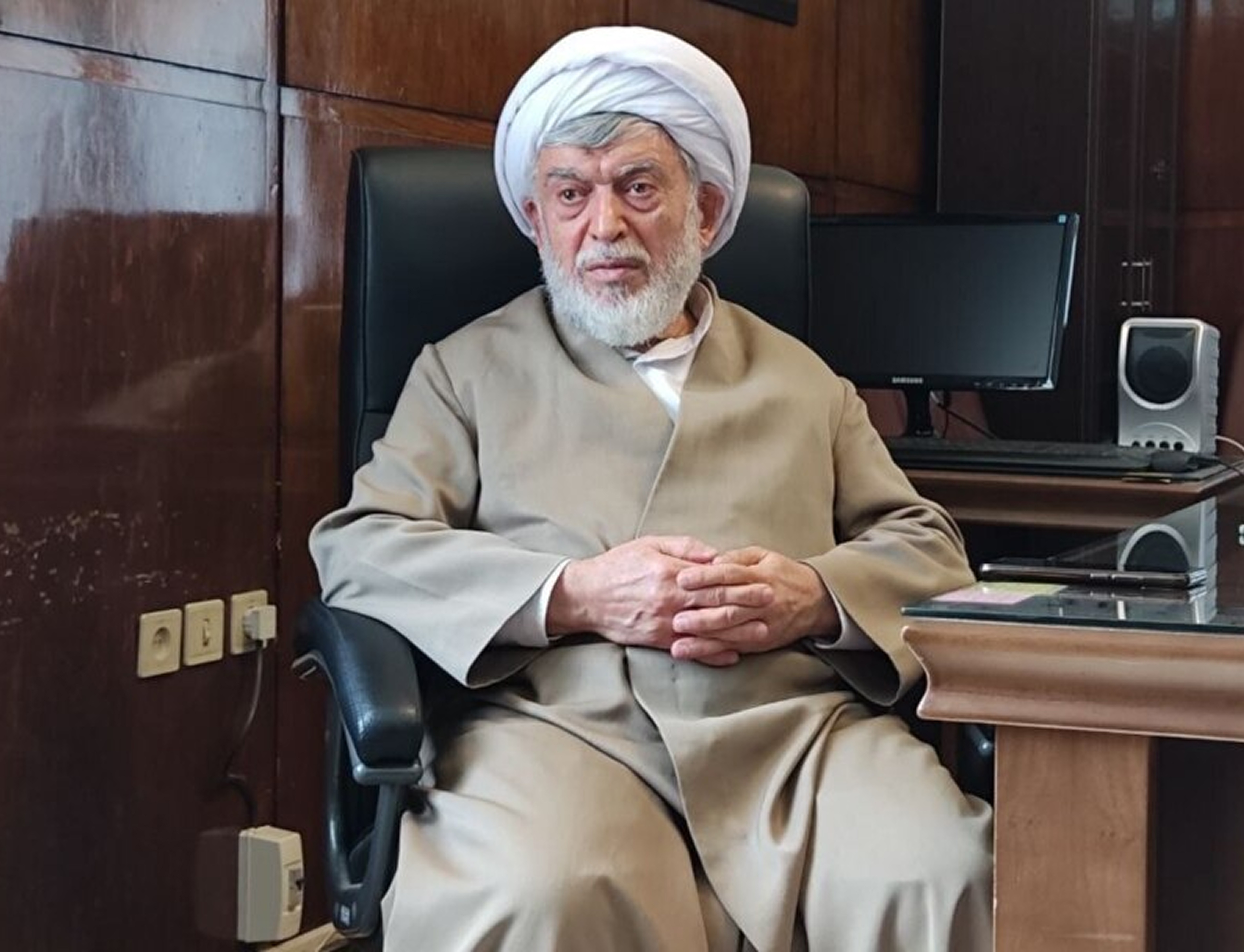
Hossein Ali Niri, a senior judge in Iran's judiciary who orchestrated thousands of political executions in the summer of 1987, died in early 2026 at an advanced age, taking his knowledge of one of the Islamic Republic's darkest chapters to the grave. His death, announced by state media without disclosing the cause, prompted immediate speculation about assassination given earlier attempts on senior judicial officials. Niri's passing removes a key figure from the "death committee", a covert tribunal that executed an estimated 5,000 or more political prisoners without trial during a period of less than three months. Despite decades of international attention, survivor testimony, and documentary evidence, Niri advanced through Iran's judicial ranks unchecked, serving as a judge, advisor to the judiciary leadership, and administrator of special courts. His career exemplifies the systematic protection extended to architects of mass human rights violations within the Islamic Republic, a pattern that extends to present day and reveals fundamental weaknesses in Iran's legal system and international mechanisms for accountability.
Niri was born in 1356 (1977) in a town in Gilan Province, in northwestern Iran. In adolescence, he entered the theological seminary in Qom, where he became a close student of Mohammad Yazdi, a prominent clerical figure who would later occupy significant positions in Iran's post-revolutionary establishment. This clerical training and proximity to influential religious scholars positioned Niri within the revolutionary elite that consolidated power following the 1979 overthrow of the Shah. Yazdi's patronage connected Niri to Ayatollah Ruhollah Khomeini's inner circle and drew him into the political currents of the emerging Islamic state.
After the 1979 revolution, Niri's clerical credentials and ideological alignment with the new regime ensured rapid advancement. In 1983, at just 26 years old, he was appointed as the "Sharia judge" - a religious authority figure overseeing discipline and justice - at Evin Prison in Tehran, one of the Islamic Republic's most notorious detention facilities. During his tenure in this role, thousands of political prisoners were subjected to systematic torture. Former detainees have documented beatings, solitary confinement, sleep deprivation, and other severe physical and psychological abuse administered under Niri's authority. The torture was neither accidental nor incidental; it was part of a deliberate machinery of control and coercion designed to break the will of political opponents.
Evin Prison during the 1980s functioned as both a detention facility and an instrument of state terror. Niri's position as Sharia judge gave him control over daily conditions, punishments, and the fate of prisoners. The facility held members of leftist organizations, Kurdish groups, Bahais, and other categories of political and religious dissidents. Prisoners were held incommunicado, denied basic medical care, and subjected to torture that left lasting physical and psychological damage. Niri's role was not merely administrative; he wielded authority over fundamental aspects of prisoner treatment and had the power to recommend leniency or severity. That he recommended severity, repeatedly and systematically, is clear from the testimony of survivors and from the scale of suffering inflicted during his watch.
In the spring and summer of 1367 on the Islamic calendar (1988 in the Gregorian calendar), the Islamic Republic embarked on one of its most extensive campaigns of extrajudicial killing. The immediate context was the end of the Iran-Iraq War and a surge in prison resistance. Political prisoners, particularly members of the Marxist-Leninist Mujahedin-e Khalq (MEK), were organizing work stoppages and protests in detention facilities across the country. Rather than address the underlying grievances or allow normal legal procedures, the Supreme Leader, Ayatollah Khomeini, issued a secret directive establishing what became known as the "death committee", a special tribunal empowered to summarily execute prisoners deemed to be in defiance.
Khomeini's decree was issued to what he termed "death commissions" or "execution committees" to be established in prisons across the country. The committees were to consist of four members: a judge designated as "Sharia judge", a prosecutor, a representative of the Ministry of Intelligence, and a security official. The committee's mandate was sweeping and vague: to determine the fate of prisoners who "persisted in their positions of apostasy", a designation that could encompass anyone who remained politically committed. The trials, such as they were, lasted minutes. Questions were asked about political affiliation; answers were predetermined. Execution orders followed. Over the course of two months, thousands were killed.
In Tehran, Niri served as the judge and decision-maker on the death committee alongside Morteza Ashraqi, the prosecutor; Ibrahim Raisi, the deputy prosecutor; and Mostafa Pour-Mohammadi, a representative of the Ministry of Intelligence. Raisi would later rise to become the Chief Judiciary Official and, ultimately, a presidential candidate. Pour-Mohammadi served in various security capacities. Ashraqi remained within the judicial establishment. The four men met in secret sessions to process and execute prisoners in batches.
The execution campaign proceeded with bureaucratic efficiency. On certain days, hundreds of prisoners were brought before the committee. The questioning lasted only minutes, sometimes mere seconds. Most detainees were not allowed legal representation. Many had already served lengthy sentences for their earlier convictions. The committee, lacking any genuine investigative capacity or interest in due process, applied a test that was both expansive and arbitrary: Did the prisoner remain ideologically opposed to the Islamic Republic? If so, they were executed. The answers were often obtained through coercion or torture; many prisoners, aware that defiance meant death, confessed or expressed rhetorical allegiance to the state. Niri's role was to lend judicial legitimacy to killings that had already been politically decided.
Niri himself, in a rare public statement made in 2022, offered justifications that echoed state propaganda of the era. He claimed that the prison environment was in crisis, that prisoners were engaged in active conspiracy and organizing, and that decisive action was necessary to preserve state security. He compared the prisoners' actions to children breaking light bulbs and cutting telephone wires, a diminishment that contradicted the actual nature of political resistance. He asserted, without evidence, that scores of assassinations were occurring daily in Tehran and other cities, creating a climate of emergency that required extraordinary measures.
Niri insisted that the re-trial of prisoners who had already served time was justified because they had renewed their organizing and posed ongoing threats. He denied that those already imprisoned should simply serve out their sentences peacefully; instead, he portrayed their continued resistance as a form of attack on the state that required lethal response. He invoked the necessity of state security and the impossibility of governing the country while making concessions to what he characterized as defiant prisoners. In his account, the executions were not a crime but a rational administrative decision made under duress.
What is remarkable about Niri's career after 1987 is not that he was prosecuted or removed from office, but that he continued to advance. The state made no effort to conceal his role in the execution committee; his name appeared in internal documents and was known to survivors and their families. Yet within years, he was appointed to positions of increased authority and prestige within the judicial system. He became a judge in Iran's Supreme Court Administrative Justice, which hears cases against government officials. He was placed in charge of special courts established under Article 49 of Iran's constitution, institutions designed to address perceived threats to national security. He served as an advisor to the head of the judiciary. These were not positions granted to obscure bureaucrats or minor functionaries; they were positions of power and influence within Iran's ruling structure.
The Islamic Republic's response to the 1987 executions established a pattern that would persist across decades: denial, suppression of evidence, and protection of perpetrators. Official death tolls were never released. Families were not informed of execution dates or burial locations. Bodies were dumped in mass graves or disposed of in ways that prevented proper burial according to Islamic custom. The regime released no list of the executed, making it impossible for families to obtain death certificates or closure. Survivor testimony and accounts by human rights organizations suggested that between 5,000 and 30,000 political prisoners were killed during this period, making it one of the deadliest extrajudicial campaigns in recent history.
A remarkable piece of evidence came to light decades after the events: a recording of a private meeting held on August 15, 1988, between the death committee members and Hossein Ali Montazeri, who at the time was designated as Khomeini's successor and the highest-ranking cleric after the Supreme Leader. In this meeting, Montazeri, hearing details of the execution campaign directly from the perpetrators, was moved to condemn their actions in extraordinary terms. He declared that the killings constituted the greatest crime in the history of the Islamic Republic and predicted that history would record these men as criminals. Montazeri's words, preserved in the audio recording and later leaked, represent the most senior condemnation of the executions from within Iran's leadership, yet Montazeri himself did not move to halt the killings or remove the perpetrators from office. Instead, he allowed the campaign to continue for weeks after the meeting.
The leaked recording is historically significant because it provides direct evidence that senior officials, including the designated successor to Khomeini, understood that mass executions were occurring and considered them to be crimes. Montazeri's condemnation was categorical: "The greatest crime that has been committed against the Islamic Republic has been perpetrated by you, and history will write your names as criminals." Yet Montazeri, despite his authority and his moral standing, chose not to intervene forcefully. This reveals a crucial feature of the Islamic Republic's power structure: even high-ranking officials capable of recognizing grave human rights violations feel constrained from taking decisive action against a Supreme Leader's directives.
The decades following 1987 saw no accountability for Niri or his colleagues. The International Court of Justice, human rights organizations, and survivor groups have documented the executions and identified the perpetrators. The United Nations has issued reports condemning the killings as crimes against humanity. Yet within Iran's borders, no prosecutions occurred. Niri continued his judicial work without impediment.
In 2019, Iranian authorities conducted a gunfire attack on the judiciary building in Tehran. Two judges were killed and a third was wounded. Initial reports suggested a third judicial official may have been the target of the shooting. Later that year, Mohammad Qassem Mortazavi, known as Nasarian, a former official who had assisted in interrogations and the death committee process, was killed. Mortazavi had served as an assistant to the death committee and had been involved in torture at Evin Prison. His death raised questions about whether someone was systematically eliminating witnesses or those with detailed knowledge of the 1987 executions.
When news of Niri's death was announced in early 2026, the state media did not disclose the cause. The head of the judiciary issued a condolence statement noting only that Niri had been ill for an extended period. The lack of transparency invited speculation that Niri may have been another victim of the 2019 courthouse attack or may have died under circumstances the state wished to obscure. Whether he died of natural causes or was assassinated remains unknown because the Islamic Republic has not provided details.
The death of Niri, whatever its cause, removes from the living one of the primary architects of the 1987 executions. It eliminates the possibility of him ever being prosecuted within Iran. It also symbolizes, for some observers, the Islamic Republic's determination to protect its founding criminals from accountability, even as it presents itself as a state governed by law.
The International Criminal Court has not conducted investigations into Iran's human rights record, in part because Iran is not a signatory to the Rome Statute. However, some cases have proceeded in third countries. In Sweden, the trial of Hamid Nouri, a low-ranking prison official who assisted in the death committee's work under the supervision of Mohammad Qassem Mortazavi, resulted in a life sentence for murder and war crimes. During the Swedish proceedings, Niri's name was mentioned repeatedly by prosecutors as a central figure in the execution campaign. Nouri was eventually exchanged in a prisoner swap, but the Swedish trial established, in a court of law outside Iran, that the death committee was real and that its executions constituted criminal acts.
For Montazeri, the regime's response to his criticism of the executions was to remove him from his position as designated successor and to place him under house arrest for much of the remainder of his life. He was not prosecuted, but he was politically sidelined. His willingness to speak out, even without taking concrete action to stop the killings, was sufficient to earn him isolation. By contrast, Niri and his colleagues, who carried out the executions without apparent qualm or dissent, were protected and promoted.
This pattern reveals a crucial aspect of governance in the Islamic Republic: the system values institutional loyalty and obedience to the Supreme Leader above all other considerations, including legality or human rights. Officials who question orders or express moral reservations, even mildly, face consequences. Those who execute orders without hesitation are rewarded. The system is not designed to produce accountability; it is designed to entrench perpetrators.
Niri's death without facing justice for crimes that occurred nearly four decades earlier symbolizes the fundamental failure of Iran's legal system to hold its own officials accountable. It also underscores the inadequacy of international mechanisms for pursuing justice in cases where the perpetrator state refuses to cooperate. The burden of seeking accountability falls to survivor organizations, exile groups, and sympathetic governments, none of whom possess direct enforcement power.
The 1987 executions have faded from daily news cycles in Iran, suppressed by state censorship and collective denial. Families of the disappeared continue to suffer in silence, denied even basic acknowledgment of what happened to their relatives. Schools do not teach the history of the executions; media outlets that mention them risk censorship. The Islamic Republic has treated the 1987 killings as an event that can be managed through silence and the passage of time, betting that eventual death of witnesses and survivors will render the crimes historical rather than politically urgent.
Niri's passing appears to follow a pattern. Key figures in the execution machinery have been dying or removing themselves from public view. Some, like Raisi, continued to hold high office until very recently. Others faded from prominence. The state has made no visible effort to preserve documentation of the executions or to facilitate truth-telling processes that might honor the dead or provide closure to families.
The larger significance of Niri's life and death extends beyond one man or one historical event. It illustrates how authoritarian systems that rest on a foundation of political violence respond to accountability claims: through denial, suppression of evidence, protection of perpetrators, and reliance on the passage of time to erode public memory. It demonstrates that senior officials who faithfully execute the directives of supreme power, regardless of the moral or legal character of those directives, face no meaningful consequence within the system. And it reveals the deep asymmetry between victims and perpetrators: victims die carrying their trauma and loss, while perpetrators die in comfort, their status and privileges intact.
The recording of Montazeri's criticism, leaked years after the events, represents perhaps the most significant piece of evidence that the killings were not a rogue action by lower officials but rather a centrally planned and centrally executed campaign approved at the highest levels of the Islamic Republic. Montazeri's words, condemning the actions in the strongest possible terms, did not prevent their continuation. His authority was insufficient to override a Supreme Leader's will. The recording's circulation decades later could not bring the perpetrators to justice within Iran. It could only provide historical validation to what survivors already knew: that what happened in 1987 was recognized as a crime by people in power, yet allowed to proceed and ultimately to go unpunished.
The question facing Iran's future is whether accountability will eventually come through a change in the political system, through international mechanisms, or whether the 1987 executions will remain, as they have for now, a suppressed chapter in the nation's history, acknowledged by the world but denied by the perpetrator state, with the perpetrators themselves dying in their beds while their victims remain in unmarked graves.