Summary
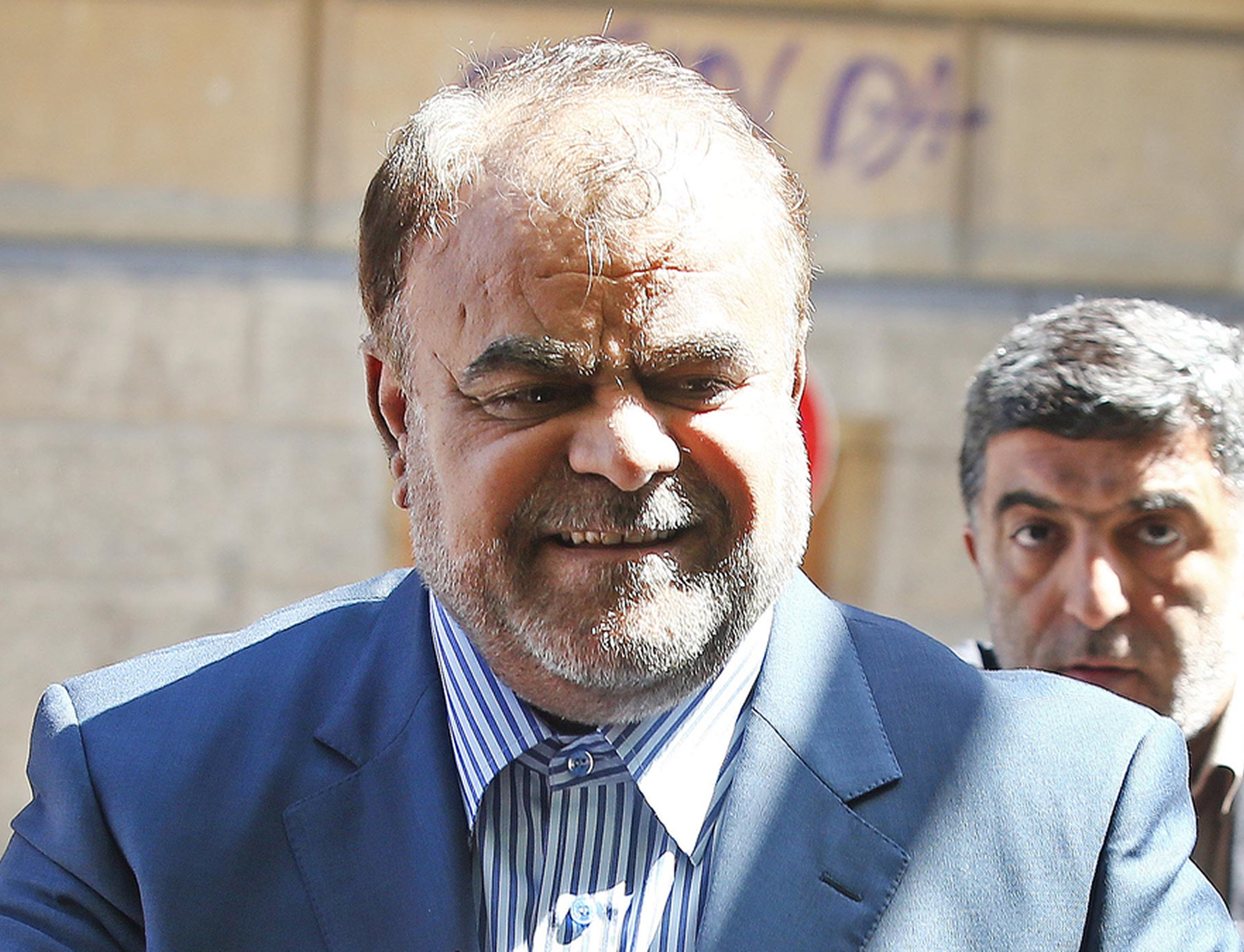
Rostam Qasemi occupied one of the most strategically sensitive positions in the Islamic Republic's apparatus: chief architect of the covert oil-smuggling networks that allowed Iran to circumvent Western sanctions. As oil minister under Mahmoud Ahmadinejad and later as road and urban development minister under Hassan Rouhani, Qasemi became indispensable to the regime's hidden economic machinery. His death in November 2023 in China from cancer, officially announced by state media, has become the subject of intense speculation and alternative narratives-none of them fully substantiated, all of them revealing deep suspicions about how power operates within the Islamic Republic's innermost circles. Three competing scenarios have emerged: assassination by foreign powers such as Israel or the United States; elimination by China and internal rivals seeking control over oil trafficking networks; or, most extraordinarily, a faked death masking Qasemi's flight to safety abroad with legendary wealth. Each hypothesis suggests something different about the system itself: foreign sabotage, internal consolidation of power, or the regime's capacity for elaborate deception.
Rise and Position: Oil Minister in an Era of Sanctions
Qasemi was born on May 5, 1964, in Sargah village in Fars Province to a merchant family with political connections. His father served as provincial governor of Fars from 1980 to 1988. Qasemi joined the Revolutionary Guard during the 1979 revolution and saw combat in the Iran-Iraq War, reportedly sustaining wounds that earned him veteran status. After the war's end, he embedded himself within the Guard's economic apparatus, eventually commanding the Khatam al-Anbia construction arm of the Revolutionary Guard in Bushehr Province and later the Nuh naval base. These positions placed him at the nexus of the Guard's vast commercial empire.
In 2011, Ahmadinejad appointed Qasemi as oil minister, a move that marked his elevation to the highest levels of economic power. His nomination faced vocal opposition in parliament from figures like Ali Motahari, who argued that active military officers should not serve as civilian ministers. Qasemi held the post for approximately two years, until August 2013, when he was succeeded by Bijan Zanganeh. During his tenure and afterward, Qasemi became known as a master of what might be termed "sanctions engineering"-designing networks, intermediaries, and trading schemes that allowed Iranian oil to reach international markets despite American restrictions. The complexity and effectiveness of these networks made him a figure of intense interest to both the Supreme Leader and to more ambitious members of the Guard's business elite.
This specialization in evasion became his signature skill and, ultimately, his apparent liability. In 2019, the U.S. Treasury Department sanctioned both Qasemi and his son Morteza for managing a covert oil-transfer network that operated under Guard control and was designated as serving terrorist organizations. According to American officials, Morteza had finalized major contracts for the network's oil sales. In February 2023, the United States again imposed sanctions and seized assets related to an Iranian oil-smuggling operation, confiscating $108 million in associated assets and over 520,000 barrels of Iranian crude. Morteza Qasemi's name appeared on the indictment.
Machinery of Shadow Power: Methods and Vulnerabilities
The apparatus Qasemi constructed relied on several overlapping mechanisms. Front companies registered in third countries would purchase Iranian crude at officially stated prices. Tanker fleets would mask their origins through repeated transfers of control, falsified manifests, and navigation through international waters outside easy surveillance. Intermediaries in Gulf ports, Turkey, and Southeast Asia would manage final sales to willing buyers, chiefly China. Corrupt officials at various levels ensured blind eyes were turned at critical checkpoints. The entire enterprise moved vast sums: hundreds of millions of dollars in annual revenue that flowed back to the Revolutionary Guard's operational budgets and the personal enrichment of those managing the flow.
That this network was extraordinarily profitable is unquestioned. That it was fragile is equally clear. Its fragility lay not in external discovery-the United States was aware of much of it and sanctioned key players accordingly-but in the concentration of knowledge and control in too few hands. Qasemi's knowledge was nearly encyclopedic: the names of corrupt officials, the location of hidden funds, the identities and methods of smuggling operatives, the ownership structures of front companies, the diplomatic channels through which senior officials had blessed the operations. He was not merely an executor but a repository of institutional secrets. In a system that had repeatedly demonstrated its willingness to eliminate potential threats to power consolidation, this made him a singular vulnerability.
The Scandal and Removal: A Textbook Operation in Character Destruction
In April 2019, a major scandal struck. Explicit photographs circulated showing Qasemi with a young, unveiled woman in Malaysia. The images appeared without warning, circulated rapidly through both domestic and international media, and met with what one might call official silence. No complaints were filed against the outlets publishing them. No investigation into the source or means of dissemination was announced. No official statement condemned the violation of privacy. The Islamic Republic's security apparatus has rarely been reluctant to prosecute perceived violations of its social codes when politically convenient, yet in this case, nothing was done.
The implications of this non-response are instructive. The woman in the photographs would later become known in underground reporting as a "spy pigeon," an operative trained to compromise target officials. The relationship itself-the meetings, the trips, the intimate moments captured on camera-was not incidental but orchestrated. She was not a romantic partner but an agent. The timing and nature of the photographs' release, their rapid dissemination, and the subsequent lack of official investigation all pointed to a coordinated operation by one faction of the Islamic Republic's security establishment against another. Specifically, testimonies and reporting suggest elements within the Revolutionary Guard's intelligence branch targeted Qasemi, using both seduction and blackmail to neutralize him as a political actor.
Why would internal factions turn against their own? The answer lies in the structure of power within the Guard itself. Qasemi had built a parallel revenue stream and possessed independent authority over critical economic assets. This autonomy was dangerous to those seeking to consolidate absolute control over Iran's hidden economy. By August 2020, when Qasemi was appointed road and urban development minister in the new Rouhani administration, he had been weakened by the scandal but not destroyed. Yet the trajectory was clear: isolation, reputational damage, and a swift diminishment of actual authority.
Questions Around Earlier Operations: The Mismanaged Oilrig
One incident from Qasemi's time as oil minister hints at deeper patterns of corruption or mismanagement that may have made him enemies. In 2011, under Qasemi's watch, an oil-drilling platform known as the Fortuna rig was transferred from one Iranian company to another. The Iranian Engineering and Construction Company for Marine Facilities, ostensibly a subsidiary of the Oil Ministry, purchased the rig for $87 million. The rig never arrived in Iran. By late 2014, fourteen parliamentarians had demanded investigation into its disappearance. Eventually, a court convicted five individuals in the affair and imprisoned them. Yet Qasemi had previously denied that the rig had vanished at all, claiming that oil platforms do not simply disappear. After his removal from office, his involvement in or awareness of this transaction remained opaque.
The End: Three Competing Narratives
In November 2023, Iranian state media announced that Qasemi had died in China from cancer. He had reportedly traveled to Beijing for treatment and succumbed to the disease. State officials, including commanders of the Revolutionary Guard, used the term "martyrdom" in their condolences, a designation typically reserved for those killed in service to the state. No officials offered clarification as to why a natural death from illness warranted such language.
This singular inconsistency-the use of "martyrdom" language for a private death from disease-opened space for alternative interpretations.
First Scenario: Biological Elimination by Foreign Powers
Israeli and American intelligence services have repeatedly demonstrated interest in disrupting Iran's nuclear and economic infrastructure. A former oil minister commanding secret networks worth hundreds of millions of dollars annually would be a plausible target. Intelligence analysts have noted that Qasemi was reported to fall ill with sudden, unusual symptoms after international travel in the months before his death. Given his role in managing clandestine oil exports and his direct knowledge of sensitive economic arrangements, his removal would inflict real damage on the Islamic Republic's hidden revenue streams.
The use of "martyrdom" language by regime officials might reflect knowledge or suspicion that Qasemi had been the target of a biological or chemical operation. If so, such knowledge would likely have been compartmentalized to the highest levels, with public acknowledgment carefully avoided. There is a historical precedent: senior figures in the Islamic Republic have quietly accepted the elimination of troublesome figures in exchange for tacit diplomatic concessions. The mysterious crash of Ebrahim Raisi's helicopter in May 2024 remains officially unexplained, with analysts in multiple countries suggesting it was no accident but a targeted operation carried out or sanctioned by a foreign intelligence service, while regime officials responded with meaningful silence rather than investigation.
Second Scenario: Internal Elimination by Rival Factions and China
A competing hypothesis holds that Qasemi was eliminated by internal rivals with the full knowledge and cooperation of the Chinese government. Under this interpretation, Qasemi's power base and control over oil-trading networks had become unacceptable to factions within the Revolutionary Guard who themselves sought total control over Iran's hidden economic machinery. His removal served multiple purposes: it eliminated an autonomous power center, it consolidated control over black-market oil sales within a single command structure, and it accomplished all of this quietly, without public trial or visible bloodshed.
China's interests aligned perfectly with such an operation. With Qasemi removed, the intricate smuggling networks he had built would either disintegrate or fall under new management. Iran would be forced to sell its crude oil at discounted prices directly to Chinese buyers, reducing transaction costs and increasing Beijing's negotiating power. A potential rival in the underground oil trade-someone with independent authority and international connections who might one day seek to diversify his arrangements-was eliminated. In exchange, elements of the Revolutionary Guard's intelligence apparatus gained consolidated control over a lucrative revenue stream, and China obtained cheaper oil and a stable, simplified relationship with a single interlocutor.
The dissemination of the compromising photographs, under this analysis, was not incidental: it was the opening move. By destroying Qasemi's reputation and forcing his withdrawal from active politics, internal rivals could operate against him with minimal visible opposition. When the moment came to eliminate him, he was already isolated, weakened, and stripped of the network of allies and protectors that autonomous authority ordinarily provides.
The question of the photographs gains particular weight under this interpretation. They were never investigated. No perpetrator was identified or punished. No official challenged their authenticity or condemned their use. In a system meticulous about controlling narrative and destroying reputations when it serves power, this silence is deafening. It suggests knowledge and approval at high levels.
Third Scenario: Faked Death and Flight
The most extraordinary narrative began circulating after the announcement of Qasemi's death. Rumors spread that he had not died at all. According to these accounts, the cancer diagnosis and death in China were fiction, a cover story masking something far more extraordinary: Qasemi's flight to another country, likely China itself, with access to legendary wealth accumulated through years of controlling black-market oil revenues. The rumor was, in its way, more plausible than it initially appeared.
Qasemi possessed several of the prerequisites for such a disappearance: vast accumulated wealth held in offshore accounts and foreign property holdings; access to forged documents and the networks to produce them; international contacts across multiple countries and intelligence services; and the capacity, given his background and connections, to acquire a credible false identity and disappear into an ordinary life of comfortable exile. In a system where the Revolutionary Guard maintains its own intelligence apparatus, issues its own identification documents, and commands vast foreign bank accounts, such a thing is technically possible.
Moreover, this scenario addresses a profound skepticism about the regime's official narratives. In the Islamic Republic, major political figures do not simply die from ordinary illness without elaborate documentation, international press coverage, and careful narrative management. When someone of Qasemi's status vanishes, populations accustomed to state control and hidden power have learned to distrust official accounts. Better to assume complexity than to accept simplicity in a system built on complexity.
The Deeper Pattern: Ambiguity as a Tool of Power
What unites these three scenarios is not their plausibility but their mutual acknowledgment that Qasemi's end was not what was officially claimed. Whether he was assassinated, internally eliminated with Chinese cooperation, or engineered into a new life abroad, his "official" death-the straightforward cancer diagnosis and quiet passing-serves as a screen behind which multiple truths might be hidden.
This ambiguity is not a failure of the regime's information machinery but perhaps one of its most sophisticated features. By refusing to clarify, by allowing contradictory accounts to circulate, by permitting wild rumors to survive alongside official denials, the system maintains interpretive control without having to openly lie. Different audiences can believe different narratives based on their ideological commitments and trust in institutions. Those loyal to the regime accept the official account. Those skeptical of authority believe in assassination or faked death. Each interpretation reinforces the listener's existing worldview, and the regime's actual conduct remains obscured.
Consequences and Unfinished Questions
The practical consequence of Qasemi's removal, under whatever mechanism, was immediate and measurable. The sophisticated network of oil-sanctions evasion that he had architected collapsed or was severely degraded. The Islamic Republic was forced to sell its crude petroleum at sharply discounted rates directly to Chinese intermediaries, cutting out the complex middlemen and profit-taking infrastructure that Qasemi had built. What had been a system generating superprofits for a narrow network became a straightforward commodity exchange. Hundreds of millions of dollars in annual revenue vanished from the black-market system.
For the Revolutionary Guard, this was not a loss but a simplification: fewer autonomous operators meant tighter central control. For China, the arrangement was profitable: cheaper oil from a politically fragile supplier with few alternatives. For Qasemi, the outcome was exile, death, or some state between the two-none of them scenarios that would have appealed to a man accustomed to wielding significant power.
His son Morteza faced more visible consequences, facing American indictment for terrorism-related money laundering and sanctions evasion tied to the family's oil operations. Whether the father was removed to protect the son, to sacrifice him as an offering, or to clear space for the son's removal as well remains unknown.
What Qasemi's End Reveals
The Qasemi case illuminates several realities about the Islamic Republic that its official institutions prefer to obscure. First, even figures of extraordinary utility and importance-men without whom critical state functions would be impossible-can be eliminated or neutralized if they accumulate too much independent authority. The regime tolerates no truly autonomous centers of power, however economically valuable they may be.
Second, the mechanisms for such eliminations can be subtle. They do not require dramatic public trials or visible violence. They require patience, coordination between different state factions, and willingness to sacrifice short-term economic efficiency for long-term political control. A compromising photograph, an illness, a quiet death announced without detail-these suffice.
Third, the regime's information apparatus is sophisticated not because it maintains perfect control of narrative but because it maintains perfect ambiguity. By refusing to clarify, by permitting rumors and contradictions to flourish, by maintaining an official story just detailed enough to be plausible but vague enough to permit multiple interpretations, it keeps populations in a state of permanent uncertainty. Nobody knows what really happened, and this ignorance itself becomes a form of control.
Fourth, international powers-whether Israel, the United States, or China-factor seamlessly into these internal dramas. Whether one believes that Qasemi was killed by foreign operatives, eliminated by internal rivals with foreign cooperation, or protected by a foreign power in exchange for future services, the end state is the same: the Islamic Republic's sovereignty over its own internal affairs is already compromised. Power operates not as a purely Iranian phenomenon but as a product of hidden negotiations between the regime's factions and the foreign powers with which those factions maintain relationships.
Finally, Qasemi's case demonstrates that the most important history of the Islamic Republic remains unwritten. The public narrative of elections, parliamentary debates, and official policy statements obscures an alternative history conducted in shadows, through photographs, assassination attempts, mysterious illnesses, and carefully maintained silences. The true architecture of power remains invisible, and may do so indefinitely, until the system itself collapses and its archives are forced open.