The Strike and the Improbable Return
On the morning of June 14, 2024, the Islamic Republic faced what analysts describe as one of the most precise security operations in modern history. The strike, code-named Operation Lion's Awakening and attributed to Mossad and Israeli defense forces, targeted the residences of senior military and intelligence commanders with unprecedented accuracy. The attack claimed the lives of numerous high-ranking Revolutionary Guard commanders, including Hussein Salamani, Mohammad Baqeri, Amir Ali Hajizadeh, and Gholam Ali Rashid, among others. The operation also reportedly eliminated more than a dozen nuclear scientists connected to the Islamic Republic's atomic weapons program.
The assault demonstrated extraordinary operational intelligence. The attackers knew not merely the locations of their targets, but the precise timing of their movements. There were no advance warnings, no air defense responses, and no opportunity to flee or mount protection. Residents of targeted buildings had only moments of comprehension before impact.
Among the primary targets was Ali Shomkhani, the longtime national security adviser and one of the most powerful figures in the Islamic Republic's power structure. Video footage released shortly after the strike showed the Kolah Noor tower in Tehran's affluent Farmanieh district, where Shomkhani maintained a penthouse residence spanning 800 square meters, utterly demolished. Initial reporting from state news agencies and security-linked media outlets declared him dead, citing the scale of destruction as conclusive proof.
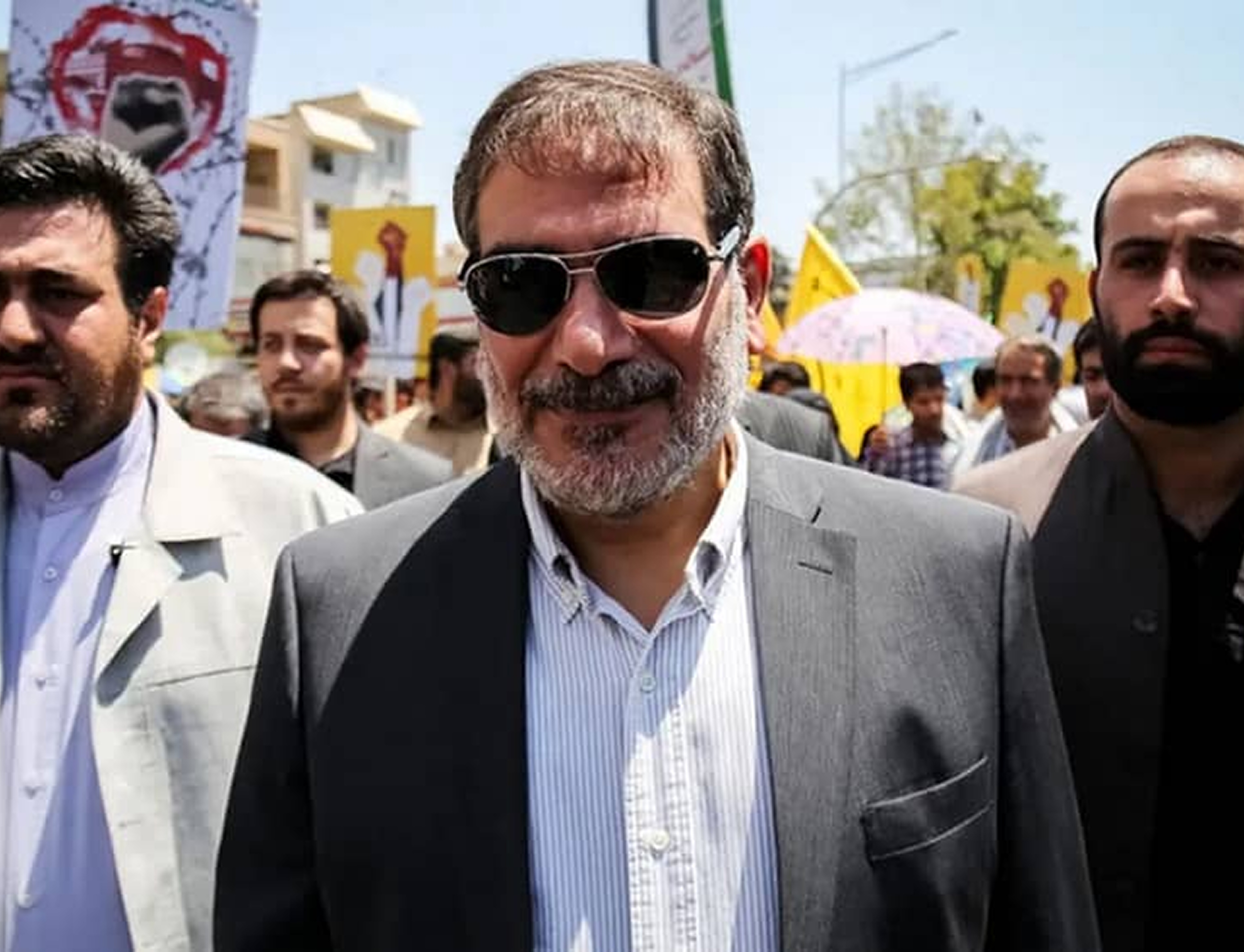
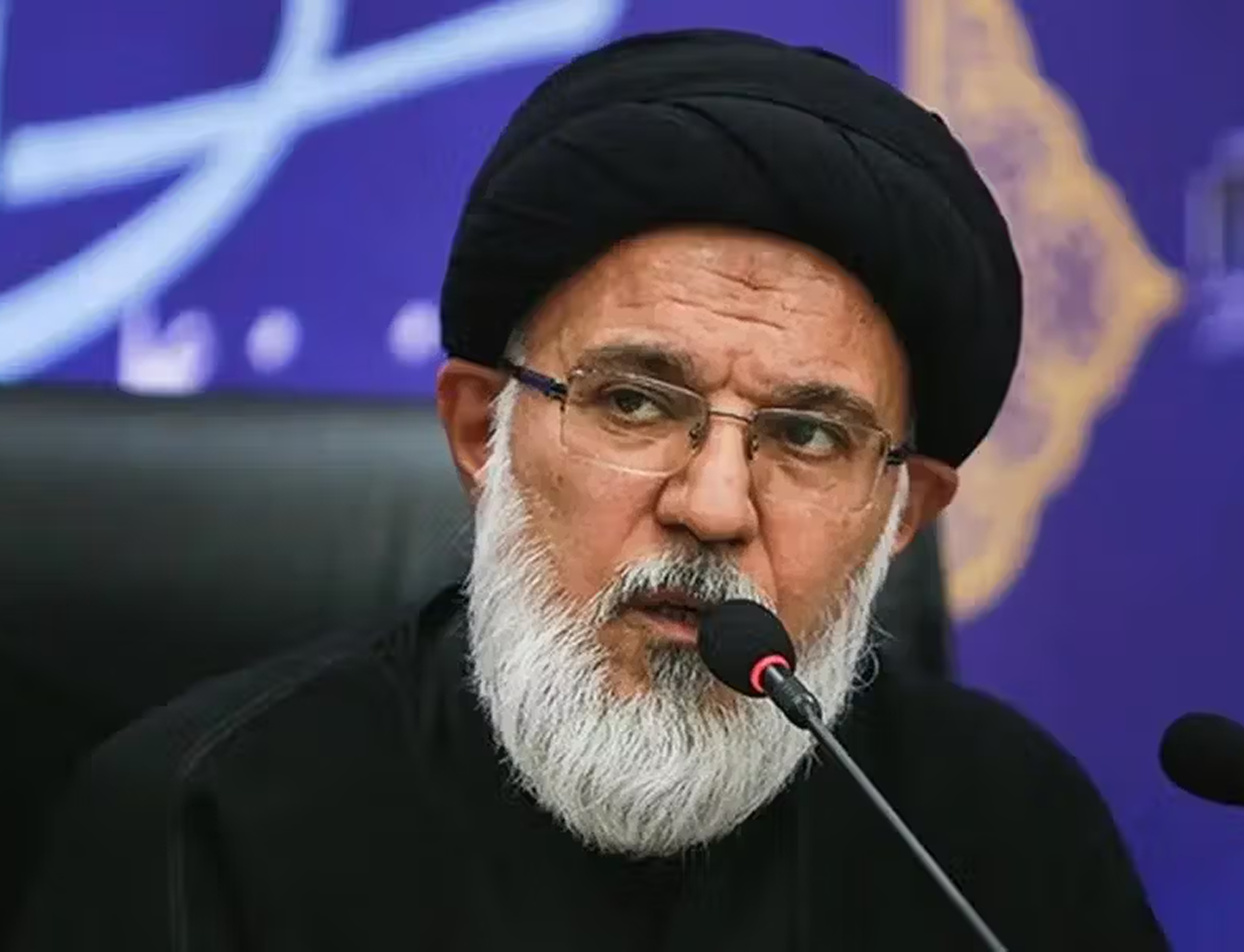
The narrative shifted dramatically seventeen days later. Shomkhani appeared at a ceremony honoring fallen regime commanders, walking with only a cane. He bore no visible wounds, no scratches, no bruises. His sudden reappearance contradicted not only the scale of damage inflicted on his residence but the earlier certainty of his death announced by regime media. Contemporaneous footage released online showed Shomkhani's young son crying in the streets outside the tower in the hours after the attack, apparently unaware that his father had survived a strike that experts suggested should have been fatal.
This resurrection raised uncomfortable questions. Did the security adviser somehow escape a direct hit that obliterated an entire penthouse? Or did the official narrative itself conceal something more troubling: that Shomkhani was never in the building when it was struck?
The Architecture of Power
To understand the significance of this moment, one must first grasp Shomkhani's position within the Islamic Republic's hierarchy. He emerged as one of the regime's most militarized personalities, rising through the ranks during the Iran-Iraq War to become a senior commander in the Revolutionary Guard. Over decades, he cycled through posts at the highest levels of the military and security establishment.
Under the Khatami administration, he served as defense minister. From 2013 to 2023, he held the position of secretary of the Supreme National Security Council and served as the direct representative of Supreme Leader Ali Khamenei within that body. In practice, this made him the chief bridge between the Leader's office, the government, the military, and the network of proxy forces operating across Syria, Iraq, Yemen, and the wider region. He was instrumental in decisions ranging from operations in Syria and Iraq to negotiations with Saudi Arabia and planning for regional proxy activities.
After stepping down from the security council, Khamenei retained him as a political adviser within the Assembly for the Discernment of the Expediency of the Islamic Republic, ensuring his influence remained intact.
This public biography, however, masks a harder and more ruthless figure. During the November 2019 protests in Iran, Shomkhani was asked by a reformist lawmaker what authorities would do if demonstrators took to the streets. According to testimony from Mahmoud Sadeghi, a member of parliament, Shomkhani responded with calculated brutality: even if it comes to mass slaughter, we will beat the people and show no restraint. The statement was matter-of-fact, stripped of equivocation. It reflected an unambiguous willingness to employ unlimited force in service of regime survival.
The Corruption Network
Shomkhani is not merely a security official; he heads a wealthy and systematically corrupt family enterprise that extends across continents. His sons, Hassan and Hussein, own the Admiralland shipping company. When one of their vessels was seized in India, Hassan Shomkhani posted on social media that to heal the wounds of sanctions, we sacrifice our lives and honor, a euphemism apparently covering illicit oil sales and smuggling operations. One son holds a degree from an American university in Lebanon; the other is involved in oil and petrochemical ventures. According to available reports, a single oil contract held by Shomkhani's son generated annual profits approaching 200 million dollars.
Shomkhani's wife, Azarmidokht Tabatabai, owns a residential complex in north Tehran valued at one thousand billion rials. The family has obtained construction permits across northern Tehran, Ahvaz, Luristan, and Shush, leveraging security intermediaries to gain access to major development projects. In Luristan, Shomkhani's son-in-law Hassan Miram is reportedly a principal figure in land seizures. In Abadan's Metropol development, another family member, Mouood Shomkhani, intermediated the introduction of the Abdul Baqi group to the city's municipality.
The family maintains corporate operations not only across Iran but in Dubai, Geneva, London, and Singapore. Family members hold foreign passports and have conducted transactions with major institutions, including JPMorgan Chase of the United States. This was all conducted openly, with apparent impunity, under the protection of Shomkhani's security position.
The Penetration
The true shock of the June operation lay not in its physical destruction but in what it revealed about intelligence penetration. Israeli intelligence demonstrated an ability to identify the exact residences of the Islamic Republic's top military and intelligence leadership within the capital, to pinpoint the locations of senior commanders of the Quds Force, and to locate nuclear scientists with such precision that multiple targets could be struck within minutes of one another. The attackers possessed no advance warning that would allow targets to relocate. Security protocols meant to obscure movements and prevent surveillance appeared to offer no protection.
In the aftermath, information emerged that complicated the official narrative further. Mahdi Shadmani, daughter of Mohammad Baqeri, the deceased commander of the Quds Force and deputy chief of the regime's general staff, released a statement addressing claims by regime officials about Whatsapp as a vector for Israeli surveillance. In her message, she confirmed what the regime's media had been trying to obscure: her father's location changed every few hours. He carried no smart devices. Security protocols were strictly observed. And yet, during his command of the war coordination center, Israeli forces attempted to target him multiple times with precision strikes.
Mahdi Shadmani made an explicit point that Israeli capability extended far beyond Whatsapp surveillance or conventional human intelligence operations. She emphasized the need to identify the primary methods of Israel's targeting capability. Her statement carried weight because she was describing her own father's experience: that even when dressed in plain clothes, stripped of military insignia, and operating under enhanced security protection without smart devices, he had still been repeatedly located and targeted. This indicated intelligence derived from within the regime's structure itself, passed outward, rather than obtained through signals intelligence or software surveillance.
The cascade of arrests that followed the twelve-day conflict in May 2024 and the subsequent June operation painted a stark picture. The Islamic Republic conducted mass blind arrests, extracted televised confessions, and executed individuals on charges of espionage for Israel. The accused included ordinary Iranians whose sole transgression was to have protested or posted cautiously on social media. Meanwhile, all observable evidence, all the precision of the strikes, and the warnings issued by the families of slain commanders pointed toward a single inescapable conclusion: the spy was not among the general population but embedded at the apex of power itself.
The Silence and the Implications
In the wake of the May and June operations, the Islamic Republic's security apparatus did what it has historically done when confronted with evidence of penetration at its own center: it pursued repression of the general public rather than genuine investigation of its inner sanctums. The shift in narrative surrounding Shomkhani's survival, coupled with the earlier certainty of his death, has fed persistent speculation about his role. Was Shomkhani himself an agent of the intelligence services he stood accused of failing to protect? Was he among those who had, directly or indirectly, transmitted the precise operational intelligence that allowed such devastating strikes?
The improbability of his emergence unscathed, the conflicting narratives from regime media, the explicit warning from the family of another slain commander about intelligence penetration at the highest levels, and the systematic persecution of ordinary citizens rather than investigation of the actual security apparatus together suggest a deeply compromised structure. The Islamic Republic, built on the premise that its security and intelligence apparatus could protect the revolution, has been exposed as fundamentally penetrated at its highest levels.
Whether Shomkhani was a knowing instrument of this penetration, whether he was merely one of many compromise figures, or whether the apparatus itself was so thoroughly compromised that precision strikes became inevitable, remains officially unaddressed. What is clear is that the events of May and June 2024 exposed not the security of the Islamic Republic but its fragility, and not the vigilance of its intelligence services but their failure. The regime's response, as always, was to turn inward and strike downward, preserving silence at the top while demanding confessions and blood below.