



The Return of a Discarded Power Broker: Inside Ali Larijani’s Comeback to the Security Apex
This investigation traces Ali Larijani’s quiet return to security power and its stakes for succession.
|
Pars Barghandan
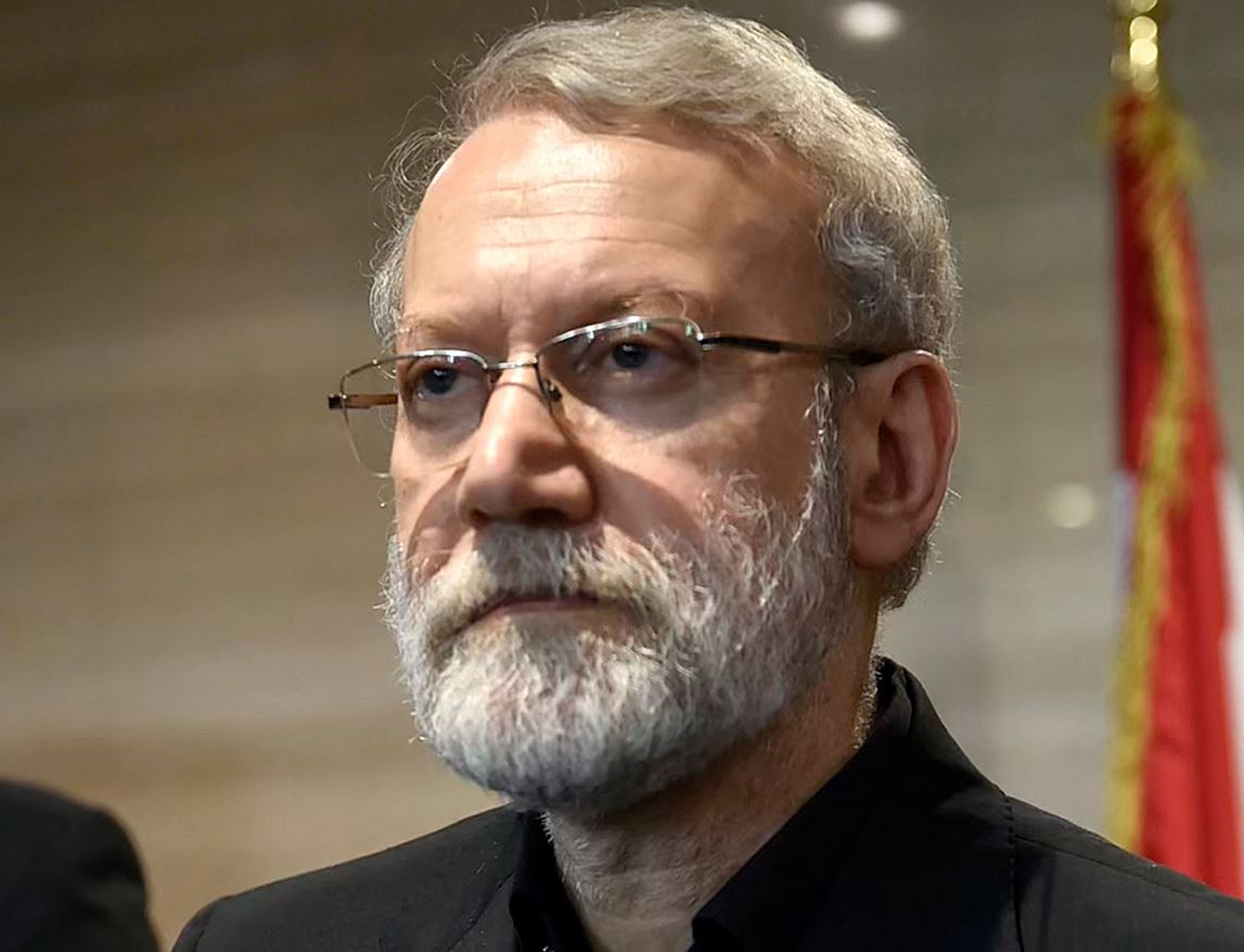
Ali Larijani’s reemergence at the top of the Islamic Republic’s security architecture is not a routine reshuffle but a negotiated return that reflects an elite pact over managing the post‑Khamenei transition.
What appears outwardly as an attempt to restore cohesion after a disastrous 12‑day war with Israel masks a deeper bargain between the “mafia of the Leader’s office” and the Larijani family over succession, impunity, and the shape of the next ruling core.
At the center of this bargain stands a figure with decades of experience in media, security, nuclear negotiations, and parliamentary power, whose career has repeatedly oscillated between elevation and apparent elimination.
The pattern that emerges is of a system that discards and then recalls its own insiders as circumstances shift, using them as modular components to preserve the continuity of power while shielding those at the apex from risk.
Ali Ardeshir Larijani was born in 1957 not in Iran but in Najaf, Iraq, into a clerical family with deep roots in Shiite religious networks that later became central to the Islamic Republic.
His father, a powerful cleric originally from Lārijān near Amol, and his marriage into the family of Morteza Motahari embedded him early in the overlapping webs of kinship, theology, and politics that define the regime’s elite.
The Larijani network extended into almost every key institution: brothers Mohammad Javad, Sadegh, Baqer and Fazel each obtained strategic posts, while kin links tied them to figures such as Ahmad Tavakkoli and Mostafa Mohaghegh Damad.
This dense web made the family not just influential individuals but a composite node in the system, able to translate clerical capital into executive, judicial, legislative, and media power.
As a young man, Larijani studied computer science at Aryamehr Industrial University in the mid‑1970s while engaging in anti‑monarchy activism influenced by a blend of leftist and Islamist revolutionary ideas.
Observers from that era recall a revealing duality: a semi‑Westernized, even “hippie‑style” appearance combined with militant opposition to the Shah, a personal tension that foreshadowed later political ambivalence between modern technocracy and hardline power.
After 1979, he entered the new order rapidly: from state broadcasting to ministerial posts, from the upper ranks of the Revolutionary Guard’s command structure to the Ministry of Culture and Islamic Guidance.
Each move deepened his access to classified information and decision‑making circles, positioning him as a trusted, though often controversial, executor of the Leader’s will.
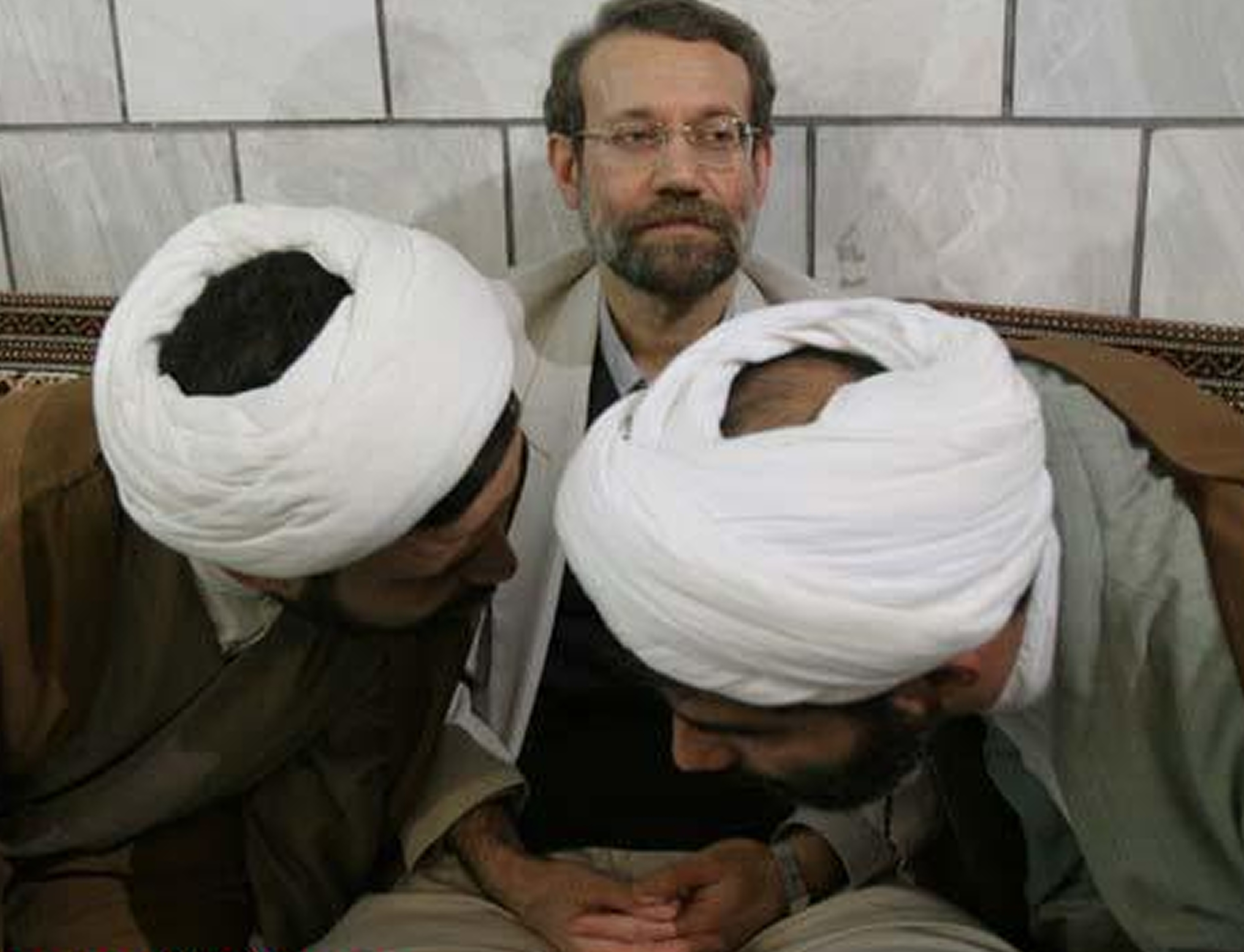
Larijani’s tenure at state broadcasting, which began in the early 1990s with a direct appointment by the Leader, transformed the organization from a limited national outlet into a sprawling media empire aligned with the security state.
Under his watch, new television and radio networks, the Jam‑e Jam newspaper, and production arms such as Sima Film were launched, while Arabic and other language channels like Al Alam and Al‑Kawthar emerged as external propaganda tools.
This expansion entrenched state media as the principal instrument of political messaging, ideological enforcement, and narrative warfare both at home and abroad.
Larijani’s approach treated media not as a public service but as a weapon: a tightly controlled resource used to shape public perception, discredit opponents, and synchronize messaging with the security apparatus.
The darkest episode of this period was the “Hoviyyat” (“Identity”) program in the mid‑1990s, produced in close collaboration with the Intelligence Ministry.
The show targeted intellectuals, writers, and critical thinkers, using selective editing, smear techniques, and broadcast “confessions” that later emerged as coerced, obtained under interrogation and pressure.
Former insiders, including a then‑deputy at state broadcasting, later stated that “Hoviyyat” was a joint project of the Intelligence Ministry and the broadcaster, pushed onto the air with Larijani’s personal insistence.
Accounts also describe prior coordination between Larijani and Saeed Emami, the notorious Intelligence Ministry operative later linked to the “chain murders” of dissidents, before production began.
When criticism surged, Larijani did not retreat; instead he publicly defended the program and accused its critics of taking money from foreign embassies, reinforcing his image as a manager willing to deploy media as a tool of character assassination.
This phase cemented a pattern that persists in later roles: the instrumentalization of institutions nominally public or constitutional to pursue security‑driven objectives with minimal transparency or accountability.
After nearly a decade at the helm of broadcasting, Larijani remained within the core: joining the Expediency Council, the Supreme Council of the Cultural Revolution, and eventually becoming the Leader’s representative at the Supreme National Security Council (SNSC) in 2004.
Within months he assumed the SNSC secretary’s chair, placing him at the center of the nuclear file, then the regime’s most sensitive international dossier.
His period as nuclear negotiator was marked by friction with President Mahmoud Ahmadinejad, who considered the nuclear issue effectively settled and favored maximalist posturing over calibrated bargaining.
Larijani, by contrast, engaged in intensive talks with EU foreign policy chief Javier Solana and emphasized structured, gradual diplomacy, creating a clash between security‑bureaucratic pragmatism and populist unilateralism.
The breaking point followed Vladimir Putin’s visit to Tehran, after which Ahmadinejad pressed Larijani to step aside, particularly over unsanctioned contacts with Solana.
Larijani later described this as a fundamental managerial disagreement, insisting that strategic issues required patience and coordination rather than impulsive decisions, but ultimately acknowledged the formal authority of the president and resigned.
His next phase unfolded in parliament. Elected from Qom in 2008, he defeated Gholam‑Ali Haddad Adel and embarked on the longest continuous speakership in the history of the Islamic Republic’s legislature.
Over three terms, he turned the parliament into both a platform and a buffer: a space to manage intra‑elite conflicts while shepherding key system‑wide decisions through procedurally contentious moments.
One emblematic episode was the handling of the nuclear accord (JCPOA).
Critics inside the conservative camp accuse him of bending parliamentary rules and compressing debate to ensure a swift, low‑friction approval aligned with the Leader’s macro line, contributing to the erosion of his traditional conservative base even as centrists and some reform‑leaning actors rallied behind him.
By the end of his third term, Larijani declined to run again, stepping away from the public parliamentary stage.
To many observers this marked a shift from overt leadership to backstage roles, a repositioning that in hindsight looks less like withdrawal and more like preparation for a different function in the security‑succession matrix.
Larijani’s bid for the presidency in 2021 ended with a surprise disqualification by the Guardian Council, despite his establishment credentials and previous proximity to the Leader.
Official explanations were vague, but leaked and semi‑official narratives pointed to alleged foreign residency of his daughter, travel patterns of his relatives, and his role in economic mismanagement under President Rouhani.
Subsequent accounts indicated that the Council internally cited a wide array of “concerns”: from supposed lack of “simple living” to foreign ties of extended family members, as well as his positions during the 2009 crisis and his support for disqualified political figures.
The breadth and vagueness of these allegations suggested less a specific infraction than an attempt to construct a pretext for sidelining a politically autonomous, networked insider.
The episode triggered rare public dissent from within the elite.
Sadegh Larijani, then a member of the Guardian Council and Ali’s brother, objected strongly and resigned, while the Leader himself later stated that “injustice” and “wrongdoing” had occurred toward some candidates and their families, explicitly praising the “respectable and chaste” Larijani family.
In 2024, Larijani again registered for the presidential race and was again disqualified.
By this stage, analysts close to the system saw the pattern as strategic: the power network around Mojtaba Khamenei and senior Revolutionary Guard commanders sought to ensure the presidency stayed in the hands of figures fully aligned with their project of managing a tightly controlled transition.
In this reading, Larijani was a “two‑edged piece”: close to the Leader’s office yet with a record of engagement with the West and a demonstrated ability to build cross‑factional coalitions.
Allowing him to access the executive branch at a moment of approaching succession risked creating an alternative center of gravity that could complicate or delay the planned transfer of real authority.
Double disqualification thus served as a preventive doctrine: removing any actor whose independent networks and bargaining capacity might, intentionally or not, open space for renegotiating the architecture of power.
The message was clear: until the balance between the Leader’s office, Revolutionary Guard command, and security services is solidified, there is no room for semi‑autonomous insiders, even if they come from the regime’s own “respectable” families.
Parallel to Ali Larijani’s formal career, the broader Larijani family became associated with allegations of financial empire building and opaque wealth accumulation, particularly during the tenure of Sadegh Larijani as judiciary chief.
Critics, including some from within the system, described a complex web of properties, companies, and economic interests shielded from oversight by institutional power and judicial control.
One of the most explosive claims concerned Ali’s daughter, Zahra Ardeshir Larijani, whom some opposition‑leaning media accused of passing sensitive bulletin information to the United Kingdom.
The Intelligence Ministry publicly denied these espionage accusations as baseless, yet the combination of denial and sustained rumor reinforced public perceptions that elements of the family were deeply intertwined with foreign environments.
The presence and residence of family members and close relatives in the United Kingdom, the United States, and Canada amplified a fundamental contradiction in the public eye.
A family publicly positioned as vanguard defenders of “independence” and anti‑Western struggle appeared to enjoy education, residence, or safety nets in the very countries officially portrayed as existential enemies.
According to critics, the Larijanis leveraged their political standing to construct an informal financial and patronage system embedded inside the state itself.
The alleged mix of political authority, security influence, and private enrichment turned them into both a structural pillar of the order and a symbol of systemic corruption, showcasing how personal networks can fuse with institutional levers to evade scrutiny.
While many of these allegations remain contested or officially denied, their persistence illustrates a broader pattern in the Islamic Republic’s elite politics: the normalization of overlapping political, security, and economic interests that are rarely subject to transparent investigation.
Larijani’s latest assignments therefore cannot be separated from his position within this dense family‑capital structure, which offers both leverage and vulnerability in elite bargaining.
In 2024, amid heightened confrontation with Israel, Larijani resurfaced visibly as a special envoy for the Leader, traveling to Damascus and Beirut at the peak of conflict.
Public statements from those trips, including a message to the second Trump administration that “we will not move toward the bomb, you must accept our conditions,” signaled that he still functioned as a trusted diplomatic channel for high‑stakes messaging.
A key episode occurred during a 12‑day war with Israel, when a covert meeting of the Supreme National Security Council was convened in an underground facility in the northern mountains of Tehran.
The gathering brought together the heads of the three branches of government and Major General Mousavi, the new chief of the armed forces, to assess the situation and potential responses.
According to insider accounts, Larijani was scheduled to attend this emergency session as the Leader’s special representative, yet he never arrived.
Despite other participants expecting him, he reportedly turned back to his office en route, for reasons that were never officially clarified.
Hours later, three Israeli F‑16 jets penetrated Iranian airspace and struck the underground tunnels hosting the session with advanced bunker‑busting munitions.
Miraculously, all core participants survived, though figures including Masoud Pezeshkian and Gholam‑Hossein Mohseni‑Ejei suffered minor injuries, while several Revolutionary Guard guards at tunnel entrances were killed.
State media disclosed the incident only slowly and in fragmentary form, omitting critical details even after the war ended.
Only later did Larijani, in a controversial interview, disclose that he had received a threatening phone call on Friday, 23 Khordad, informing him that he had twelve hours to leave Tehran or share the fate of slain commanders such as Bagheri and Rashid.
He stated that he recognized the origin of the call from its code, interpreted it as linked to Israeli intelligence, and claimed to have issued a sharp verbal response “suitable” to the Israeli prime minister.
He also insisted that “no one answered them” and framed the threats as part of a broader project to decapitate Revolutionary Guard leadership, hit key facilities, and intimidate certain officials into distancing themselves from the system.
The episode raises unresolved questions: why did a scheduled representative of the Leader abruptly avoid a targeted meeting later struck by precision munitions; what protection mechanisms were activated; and how deeply had operational secrecy been penetrated.
Even in sanitized official narratives, the incident confirms that Israeli intelligence had detailed awareness of the meeting’s location and timing, and that elite figures like Larijani were personally targeted with psychological pressure.
Larijani’s return to the top of the Supreme National Security Council in mid‑2025, replacing Masoud Pezeshkian, did not emerge from a vacuum.
By that time, the Islamic Republic was entering what insiders described as the “final engineering phase” of the post‑Khamenei era, a period in which succession scenarios, command arrangements, and the role of Mojtaba Khamenei were being silently calibrated.
Accounts from within the elite frame his reappointment as the result of intense, secretive negotiations between the Leader’s office and the Larijani family, mediated through security and Guard channels.
The deal, as reconstructed from these testimonies, pivoted on mutual guarantees: the system needed a seasoned operative capable of bridging security, diplomacy, and factional politics, while Larijani demanded protection and long‑term security for himself and his relatives.
According to these narratives, Larijani sought explicit assurances against sudden purging, as well as guarantees of safety for his family and close circle.
In exchange, he accepted to function as a central executor in the carefully managed handover process, operating inside parameters defined by the Leader’s office and Mojtaba’s circle.
The objective for the ruling core was not merely to fill a vacant chair but to deploy an experienced broker who could simultaneously communicate with Revolutionary Guard commanders, manage international signaling, and maintain coherence among competing factions.
Larijani’s fluency in the language of both hard security and diplomatic negotiation, combined with his long‑standing relationships across institutions, made him a uniquely suitable but also potentially dangerous asset.
In this design, he is neither hero nor simple functionary: he is a calibrated component in a larger script.
The scenario envisages a “silent transition” in which formal power moves from an aging Leader to a “hidden heir,” with figures like Larijani tasked with holding the system together long enough to bridge the turbulent passage.
Seen through this lens, earlier episodes of exclusion, such as his presidential disqualifications, were not final expulsions but tools for discipline and re‑positioning.
The message was that high‑level participation would be conditional on strict alignment with the transition plan, with personal and familial security hinging on compliance.
While Larijani’s trajectory unfolds largely within elite corridors, its implications are deeply felt by wider society, which experiences the outcomes of security decisions, propaganda campaigns, and corruption patterns without access to the backroom logic that produces them.
The “Hoviyyat” era, for example, left lasting scars on intellectuals and activists subjected to televised humiliation and coerced confessions, demonstrating how media power can be turned into an instrument of psychological violence.
The financial allegations surrounding the Larijani network contribute to a broader sense that key families live under a different legal regime, shielded by their positions while ordinary citizens face harsh enforcement and economic precarity.
This perception corrodes trust in any notion of rule‑based governance, reinforcing the belief that proximity to the core, not legality, determines outcomes.
Internationally, Larijani’s role as a negotiator and envoy embodies the double language of the system: conciliatory and pragmatic in external forums, rigid and security‑oriented internally.
His capacity to reassure foreign interlocutors while simultaneously enforcing hardline domestic projects illustrates how the same actors are deployed to manage both fronts of regime survival.
Domestically, his repeated disqualifications and subsequent elevation to the SNSC expose the limits of institutional formalism.
Bodies like the Guardian Council appear powerful until the Leader’s office and security apparatus decide otherwise, demonstrating that legalistic mechanisms are often instruments for intra‑elite bargaining rather than stable frameworks.
For many inside the system, Larijani’s latest appointment signals that loyalty and usefulness in critical moments override past disputes and even serious reputational costs.
For those outside, it affirms a more unsettling conclusion: that the system’s crises do not necessarily produce renewal, but rather the recycling of the same hardened cadre in newly tailored roles.
Ali Larijani’s path from student activist to media czar, nuclear negotiator, parliamentary boss, disqualified candidate, targeted official, and once again top security coordinator outlines more than a personal saga.
It reveals a system that treats individuals as interchangeable modules, sidelining and rehabilitating them according to the shifting needs of a ruling core focused above all on preserving continuity.
His comeback to the Supreme National Security Council after double disqualification and serious public allegations shows that even deep institutional wounds, including questions of legitimacy and corruption, can be subordinated when the ruling bloc requires a familiar, tested manager.
In return, that bloc offers protection and relevance, binding its operatives not only through ideology but through mutual vulnerability.
The image that emerges is of a train long set on its tracks, heading toward a wall that many inside the cabins can now see.
Larijani’s new seat is not at the locomotive but in the last carriage, charged with keeping passengers calm and doors closed until impact, ensuring above all that the game continues for as long as possible.
In this configuration, his story is less about rise and fall than about absorption: a figure who spent decades feeding off the structure and now serves as part of its survival mechanism in a decisive historical passage.
Whatever the exact contours of the post‑Khamenei settlement, the patterns illuminated by his trajectory suggest that elite pacts, opaque bargains, and selective impunity will remain central tools of governance, even as societal pressures and external shocks intensify.