



The Executioner’s Rise: Inside the Command of Ahmad Reza Radan
An investigation into the career and command of Ahmad Reza Radan, a principal architect of state repression.
|
Pars Barghandan
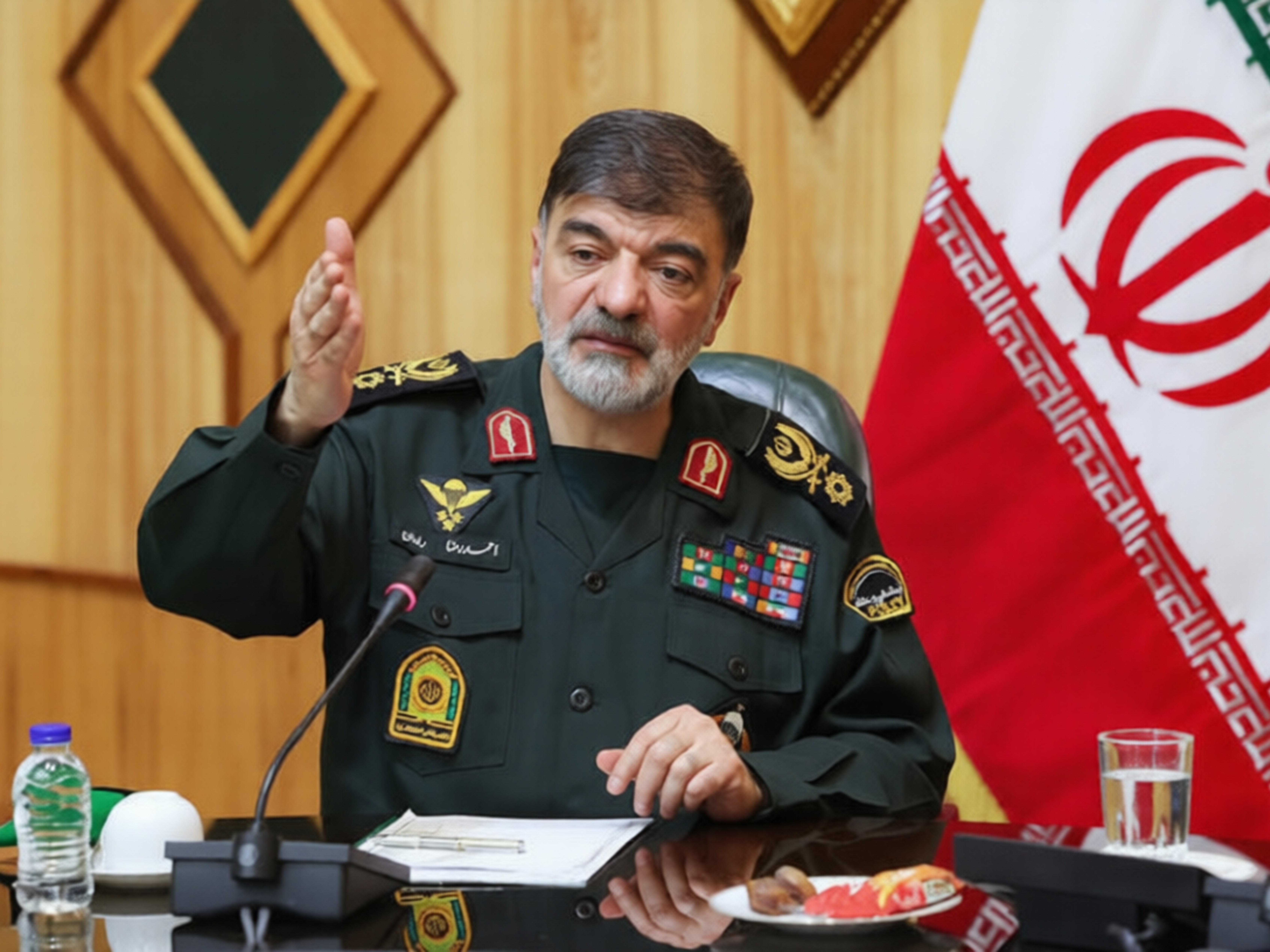
This investigation reconstructs the operational career of Ahmad Reza Radan, a senior security commander whose trajectory is inextricably linked with the most violent episodes of public suppression in recent Iranian history. From his early involvement in the security apparatus to his appointment as Commander of the Islamic Republic’s Law Enforcement Command (FARAJA) in 2022, Radan has personified a policy of ruthless, premeditated force against protest.
Based on extensive testimony and documented events, this report details how Radan evolved from an enforcer of social control to a central planner and executor of mass casualty operations, culminating in alleged atrocities. His career offers a case study in how the Islamic Republic’s security structure cultivates, rewards, and empowers figures willing to translate ideological imperatives into street-level brutality, operating with systemic impunity.
Ahmad Reza Radan’s biography is a blueprint for advancement within the Islamic Republic’s security institutions. Born in 1963 in Isfahan, he began his career in the early 1980s as a volunteer Basij militiaman, later joining the Islamic Revolutionary Guard Corps (IRGC) and serving during the Iran-Iraq War. This foundational period embedded him within the ideological and military core of the state. His post-war transfer to the national police force (NAJA) marked the start of a specialized path in domestic suppression.
Radan’s rise was built on deployments to regions where the state faced persistent ethnic or social unrest: Kurdistan, Sistan and Baluchestan, and Khorasan. In these provinces, he reportedly oversaw harsh crackdowns, widespread arrests, and systematic human rights violations, treating them as testing grounds for severe security policies. His operational ruthlessness reportedly earned him favor within the power hierarchy. In 2006, following the retirement of his predecessor, he was appointed Chief of Tehran’s Police, a role that propelled him to national prominence.
In Tehran, Radan was a chief executor of the controversial “Social Security Plan,” an initiative that extended police control over citizens’ personal lives through organized crackdowns on dress code violations, targeting of addicts and so-called “thugs,” and raids on shops, barbershops, photo studios, and private homes. During his command, pressure on women and youth intensified significantly, and the presence of morality patrols expanded. He publicly defended violent tactics, using derogatory language to dismiss critics. This period saw public humiliation of detainees, forced parades of arrested individuals through the streets, and numerous reports of deaths in police custody, cementing his reputation as a principal figure of repression and torture.
Radan’s command has been directly implicated in several of the Islamic Republic’s most notorious suppression campaigns. His role in the bloody aftermath of the 2009 presidential election protests stands out. Testimony and reports allege his direct involvement in torture leading to deaths at the Kahrizak detention center. Victims such as Mohsen Ruholamini, Mohammad Kamrani, Amir Javadifar, Ramin Ghebrahmani, and Ahmad Nejati are named among those who died under torture there, their names forever linked to Kahrizak and to Radan. He later stated he had no regrets about his actions during the “sedition” of 2009 and would do the same again.
After being replaced as Deputy Commander of NAJA in 2014, Radan was not sidelined but moved to head the Strategic Studies Center of FARAJA, a low-profile but influential think-tank where he remained for eight years. His return to the apex of power came in December 2022, amid nationwide protests following the death of Mahsa Jina Amini. Appointed by Supreme Leader Ali Khamenei to lead FARAJA, Radan assumed command as the state struggled to contain unrest. He immediately adopted a language of open threat, vowing no retreat and speaking of “making life difficult” and “stepping over corpses.”
Under his command, policies grew more severe. These included deploying smart technology to identify women opposing mandatory hijab, harsh crackdowns on student protests, and the implementation of operations like the “Nour Plan,” which led to waves of violent arrests, beatings, and mass vehicle confiscations. He dismissed videos showing the violent treatment of teenage girls as merely “unprofessional” conduct, blaming the victims. The case of Armita Geravand, a 16-year-old who fell into a coma after an encounter on the Tehran metro and later died, was added to the list of casualties during his command.
The most grave allegations against Radan concern the planning and execution of a mass killing during widespread protests in the December-January 2025-2026. According to accounts from within security apparatus circles, a critical meeting was convened in a closed session attended by Supreme Leader Khamenei and top officials, including judiciary figures, parliamentary speakers, and senior commanders like Radan and Mohammad Pakpour of the IRGC. The explicit agenda was preserving the system “at any cost.” Radan reportedly presented a dire assessment, warning that parts of the country were slipping from control and that without a massive intervention involving the IRGC ground forces and widespread lethal force, provincial capitals could fall and the system could collapse overnight. Khamenei is said to have issued the final order for a deadly crackdown.
To execute this, Radan, in coordination with IRGC and Basij commanders, devised a plan that addressed a critical weakness: widespread disobedience and unreliability among local police forces, especially in smaller cities where familial ties with communities made them unwilling to perpetrate extreme violence. His solution was twofold. First, he devised a scheme to deploy non-local police units to each city. Second, and more ominously, the plan allegedly involved deploying foreign, battle-hardened militias—reportedly from Lebanese Hezbollah, the Fatemiyoun Brigade (Afghan fighters), and Syrian mercenaries—to act as shock troops in western cities, Tehran, and Mashhad. These forces had no ties to the local population and were trained for such scenarios.
Testimony from security personnel describes Radan personally taking to the streets on the key nights of the operation. He is alleged to have moved between command points in an armored vehicle, positioned himself behind mounted machine guns (one account claims he fired over 300 rounds from one position), and held field briefings every 15 minutes to relay kill orders directly to commanders. Snipers were reportedly positioned on rooftops, and vehicles equipped with machine guns were deployed in streets. The weaponry used, as evidenced by spent shell casings documented by citizens, included heavy munitions typically used in warfare against fortified positions or aircraft, indicating a deliberate decision to inflict maximum casualties. Estimates from human rights groups outside Iran suggest a catastrophic death toll over those two days.
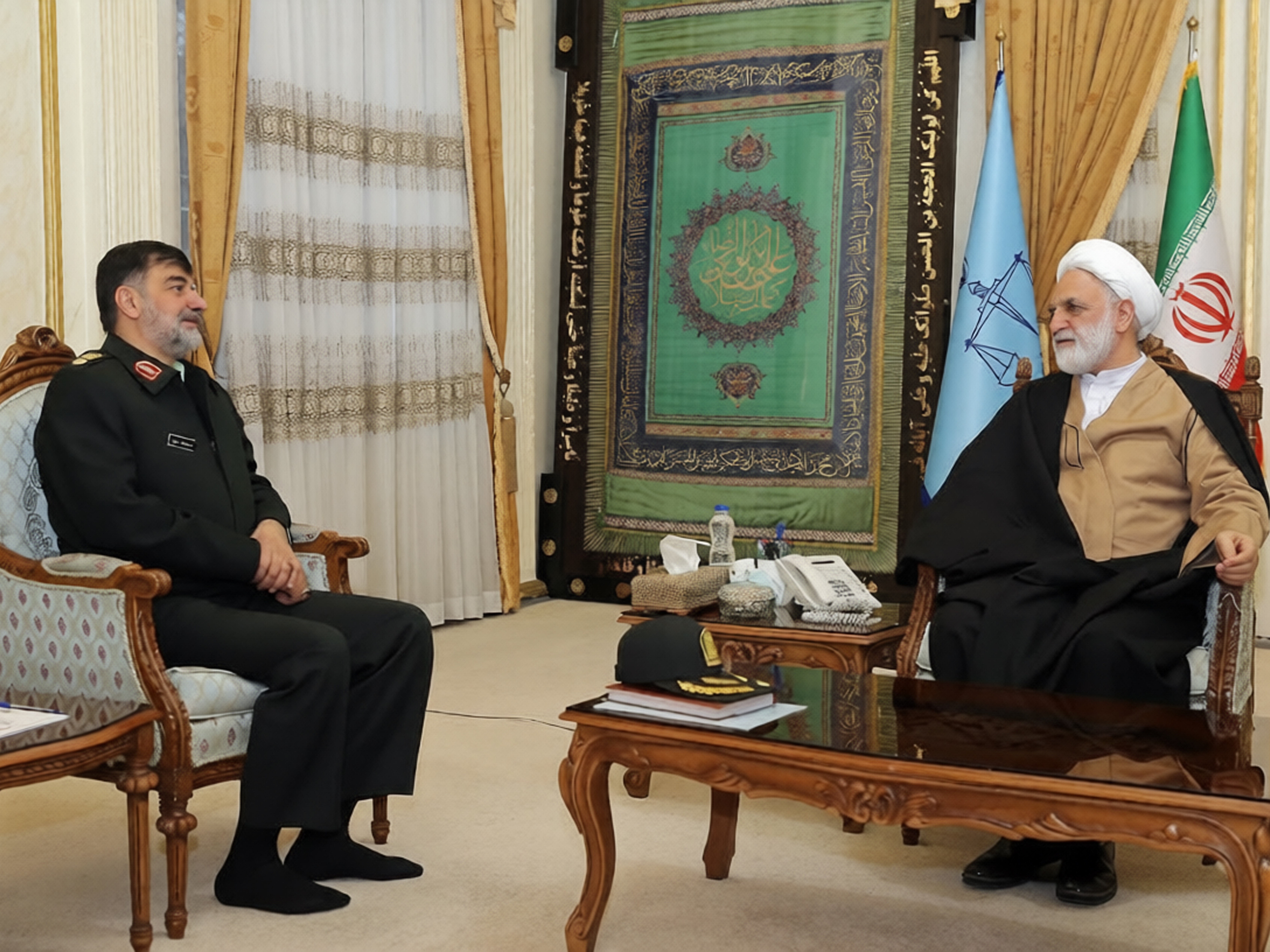
Following the alleged massacre, Radan appeared publicly, issuing a three-day ultimatum to “revolutionaries” to surrender themselves to the authorities, a blatant threat following an even more blatant crime. He continued to justify the violence, claiming protesters had killed each other with knives and at close range. His rhetoric and actions faced no internal sanction; instead, they exemplified the complete impunity granted to senior executors of state violence.
Radan’s career is not an aberration but a product of the Islamic Republic’s security governance model. His progression demonstrates how loyalty measured in willingness to employ unlimited violence against citizens is the paramount criterion for promotion. Each episode of severe repression, 2009, the social control campaigns, the 2025-2026 crackdown, served as a stepping stone, reinforcing his utility to the leadership. The system protects such figures through institutional solidarity, the absence of independent judiciary, and a narrative that frames all dissent as foreign-backed “sedition” requiring ruthless eradication.
The figure of Ahmad Reza Radan thus transcends the individual. He has become a symbol of a state logic that has institutionalized violence as its primary tool for survival. His repeated resurrection to higher command, especially during crises, sends a clear signal about the regime’s priorities and its perceived path to preservation. The investigation into his command reveals not just the actions of one man, but the operational blueprint of a political system that has chosen to govern through fear and bloodshed, systematically sacrificing its citizens to maintain its grip on power. The enduring impunity for such acts continues to define the relationship between the state and the people it claims to represent.