

Night of Fire: Inside the Planned Massacre That Shook Iran
An in depth investigation into a planned nationwide massacre in Iran and the chain of command.
|
Pars Barghandan
On the evening of 8 January 2026, Iran’s streets filled with one of the largest protest mobilisations in the country’s recent history, a two day eruption that many participants described as larger and more determined than any demonstration since the 2009 protests. The trigger was a public call by Reza Pahlavi for coordinated nationwide nightly protests, but the underlying fuel was weeks of spreading demonstrations that had evolved from economic grievances into an explicitly anti regime, pro monarchy movement.
Witness accounts and internal descriptions indicate that the leadership of the Islamic Republic interpreted this mobilisation as an existential threat and responded with a premeditated, centrally orchestrated decision to crush it at any cost, even at the price of “hundreds of thousands” of lives, ascribed to Ali Khamenei in a high level security meeting. According to these accounts, the Supreme Leader, the Supreme National Security Council, senior commanders of the security forces, and allied foreign militias together executed what many observers and medical networks now describe as one of the most lethal two day crackdowns of the 21st century, with estimates of more than 16,000 people killed and hundreds of thousands wounded.
The pattern that emerges from testimonies, videos and internal leaks is not of chaotic over reaction but of an organised mass killing: nationwide internet and communications blackout, deployment of domestic and foreign paramilitary units, widespread use of heavy automatic weapons against unarmed crowds, targeted killing of the wounded, forced disappearance of bodies, and deliberate destruction of evidence. This investigation reconstructs the sequence of events, the chains of command, and the on the ground methods used in cities from Tehran to Rasht, and examines what this operation reveals about the nature of power, violence and impunity inside the Islamic Republic.
By the evening of 8 January 2026, Iran had already been in turmoil for two weeks. What began as protests over economic hardship, led by bazaar workers and those hit hardest by inflation, had quickly spread from commercial districts to some of the country’s most deprived western and south western provinces and then across the national map. As participation widened, the tone shifted: slogans moved from bread and livelihood to openly anti regime chants and explicit calls for the return of the Pahlavi monarchy.
The first open public call by Reza Pahlavi to synchronise nightly protests on 8 and 9 January 2026 at 8 p.m., whether in the streets or from homes, acted as an accelerator for a mobilisation that was already under way. In his message he urged people to test the power of sheer numbers, arguing that overwhelming crowds could push back security forces and reduce the risk of repression, and he specifically called on hesitant citizens to join on the second night if they had stayed home on the first.
When the hour came, videos and reports from inside the country showed immense streams of people leaving their neighbourhoods and converging on main arteries without a single central square as the sole focus, a decentralised tactic that stretched security forces thin. Tehran saw simultaneous marches in the east (Narmak and Haft Hoz), west (Aryashahr, Boulevard Ferdows, Boulevard Kashani, Shahrak Azadi), north (around Meydan Ghods, Shariati, Qolhak, Qeytarieh, Vanak, Haft Tir) and south (Nazeeabad), while large crowds also poured into the streets of cities like Bandar Abbas, Shahriar, Karaj, Urmia, Mashhad, Tabriz, Isfahan, Ahvaz, Gorgan, Kermanshah, Ardabil, Yazd and Sanandaj.
The slogans crystallised a sense of a shared nationwide agenda. Chants in many cities were almost identical, revolving around “Javid Shah”, “This is the last battle” and assertions that the Pahlavi dynasty would return, repeated loudly and in unison rather than in scattered pockets, a synchrony that witnesses say was largely absent in earlier protest cycles. Participation cut across age groups and social strata, with families, elderly people and very young demonstrators present, and the atmosphere on the first night was reported as more charged with energy and confidence than with fear.
This scale and tone shocked not only observers but also the state’s own forces. In the early hours of the mobilisation, many security units appeared stunned and disoriented, unable to prioritise targets as protests erupted in dozens of locations simultaneously. In some areas they merely watched or moved cautiously at a distance. For a brief window, it appeared that the protesters’ belief that numbers could dilute repression might be borne out.
That window closed rapidly. Late on 8 January 2026, connectivity monitoring organisations began reporting a sharp decline in Iranians’ access to the global internet; by after midnight, the country had effectively gone dark, with mobile networks, domestic messaging services and even ATMs paralysed in many areas. Exiled Iranians trying to call relatives inside the country were met with pre recorded, nonsensical English messages, while reports emerged of military style jamming against Starlink satellite internet signals.
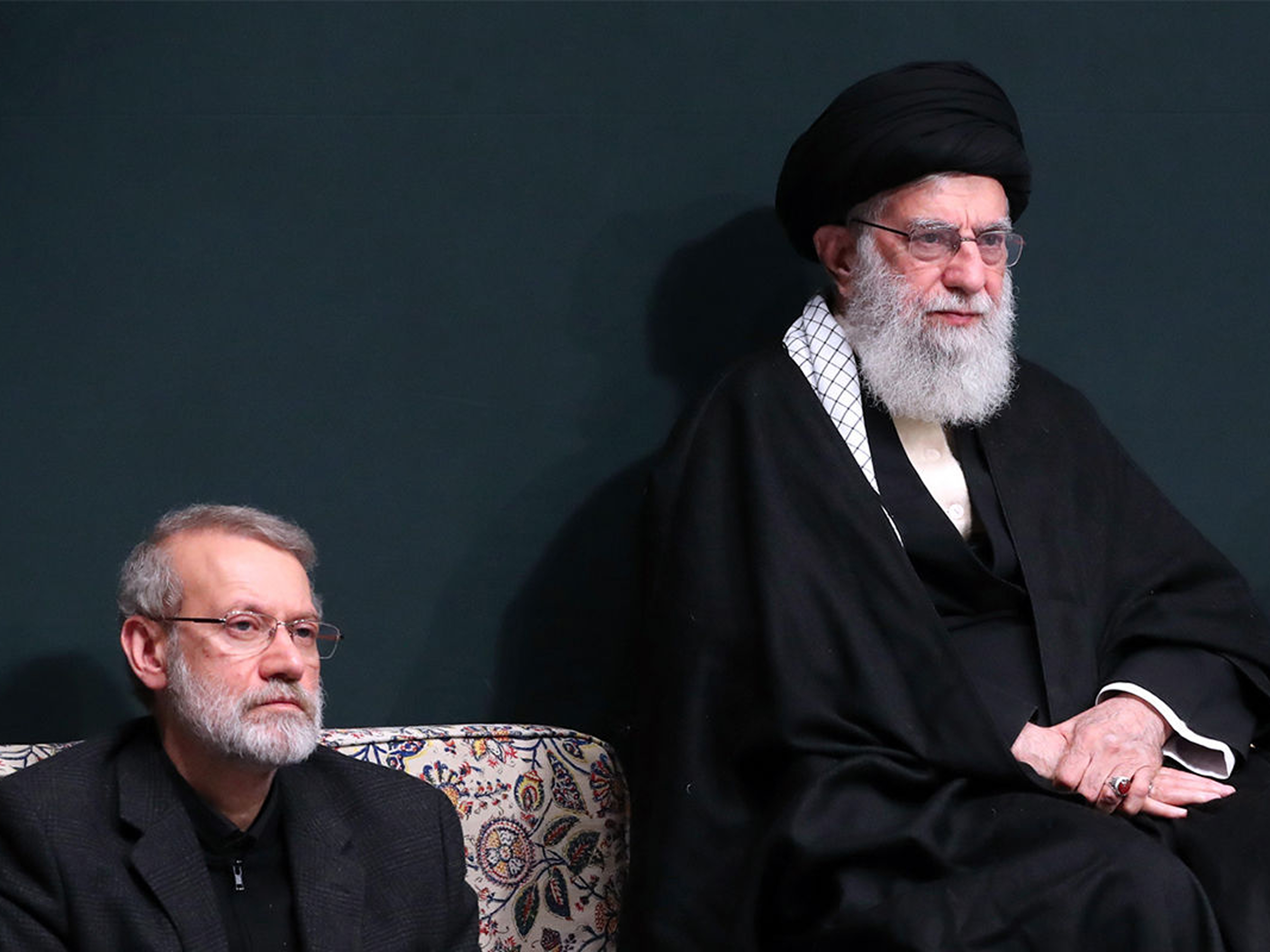
Inside the power structure, according to internal accounts, Ali Khamenei joined a virtual meeting of the Supreme National Security Council earlier that evening. Sources cited in these narratives say that he concluded the session by declaring that blood must be spilled to save the system, even if the death toll reached into the hundreds of thousands, and instructed Ali Larijani that security forces should abandon previous years’ pattern of predominantly aiming below the waist and instead “shoot from the waist up” so “no one would dare return to the streets”. In his reported remarks he invoked the early Islamic wars and the figure of the first Shia imam, implicitly likening his own role to that of a victorious warrior who must secure the faith through uncompromising violence.
The next day, in a public speech, Khamenei referred to protesters as a “bunch of saboteurs” destroying their own country’s buildings to please the United States, while framing the Islamic Republic itself as a project built with the blood of “hundreds of thousands of honourable people” that would not yield to “saboteurs”. This rhetoric functioned not merely as propaganda but as a second, open authorisation of lethal force ahead of the second night’s mobilisation.
Khamenei’s own relatives reinforce the picture of a leader unwilling to countenance retreat. His nephew, Mahmoud Moradkhani, a political activist based in France, told a French television network that, based on his personal knowledge of Khamenei, the leader would not back down and would pursue his path “until the last drop of blood”, and he described Khamenei as someone who believes his own narratives and fabrications to the point of seeing himself as the vehicle of divine speech. Khamenei himself had earlier claimed sometime between 21 March 2023 and 19 March 2024 that during a gathering with around twenty Revolutionary Guard commanders, “God Almighty was speaking through my tongue”, a statement that, for critics, illustrates a self perception that merges personal authority with unquestionable divine will.
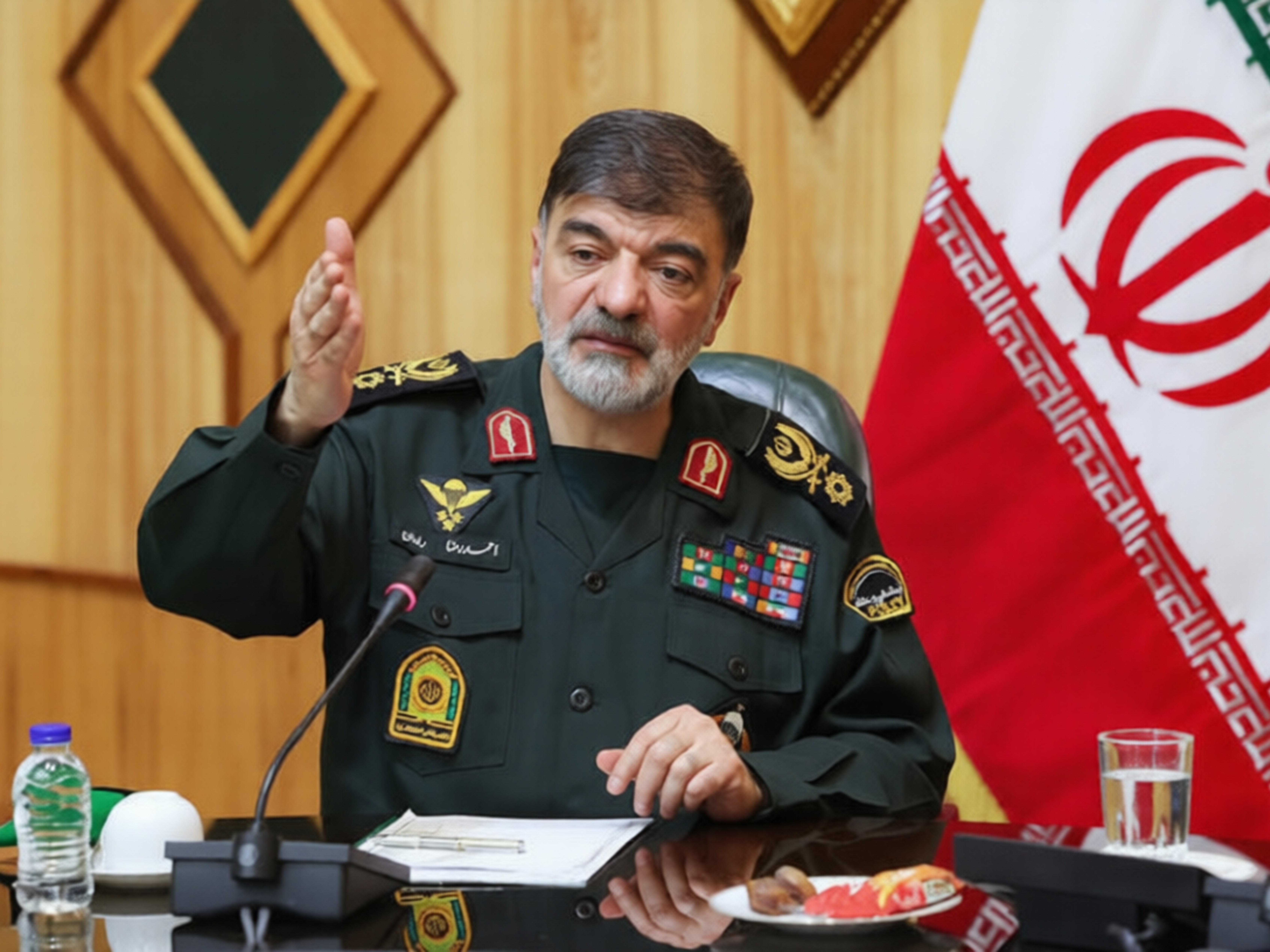
With this mindset and mandate, the security apparatus moved from confusion to a concentrated plan. The Supreme National Security Council, with Larijani in a key design role and coordination among senior figures such as Masoud Pezeshkian, Mohammad Bagher Ghalibaf and Gholam Hossein Mohseni Ejei, approved a framework that combined full information blackout, nationwide deployment of domestic units of police, Basij and Revolutionary Guard, and the use of allied foreign militias from Iraq, Syria, Lebanon and, in some reports, Afghanistan. Operational command in the field ran through the police chief Ahmad Reza Radan, Basij commander Gholamreza Soleimani and the structures connected to the Quds Force, under the overall military coordination of IRGC ground forces commander Mohammad Pakpour.
Public messaging moved in tandem. Intelligence agencies issued separate statements threatening citizens and warning families to keep their children off the streets, while a senior Revolutionary Guard associated figure, Hossein Yekta, appeared on state television to tell parents that if their children were injured or shot “by accident” they should not complain, effectively shifting responsibility for harm onto families and normalising the prospect of lethal force. He urged “Hezbollahi” and pious youth to fill mosques and bases that night, framing mass mobilisation of pro regime cadres as a religious duty.
Once the blackout was in place, the character of the operation shifted sharply. Reports and footage that did manage to leave the country, either before full disconnection or through limited remaining channels, show a scale and intensity of violence that witnesses and expert networks later classified as a “planned massacre”.
Across numerous cities, security forces and allied militias used automatic military grade weapons, including assault rifles and mounted machine guns, against unarmed crowds. Witnesses describe not sporadic warning shots but sustained barrages, with the sound of dozens of rounds fired in quick succession, turning public streets into firing ranges where retreat or organised medical aid became almost impossible. Some firing positions were not at street level: accounts mention shots from rooftops of government offices, mosques and administrative buildings, creating overlapping fields of fire that trapped crowds in open spaces.
The Islamic Republic’s media strategy relied on criminalisation to retroactively justify lethal force. State broadcasting’s Telegram channel was reportedly the only domestic outlet issuing real time bulletins during the killings, pushing statements that labelled the demonstrators as “terrorists” linked to the United States and Israel and framed the repression as counter terrorism. According to internal descriptions, forces were instructed to set fire deliberately to trees, cars and private property in order to film the scenes and present them as proof of rioters’ violence.
The violence extended beyond the streets. Doctors and medical networks report that in some locations security forces stormed hospitals and clinics, interrupting treatment of the wounded and, in certain documented cases, shooting injured protesters at close range within medical facilities or ambulances. Some victims who still had medical equipment attached to their bodies, such as ventilator tubes, were later photographed among the dead with bullet wounds to the head, suggesting that they were executed rather than dying of their original injuries.
Testimonies also describe a practice of placing living but wounded protesters into body bags and dispatching them to morgues as “corpses”, blurring the line between abandonment and direct killing. This mixture of denial of care and targeted killing pushed the operation beyond the usual boundaries of crowd control, into the realm of systematic extermination of perceived enemies.
The subsequent treatment of bodies and families reveals an organised attempt at erasure. In some cities, security forces allegedly removed bodies en masse, buried them in undisclosed locations, or burned parts of markets and residential areas to eliminate traces of mass death. Families who tried to retrieve the remains of their relatives were, in multiple accounts, told that their loved ones were in custody even when no record of detention existed, or were pressured to pay large sums – 800 million to one billion tomans – and sign statements portraying their dead children as regime supporters killed by “terrorists” in order to receive a body.
Others, fearing that corpses would be confiscated and used as leverage, resorted to quiet, improvised burials in home courtyards and garden plots, creating a landscape of unmarked graves and hidden mourning. The combination of enforced disappearances, coerced narratives and financial extortion constructed an ecosystem of impunity in which the state not only killed but attempted to dictate the meaning of death.
While brutal repression was reported across more than 300 cities, testimonies identify Rasht as one of the most extreme examples, where the line between “crackdown” and “massacre” effectively disappeared. Over two days, particularly around Meydan Shahrdari and Sabz Meydan, protesters assembled in such numbers that the crowd on both sides of main streets merged, giving demonstrators full control of the space for a time. Security units initially tried conventional dispersal tactics, including anti riot police and Basij units, but were forced to retreat under the pressure of the crowd.
Witnesses say slogans were emphatically in support of Reza Pahlavi and against the regime, yet the atmosphere remained non violent despite earlier attempts at pressure. Then, the character of the security presence changed. Black pickup trucks without consistent uniforms arrived from the north of the area. Some men wore military fatigues, others plain clothes, and some had no visible insignia at all. At first, people heard gunfire from indeterminate directions, with no obvious shooters in sight, leading many to assume shots were fired in the air.
As casualties mounted, individuals with military experience realised that the vehicles were equipped with mounted machine guns, firing from elevated positions into dense crowds. Panic spread as people tried to flee southward towards the bazaar’s narrow alleys and passageways, expecting these bottlenecks to provide cover and escape routes. But as crowds poured into the bazaar, more of the same pickup trucks appeared at other exits and choke points, effectively turning the network of narrow lanes into kill zones sealed from multiple sides.
According to eyewitness testimony, security forces then set fires at strategic points within the bazaar, closing off escape routes and driving people into tighter spaces under worsening conditions of smoke and heat. Those trapped inside faced a brutal choice: stay in the burning interior and risk suffocation or immolation, or emerge through flames and smoke into open areas covered by machine guns. Some who raised their hands or put them on their heads in a universal gesture of surrender were shot almost immediately upon appearing, despite being unarmed and clearly signalling submission.
Witnesses estimate that in certain stretches of the bazaar and surrounding streets, bodies piled up in such numbers that the dead formed literal layers on the ground. Many of the victims were very young, with numerous cases of teenagers and people under 30 among the dead, but older participants, including those around 60 or 65 years old, were also killed. Testimonies from Rasht emphasise that protesters carried no weapons, not even sticks or knives, while security forces used automatic rifles such as G3 and Kalashnikovs, and in some instances fired systematically rather than sporadically.
In the aftermath, security forces allegedly returned with transport vans to remove large numbers of bodies, taking them to unknown locations. Some families reported never finding their missing relatives despite visits to IRGC intelligence, police, and forensic centres, with each authority denying custody or knowledge. Others speak of authorities secretly washing and burying bodies themselves to keep the official death toll low, while simultaneously pursuing families, pressuring them, and in some cases threatening or abusing those who asked questions.
Locals from Rasht interviewed in these accounts believe that at least two to three thousand people died in their city alone, even as they acknowledge that many deaths will never appear in any official or aggregated tally, because relatives were too frightened to report them or because entire cases were concealed. From their perspective, the two nights were marked not by arrests and subsequent legal proceedings, but by straightforward killing, with security forces primarily focused on shooting rather than detaining.
As the immediate shooting subsided, the scale of the disaster slowly became visible through fragments of video and testimony. On Sunday, the first clandestine footage from the Kahrizak morgue emerged, filmed by a citizen who had infiltrated the facility. The images, compared by viewers to post apocalyptic scenes, show rows of bodies in plastic bags laid directly on the floor, tags and markings indicating overwhelming volume, and families moving through the space in shock, trying to identify their dead. Subsequent videos suggested that the number of bodies was in the thousands, far beyond any previous crackdowns.
A network of Iranian doctors estimated that over 16 000 people were killed in the two day crackdown, with at least 330 000 injured. The network stressed that a large proportion of the dead were under 30, and that among the victims were children and pregnant women, underlining the indiscriminate nature of the fire. The network’s assessment that the bulk of the killing took place in a concentrated period between Friday, 9 January 2026 and Saturday night, 10 January 2026 highlights how closely the deaths align with the period of the total information blackout.
In many cities, residents recall days of surreal quiet after the shooting stopped. Streets that had been filled with hundreds of thousands of people became almost empty, not because the population had reconciled itself to the state’s narrative but because terror, grief and the practical work of searching for missing relatives pushed people back into homes and private networks. Mothers cradling their children’s bodies in public, late night secret burials, and whispered exchanges about who had disappeared became recurring images.
Meanwhile, security forces turned to retrospective control of the narrative and continued repression. Beginning on Saturday and intensifying thereafter, units went door to door, reviewing CCTV footage and other recordings in search of participants. Entire neighbourhoods effectively came under a form of undeclared martial law, with residents reporting that the atmosphere felt like a permanent state of siege. The absence of public Friday prayers coverage from Tehran on 9 January 2026, unusual for a regime that uses such events for propaganda, suggests disruptions even in ritual political staging.
Internationally, the events drew strong condemnation and pledges of support, at least rhetorically. Then US President Donald Trump publicly warned that Washington was “watching very closely” and declared that if the regime started “killing people like before” the United States would strike “very hard, exactly where it hurts”, while explicitly praising the protesters and stating that in his view they were taking control of some cities. His remarks contrasted implicitly with Barack Obama’s perceived reluctance to support the 2009 protests, a comparison he drew himself. Yet despite these words, no immediate external intervention occurred, and inside Iran the blackout limited real time foreign awareness.
For many Iranians, the events of January 2026 crystallised a sense that the relationship between state and society had crossed a point of no return. The sheer scale of bloodshed, the age profile of the victims, and the cold procedural quality of the killing and cover up left a lasting scar on the collective psyche. Protesters began to describe the mobilisation as “the last battle”, not in the sense that resistance would cease, but as a symbolic framing of an irreversible rupture between rulers and ruled.
Reconstructing the chain of command reveals an operation planned and executed from the very top of the state’s hierarchy. At the apex, Ali Khamenei provided the political and religious justification and, according to multiple internal accounts, personally authorised the use of extreme force with full awareness that casualty numbers could be enormous. His public statements before and after the killings, his earlier claim that “God spoke through my tongue”, and his long standing identification of himself with historic religious warriors all form part of an ideological apparatus that casts mass violence as both necessary and sacralised.
Immediately below him, the heads of the three branches of power – including figures such as Pezeshkian, Ghalibaf and Ejei – accepted and operationalised the decision, according to these narratives. The Supreme National Security Council, with Ali Larijani in a central strategic role, designed the overall plan: nationwide blackout, coordinated security deployments, and a legal political frame that classified protesters as foreign backed saboteurs and terrorists. On the military side, IRGC ground forces commander Mohammad Pakpour oversaw coordination between IRGC units, Basij militias, and police forces, while Quds Force associated structures facilitated the integration of foreign paramilitaries.
Operationally, the police and Basij, under leaders like Ahmad Reza Radan and Gholamreza Soleimani, were the main domestic executors in the streets, augmented by regular army elements in some areas and reinforced by thousands of non Iranian fighters from the self described “axis of resistance”. Reports point to contingents from Iraqi, Lebanese and Syrian militias, and in some locations units of the Afghan Fatemiyoun brigade, being embedded in key flashpoints such as Mashhad.
The judicial and intelligence apparatuses provided the mechanisms of impunity. Intelligence agencies issued threats to dissuade participation, later pursued families and survivors, and denied the existence of detainees or bodies. Prosecutors and courts did not investigate the killings but instead, where they engaged at all, focused on coercing families into accepting narratives that branded their dead as terrorists or foreign agents. Financial extortion for access to bodies, harassment of relatives, and pressure to hold quiet, controlled funerals were part of a wider strategy to prevent the emergence of public martyrs and to keep the true scale of casualties opaque.
This architecture of impunity is reinforced by the leader’s personal positioning. According to his nephew’s account, Khamenei has proven willing to leave the capital during moments of external threat, such as during a 12 day war with Israel, reportedly spending time in Mashhad’s shrine rather than remaining in Tehran. Critics interpret this as emblematic of a leadership that both claims divine authority and avoids personal physical risk, while allowing subordinates to absorb any potential legal or political consequences for mass violence. So far, however, the internal system has shown no sign of holding any senior figure accountable.
Beyond the numbers, the January 2026 massacre’s most enduring impact lies in the stories of those who vanished in its shadows. Young people who left home on Thursday or Friday night and never returned, families who went from police stations to intelligence offices to forensics to no avail, parents who were told “your child is not here” at every door and still have no grave to visit. Children and teenagers whose last moments were spent in alleys filled with smoke and bullets, mothers whose final images of their sons or daughters came in shaky phone videos.
The hidden burials in courtyards and gardens, the improvised grave markers, the quiet gatherings around patches of earth that officially do not exist, all contribute to a new layer of what many Iranians already call the country’s “secret cemeteries” of political dead. Social trust erodes when neighbours are unsure who may inform, when families fear that even mourning could attract repression, and when everyone knows that the law protects the shooters rather than the shot.
For the Islamic Republic, the operation may have produced short term control of the streets, but at the price of stripping away remaining illusions about reformability. When a state orders the use of mounted machine guns on surrendering civilians, storms hospitals to finish off the wounded, and treats corpses as bargaining chips, it signals that its core survival strategy rests on fear rather than consent. Even for some who once believed in the possibility of gradual change, the events of January 2026 function as a definitive demonstration that violence is not an aberration but an integral tool of governance.
At a broader level, the massacre positions Iran within a grim global canon of state crimes. Comparisons drawn in testimonies to Saddam Hussein, Bashar al Assad and Muammar Gaddafi are not rhetorical flourishes but attempts to situate the scale and intent of the killings within widely recognised patterns of atrocity. Some internal commentators argue that, in terms of the concentration of killing within a short timeframe and its nationwide scope, the January 2026 events surpass many previous episodes of Middle Eastern state repression.
Yet history suggests that such operations rarely close the book on dissent. Instead, they create a long lasting demand for accountability. The memories of those two nights, the names of the cities and squares, the stories of Rasht’s bazaar and Kahrizak’s morgue, become parts of a collective ledger that future legal and political processes may one day revisit. For now, the architecture of power that ordered and executed the massacre remains intact and unrepentant, convinced that it can rule through fear indefinitely.
The investigation of these events, however incomplete, already makes one point clear: what happened in January 2026 was not a spontaneous clash between angry crowds and panicked police, but a deliberate, centrally organised crime against a nation’s citizens. The details preserved in testimonies, videos and medical records ensure that the operation will not be remembered solely through the regime’s narrative. In the long run, it is these records, and the refusal of survivors and families to forget, that will shape how this chapter is judged by history and, eventually, by law.