Summary
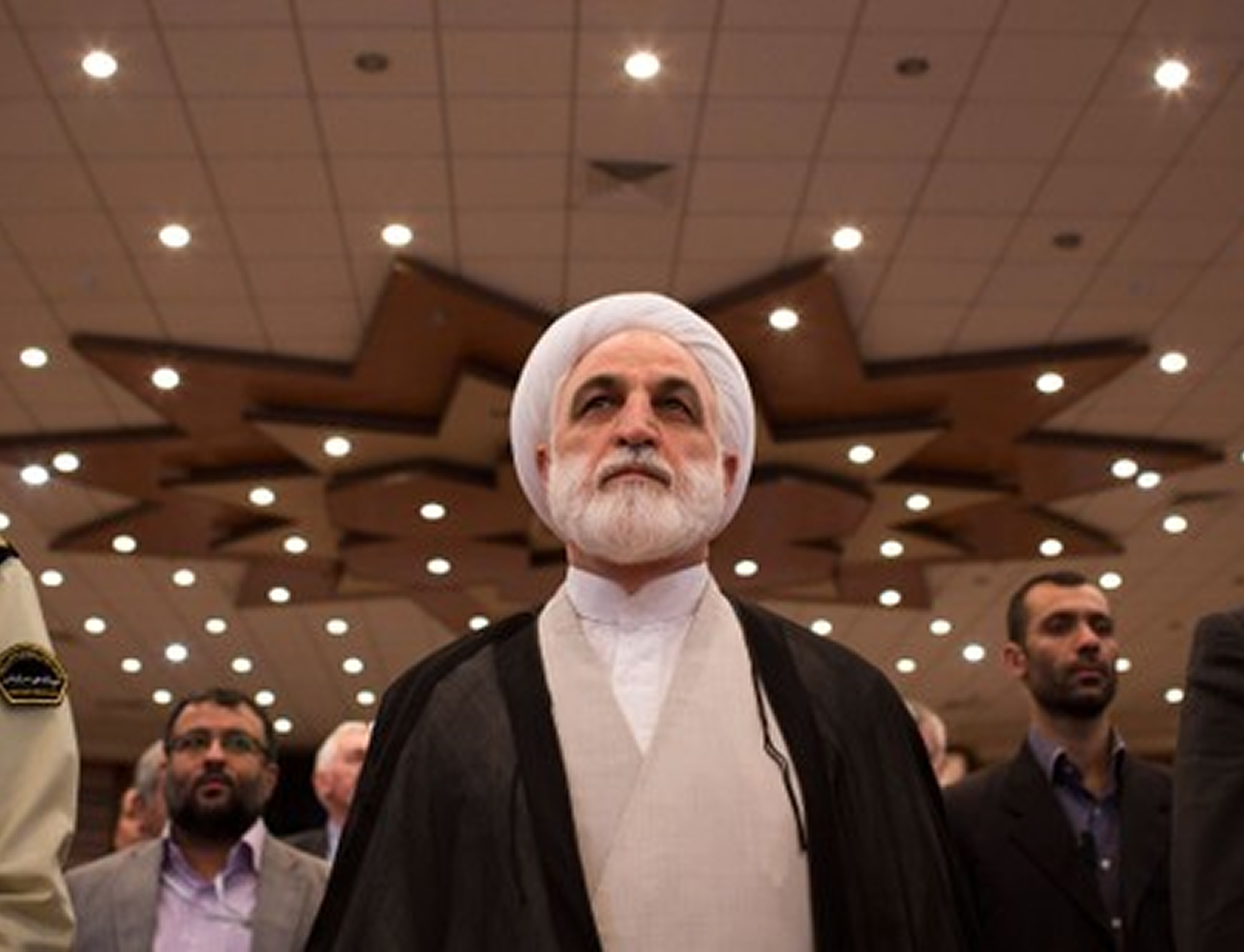
For over forty years, Gholam-Hossein Mohseni-Ejei has been the Islamic Republic’s ultimate insider, a figure whose career arc maps directly onto the regime’s evolution from revolutionary chaos to institutionalized repression. More than a judge or a prosecutor, Ejei has functioned as a specialized operative: a fixer for the security state, a shield for the powerful, and a sword for dissidents. His trajectory from a provincial seminary student to the head of the judiciary is not a story of legal scholarship, but of unwavering loyalty to the supreme leader and a chilling aptitude for converting political violence into judicial process. This investigation reconstructs his path, detailing his role in the execution of political prisoners, the manipulation of high-profile corruption cases to protect regime insiders, the brutal suppression of protest movements, and the creation of a legal framework where the concept of justice is subordinate to the demands of the state.
Origins and Rise: The Making of a Security Judge
Ejei’s ascent is rooted in the network of the Haqqani School in Qom, an institution that served as a crucible for the Islamic Republic’s security and judicial elites. Born in 1956 to a farming family in Isfahan, he entered the seminary at 16 and later moved to Qom, studying alongside figures who would become pillars of the intelligence and judicial apparatus. This early environment, steeped in a fusion of religious authority and revolutionary zeal, provided him with a distinct worldview and a powerful set of patrons.
His professional life began not in a courtroom, but in the revolutionary committees and the Ministry of Information (MOIS). His big break came with the investigation into the Mehdi Hashemi affair in the mid-1980s. Tasked with interrogating a key figure whose actions had created a rift between the newly installed Supreme Leader, Ali Khamenei, and Grand Ayatollah Hossein Ali Montazeri, Ejei secured a televised confession. The case, which ultimately led to Montazeri’s political marginalization, was a masterclass in using the judiciary for high-stakes political elimination. Ejei, then just 30, proved his value to the inner circle. His role in the critical 1989 campaign to gather clerical signatures affirming Khamenei’s religious authority further cemented his position as a trusted and indispensable operative. This period also implicates him in one of the regime’s darkest chapters: the mass execution of political prisoners in 1988, where he is alleged to have played a significant role within the ministry in carrying out the death sentences.
Methods and Mechanisms: The Courtroom as an Extension of the Security Apparatus
Ejei’s genius lies in his ability to wield the law not as an impartial standard, but as a flexible instrument of state power. He has perfected two complementary roles: the public scourge of designated enemies and the discreet protector of the system's own. His career is a catalogue of how the judiciary can be weaponized.
His handling of the high-profile 1990s corruption case involving Morteza Rafiqdust, brother of a powerful Revolutionary Guard founder, is a classic example. While a low-level bank employee, Fazel Khodadad, was swiftly tried, convicted, and executed, Rafiqdust received a light sentence and was quietly freed after a few years. The public narrative of a "fight against corruption" was maintained, while a regime insider was granted impunity. This pattern of selective justice was repeated in the 3-billion-dollar embezzlement case involving Mahmoudreza Khavari. While the primary defendant was hastily executed, Khavari, the bank CEO, fled the country. Whispers persist that Ejei’s own brother-in-law, acting as Khavari’s lawyer, facilitated the escape, even as Ejei publicly called for his return.
His style extends beyond legal maneuvering. The 2003 attack on journalist Isa Saharkhiz during a press oversight meeting, where Ejei reportedly threw a sugar bowl and bit him, became a symbolic moment. It laid bare the physical violence underpinning his authority, a fury that would later manifest in courtrooms. During the 1999 trial of Tehran mayor Gholamhossein Karbaschi, Ejei’s conduct was marked by explosive anger, silencing witnesses and defendants who attempted to describe their treatment in detention. For Ejei, the court is not a place for deliberation but for delivering a verdict pre-ordained by the security establishment. His infamous 2017 incident of whistling at a student protest at Sharif University, and his subsequent mocking of critics, revealed a contempt for dissent that is central to his public persona.
Corruption and Impunity: The Inner Circle’s Shield
While projecting an image of an anti-corruption crusader, Ejei’s career has been consistently defined by his role in insulating the powerful from accountability. The 1995 Bank Saderat case was merely an early template. Later, he was tasked with managing the fallout from scandals involving the family of Sadegh Larijani, a former judiciary chief. When Saeed Mortazavi, a notorious prosecutor and Larijani ally, was implicated in the death of Zahra Kazemi and later in massive corruption, Ejei and Ebrahim Raisi formed a committee to whitewash him. When the Larijani brothers themselves faced corruption allegations, Ejei intervened, ensuring the cases were closed without charges against senior officials.
His involvement in the Babak Zanjani case further illustrates this duality. While publicly demanding Zanjani’s assets be seized, he simultaneously blocked others from investigating and suggested the government was at fault. Zanjani, convicted of massive oil-related fraud, was eventually pardoned by the Supreme Leader and released, reportedly free to resume business. The consistent outcome, from financial crimes to human rights abuses, is that those connected to the system are protected, while expendable figures are sacrificed to maintain a facade of justice. This network of protection extends to his own family; his son and nephew were named in a major police force corruption case in 2015, yet never faced charges. Allegations, including a lawsuit in Canada claiming a $3 million bribe was paid to Ejei for freedom, remain part of his public record, though officially denied.
From the Green Movement to the "Persian Gulf Lion" Uprising
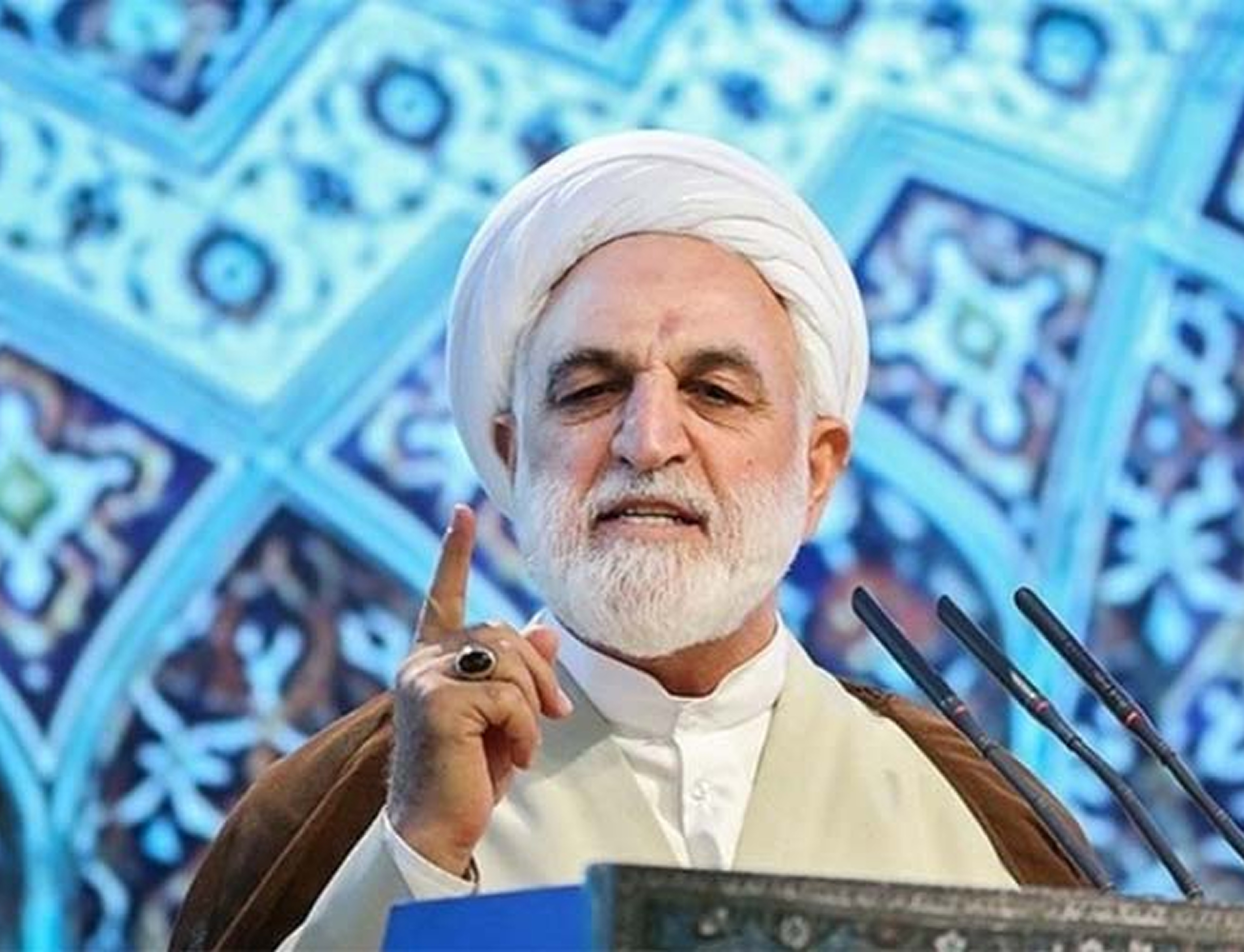
Ejei’s true legacy, however, is written not in case files but in the lives he has helped extinguish and the suffering he has authorized. As intelligence minister during the 2009 Green Movement protests, he was directly responsible for the security forces that killed and tortured demonstrators, a role that earned him sanctions from the United States for "gross violations of human rights." He later led the judicial panel that dismissed credible allegations of rape in detention centers, a decision that cemented his status as a primary enforcer of the post-election crackdown.
His role intensified with each successive wave of protest. During the 2019 fuel protests, as the regime’s deadliest crackdown in decades unfolded, Ejei was the number-two man in the judiciary, overseeing the trials that handed down long sentences and executions in the aftermath. In 2022, as head of the judiciary during the Woman, Life, Freedom uprising, he became the public face of judicial vengeance. He labeled protesters "fools" and agents of the enemy, praised judges who issued swift verdicts, and presided over a system that rushed young men like Mohsen Shekari and Majidreza Rahnavard to the gallows in show trials that lasted minutes.
The pattern reached its apotheosis in the January 2026 uprising, which saw the return of the "Shir o Khorshid" (Lion and Sun) symbol to the streets. With the regime shaken, Ejei emerged as the coordinator of the post-massacre phase. His statements became more explicit: with foreign enemies openly supporting the protests, there would be "no leniency." He ordered prosecutors to act with "no mercy," and devised new punishments, ordering protesters to pay financial restitution for damages, leading to the seizure of assets and the closure of businesses belonging to those who had joined strikes. He personally assured the Supreme Leader that detainees would be made an "example for generations." In this role, he is the architect of the judicial terror that follows the bullet, the man who transforms a street massacre into a permanent legal warning.
Systemic Meaning: The Man Who Made Murder a Policy
Gholam-Hossein Mohseni-Ejei is more than a senior official; he is a living embodiment of the Islamic Republic’s core principle: that power is absolute and accountable to no one. His career demonstrates that the regime’s judiciary is not a separate branch of government, but an integrated weapon of the security state. Its purpose is to sanctify the state's violence, to provide legal cover for its crimes, and to ensure that while the foot soldiers of dissent face the gallows, the architects of repression live in palaces.
The transcript reveals a man who, in his own words, believes that swift punishment is "the essence of justice." This is the justice of a mafia don, not a magistrate. It is a system designed to create a ledger of fear so profound that it deters not just action, but even the thought of opposition. Yet, for all its power, the system Ejei serves is built on a foundation of sand. Each victim creates a family of mourners. Each execution adds a name to a growing list of unavenged dead. The article's closing observation is not mere rhetoric but a statement of historical fact: the blood of the thousands he has helped condemn has a price. Ejei, like the system he represents, cannot escape the judgment of history. He has built a career on silencing others, but the silence he has created is not an end; it is merely the pause before an inevitable reckoning.