

When Hospitals Become Battlegrounds: Iran's Assault on the Wounded in Ilam
Islamic Republic forces storm medical facility, attack staff and patients in brutal crackdown.
|
Pars Barghandan
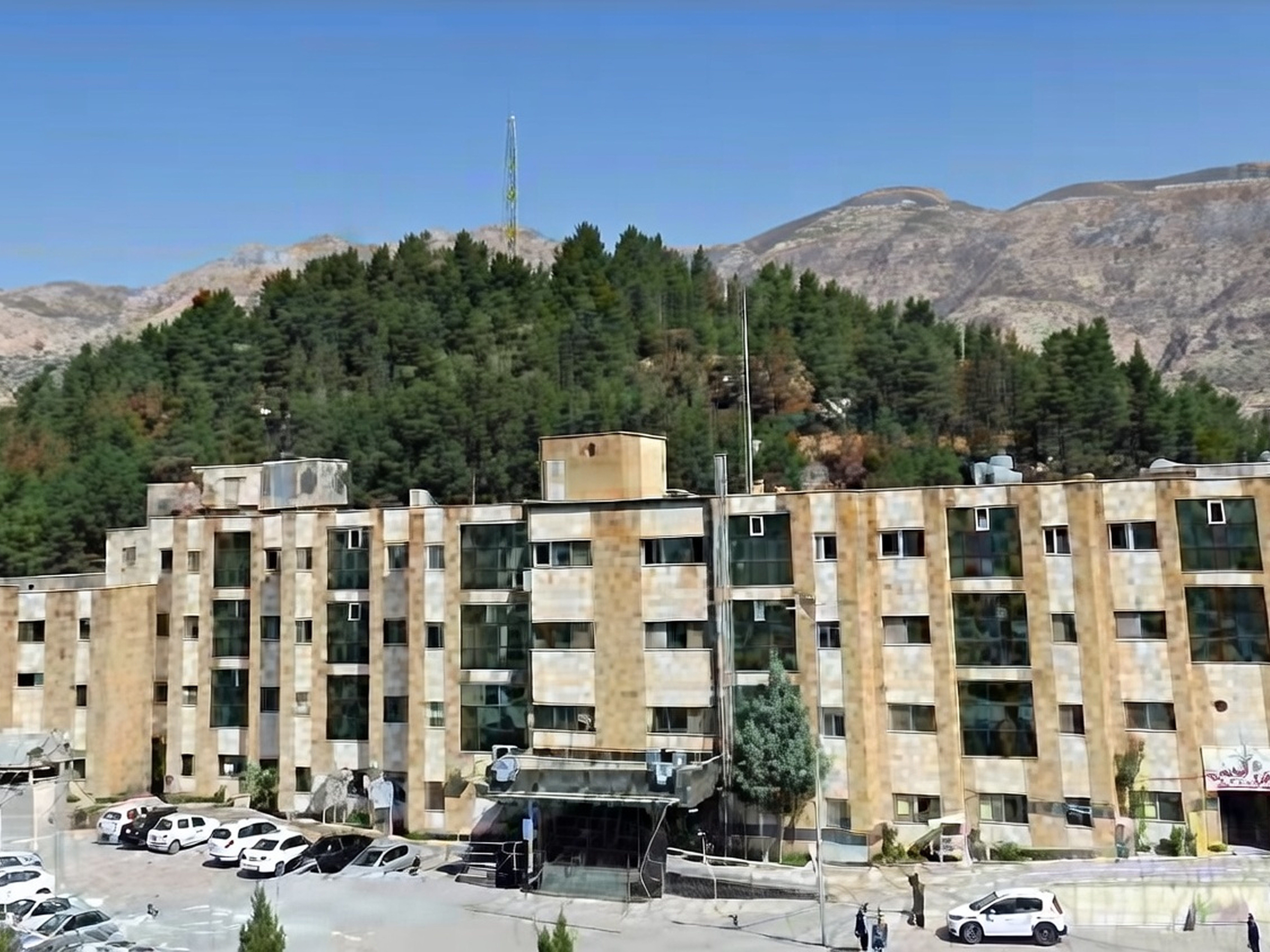
In the first days of January 2026, security forces of the Islamic Republic carried out one of the most brazen violations of medical neutrality in the current wave of nationwide protests. After Revolutionary Guard troops opened fire on unarmed demonstrators in the Kurdish town of Malekshahi in western Iran, killing at least seven people and wounding dozens more, special forces laid siege to Imam Khomeini Hospital in the provincial capital of Ilam, where the injured had been taken for treatment. Over two nights, security personnel surrounded the facility, deployed tear gas inside patient wards, smashed entrance doors, beat medical staff and family members with batons, and attempted to arrest wounded protesters and seize the bodies of those killed. The assault on a functioning hospital drew swift international condemnation, with Amnesty International and the United States Department of State labeling the actions a violation of international law and a crime against humanity. Yet the incident represents far more than an isolated abuse. It encapsulates the systematic methods the Islamic Republic employs to suppress dissent, the lengths to which it will go to erase evidence of its own violence, and the hypocrisy of a system that condemns abroad what it practices with impunity at home.
The unrest that engulfed Iran beginning in late December 2025 did not emerge in a vacuum. For months, ordinary Iranians had watched their purchasing power evaporate as the national currency, the rial, collapsed to record lows, falling below 144,000 to the dollar. Inflation ravaged household budgets. The cost of basic goods spiraled beyond the reach of working families. When shopkeepers in Tehran's historic Grand Bazaar, traditionally a conservative base of regime support, shuttered their stores on 28 December, the symbolic weight was unmistakable. The bazaar is often described as the economic heart of the capital, and for its merchants to close shop in protest signaled that the breaking point had been reached.
Within days, the demonstrations spread from Tehran to cities large and small across all 31 provinces. What began as anger over economic mismanagement rapidly transformed into something more fundamental. Crowds no longer confined their grievances to the price of bread or the exchange rate. In the streets, protesters openly called for the overthrow of the Islamic Republic itself. They invoked the name of the Pahlavi dynasty, chanting support for Reza Pahlavi, the eldest son of the deposed Shah, in a direct repudiation of more than four decades of clerical rule. Videos circulated on social media showed demonstrators shouting, "Long live Reza Shah II," and "This is the last message: Pahlavi is returning." For a regime that has invested enormous resources in erasing the memory of the pre-revolutionary monarchy, these slogans represented an existential challenge.
The authorities recognized the threat. What followed was a coordinated crackdown marked by extraordinary violence. Security forces deployed live ammunition against largely unarmed crowds, and casualty figures mounted rapidly. By early January, human rights organizations documented dozens of deaths, with local sources and medical personnel reporting far higher tolls. Within two weeks, estimates ranged from hundreds to several thousand killed, though the lack of official transparency and systematic obstruction of information made verification difficult. Among the bloodiest episodes in the initial phase of the crackdown was the incident in Malekshahi, a predominantly Feyli Kurdish town in Ilam Province, where the collision between popular anger and state repression produced a massacre that the regime then sought to cover up by assaulting the hospital treating the survivors.
Malekshahi, a town of approximately 21,000 residents in western Iran near the border with Iraq, occupies a precarious position in the country's ethnic and economic landscape. The population is largely Feyli Kurdish, a minority group with a history of marginalization and resistance to central authority. Economic opportunities are scarce. Agriculture and livestock herding provide livelihoods for some, but chronic unemployment has driven many young men into the ranks of the military and security services, creating deep social fissures within families and communities. The region carries historical resonance as well. In 1929, the Poshtkuh uprising led by Shah Mohammad Yari Malekshahi challenged the rule of Reza Shah, an early episode of tension between Tehran's centralizing ambitions and the autonomy of tribal structures in the west. Nearly a century later, that legacy of defiance persisted.
Four days before the scheduled protest, authorities moved to preempt the gathering. Intelligence officers detained three local youths and subjected them to pressure, demanding they publicly call off the demonstration. The young men refused to cancel the event outright but agreed to ensure it remained peaceful, pledging that no harsh slogans would be shouted and no violence initiated. In a gesture that reflected both communal solidarity and a desperate hope that restraint might avert bloodshed, the people of Malekshahi honored this pledge. On the afternoon of 3 January, a large crowd assembled peacefully in the main square and began to march toward the governor's office.
The route took the demonstrators past a two-story building housing a base of the Basij, the paramilitary volunteer force operating under the command of the Islamic Revolutionary Guard Corps. As the marchers passed, some threw stones at the structure, an act of defiance but hardly a military threat. Minutes later, Revolutionary Guard personnel appeared on the rooftop. Without warning, they opened fire directly into the crowd. Eyewitnesses reported that many demonstrators initially believed the shots were fired into the air, a common intimidation tactic. The illusion shattered when bodies began to fall.
The weapon of choice was the Kalashnikov rifle, a military-grade firearm used not to disperse but to kill. According to testimony gathered by human rights organizations, the shooters aimed deliberately at protesters, and the toll was immediate and devastating. At least three individuals were killed instantly: Reza Azimzadeh, Fares Aghamohammadi (also known as Mohsen), and Mehdi Emamipour. Two others, Latif Karimi and Mohammad Maqaddasi (known locally as Bazneh), also died at the scene or shortly thereafter. Dozens more were wounded, some critically. One of the injured, Ali Karimi Bavolaki, succumbed to his wounds within hours. Another victim, Mohammad Reza Karami, a sixteen-year-old boy, was rushed to Imam Khomeini Hospital in the city of Ilam. He would survive for four days in the intensive care unit before dying on 6 January. His funeral announcement bore a single, haunting question: "For what sin?"
State-controlled media immediately sought to minimize and distort the events. The semi-official Fars News Agency, closely aligned with the Revolutionary Guards, claimed that only two people had been killed and described the demonstrators as armed rioters who had attacked security forces. Subsequent reports alleged that protesters possessed firearms and grenades, assertions contradicted by all independent accounts and video evidence, which showed unarmed civilians fleeing gunfire. The discrepancy between the official narrative and the reality documented by witnesses, medical staff, and human rights monitors was stark and deliberate. It set the stage for what would follow: an attempt not merely to justify the killings but to erase the evidence entirely.
Malekshahi lacks a fully equipped hospital, so the wounded and the bodies of the dead were transported approximately 80 kilometers north to Imam Khomeini Hospital in Ilam, the provincial capital. Almost immediately, security forces moved to surround the facility. According to multiple sources, including local residents, medical personnel, and international human rights organizations, the objective was clear: to seize the bodies of those killed and to arrest the injured before they could be treated, interviewed, or documented.
The response from the community was equally swift. Families of the wounded, along with residents alarmed by the violence, gathered outside the hospital in large numbers. Inside, medical staff refused to cooperate with security personnel seeking access to patients and corpses. Videos circulated on social media that night showed a tense standoff, with crowds confronting armed officers and riot police deployed around the hospital perimeter. The security forces attempted multiple times to enter the building, but each effort was repelled by the sheer presence of the civilians and the determination of healthcare workers who understood that surrendering the wounded would mean their disappearance into the detention system, where torture and forced confessions are routine.
In response to this resistance, the authorities escalated. Tear gas canisters were fired into the hospital grounds to disperse the crowds. The siege, which began on the night of 3 January, continued until the early hours of 4 January, with security forces maintaining a visible and menacing presence. The hospital effectively became a fortress under siege, its staff and patients trapped inside while families and supporters formed a human barrier at the gates. Throughout the night, the fear was palpable that at any moment the security forces would storm the building. That fear proved justified.
On the evening of 4 January, the Islamic Republic's security apparatus launched a coordinated and violent assault on Imam Khomeini Hospital. Special Forces units from the Revolutionary Guards and the Law Enforcement Command, known by its Farsi acronym FARAJA, were deployed in greater numbers. The operation was systematic and brutal. First, security personnel used shotguns loaded with metal pellets and launched tear gas canisters to disperse the crowd that had gathered in the hospital courtyard and surrounding area. Then, after smashing glass entrance doors, they forced their way into the wards and patient rooms.
Verified video footage obtained by human rights organizations and international media showed riot police in full gear moving through hospital corridors, deploying tear gas indoors, and attacking anyone in their path. Medical staff, patients, and family members were beaten with batons. One nurse, interviewed later under the pseudonym Shirin to protect her identity, described the scene to the German broadcaster Deutsche Welle. "The agents used shotguns, tear gas, and fired inside the facility," she recounted. "They shattered the entrance glass doors and invaded the wards. IRGC personnel assaulted patients, the injured, staff, and families with batons. They launched tear gas canisters into the building. Many patients and civilians suffered serious injuries. Even some children in the pediatric ward experienced severe respiratory issues."
Shirin's testimony painted a picture of indiscriminate violence and deliberate humiliation. "They acted with savage brutality," she said. "They unleashed sexual and ethnic insults, humiliating everyone. The atmosphere was filled with screams. The scene resembled a war zone more than a hospital." Her words underscored not only the physical assault but the psychological dimension of the attack, the intent to degrade and terrorize. For Shirin, who had spent her professional life saving lives in that very building, the experience was transformative. "I used to see hospitals as sanctuaries," she reflected. "But what we experienced that Sunday opened my eyes. Now I have a deeper understanding of why people have taken to the streets."
The raid had immediate and severe consequences for patient care. The deployment of tear gas inside a medical facility endangered everyone, but it was particularly catastrophic for vulnerable patients. According to reports from medical sources and human rights groups, several children in the hospital's pediatric ward suffered acute respiratory distress as a result of the gas and had to be transferred to the intensive care unit under unsafe conditions. The chaos disrupted medical procedures across the facility, putting lives at risk far beyond those directly involved in the protests. Surgeries were interrupted, oxygen supplies were compromised, and the basic functioning of a hospital in a region with limited medical infrastructure ground to a halt.
Security forces arrested several members of the medical staff, apparently as punishment for their refusal to cooperate in handing over injured protesters. Reports vary on the number of wounded demonstrators who were detained during the raid. One witness, speaking to Deutsche Welle, stated that eleven injured individuals were taken by Revolutionary Guard forces to an unknown location, while five others remained in critical care, restrained to their beds, and subjected to on-site interrogation. Some of the less severely wounded managed to escape through a rear exit. The effort to seize the bodies of those killed at Malekshahi also continued, though accounts differ on whether security forces succeeded in removing any corpses during this operation. What is beyond dispute is that the raid represented a calculated assault on a protected medical facility, an act that international law categorically prohibits.
The assault on Imam Khomeini Hospital did not occur in a rhetorical vacuum. Just one year earlier, officials of the Islamic Republic had loudly condemned alleged attacks on medical facilities in the Gaza Strip. State media and government representatives expressed outrage when reports emerged that Israeli forces had raided hospitals, accusing them of harboring military assets. The rhetoric was steeped in religious and moral condemnation, with officials invoking the sanctity of hospitals and the inviolability of medical neutrality. Yet in January 2026, those same institutions carried out an operation that mirrored the very conduct they had denounced. The forces under the command of Supreme Leader Ali Khamenei fired tear gas into hospital wards, beat medical staff, and attempted to arrest the wounded, all while the world watched.
This hypocrisy was not lost on observers. International human rights organizations and foreign governments drew explicit parallels. The United States State Department, in a statement issued on its Farsi-language social media account, called the hospital raid a "crime against humanity." The statement read, "Storming the wards, beating medical staff, attacking the wounded with tear gas and ammunition is a crime against humanity." It used the words "barbaric" and "savage" to describe the actions of Iranian security forces. Amnesty International, one of the most prominent global human rights organizations, issued a detailed condemnation on 6 January. "The Iranian security forces' attack on a hospital in Ilam, where injured protesters are seeking medical care or shelter, violates international law," the statement declared. Amnesty emphasized that hospitals and medical personnel are afforded special protection under international humanitarian law, protection that must be respected even in situations of civil unrest.
The legal framework is unambiguous. Under the Geneva Conventions and customary international humanitarian law, hospitals must not be attacked, and their medical functions must be respected at all times. The Rome Statute of the International Criminal Court explicitly classifies intentional attacks on hospitals as war crimes, provided those facilities are not being used for military purposes. Even in cases where a hospital is alleged to have been used for hostile activities, the opposing force is required to issue a warning before attacking, to distinguish between civilians and any combatants present, and to ensure that any response is proportionate. None of these safeguards were applied in Ilam. The protesters being treated were civilians, unarmed and wounded. The medical staff were performing their professional duties. The hospital was functioning in its humanitarian capacity. The assault was therefore not a legitimate security operation but a violation of fundamental legal and ethical principles.
Amnesty International's statement went further, demanding that the Islamic Republic immediately cease the siege, guarantee the safety of the injured, their families, and medical personnel, and refrain from arrests and violence against those receiving or providing care. The organization also called on international bodies, including United Nations special rapporteurs and humanitarian organizations like Médecins Sans Frontières, to respond urgently to the crisis and exert pressure to end the militarization of medical spaces. The call fell largely on deaf ears within Iran, where the authorities proceeded with business as usual.
The events in Malekshahi and Ilam were not isolated incidents but rather exemplars of a systematic pattern of repression that has characterized the Islamic Republic since its founding in 1979. Over nearly half a century, the regime has refined a repertoire of tactics designed to suppress dissent, eliminate opposition, and maintain control through fear. These tactics include the use of live ammunition against unarmed demonstrators, mass arbitrary detention, torture, forced confessions, extrajudicial killings, and the deliberate obstruction of medical care for the wounded. The assault on Imam Khomeini Hospital fits seamlessly into this continuum.
The institutional architecture of repression in Iran is both centralized and decentralized. At the apex stands the Supreme Leader, currently Ali Khamenei, who holds ultimate authority over all security forces. Below him, the Islamic Revolutionary Guard Corps functions as the regime's praetorian guard, a parallel military and intelligence structure with vast economic and political power. The Basij, nominally a volunteer paramilitary organization, operates under the IRGC's command and serves as the regime's eyes and ears at the local level. Basij units are organized territorially, with structures that extend from provinces down to individual neighborhoods and resistance bases in cities and towns. In Malekshahi, it was a local Basij base that became the site of the massacre.
The Basij's role is multifaceted. In addition to participating in anti-riot operations and internal security, its members function as informants, enforcers of social norms, and mobilizers for state-sponsored events. The organization's embedding within communities means that when violence erupts, it often pits neighbor against neighbor. In a town like Malekshahi, where economic hardship has driven many young men to join the security forces, the social fabric is torn in particularly painful ways. Families with members in the Basij or the IRGC find themselves on opposite sides of a confrontation that is simultaneously political, economic, and deeply personal.
The legal mechanisms that might hold perpetrators accountable within Iran are entirely absent. The judiciary is not independent. Judges are appointed by the Supreme Leader, and the courts routinely serve as instruments of state repression rather than impartial arbiters of justice. Protesters, when captured, face sham trials in revolutionary courts, where access to legal representation is limited, evidence is fabricated, and confessions extracted under torture are admitted without scrutiny. Sentences are harsh and often include the death penalty. Since the beginning of the protests in late December 2025, human rights organizations documented a sharp increase in executions, with 167 people executed in the first month alone, including individuals detained during earlier waves of unrest.
The international community has limited leverage. Iran is not a party to the International Criminal Court, and its leadership has shown no interest in cooperating with United Nations human rights mechanisms. Special rapporteurs and fact-finding missions issue reports documenting abuses, but these rarely translate into tangible consequences for the regime. Sanctions have been imposed by Western governments, but their impact on the behavior of security forces is negligible. The result is a system of near-total impunity, in which those who order and carry out massacres and torture face no meaningful prospect of prosecution, either domestically or internationally.
The scale and visibility of the violence in Ilam forced even the Islamic Republic's officials to respond, though the responses revealed more about the regime's instincts than any genuine commitment to accountability. On 6 January, President Masoud Pezeshkian, a relative moderate within the regime's narrow political spectrum, issued an order to the Interior Ministry to form an investigative team. The team was tasked with examining the causes of the unrest in Ilam, the response of security forces, and the incident at the hospital. A comprehensive report was to be submitted to the president's office as soon as possible.
The announcement was greeted with widespread skepticism. Investigative commissions in the Islamic Republic have a long history of serving as instruments of whitewash rather than truth-seeking. Previous inquiries into mass killings, prison massacres, and other atrocities have either produced no findings, blamed victims, or simply disappeared into bureaucratic oblivion. The 2009 post-election crackdown, the 2019 November protests in which an estimated 1,500 people were killed, and the 2022 killing of Mahsa Amini and the subsequent nationwide uprising all prompted official promises of investigations. In no case were senior officials held accountable. The pattern is clear: the regime conducts performative reviews to deflect international criticism and pacify domestic opinion, but it never punishes its own.
The government spokesperson's comments on the hospital raid epitomized this approach. When pressed about the assault, he attempted to reframe the narrative, claiming that "a group" had "occupied" the hospital, thereby necessitating a security response. "When a group goes and occupies a hospital, what should we do?" he asked, inverting the reality in which families and staff were protecting wounded patients from arrest. He drew a distinction between "legitimate protesters with grievances" and "rioters who attack military centers," asserting that the latter category forfeited any protection. This distinction, however, was entirely constructed. The protesters in Malekshahi were unarmed civilians, many of whom were shot in the back as they fled. The notion that their presence in a hospital constituted an "occupation" is absurd on its face and reveals the regime's determination to criminalize the victims.
At the same time, the Health Minister, Mohammad Reza Zafarghandi, attempted to cast doubt on reports of tear gas being deployed inside Sina Hospital in Tehran, another medical facility that security forces had targeted during the protests. "Our information indicates that no tear gas was fired inside Sina Hospital," he claimed, despite video evidence to the contrary. "However, investigations must certainly be conducted. Whether it is said that tear gas was fired inside or outside Sina Hospital makes a difference." This parsing of language, the attempt to obscure and minimize through semantic games, is characteristic of a regime that knows it cannot defend its actions on the merits and instead seeks to muddy the waters.
The broader political context also shaped the official response. Pezeshkian, who had campaigned on a platform of reform and dialogue, found himself in an untenable position. The crackdown was being directed by forces loyal to the Supreme Leader, not the elected president, and Pezeshkian's authority over security matters is limited at best. His call for investigation can be read as an attempt to preserve some semblance of reformist credibility while lacking the power to impose genuine accountability. For the protesters and their families, such gestures were worse than useless. They represented the fiction of a system capable of self-correction, a fiction that decades of experience have thoroughly discredited.
Behind the statistics and the policy debates lie individual human beings whose lives were shattered by the events in Malekshahi and Ilam. Mohammad Reza Karami, the sixteen-year-old boy who died on 6 January after four days in intensive care, becomes more than a casualty number when one considers the specifics of his story. He was the son of a man named Jabbar, a resident of a small Kurdish town with limited prospects, a teenager who went to a protest hoping to be heard and was shot for his trouble. His funeral announcement, inscribed with the words "For what sin?", captured the senselessness and injustice that define the relationship between the Islamic Republic and its citizens. That question, posed by grieving relatives, is one the regime has no answer for, because the answer would require an admission of guilt it will never make.
The funerals of the Malekshahi victims became sites of further protest and defiance. On 4 January, mourners gathered at the town's Mazar-e Shohada-ye Imam Hassan cemetery to bury three of those killed on the first day. The ceremonies drew large crowds, and despite the heavy presence of security forces, attendees chanted anti-government slogans. "Death to Khamenei," they shouted. "Death to the IRGC." "This year is the year of blood; the regime will be overthrown." These slogans were not whispered in fear but proclaimed openly, a testament to the depth of popular anger and the erosion of the fear that has long underpinned the regime's control. Each funeral became an act of resistance, a public assertion that the lives taken mattered and that the killings would not be forgotten or forgiven.
The nurse Shirin's testimony offers another window into the human dimension of the crisis. Her account of the hospital raid is not that of a political activist or a seasoned dissident but of a healthcare professional who found herself thrust into a moral and physical confrontation she had never anticipated. Her realization, expressed in her own words, that the hospital she had regarded as a sanctuary could be violated so thoroughly forced her to reconsider her relationship to the system she worked within. "Now I have a deeper understanding of why people have taken to the streets," she said. This awakening, replicated across countless individuals in Iran, represents a profound shift. When even those employed within state institutions begin to question and resist, the regime's foundation weakens.
The assault on Imam Khomeini Hospital violated multiple provisions of international law, and the clarity of these violations is worth underscoring. The Fourth Geneva Convention, to which Iran is a party, mandates that medical units must be respected and protected in all circumstances. Additional Protocol II, applicable to non-international armed conflicts, extends these protections explicitly to situations of internal disturbance and tension, which would include civil unrest and protest. Article 11 of Protocol II states that medical units "shall be respected and protected at all times and shall not be the object of attack." Medical personnel must be allowed to carry out their functions without interference, and the wounded and sick, regardless of their affiliation, must receive necessary medical care.
The Rome Statute of the International Criminal Court reinforces these norms by classifying attacks on hospitals as war crimes when committed in the context of armed conflict. While the protests in Iran do not constitute an armed conflict in the technical sense, the principles underlying the prohibition remain relevant. The rationale for protecting hospitals is rooted in the recognition that certain places and certain functions must remain inviolate if any semblance of humanity is to endure in situations of violence. Hospitals treat the vulnerable. They are staffed by individuals committed to healing. To attack such a place is to attack the very idea that human life has intrinsic worth.
In practical terms, the violations in Ilam included the deployment of weapons (shotguns and tear gas) within a medical facility, the obstruction of medical care through violence and intimidation, the physical assault of medical personnel, the attempted arrest of patients receiving treatment, and the endangerment of non-combatant patients, including children. Each of these acts contravenes established international norms. The fact that the victims were protesters rather than soldiers does not diminish the protection owed to them. If anything, it heightens the regime's culpability, as the individuals targeted posed no military threat and were exercising rights of assembly and expression that are protected under international human rights law.
The international response, while vocal, has thus far lacked the mechanisms necessary to compel accountability. The United Nations Fact-Finding Mission on the Islamic Republic of Iran, established in 2022 in response to the killing of Mahsa Amini and the ensuing crackdown, has called for the immediate restoration of internet access and for accountability measures. Statements from the UN High Commissioner for Human Rights and various special rapporteurs have condemned the violence. But these statements, however strongly worded, do not translate into legal proceedings or sanctions capable of altering the calculus of the regime's security apparatus. The International Criminal Court, which could theoretically exercise jurisdiction over crimes against humanity, has no mandate over Iran because the country is not a state party to the Rome Statute and the UN Security Council, paralyzed by geopolitical divisions, has not referred the situation.
What remains, then, is the court of international opinion and the longer arc of history. Documentation efforts by human rights organizations, testimony from survivors, video evidence, and medical records create a record that may one day serve as the foundation for accountability, whether in a future Iranian court, an international tribunal, or a truth and reconciliation process. The Malekshahi massacre and the Ilam hospital raid will be catalogued alongside the 1988 prison massacres, the 2009 post-election killings, the 2019 November bloodshed, and the 2022 crackdown on women's rights protests. Each episode adds to an indictment that grows heavier with each passing year.
The attack on Imam Khomeini Hospital is significant not only for the immediate suffering it caused but for what it reveals about the nature of the Islamic Republic as a political system. It demonstrates, first, that the regime recognizes no limits, no sanctuaries, no spaces exempt from its reach when its survival is perceived to be at stake. The hospital, a place universally understood to be neutral ground, was treated as an extension of the battlefield. This is not incidental. It is a deliberate strategy designed to instill fear, to communicate that nowhere is safe and no one is protected.
Second, the operation underscores the regime's obsession with controlling the narrative and erasing evidence. The attempt to seize bodies and arrest the wounded was not merely punitive. It was an effort to prevent documentation, to limit the number of visible victims, and to suppress testimony that could be used to hold the state accountable. In a digital age, when images and videos can be disseminated globally within minutes, the regime's reflex is still to hide, to confiscate, to silence. This speaks to a deep insecurity, a recognition that the truth is more dangerous to the regime than any armed opposition.
Third, the hospital raid illustrates the complicity of multiple institutional actors. The operation required coordination between the Revolutionary Guards, the police special forces, and likely the intelligence services. It required the acquiescence, if not the active participation, of local officials. The fact that such an assault could be carried out, in full view of the world, without triggering resignations or defections from within the security apparatus, reveals the extent to which the regime has cultivated a culture of obedience and brutality among its enforcers. It also highlights the consequences of decades of purges and ideological indoctrination designed to ensure that those who wield state violence are loyal above all else to the Supreme Leader and the revolutionary ideology.
Fourth, the assault exposes the hollowness of the regime's claims to Islamic legitimacy. The Islamic Republic justifies its existence and its monopoly on power through an appeal to religious authority and divine law. Yet the actions in Ilam, and countless similar actions over the years, are antithetical to the ethical teachings that the regime purports to uphold. The violation of medical neutrality, the killing of unarmed civilians, the torture of prisoners, and the lies told to cover up these crimes cannot be reconciled with any coherent moral or religious framework. The hypocrisy is glaring, and it is one of the reasons the regime's ideological facade has crumbled in the eyes of so many Iranians, particularly the young.
As of mid-January 2026, the protests that began in late December had evolved into the most significant challenge to the Islamic Republic since the 1979 revolution. Casualty figures, though contested and incomplete, pointed to a death toll in the thousands. Tens of thousands had been arrested. Security forces had been ordered to use lethal force, and they had done so with evident enthusiasm. Yet the demonstrations had not ceased. In cities across the country, people continued to take to the streets, chanting slogans that explicitly called for the end of the regime and the restoration of a different political order, one symbolized by the return of the Pahlavi monarchy or, more broadly, by secular governance and respect for human rights.
The resilience of the protest movement, in the face of such overwhelming violence, reflects a fundamental shift in the social contract between state and society in Iran. For decades, many Iranians tolerated the regime, however grudgingly, because the alternatives seemed worse or because the cost of resistance was too high. The economic collapse of recent years, the systemic corruption, the environmental degradation, the international isolation, and the relentless social repression have together exhausted that tolerance. The regime's legitimacy, always contested, has evaporated among large segments of the population. What remains is coercion, and coercion alone is a brittle foundation for any government.
The assault on Imam Khomeini Hospital, rather than deterring protest, has become a rallying symbol. It has been invoked by activists, dissidents, and opposition figures as evidence of the regime's barbarity and moral bankruptcy. Reza Pahlavi, the figure many protesters have embraced, issued a statement comparing the Ilam raid to the Zahedan massacre of September 2022, when security forces opened fire on worshippers leaving a mosque, killing scores. The comparison is apt. Both incidents involved the killing of unarmed civilians, the targeting of spaces that should be inviolate, and the attempt by the state to deny and obscure what had occurred.
History offers some guidance on the trajectory of such confrontations. Authoritarian regimes that rely primarily on violence to maintain power can endure for years, even decades, but they rarely do so indefinitely. The Soviet Union, the Eastern Bloc dictatorships, apartheid South Africa, and countless other examples demonstrate that systems built on repression eventually crack under the weight of their own contradictions and the sustained pressure of popular resistance. The Islamic Republic is not immune to these dynamics. Its economic model is unsustainable, its regional ambitions have faltered, its social policies have alienated the majority, and its instruments of control are overstretched. The hospital raid in Ilam, far from demonstrating strength, reveals desperation.
Yet the outcome is far from certain. Repressive regimes can also prove remarkably durable, particularly when they retain control over the means of violence and when the international community is divided or indifferent. The Syrian regime, for instance, survived a decade of civil war through a combination of ruthless violence and external support. The Islamic Republic has shown itself willing to kill in large numbers to preserve its hold on power, and it has allies, including Russia and China, that are willing to provide diplomatic and material support. The protest movement, despite its breadth and passion, lacks a unified leadership, a clear organizational structure, or access to weapons. The regime, by contrast, commands an extensive security apparatus, a vast intelligence network, and a willingness to employ unlimited force.
What is clear is that the events in Malekshahi and Ilam have left an indelible mark on Iran's collective memory. The images of security forces storming a hospital, the testimony of nurses and doctors who witnessed the violence, the funeral announcements of teenage boys killed for protesting, these will not be forgotten. They will be recounted, studied, and memorialized. They will form part of the historical record that future generations will use to judge the Islamic Republic and those who served it. And they will serve as a reminder, to the people of Iran and to the world, that some violations are so egregious, so contrary to basic human decency, that they demand a reckoning, no matter how long it takes.
The struggle for justice, for accountability, and for a political system that respects the dignity and rights of all Iranians continues. The hospital in Ilam, once a place of healing, has become a symbol of a system that wages war on its own people. Whether that system can be transformed or must be dismantled entirely is a question that only the people of Iran can answer. But the answer, when it comes, will be written in the blood of those who fell in Malekshahi, in the tears of the families who watched their loved ones die, and in the courage of the medical workers who refused to abandon their patients even when the state turned its guns on them.