



The Judge of Death: How Abolghasem Salavati Became the Islamic Republic's Execution Machine
A detailed investigation exposes corruption, systematic repression, and sham trials under Iran's most notorious judge, Abolghasem Salavati.
|
Pars Barghandan
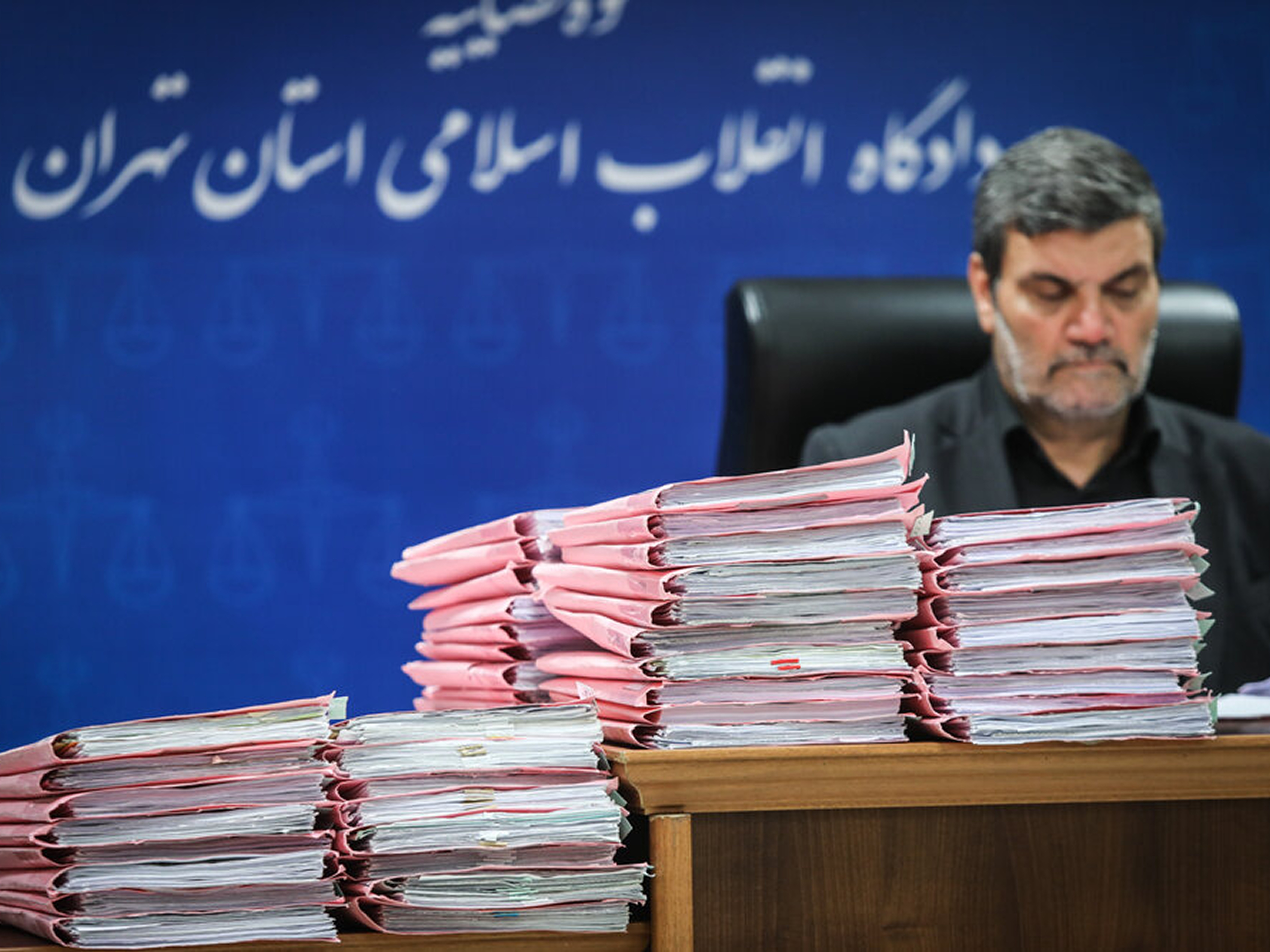
Abolghasem Salavati, known as the "Death Judge" and "Khalkhali the Second," stands as one of the Islamic Republic's most notorious judicial figures. Operating from Branch 15 of Tehran's Revolutionary Court for over two decades, Salavati has transformed judicial proceedings into an instrument of state terror, issuing at least 322 verdicts by 2023, including 30 death sentences totaling 1,515 years of prison time. Despite documented moral and financial corruption acknowledged even within the regime itself, Salavati enjoys complete immunity solely because of his ruthless willingness to sign execution orders on demand. His courtroom has become a machinery of repression where predetermined verdicts are delivered in rushed proceedings, defendants are denied access to chosen lawyers, and forced confessions extracted under torture by Intelligence Ministry and Revolutionary Guards interrogators become the sole basis for capital punishment.
Abolghasem Salavati was born in Tuyserkan, Hamedan Province. Little is known about his educational background, and sources suggest he lacks a law degree, ascending to senior judge status without formal legal knowledge. Even his actual name remains disputed among sources. According to available information, Salavati served in the Basij and Revolutionary Guards during the Iran-Iraq War and was injured during combat. After returning from the front in 1987, he joined the judicial police of Kurdistan Province and four years later became a judge, appointed to the deputy prosecutor position in Sanandaj.
According to Dariush Shiri (known as Kourosh Kohan), Salavati's brother-in-law, the judge initially operated in Eslamabad-e Gharb in Kermanshah Province before moving to Kermanshah city, where he lived in the house of General Hamedanian, head of SAVAK in Kermanshah who had been executed after the 1979 revolution. Kourosh Kohan attributed Salavati's rapid rise through the ranks to his complete obedience to regime authorities, which enabled his swift promotions and transfer to Hamedan Province with increasingly senior positions.
In the early 1990s, Salavati married Parvin, one of Kourosh Kohan's sisters. There is speculation that the Kohan family were originally Jewish (Kalimi), and that Parvin converted to Islam after marriage. According to her brother, Parvin was hospitalized in a psychiatric facility for nine years. He states that the executions and court proceedings conducted by her husband placed her under severe psychological pressure, leading to mental illness so severe that at age 40 she was retired from the teaching institution where she had been working. In 1974, Salavati became head of security for the Iranian judiciary, and in 1982 he was appointed by Saeed Mortazavi to lead Branch 15 of the Revolutionary Court, a position he has held for 21 years and continues to occupy.
For years, a governmental mission has been defined for Judge Salavati: to assist security forces in suppressing protesters and critics of the Islamic Republic by holding show trials, in exchange for financial benefits while the system turns a blind eye to his moral and economic corruption. Sensitive cases involving political and civil activists and journalists are typically assigned to him. Those who have experienced Salavati's courtroom unanimously report that he issues predetermined verdicts under completely rushed conditions.
Defendants in Salavati's court are usually denied access to their chosen lawyers, and he issues verdicts based on forced confessions obtained through torture by Intelligence Ministry and Revolutionary Guards interrogators during pre-trial detention. The confessions Salavati relies upon are systematically extracted under physical and psychological torture in detention facilities before any court appearance. The court operates through a series of deliberate mechanisms designed to eliminate any semblance of justice. Cases arrive at his bench with outcomes already decided by security agencies; the judicial proceedings serve merely as theater to legitimize decisions made elsewhere. State-appointed lawyers function as accomplices rather than defenders. The sole evidentiary basis for convictions consists of statements extracted through torture. Trials are conducted with extreme haste—in one notorious case, Salavati issued death sentences to four defendants in just seven minutes. His courtroom demeanor is characterized by harsh language, repeated insults directed at defendants, and documented instances of physical violence. In multiple cases, Salavati physically attacked defendants, including kicking male prisoners in the genitals during proceedings. According to testimonies from multiple women arrested during the 2022 protests and tried in Salavati's court, he made sexual propositions and physically assaulted female defendants in his private office during non-public interrogations.
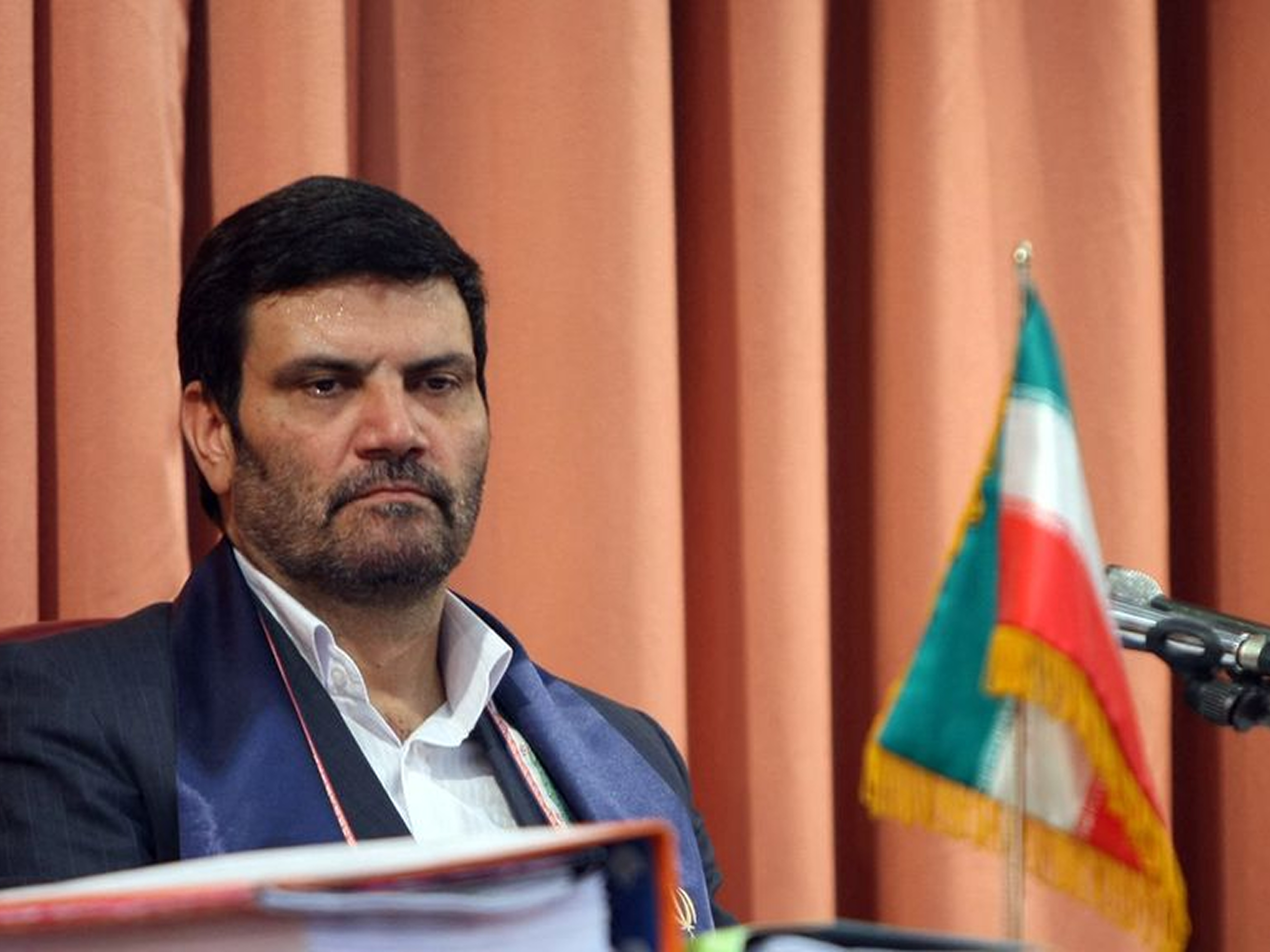
Salavati first gained public notoriety during the prosecution of reformist figures following the 2009 election protests, which were broadcast on Islamic Republic television. Some defendants later revealed that before the televised proceedings, Salavati and Jafar Dowlatabadi, then head of Tehran's Revolutionary Court, rehearsed with defendants to ensure better execution of the courtroom performance. During this period, Salavati issued death sentences for Arash Rahmanipour and Mohammad Reza Ali Zamani, members of the Iran Monarchy Association, for their alleged participation in 2009 protests, despite both having been arrested three months before the protests began. Salavati also issued the death sentence for Zahra Bahrami, an Iranian-Dutch citizen arrested after Ashura 2009, on drug trafficking charges. Bahrami's family rejected the drug possession and dealing charges, stating they were fabricated by judicial authorities to provide justification for her arrest and execution during the 2009 protests.
The environmental activists case represents one of Salavati's most controversial prosecutions. He convicted six environmental activists and experts on espionage and security charges, sentencing them to between six and ten years in prison, totaling 58 years, despite the absence of any evidence of espionage or cooperation with foreign countries. Kavous Seyed-Emami, a university professor involved in the case, died in prison in 2017. While the Islamic Republic claimed suicide, opponents believe Seyed-Emami was killed under torture. During the trial of Niloufar Bayani, another environmental activist, Salavati reportedly told the defendant: "The consequence of espionage is this," before ordering her forcibly removed from the courtroom.
In 2012, Salavati presided over the trial of 13 individuals accused of espionage for Israel and assassinating Iranian nuclear scientists. Three months prior, Majid Jamali Fashi had been convicted and executed on the same charges by Salavati. Maziar Ebrahimi, one of the defendants, was later released due to conflicts between the Intelligence Ministry and Revolutionary Guards intelligence. In interviews, Ebrahimi described how Salavati threatened defendants, showing them papers and saying: "This is your death sentence. Go cooperate with the gentlemen or we will bury you here." Ebrahimi revealed he was tortured for 40 days to produce televised confessions. When authorities realized their mistake, they apologized repeatedly but told him: "For the sake of preserving the system's reputation, we cannot release you now." A leaked audio recording from late October 2016 captured an Intelligence Ministry agent calling Ebrahimi, pressuring him to withdraw his complaint against the agency while simultaneously threatening consequences.
Following protests after gasoline price increases in November 2019, Salavati issued death sentences for Saeed Tamjidi, Mohammad Rajabi, and Amirhossein Moradi on charges of sabotage and incitement to confront the government. The sentences were later overturned on appeal, and the men were released in 2023. The traumatic impact on families was profound: Nasser Moradi, father of Amirhossein Moradi, committed suicide in his basement during his son's imprisonment due to psychological pressure after authorities threatened that execution might proceed if he refused to give interviews calling his son a criminal.
Following the state killing of Mahsa Amini in September 2022, nationwide protests erupted and thousands were arrested. The regime issued numerous death sentences to terrorize the population into silence. Salavati played a central role. Mohsen Shekari, age 22, was executed just 75 days after arrest on a death sentence issued by Salavati. Mohammad Ghobadlou, a 24-year-old, received a death sentence from Salavati without his lawyer being allowed access to the case file; he was later executed. Saman Seydi (Saman Yasin), a singer and songwriter, and Mohammad Broghani both received death sentences from Salavati. Saman managed to escape Iran during medical leave after his death sentence was overturned by the Supreme Court. Broghani's execution was suspended due to procedural deficiencies.
Additional cases from 2022 included Abolfazl Mehri and Hossein Hajilu (charged with confronting the Islamic government and disrupting national security), Mohsen Rezazadeh Gherghelou (charged with moharebeh and conspiracy against national security), and Saeed Shirazi (charged with corruption on earth), all with charges potentially leading to execution. Elaheh Mohammadi, a journalist arrested in October 2022 for reporting on Mahsa Amini's funeral ceremony for Hammihan newspaper, filed complaints against Salavati for prolonged temporary detention and failure to follow legal procedures. Despite this, Salavati convicted Mohammadi and Niloufar Hamedi (Shargh newspaper journalist) on charges of cooperation with the hostile American government, conspiracy to commit crimes against state security, and propaganda against the system, sentencing them to 12 and 13 years respectively. They were eventually pardoned and their cases recently closed.
According to Kourosh Kohan, Salavati's brother-in-law who died shortly after giving interviews, the judge's financial situation is excellent and he is extremely wealthy, owning several houses in Tehran and numerous plots of land and houses in Tuyserkan, Hamedan. Several of his relatives obtained government positions in Hamedan through his connections. Several years ago, media outlets revealed the business and financial relationships between economic criminals such as Ahmadreza Goodarzi and Hedayatollah Aghaei and Salavati, explaining that due to his power and influence in the judiciary, Salavati kept these individuals immune from prosecution while they protected Salavati's assets in foreign banks. Salavati reportedly extorts defendants to change case outcomes. For example, several years ago he demanded a large villa-garden from an economic criminal in exchange for lifting a travel ban.
The corruption extends to the Babak Zanjani case. While investigating the prominent economic criminal, Salavati allegedly introduced two individuals to Zanjani's sister, Bahareh Zanjani, to receive bribes and payoffs on Salavati's behalf. Leaked chat logs published over the past year show that Salavati maintained extramarital relationships with family members of defendants.
Salavati's own family enjoys the fruits of his corruption. His daughter Samaneh, born in 1990, studied graphics and painting and works as a children's book illustrator. Despite Islam's prohibition of image-making in religious jurisprudence and the regime's official stance condemning visual arts, the daughter of the regime's most notorious execution judge pursues exactly such a career. His wife and daughter travel freely to Europe and America, photographed without hijab abroad, living luxuriously on wealth accumulated through judicial corruption and extortion, while Salavati himself cannot travel due to international sanctions. His wife and daughter vacation in England, France, and Italy without hijab, a stark contradiction to the regime's enforcement of mandatory hijab for all Iranian women.
Abolfazl Ghadyani, a political prisoner and Islamic Republic opponent, wrote in his 2012 letter to Sadegh Larijani, then head of the judiciary: "There is no corrupt and infamous judge like Salavati whom I would address and respond to. You certainly know about the various corruptions of this person when he was a judge in Hamedan and then in Tehran, continuing that path differently in political courts... You know well that he and his ilk have been appointed as political court judges precisely because of these corruptions, impurities, and weaknesses, so they easily submit to Revolutionary Guards and Intelligence Ministry agents and unquestioningly sign dictated verdicts against political forces. You also know well that this person is known for committing various corruptions within the judiciary itself and among judges."
Salavati systematically targeted religious minorities throughout his judicial career. In 2012, he tried Faran Eslami, her husband Kayvan Rahimian, and Kayvan's brother Kamran Rahimian, all instructors at the Baha'i Institute for Higher Education (an online university created because Baha'is are banned from Iranian universities), on charges of conspiracy to disrupt national security. Salavati sentenced Kamran Rahimian and Faran Eslami to four years and Kayvan Rahimian to five years. He also convicted Sadaf Sabetian to two years for connections with the Baha'i online university and attending a meeting defending the right to education.
In July 2013, Salavati sentenced seven Gonabadi Dervish activists and lawyers to a total of 56 years on charges of propaganda against the system, insulting leadership, photography intended to disturb public opinion, establishing and membership in deviant groups, and disrupting public order. He also issued 10 and 7-year sentences for members of the Majzooban Noor website, the Gonabadi Dervishes' online platform.
Salavati issued harsh sentences for American, European, and dual-national Iranian citizens regularly taken hostage by the Islamic Republic as bargaining chips. In November 2017, Branch 15 under Salavati sentenced Ahmadreza Djalali, a medical doctor and researcher, to death on espionage charges. In 2014, Jason Rezaian, an Iranian-American journalist for the Washington Post arrested in Tehran, received a prison sentence from Salavati, though he was later released in 2016 during a prisoner exchange. In 2019, two Swedish dual nationals, Stefan Kevin Gilbert and Simon Casper, were arrested on charges of cooperating with an international drug trafficking network and convicted in Revolutionary Court under Salavati, though evidence suggests the charges were fabricated.
Among Salavati's final executions was that of Jamshid Sharmahd, a German citizen and head of the Tondar group, kidnapped by Islamic Republic agents abroad, brought to Iran, and executed in 2024 based on a case constructed by Salavati. Even high-ranking former officials faced Salavati's court when accused of betrayal. Alireza Akbari, who had previously served in Iranian security and military institutions, was convicted of espionage and executed on Salavati's order.
Cases of Kurdish and other ethnic minorities are also prevalent. In 2008, Salavati issued death sentences for Farzad Kamangar, Farhad Vakili, Ali Haidari, and Shirin Alam, accused of membership in Kurdish opposition groups, on charges related to anti-government activities. The sentences were issued in a single court session lasting only seven minutes. Additional victims include Maryam Akbari Monfared, sentenced to 155 years in prison, to whom Salavati infamously said: "You kill your brothers and sisters; bring their children here so we can see them cry and mourn," a deliberate attempt to psychologically torture a defendant whose family members had been executed in the 1980s under the regime's mass executions.
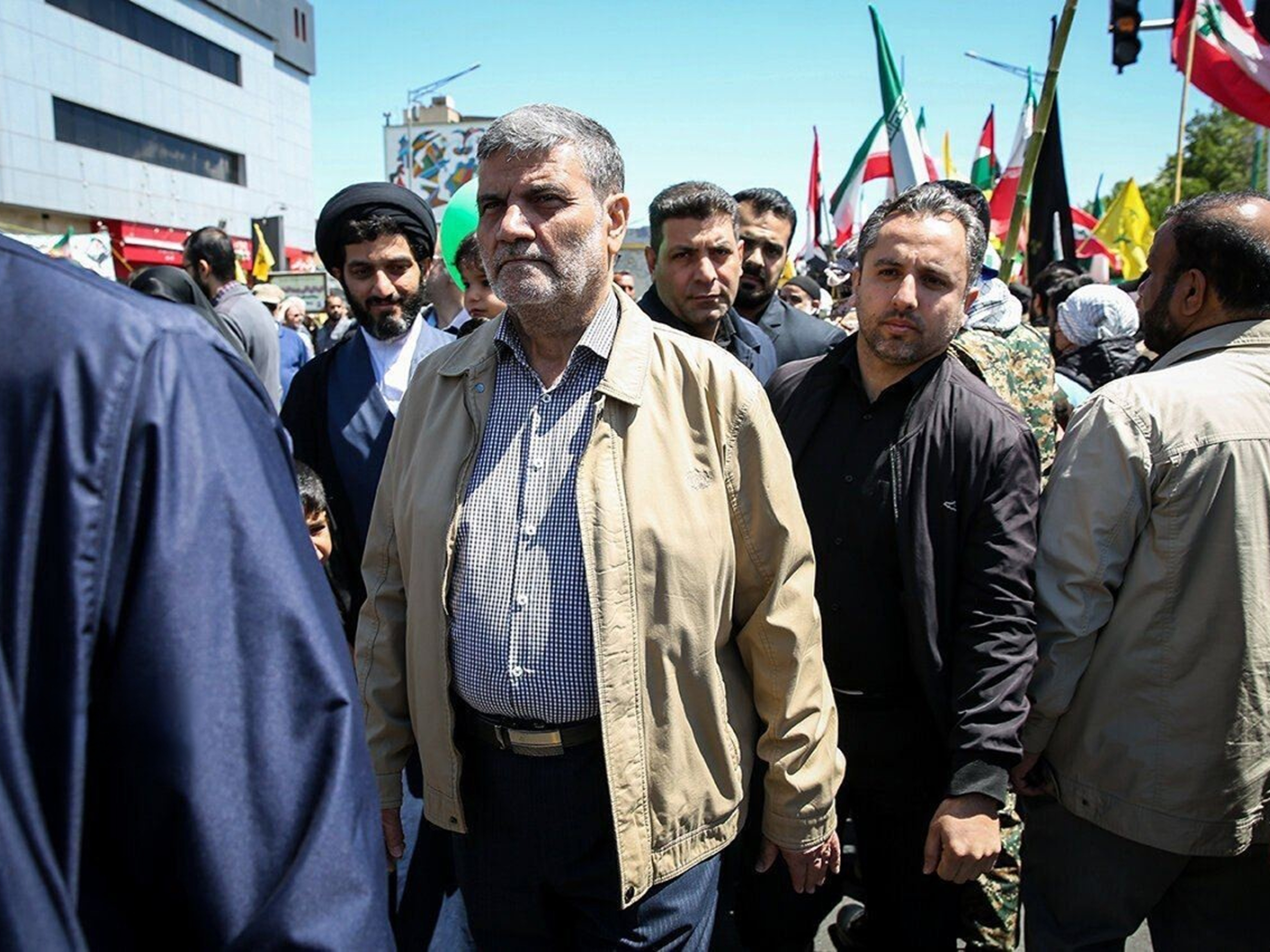
In April 2011, Abolghasem Salavati was placed under European Union human rights sanctions. According to the EU statement, his handling of 2009 election-related cases and issuance of death sentences and long prison terms constituted the basis for sanctions. On December 18, 2019, the United States Treasury Department sanctioned Salavati for serious and widespread human rights violations. Under these sanctions, any potential assets of Salavati in the United States are frozen, he is barred from entering the country, and U.S. citizens are prohibited from any transactions with him.
Despite these international condemnations, the Islamic Republic's judiciary praises and thanks Salavati for issuing harsh sentences. He receives awards and commendations from the judicial system for the same conduct that has made him an international pariah. Human rights organizations, including Amnesty International, Human Rights Watch, and the United Nations Special Rapporteur on Iran, have repeatedly documented Salavati's role in show trials, denial of due process, and execution of protesters. These reports have had no impact on his career trajectory or the regime's continued reliance on his services.
Within the Iranian judiciary, complaints against Salavati lead nowhere. When the Supreme Court overturned his verdicts (as happened twice with Mohsen Amir-Aslani's death sentence), Salavati's political patrons, including former Judiciary Chief Sadegh Larijani, intervened to ensure executions proceeded through Article 18 procedures, which bypass normal judicial review. Salavati moves with a convoy of three vehicles and seven personal bodyguards. A battalion from the Judiciary Protection Corps is deployed for each daily commute. No other judge in the Islamic Republic receives such extensive protection, testimony to both his value to the regime and the widespread hatred he has earned.
The leaked audio recording of an Intelligence Ministry agent calling Maziar Ebrahimi reveals the mechanics of control and complicity. The agent pressures Ebrahimi to withdraw his complaint against the Intelligence Ministry, promising compensation that never materializes, while simultaneously threatening consequences. The regime acknowledges its agents' wrongdoing but refuses accountability, prioritizing "the system's reputation" over justice. When several Gonabadi Dervishes complained to the disciplinary court for judges in 2014, Salavati was exonerated. Jafbe Siah (Black Box) channel, run by Massoud Molavi, a media activist later assassinated in Turkey, published documents exposing Salavati's relationship with the sister of one of his defendants. The channel intended to publish more documentation but ceased operations after Molavi's murder. Documents showed that videos of Salavati's illicit relationships with defendants' family members, obtained by hacking his phone, were provided to Judiciary Protection but closed during Sadegh Amoli Larijani's tenure following recommendations from senior regime officials.
The human cost of Salavati's judicial terror is immeasurable. Beyond the at least 30 people executed on his orders and the 1,515 years of prison sentences he has imposed, the psychological devastation extends to families destroyed by grief, trauma, and despair. Parvin, Salavati's own wife, spent nine years in psychiatric hospitalization. Her mental health was shattered by proximity to her husband's judicial killings and the weight of witnessing systematic state terror. Nasser Moradi, unable to bear the threat of his son's execution, took his own life in his basement. Countless families have been denied the bodies of their executed loved ones, forbidden even the basic dignity of burial.
Women tried in his court describe not just unjust verdicts but sexual harassment and physical assault in his private office. Political prisoners describe physical beatings, including being kicked in the groin during court proceedings. Lawyers attempting to represent clients report being denied access to case files and physically threatened. The impact extends beyond individual cases. By systematically crushing dissent through judicial terror, Salavati has contributed to the broader climate of fear that enables authoritarian control. His courtroom has processed activists from every sphere: environmental protection, labor rights, women's rights, ethnic minorities, religious minorities, student movements, journalists, artists, and ordinary citizens who participated in protests.
The documented cases of torture and psychological abuse reveal patterns designed to break the spirit of defendants before trial. Pre-trial detention periods extend weeks or months, with prisoners held incommunicado, subjected to sleep deprivation, beatings, and threats against family members. By the time a defendant reaches Salavati's courtroom, they have already been broken. The "confessions" that form the sole basis of his verdicts are not the product of genuine admission but of systematic psychological and physical destruction.
Abolghasem Salavati is not an aberration but a necessity for the Islamic Republic's machinery of repression. His judicial career reveals how authoritarian systems require individuals willing to abandon all moral restraint in service of state violence. His complete immunity despite documented corruption demonstrates that the regime values his willingness to issue execution orders more highly than any principle of justice or rule of law. Salavati's trajectory from an injured war veteran with no legal training to the Islamic Republic's most prolific executioner illustrates the nature of advancement within the system. Loyalty, brutality, and moral flexibility, not competence or integrity, determine success. His rapid promotions followed each demonstration of willingness to serve the regime's repressive agenda without question or hesitation.
The marriage of judicial authority and systematic corruption in Salavati's career exposes the fiction of an independent judiciary in Iran. His court functions not as an institution of justice but as a processing center for security agency demands. The Intelligence Ministry and Revolutionary Guards interrogate, torture, and extract confessions; Salavati provides the judicial rubber stamp that creates a veneer of legality for predetermined outcomes. International sanctions have proven ineffective at constraining Salavati or changing regime behavior. While he personally cannot travel, his family enjoys European vacations on wealth extracted through corruption and extortion. The disconnect between his official role enforcing Islamic strictures, including hijab mandates, and his wife and daughter's unveiled European travels, captures the hypocrisy at the core of the system.
In recent years, information about judges, former officials, and even military figures who have faced similar international sanctions has come to light, yet their presence and prominence within the regime continue. Salavati represents a type of functionary that the Islamic Republic considers essential: the judge who asks no questions, feels no remorse, and signs whatever documents power places before him. In return for this service, Salavati receives protection, wealth, and advancement that would be impossible in a functioning state based on law.
For the thousands of Iranians who have passed through Salavati's courtroom, for the families of the executed, for those serving decades in prison on his orders, and for the broader society terrorized by the knowledge of what awaits political dissent, Salavati's name has become synonymous with injustice, cruelty, and the weaponization of judicial power against the people. As long as the Islamic Republic exists in its current form, it will require figures like Abolghasem Salavati. When accountability finally arrives, whether through internal reform or external pressure, Salavati's judicial legacy will stand as evidence of systematic crimes against the Iranian people. Like the infamous judges of other brutal regimes throughout history, his name will be remembered not as an enforcer of law but as an architect of state terror, a willing participant in the machinery of repression who chose cruelty, corruption, and complicity over any semblance of justice or humanity.