

From Olympic Glory to Regime Enforcer: The Rise of Iran's Wrestling Power Broker
An Olympic champion's transformation into an apparatus of political control and corruption.
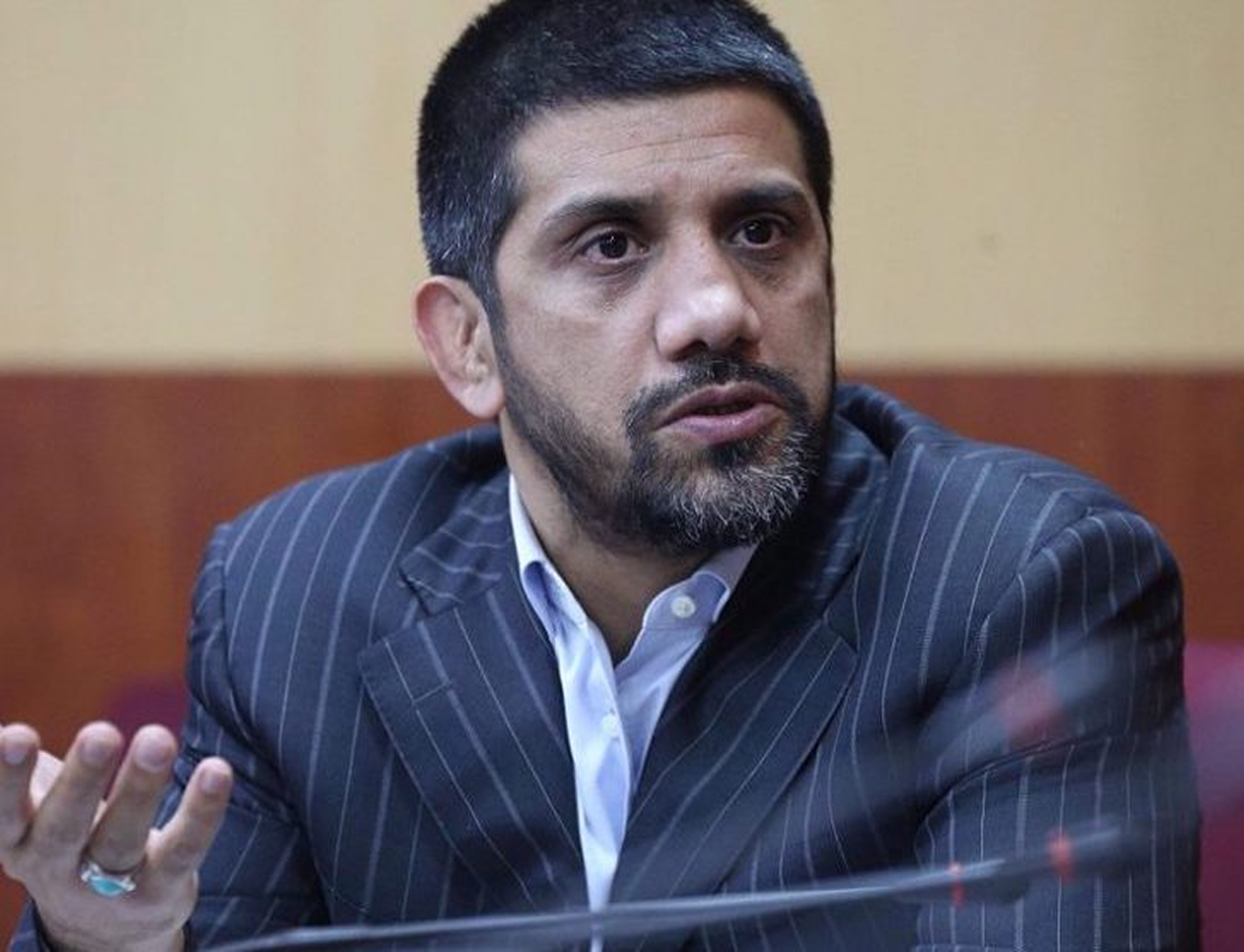
Twenty-five years after standing on the Olympic podium with gold around his neck, Alireza Dabir has completed a metamorphosis that few could have predicted. The wrestler who once embodied national pride as Iran's champion in Sydney 2000 now stands as one of the Islamic Republic's most controversial sports administrators, accused of wielding power not for athletic excellence but for political allegiance to Supreme Leader Ali Khamenei. This investigation reveals how a decorated athlete transformed into a key figure in what critics describe as a network of corruption, censorship, and repression that has systematically weaponized Iranian sports against its own people.
Today, Dabir presides over the Iranian Wrestling Federation with an iron grip, backed by the Revolutionary Guards and the Supreme Leader's office. His tenure has been marked by purges of independent voices, allegations of massive financial impropriety, and increasingly vitriolic attacks on dissent. While Iranian wrestlers continue to win medals on the world stage, behind the scenes the sport has become a battlefield where loyalty to the regime trumps athletic merit, where humanitarian gestures are condemned as sedition, and where the ghost of wrestling's greatest legend, Gholamreza Takhti, serves as a stark reminder of what courage once meant in Iranian sport.
Alireza Dabir won his Olympic gold medal on September 30, 2000, defeating Ukraine's Yevhen Buslovych in the 58-kilogram freestyle final in Sydney. The victory marked Iran's third wrestling gold at those Games and secured Dabir's place in the nation's sporting pantheon alongside legends like Gholamreza Takhti and Rasoul Khadem. His technical brilliance had already earned him a world championship title in Tehran in 1998, and he would go on to claim silver medals at the 1999, 2001, and 2002 world championships.
Yet even during his competitive years, those close to the sport noticed something different about Dabir. Unlike many of his contemporaries who focused purely on wrestling, he cultivated relationships beyond the mat. Former teammates and coaches described a calculated approach to networking with officials, an unusual eagerness to align with power structures. This instinct for political positioning would serve him well in post-competitive life.
The transition from athlete to politician came swiftly. In 2007, Dabir successfully ran for Tehran City Council, securing his seat with backing from conservative political factions. He was elected during the same period that saw hardliners consolidate control over municipal governance. As a council member, and later as head of the Budget and Planning Commission, Dabir gained firsthand experience in the machinery of patronage and power that defines governance in the Islamic Republic.
His time on the council coincided with an unprecedented debt crisis in Tehran Municipality, which reached over 300 trillion rials, approximately eight billion dollars. The municipality's budget had ballooned from 8.5 trillion rials in 2000 to 179 trillion rials by 2017, yet debt continued to mount. Former Tehran Mayor Morteza Alviri stated bluntly that "corruption in Tehran's municipality is so deeply rooted that it has become institutionalized". Dabir served in this environment for years, learning how power and money flow through Iran's governmental structures.
In July 2019, Dabir was elected president of the Islamic Republic of Iran Wrestling Federation, a position he holds to this day. The appointment came not through grassroots support within the wrestling community but through backing from security and intelligence apparatuses. Wrestling insiders reported that Dabir's selection was predetermined, the result of coordination between the Ministry of Sports and Youth and organizations tied to the Islamic Revolutionary Guard Corps.
The timing was significant. By 2019, Iran's ruling establishment had grown increasingly paranoid about dissent following waves of protests in 2017-2018 and the massive "Bloody Aban" uprising in November 2019, during which security forces killed between 304 and 1,500 protesters according to various estimates. The regime needed reliable figures in positions of influence across society, including sports. Dabir fit the profile perfectly: a recognizable name with Olympic credentials, no history of challenging authority, and a demonstrated willingness to play the political game.
From the outset, Dabir made clear that his presidency would prioritize ideological conformity over athletic achievement. In early statements, he emphasized the importance of wrestlers embodying "revolutionary values" and maintaining loyalty to the system. He instituted new protocols requiring wrestlers to attend ideological training sessions. Those who questioned these requirements found themselves excluded from national team camps.
The federation under Dabir's leadership has been systematically purged of independent voices. Experienced coaches who refused to toe the political line were dismissed or sidelined. Wrestlers who maintained contact with Iranian expatriate athletes or who followed politically sensitive social media accounts faced interrogation and suspension. The message was unmistakable: success in Iranian wrestling now depended not just on skill, but on demonstrable loyalty to the Islamic Republic.
Perhaps no episode better illustrates Dabir's opportunistic relationship with power than the saga of his U.S. green card. In early 2022, investigative reporting revealed that Dabir had obtained permanent residency in the United States around the time of his Olympic victory in 2000. The revelation was explosive because it stood in stark contrast to Dabir's public persona as a fierce defender of anti-American ideology.
When confronted, Dabir initially claimed he had surrendered the green card "seven years ago" because he "didn't like" the United States. He told state media that he obtained it "just like many other athletes" with the thought of potentially studying abroad, but never used it. The U.S. government told a different story. In 2025, American officials confirmed they had revoked Dabir's permanent residency, indicating it had remained active far longer than he claimed.
The timeline is revealing. Dabir obtained his green card in 2000. He began his political career in Tehran in 2007. Public criticism of his U.S. residency emerged around 2011-2012. By his own account, he supposedly returned it around 2015. Throughout this period, he was building his reputation as a hardliner, yet he maintained a pathway to life in America, the country he now publicly condemns.
The contradiction reached its apex in January 2022 when, in a state television interview, Dabir proclaimed: "We always chant 'Death to America,' but the important thing is showing it in action". Days later, Iranian media reported he was planning to travel to Texas for a wrestling dual meet between Iranian and American teams. The U.S. State Department denied visas to Dabir and five other team members. In response, Dabir canceled the entire match, framing it as a principled stand against American "humiliation".
Sardar Pashaei, a former Iranian Greco-Roman champion who defected to the United States, captured the absurdity: "It's painful for me as a wrestler and national team coach to listen to these words. When I and many other athletes who have been forced to leave their homeland due to pressure from the Iranian government see Alireza Dabir, the president of the Iranian Wrestling Federation, say 'Death to America,' while he has the US Green Card in his pocket".
For Dabir, the green card represented insurance, a hedge against political winds in Iran. When maintaining it became politically untenable, he shed it and doubled down on revolutionary rhetoric. The episode demonstrated a core truth about his character: ideology serves ambition, not the other way around.
No figure better represents the chasm between Dabir and Iran's wrestling heritage than Rasoul Khadem. Born in 1972, Khadem won bronze at the 1992 Barcelona Olympics and gold at the 1996 Atlanta Games. He claimed world championship titles in 1994 and 1995. Beyond medals, Khadem became beloved for his integrity, his willingness to speak uncomfortable truths, and his humanitarian work.
In 2018, while serving as president of the Iranian Wrestling Federation, Khadem resigned in protest over the government's unwritten policy forbidding Iranian athletes from competing against Israelis. He called on officials to either declare this policy openly or allow wrestlers to compete without fear of retribution. "I cannot lie to the wrestling community in order to maintain my position," Khadem stated upon his resignation. Scores of wrestling officials resigned in solidarity with him.
After leaving federation politics, Khadem remained active in grassroots humanitarian efforts. During the devastating floods in Sistan-Baluchestan province in spring 2023, he spent his entire Nowruz holiday delivering aid to affected communities. Images of the Olympic champion wading through floodwaters carrying supplies resonated deeply with Iranians. Here was a sports hero using his platform not for self-promotion, but for genuine service.
This adoration made Khadem a threat to Dabir. The contrast between the two men, both Olympic champions, was inescapable. Where Khadem resigned on principle, Dabir clung to power. Where Khadem helped flood victims, Dabir posed with Revolutionary Guard commanders. Where Khadem earned the honorific "Pahlevan" (champion) from the people, Dabir demanded loyalty from athletes.
Dabir's response has been a sustained campaign of vilification. In television appearances and interviews, he has repeatedly accused Khadem of being linked to "counter-revolutionary" media outlets and hostile foreign powers. He has suggested, without evidence, that Khadem's charitable work is funded by external enemies of Iran. He has mocked Khadem's humanitarian efforts, saying certain media outlets want to "create a hero" while making Dabir himself into a villain.
The attacks reached a particularly bitter note when Dabir invoked the memory of Gholamreza Takhti, Iran's most revered wrestler. Takhti, who won Olympic gold in 1956 and world championships in 1959 and 1961, was known not just for his athletic prowess but for his chivalry and his opposition to the Shah's dictatorship. Takhti died under mysterious circumstances in 1968, with many Iranians believing he was murdered by SAVAK, the Shah's secret police. His legacy as a people's champion remains powerful.
Dabir told state media: "Many people haven't seen all angles of Takhti's life. Takhti didn't try to become Takhti. God made him Takhti. Many people want to become Takhti, but they can't". The implication was clear: Khadem was trying to manufacture a Takhti-like image through calculated humanitarian gestures, whereas true champions are anointed by fate, not public opinion.
The comment backfired spectacularly. Iranians across social media pointed out the grotesque irony of Dabir, a man who wields power through political connections and Revolutionary Guard patronage, lecturing anyone about authentic heroism. Comparisons were drawn between Takhti's principled opposition to dictatorship and Dabir's enthusiastic service to one. One widely shared post asked: "Which would Takhti respect more: a champion who helps flood victims, or one who calls for protesters to leave the country?"
Accusations of corruption have followed Dabir since his Tehran City Council days, but they intensified after he assumed control of the wrestling federation. In 2017, Iranian media published allegations that Dabir had been involved in the illegal transfer of 60 billion tomans (over $10 million at 2017 exchange rates) to the United States. Documents leaked to journalists also raised questions about how Dabir acquired a 420-square-meter house in the upscale Valenjak neighborhood of Tehran, and whether construction permits for this property involved bribery.
The judiciary has taken no meaningful action on these allegations. This inaction speaks to Dabir's protection by powerful interests. In the Islamic Republic's legal system, prosecution depends heavily on political considerations. Minor figures can be prosecuted harshly for symbolic purposes, while well-connected individuals operate with impunity.
A dramatic illustration of the feuds these allegations sparked came in a physical altercation between Dabir and Abbas Jadidi, another former wrestling champion. Jadidi, who won silver at the 1996 Olympics and was stripped of a 1993 world championship for doping, later became a Tehran City Council member. According to Jadidi, he and Dabir came to blows after Dabir incorrectly suspected him of leaking financial information about the 60 billion toman transfer. The incident, which was reported in sports media, underscored the paranoia and infighting that characterized Dabir's circle.
More recently, there have been allegations involving the misuse of funds intended for athletes and staff. In one reported case, vouchers meant for municipal workers from Shahrvand, a major retail chain, were allegedly used by Dabir's spouse for a 15 million toman shopping spree. Such stories, while difficult to verify completely, fit a pattern of entitlement and misuse of position.
Perhaps most damaging to the sport itself has been the fate of wrestlers who speak out. Arman Alizadeh, a six-time Asian and international wrestling champion, revealed in 2021 that he was working as a farm laborer despite his accomplishments. "After 15 years of professional sports I am a laborer," he said. "Whenever I go to sports officials, they equivocate, and pass me back and forth between them". The federation claimed he had received 70 million tomans in 2020; Alizadeh denied receiving these funds.
Similarly, Mohsen Madhani, a 2017 World Junior Wrestling Championship gold medalist, was forced to sell fruit on a street corner in Khuzestan province in 2020 to make ends meet. These cases illustrate how the wrestling federation under Dabir has become an apparatus of patronage and punishment, rewarding loyalists and abandoning those deemed insufficiently compliant.
Dabir's power does not exist in a vacuum. It is sustained by the Islamic Revolutionary Guard Corps, the parallel military and economic force that has systematically penetrated every sector of Iranian society. Estimates suggest the IRGC controls between one-third and two-thirds of Iran's GDP through a vast network of front companies, foundations, and contracts. Sports are no exception.
The IRGC directly controls major football clubs, including Tehran giants Persepolis and Esteghlal, and has placed loyalists in leadership positions across sporting federations. These positions serve multiple purposes: they generate revenue through corruption and preferential contracts; they provide platforms for political messaging; and they function as recruitment pipelines, particularly in martial arts disciplines that feed into IRGC special units tasked with protest suppression.
After the U.S. denied Dabir's visa in February 2022, Abolfazl Khoda-Gholipour, head of the Basij Sports Organization (a branch of the IRGC), visited the wrestling federation offices to publicly praise Dabir's decision to cancel the match with America. The Basij is notorious as the regime's street-level enforcement arm, responsible for much of the violence during crackdowns on protests. Khoda-Gholipour's public endorsement signaled where Dabir's true allegiances lie.
The IRGC's involvement in sports extends to surveillance and control of athletes. During the 2022 Qatar World Cup, held amid the Mahsa Amini protests, Iranian footballers faced enormous pressure to demonstrate loyalty to the regime. Some chose silence during the national anthem in solidarity with protesters; they were later subjected to interrogation. Athletes who defied the mandatory dress code abroad, like speed skater Niloufar Mardani who competed without a hijab in Turkey, faced swift condemnation from state authorities.
Sources from within Iran's sporting community, including several wrestlers who have since defected or sought asylum, report that national team camps operate under constant surveillance. Intelligence officers attend training sessions. Wrestlers' social media accounts are monitored. Even following accounts of politically sensitive figures, such as exiled footballer Ali Karimi, a vocal supporter of the 2022 protests, can result in suspension from the team.
This surveillance extends internationally. Wrestlers traveling abroad for competitions receive explicit instructions about acceptable conduct. They are warned against interacting with Iranian expatriates, particularly those who have criticized the regime. Handlers accompany teams, and wrestlers are expected to report on each other's activities. The system creates an atmosphere of mistrust and fear that is antithetical to the spirit of sport.
As opposition to his rule has grown, Dabir has increasingly adopted the language and tactics of intimidation. His public statements have become harsher, his denunciations more sweeping. In response to the nationwide protests following Mahsa Amini's death in September 2022, protests in which at least 551 people were killed by security forces, Dabir issued a stark ultimatum: "I have no tolerance for anyone who has a problem with this system. Anyone who has a problem with the Islamic Republic should leave Iran".
The statement was not a casual remark. It was a calculated message that aligned perfectly with the regime's narrative that protesters were foreign agents and traitors rather than citizens with legitimate grievances. It signaled to the wrestling community that dissent would not be tolerated, and that Dabir saw his role as enforcer, not advocate for athletes.
Dabir has also sought to silence wrestlers on any political topic. He has explicitly told athletes they have no right to comment on political, social, or cultural matters. "You are experts in this field only," he told wrestlers, referring to sport. This gag order extends to elections and social issues. The message is clear: wrestlers exist to win medals for the regime, not to participate as citizens in their own society.
The case of television host Piman Yousefi illustrates Dabir's volatile temperament. In a 2022 live interview, Dabir became visibly agitated when Yousefi asked about his controversial statements. The exchange devolved into a heated confrontation, with Dabir accusing the host of trying to create viral moments at his expense and threatening consequences in the afterlife for perceived slights. The outburst, broadcast on state television, revealed a man unaccustomed to scrutiny and intolerant of even mild criticism.
Behind closed doors, the intimidation is more direct. Multiple sources within the wrestling community report that athletes who are deemed insufficiently loyal are subject to threats against themselves and their families. Wrestlers have been told their relatives may lose government jobs or face tax investigations. Some have reported being called in for "chats" with intelligence officials, during which their futures in the sport are explicitly tied to political cooperation.
Despite having no background in football, Dabir has made no secret of his ambition to control Iran's Football Federation, the most visible and lucrative sporting body in the country. Sources with knowledge of internal discussions say this ambition is not Dabir's alone but is part of a broader IRGC-backed strategy to consolidate control over all major sports.
The contrast with Ali Karimi is instructive. Karimi, widely regarded as one of the greatest Asian footballers of all time, sought to lead the football federation years ago but faced insurmountable obstacles. His candidacy was blocked through bureaucratic maneuvers and behind-the-scenes pressure. Karimi's popularity with the Iranian public and his independent stature made him unacceptable to the power structure.
Now Karimi lives in exile in Europe, facing charges in absentia for his vocal support of the 2022 protests. He has used his massive social media following, nearly 15 million on Instagram alone, to support demonstrators and expose regime abuses. In response, authorities have confiscated his property in Iran, harassed his family, and issued death threats. Supreme Leader Ali Khamenei himself has dismissed the support of celebrities like Karimi as "worthless" and called for judicial action against them.
Yet while a beloved football legend is persecuted for standing with his people, Dabir, a wrestler with zero football credentials, is reportedly being groomed for leadership of the football federation. The timeline extends beyond the 2026 World Cup, with planning for a transition after that tournament. This plan exists solely because Dabir has proven his loyalty to the system and to the Supreme Leader personally.
The implications are profound. Football is Iran's most popular sport, with a reach far beyond wrestling. Placing Dabir at its helm would represent the ultimate triumph of political reliability over competence, and would further militarize sports administration. It would also send a message to all Iranian athletes: your fate depends not on talent or achievement, but on submission to power.
The personal toll of Dabir's reign extends beyond statistics and politics. It can be measured in the destroyed careers of principled coaches, the silenced voices of athletes who wish to speak about their society, and the psychological burden carried by wrestlers who must navigate an environment where suspicion and conformity have replaced camaraderie and competition.
Consider the psychological impact on young wrestlers entering the national program. They train for years, sacrificing their bodies and their youth for the dream of representing Iran. When they reach the national team level, they discover that success requires not just athletic excellence but ideological performance. They must attend propaganda sessions. They must demonstrate enthusiasm for the regime in social media posts. They must report on teammates. They must, in essence, betray the bonds of sport for the demands of politics.
Some choose exile. In recent years, several promising Iranian wrestlers have defected during international competitions or sought asylum in neighboring countries. Each departure represents not just a lost talent, but an indictment of the system Dabir oversees. These athletes don't leave because training conditions are inadequate or because they're chasing money. They leave because they cannot breathe, because the pressure to be something other than an athlete has become unbearable.
For those who remain in Iran, the consequences of defiance can be severe. The Islamic Republic has a well-documented history of persecuting athletes who step out of line. In 2020, Navid Afkari, a wrestler, was executed on charges related to participating in protests, despite international outcry and questions about the evidence against him. The execution sent a chilling message to every Iranian athlete: political activity can cost you your life.
Women in Iranian sports face an additional layer of oppression. Iran bans women from competing in wrestling, even as neighboring Turkey allows female participation. Female athletes in permitted sports must wear the hijab even in international competitions, putting them at a physical disadvantage. Those who compete without the hijab abroad, such as boxer Sadaf Khadem, face prosecution and exile. Women who violate dress codes in domestic sporting events risk detention, as was the case with coach Nasrin Shariati in 2025.
This systematic exclusion and control of women in sports reflects broader regime policies enforced by the morality police, the same force whose custody resulted in the death of Mahsa Amini and the protests that shook Iran in 2022-2023. Dabir, as a senior sports administrator, is complicit in this system of gender apartheid. His federation enforces rules that prevent Iranian women from pursuing wrestling, the sport that made him famous. The hypocrisy is staggering: he benefits from a tradition of Iranian wrestling excellence while working to ensure that half the population can never participate in it.
What allows Dabir to operate with such brazenness? The answer lies in the Islamic Republic's architecture of impunity. At its apex sits Ali Khamenei, Supreme Leader since 1989, who wields ultimate authority over all branches of government, the military, the judiciary, and major economic institutions. Khamenei has made clear his expectations: loyalty above all else, and the use of force to crush dissent.
The IRGC operationalizes these directives. As a designated foreign terrorist organization by the United States, the IRGC faces international sanctions, yet domestically it operates as a state within a state. It runs business empires, controls smuggling networks, deploys militias abroad, and suppresses protests at home. Its deep involvement in sports gives it leverage over athletes and administrators.
The judiciary, notionally independent, functions as an extension of security services. Judges often have backgrounds in intelligence agencies. Courts regularly violate basic due process, particularly in political cases. Confessions extracted under torture are admissible. Trials are swift and opaque. This system ensures that individuals like Dabir, protected by connections to the IRGC and the Supreme Leader's office, face no real legal accountability regardless of the evidence against them.
The media environment reinforces this impunity. State television and major news agencies are either controlled directly by the IRGC (such as Fars News and Tasnim) or are subject to heavy censorship. Critical reporting on powerful figures rarely appears in domestic outlets. When corruption allegations against Dabir surfaced in 2017, they appeared briefly in semi-independent publications but were never pursued by major state media. The judiciary's refusal to investigate ensured the story died.
Internationally, the Islamic Republic has proven adept at using sports as diplomatic leverage. Wrestling, given its cultural significance and Iran's excellence in the sport, provides opportunities for engagement with countries that otherwise have hostile relations with Tehran. The regime calculates, often correctly, that international sporting bodies will prioritize maintaining relationships and hosting competitions over demanding accountability for human rights abuses.
This dynamic was evident in the controversy over the 2022 U.S.-Iran wrestling match. Despite Dabir's "Death to America" rhetoric and documented green card hypocrisy, USA Wrestling initially proceeded with planning for the event. It took sustained pressure from Iranian-American activists, including former wrestlers who had fled persecution, to highlight the moral contradiction of hosting regime representatives while Iranian protesters were being killed in the streets. Even then, it was the U.S. State Department's visa denial, not USA Wrestling's cancellation, that ultimately stopped the event.
Throughout this investigation, the ghost of Gholamreza Takhti haunts every page. Takhti represents what Iranian wrestling was before it became a tool of repression: a space for excellence, chivalry, and resistance to tyranny. His life story reads as a rebuke to everything Dabir represents.
Takhti, born in 1930, rose from poverty to become Iran's greatest wrestler. He won Olympic silver in 1952, gold in 1956, another silver in 1960, and world championships in 1959 and 1961. But what made him legendary was not just his medals. It was his character.
Stories of Takhti's chivalry are numerous. He was known to refuse to attack an opponent's injury, even in championship matches. He used his fame to help the poor, personally delivering aid after the devastating 1962 Buin Zahra earthquake. He spoke out against injustice and aligned himself with Mohammad Mossadegh, the democratically elected prime minister overthrown in the CIA-backed 1953 coup.
For these stances, Takhti paid dearly. The Shah's secret police, SAVAK, regularly interrogated him and obstructed his training. In January 1968, Takhti was found dead in a hotel room in Tehran under circumstances that have never been satisfactorily explained. The official verdict was suicide, but the Iranian people have never accepted this. The prevailing belief, supported by circumstantial evidence and the regime's pattern of eliminating dissidents, is that Takhti was murdered by SAVAK.
Every year on the anniversary of Takhti's death, thousands of Iranians visit his grave in the Ibn Babawayh cemetery in southern Tehran. They lay flowers, they recite poetry, they remember a champion who stood with them against tyranny. This annual pilgrimage continued even under the Islamic Republic, which initially tried to suppress it but eventually co-opted Takhti's image, attempting to present him as a loyal son of Islam rather than a political dissident.
But the Iranian people's understanding of Takhti's legacy has remained intact. They know what he stood for. They know what he stood against. And they know the difference between a champion who risks everything for principle and one who trades principle for power.
When Dabir invokes Takhti's name, as he has done repeatedly, the comparison illuminates rather than elevates. Takhti opposed a dictatorship and likely died for it; Dabir serves a dictatorship and prospers from it. Takhti helped earthquake victims out of genuine compassion; Dabir attacks those who help flood victims, calling their humanitarian work a media stunt. Takhti refused to exploit an opponent's injury in a wrestling match; Dabir exploits every advantage, fair or foul, to maintain power.
The cruel irony is that Takhti's name adorns wrestling clubs across Iran, places where young athletes train under Dabir's federation. They learn technique on mats dedicated to a martyr's memory while being indoctrinated into a system that would have destroyed Takhti were he alive today.
The story of Alireza Dabir is not merely about one corrupt official or one compromised sports federation. It is a window into how authoritarianism functions, how it perpetuates itself, and how it corrodes every institution it touches.
The Islamic Republic maintains power not through majority support, which it manifestly lacks, as evidenced by repeated uprisings, but through systems of control, cooptation, and coercion. It identifies individuals in every sector, people who possess some form of legitimacy or influence, and it offers them a bargain: serve the system and prosper, or resist and be destroyed. Many choose the former.
Dabir's trajectory illustrates this dynamic perfectly. An Olympic champion possesses social capital, name recognition, and access to platforms. These assets can be deployed for change, as figures like Ali Karimi and Rasoul Khadem have demonstrated, or they can be deployed to maintain the status quo. Dabir made his choice long ago, and the regime has rewarded him handsomely.
But the system also reveals its brittleness through figures like Dabir. When a government must install a wrestling administrator with no football experience to potentially run its football federation, it demonstrates that competence has been wholly subordinated to loyalty. When it must allow corruption to fester unchecked because prosecuting it would undermine a loyalist, it demonstrates that justice has become entirely transactional. When it must silence athletes and coaches who might express opinions on social issues, it demonstrates its terror of even mild dissent.
The wrestling community's response to Dabir, the barely concealed contempt from many athletes and the open hostility in public forums, shows that imposed authority lacks genuine legitimacy. Dabir rules through institutional power and IRGC backing, not through respect. This is sustainable in the short term but unstable over time.
Similarly, the contrast between how the regime treats figures like Dabir versus how it treats figures like Karimi and Khadem reveals the system's values with brutal clarity. Karimi, whose social media posts supported young protesters, faces charges and death threats. Khadem, who resigned on principle and helped flood victims, is smeared as a foreign agent. Dabir, credibly accused of major corruption and nakedly opportunistic in his ideology, not only remains free but ascends to greater power. The message: in the Islamic Republic, loyalty to power trumps service to people every time.
This pattern extends beyond sports. It characterizes the entire structure of the regime, from the judiciary that selectively prosecutes enemies while ignoring crimes by allies, to the economy dominated by IRGC-connected "super borrowers" who extract billions from state banks with no intention of repayment, to the political system that has transformed elections into choreographed rituals devoid of real choice.
The consequences are profound. Iran, a nation of enormous human capital and historical achievement, finds itself systematically hollowed out by this culture of corruption and coercion. Its athletes, instead of being celebrated and supported, are surveilled and threatened. Its institutions, instead of serving the public, serve the security state. Its people, instead of being governed with their consent, are governed through fear.
And yet, resistance persists. The annual pilgrimage to Takhti's grave continues. Protesters return to the streets despite horrific repression. Athletes like Karimi and Khadem refuse to be silenced. Wrestlers defect rather than submit. Women compete without hijabs despite the consequences. The Iranian people's refusal to accept the system's legitimacy, their insistence on remembering what their heroes truly stood for, and their continued willingness to risk everything for freedom, all suggest that the edifice of control, no matter how brutally maintained, remains fundamentally unstable.
Alireza Dabir may sit atop the wrestling federation today, backed by guns and money. But he will never earn what Gholamreza Takhti earned: the genuine love of his people. History will remember which type of champion mattered more. And in Iran, history's judgment arrives in the silence at graves and the roar of crowds, in the exile of the principled and the isolation of the powerful, in the knowledge that gold medals fade but courage endures.
The greatest tragedy may be that Iranian wrestling, a sport with such a glorious legacy, has been reduced to a mechanism of control. The mats where Takhti once grappled with the world's best now double as spaces of political indoctrination. The federation that once existed to cultivate champions now exists to cultivate compliance. And the man who stands at its helm, an Olympic champion himself, has chosen to be remembered not for his athletic achievements but for his willingness to betray the very spirit that made those achievements meaningful.
When this chapter of Iranian history is finally written, when the full accounting of the Islamic Republic's rule is rendered, figures like Alireza Dabir will occupy a particular category: those who possessed the platform, the resources, and the responsibility to stand with their people in their hour of need, and who chose instead to stand on their necks. This choice, more than any match won or any medal earned, will define his legacy. And that legacy will be condemnation.