



The Shadow Cleric: Inside the Rise of Iran's Most Dangerous Extremist
A hardline ayatollah emerges as successor candidate while orchestrating repression and school poisonings.
|
Pars Barghandan
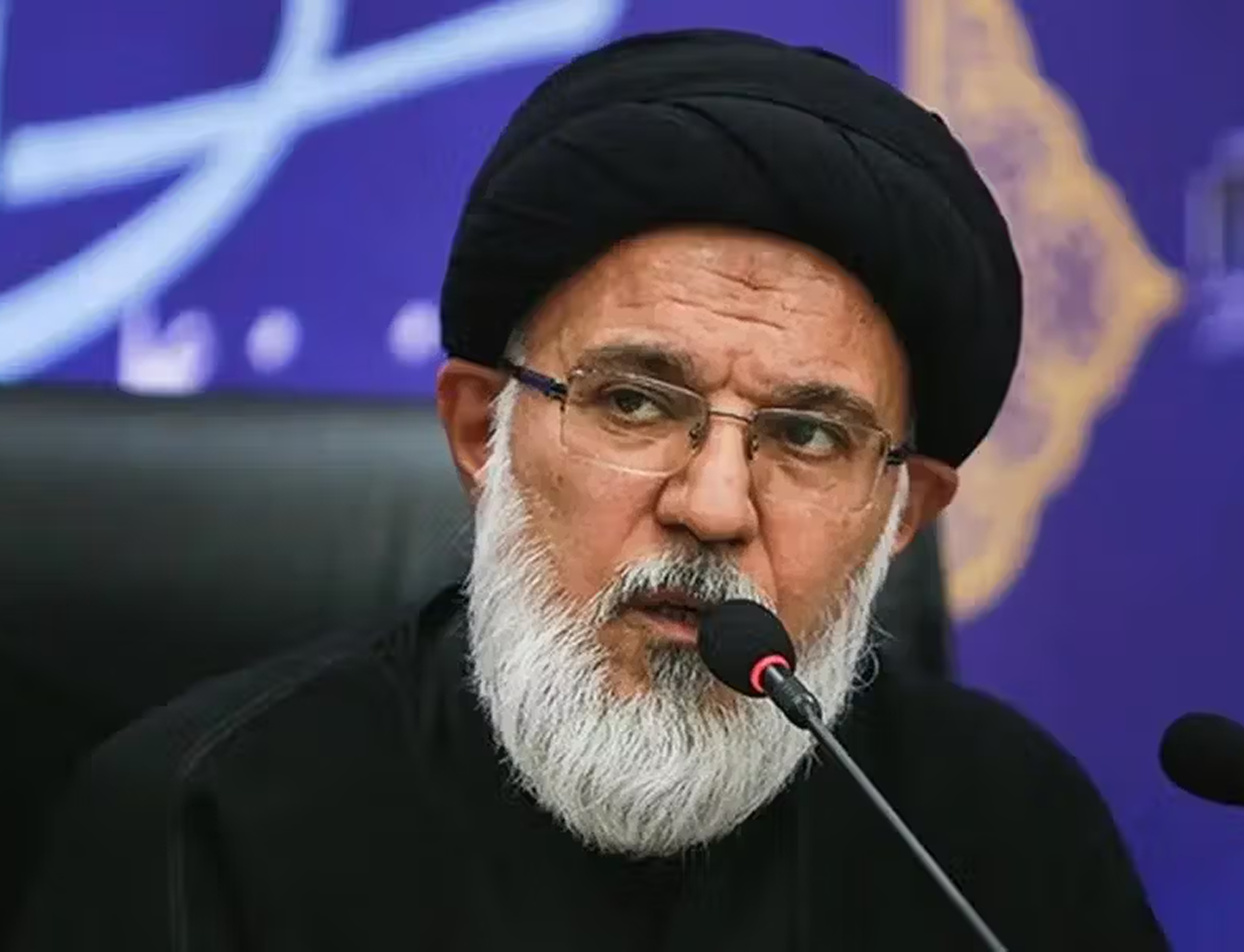
In the hidden corridors of Iran's theocratic power structure, one name has surfaced with alarming frequency among those positioned to inherit the mantle of Supreme Leader: Syed Mohammad Mehdi Mirbagheri, a 63-year-old cleric whose radical ideology makes even the Islamic Republic's current extremism appear moderate by comparison. Born in 1961 in the theological center of Qom, Mirbagheri has spent decades operating largely in the shadows, yet his fingerprints appear across some of the regime's most repressive chapters. From alleged links to the systematic poisoning of over 1,200 schoolgirls to public declarations justifying the deaths of half the world's population in service of his apocalyptic vision, Mirbagheri represents the crystallization of Iran's most uncompromising theocratic impulses.
As head of the Islamic Sciences Academy in Qom and a member of the 88-strong Assembly of Experts, the body constitutionally empowered to select Iran's Supreme Leader, Mirbagheri wields influence far beyond his public profile. His name emerged prominently following the May 2024 helicopter crash that killed President Ebrahim Raisi, a tragedy that triggered renewed speculation about succession planning within the aging leadership. While Ali Khamenei's son Mojtaba had long been considered the heir apparent, recent reports suggest the Supreme Leader has named three alternative successors, though their identities remain classified. Mirbagheri's positioning within the hardline establishment, his sayyid status as a claimed descendant of the Prophet Muhammad, and his unwavering commitment to absolute clerical rule make him a formidable contender in what may prove to be the Islamic Republic's most consequential leadership transition.
What makes Mirbagheri particularly dangerous is not merely his extreme positions on women's rights, Western influence, or religious mysticism. Rather, it is his systematic work to construct an ideological framework that justifies authoritarian violence as theological necessity, his cultivation of militant networks through the ultra-hardline Paydari Front, and his role in what critics describe as a "shadow government" that has increasingly constrained even the Islamic Republic's limited pretense of electoral politics. Multiple sources within Iran's fractured political landscape have characterized Mirbagheri as the intellectual architect of repression, a theorist whose academic veneer provides religious legitimacy to policies ranging from the violent suppression of the 2022 "Woman, Life, Freedom" protests to potential attacks on educational institutions serving girls.
Mohammad Mehdi Mirbagheri's formative years unfolded entirely within the ecosystem of Iran's religious establishment. Entering the Qom Seminary in 1975 at age 14, he immersed himself in the traditional Shia educational system that would shape not only his theological outlook but his understanding of political power. His teachers included some of the most influential, and controversial, figures in modern Iranian clerical politics.
Chief among these mentors was Mohammad Taqi Mesbah-Yazdi, a cleric whose name became synonymous with the most extreme interpretation of velayat-e faqih, the doctrine of absolute clerical guardianship that underpins Iran's political system. Mesbah-Yazdi, who died in January 2021, advocated a vision of Islamic governance so uncompromising that it made many of his fellow conservatives uncomfortable. He rejected any notion that government required popular legitimacy, famously declaring that "the people are ignorant sheep" and insisting that only divine sovereignty, channeled through the Supreme Leader, had any validity. Under Iranian law, the Guardian Council, a 12-member body half appointed directly by the Supreme Leader and half by his judicial appointee, vets all candidates for elected office. This ensures that even institutions nominally subject to popular vote remain firmly under clerical control, embodying Mesbah-Yazdi's conviction that democratic discourse is fundamentally incompatible with Islamic governance.
Mirbagheri absorbed these lessons thoroughly. Yet his ideological development also incorporated influences from another mentor: Syed Muniruddin Hosseini Hashemi, who founded the Islamic Sciences Academy in 1980. Hashemi represented a different strand of revolutionary thought, one focused on adapting traditional Shia concepts to contemporary political challenges. Where Mesbah-Yazdi emphasized unquestioning obedience to clerical authority, Hashemi sought to demonstrate that Islamic sciences could provide comprehensive answers to modern governance questions. This dual inheritance shaped Mirbagheri into something more complex than a simple dogmatist. He became a theorist capable of clothing reactionary positions in the language of scholarly inquiry, making extremism appear intellectually respectable.
By 2015, Mirbagheri's patient cultivation of clerical credentials bore fruit when voters in Semnan Province elected him to the Assembly of Experts. This body, comprising 88 senior Islamic jurists serving eight-year terms, holds theoretical power to supervise and dismiss the Supreme Leader, though in practice it has never challenged Khamenei. The Assembly's composition is heavily managed through the Guardian Council's vetting process, which routinely disqualifies moderate and reformist candidates. In the March 2024 Assembly elections, the Guardian Council rejected 510 candidates, approving only 138, and barred even prominent establishment figures like former President Hassan Rouhani. This systematic exclusion ensures the Assembly remains dominated by hardliners aligned with the Supreme Leader's vision, a dynamic that positions clerics like Mirbagheri as kingmakers in any future succession.
His ascent coincided with his assumption of leadership at the Islamic Sciences Academy, the institution his late mentor Hashemi had established. Under Mirbagheri's direction, the Academy has served dual purposes: ostensibly advancing scholarly research into Islamic thought while functionally operating as an ideological training ground for the regime's most committed cadres. The Academy's research centers span topics from "Fighting against Deviant Movements" to "Mahdiism and Future Studies," reflecting Mirbagheri's conviction that preparing society for the apocalyptic return of the Hidden Imam should guide all policy considerations.
At the core of Mirbagheri's worldview lies an apocalyptic interpretation of Twelver Shia Islam that transforms the Islamic Republic from a mere government into an eschatological project. According to this theology, the Twelfth Imam, Muhammad al-Mahdi, entered occultation in 941 CE and will return at the end of days to establish global Islamic rule following a period of unprecedented violence and chaos. For Mirbagheri and his followers, current events are not random political developments but signs of the approaching end times. The confrontation between Iran and Israel, Western cultural influence, and internal dissent are all manifestations of the final cosmic battle between truth and falsehood.
This apocalyptic framework has profound policy implications. In October 2024, Mirbagheri appeared on state television to deliver remarks that shocked even hardened observers of Iranian politics. "Even if 42,000 people have been killed, even if half the world is killed," he declared, "reaching the goal is worth it." He attributed similar sentiments to Ayatollah Khomeini, the Islamic Republic's founder, claiming that Khomeini had said that even if all the world's Muslims were killed and all Muslim women taken prisoner, the objective would justify the sacrifice. While the authenticity of this Khomeini quotation remains disputed, Mirbagheri's public embrace of such extreme positions illuminated the theological underpinnings of his politics.
For Mirbagheri, contemporary Iranians bear special responsibility in the divine plan. Drawing on selected Shia traditions, he teaches that Iranians have been designated by God to play a unique role in preparing the world for the Mahdi's return. The Islamic Revolution of 1979, in his interpretation, represents "the greatest and most legitimate social event during the occultation period," and the Islamic Republic's survival and expansion constitute essential prerequisites for the apocalyptic fulfillment. This vision transforms political opposition into religious heresy and elevates regime preservation to the status of cosmic necessity.
His commitment to velayat-e motlaqaye faqih, the absolute authority of the ruling jurist, flows directly from this eschatological framework. In traditional Shia jurisprudence, religious scholars have authority only in specific domains, primarily interpreting religious law. Khomeini revolutionized this concept by asserting that a qualified jurist should exercise comprehensive political authority during the Imam's absence. The 1989 constitutional amendments, implemented after Khomeini's death, further expanded this doctrine to make the Supreme Leader's power absolute and answerable only to God. Under this system, the Supreme Leader can override any law, suspend religious obligations including prayer and pilgrimage if he deems it necessary, and his commands carry the same weight as divine ordinances.
Mirbagheri has written extensively defending this maximalist interpretation. In his 1998 book on the foundations of religious government and velayat-e faqih, he argued that the ruling jurist must exercise "custody over all dimensions of society" and work systematically to "marginalize non-religious and tyrannical authority." Moreover, he insists that velayat-e faqih should not be confined to Iran's geographical boundaries but must be understood as a global principle. The Guardian Jurist's authority, he contends, extends over all Muslims worldwide, not merely those within the Islamic Republic's borders. This expansionist theological vision aligns perfectly with the Islamic Republic's regional strategy of cultivating proxy militias across the Middle East, from Hezbollah in Lebanon to the Houthis in Yemen, presenting these networks as expressions of religious obligation rather than mere geopolitical maneuvering.
Where Mirbagheri notably diverges from even hardline orthodoxy is in his hostility to Sufism and Islamic mysticism, positions that have brought him into implicit conflict with Supreme Leader Khamenei himself. In a 2009 sermon at the Feyziyeh School in Qom, Mirbagheri launched a remarkable attack on Rumi, the 13th-century Persian poet whose works are revered across the Islamic world and particularly in Iran. He criticized clerics who placed Rumi's Masnavi alongside the Quran, asking, "How can we place a book next to the Quran that explicitly insults the Commander of the Faithful and calls his father a polytheist?" This assault on Rumi is significant because Khamenei has repeatedly praised the poet as representing "the foundation of the foundations of religion." Mirbagheri's willingness to publicly contradict the Supreme Leader on this point suggests either extraordinary confidence in his own position or a calculated gambit to position himself as more uncompromising than Khamenei.
His rejection of mysticism in favor of rigid Sharia literalism has earned him comparisons to the Taliban. Like Afghanistan's extremist rulers, Mirbagheri prioritizes external conformity to religious law over the internal spiritual development emphasized by Sufi traditions. He has explicitly stated that "with Rumi's mysticism, you cannot govern the world," arguing that effective rule requires the harsh discipline of Sharia rather than the tolerant ambiguity of mystical poetry. This theological rigidity extends to his vision of international relations, cultural policy, and gender norms.
Perhaps no aspect of Mirbagheri's ideology has generated more alarm than his systematic opposition to women's education and autonomy. As early as 2011, he began warning against what he characterized as a Western conspiracy to educate Middle Eastern women. In public statements, he has argued that Western-style education for women, coupled with their entry into the workforce, represents a deliberate strategy to undermine Islamic societies by removing women from their "natural" roles as mothers and homemakers.
His 2012 remarks at Qom Seminary laid out this position with remarkable candor. He described how Western development models require women to pursue higher education, delay marriage, enter mixed-gender workplaces, and spend hours commuting on public transportation. "Then we tell them to maintain complete Islamic covering," he said, illustrating what he portrays as an impossible contradiction. "I'm not saying it's impossible," he continued, "but the conditions make it very difficult." The solution, in his view, is not to adapt Islamic practice to modern economic realities but to reject those realities entirely, preventing women from pursuing education and employment outside the home.
This is not mere conservatism but a comprehensive program to reverse decades of social progress. Under the Islamic Republic, women's university enrollment has actually increased dramatically, with women now constituting the majority of university students in many fields. This development, which many Iranians across the political spectrum view as a genuine achievement, Mirbagheri sees as a dangerous deviation requiring correction. He explicitly rejects the Western "development model" in favor of what he calls an "Islamic progress model" that would sharply curtail women's participation in public life.
The comparison to the Afghan Taliban is not hyperbolic. When the Taliban seized power in Afghanistan in 2021, among their first acts was closing girls' secondary schools and universities and banning women from most employment. Multiple Iranian scholars and activists have drawn direct parallels between Mirbagheri's ideology and Taliban practice. Mohammad Javad Akbarein, a religious scholar and journalist, has described Mirbagheri as "the Shia branch of the Taliban in Iran" and identified him as the leader of a fundamentalist current explicitly opposed to girls' education.
These warnings took on terrifying urgency following the wave of mysterious poisonings that swept Iranian girls' schools beginning in November 2022. The first reported incident occurred on November 30, 2022, in Qom, Mirbagheri's base of operations. Over subsequent months, poisoning attacks were reported at 91 schools across 20 provinces, affecting over 1,200 schoolgirls. Victims suffered respiratory problems, nausea, and other symptoms after being exposed to what investigators believe was an airborne chemical irritant, possibly a gas or aerosol deliberately introduced into school buildings.
The timing was striking. The attacks began just weeks after the eruption of nationwide protests following the September 16, 2022 death of Mahsa Amini, a 22-year-old Kurdish woman who died in the custody of the morality police after being arrested for allegedly wearing her hijab improperly. The protests, which adopted the slogan "Woman, Life, Freedom," represented the most serious challenge to the Islamic Republic in decades. Young women and girls led the demonstrations, burning their hijabs and demanding fundamental change. The regime's response was brutal: over 500 protesters were killed, 22,000 detained, and systematic torture documented. In this context, the school poisonings appeared to some observers as a campaign of retribution targeting the demographic most visible in the protests: young women asserting autonomy.
United Nations experts issued a statement in March 2023 expressing "outrage at the deliberate poisoning of more than 1,200 schoolgirls" and the state's failure to protect them or conduct swift investigations. The experts noted that authorities initially dismissed the poisonings as "stress" or "mass hysteria," with Interior Minister Ahmad Vahidi claiming that 90 percent of cases were psychological. This official response contrasted sharply with the government's speed in arresting protesters. "There is a stark contrast between the rapid deployment of force to arrest and jail peaceful protestors and an incapacity spanning months to identify and arrest perpetrators of large-scale, coordinated attacks against young girls," the UN statement observed.
Akbarein pointed directly at Mirbagheri and his networks. Writing in 2023, he identified Mirbagheri as "the mentor of a Basiji paramilitary gang in various cities" and noted that Mirbagheri had been warning about the dangers of educating women since 2011. "Over the past three decades, he has been planning and conceptualizing to control girls' education and implement maximalist Islam," Akbarein wrote. Mohammad Taqi Fazel Meybodi, a university professor and seminary instructor, told interviewers that the poisonings were not accidental and that "a Taliban-like movement in Qom and Isfahan" was orchestrating them. Meybodi labeled these perpetrators "Millennialists," a reference to their apocalyptic belief system, and identified Mirbagheri as their leader.
No criminal charges have been filed against Mirbagheri in connection with the poisonings, and he has issued no direct statement on the matter. The Iranian government announced in April 2023 that its investigation concluded the illnesses were caused by "mass hysteria" rather than toxic substances, a finding that independent observers found implausible given the scale, geographic distribution, and consistent symptomology of the attacks. The fact that no perpetrators have been prosecuted while the investigation was closed without resolution mirrors the pattern that followed the 2014 acid attacks against women in Isfahan, another case where religious extremism was suspected but never officially acknowledged as the motive.
The Isfahan acid attacks, which occurred during Mirbagheri's rise to prominence, share disturbing similarities with the school poisonings. In October 2014, multiple women in Isfahan, Iran's third-largest city, were attacked by assailants on motorcycles who threw acid at their faces, reportedly targeting women deemed improperly veiled. At least one woman died and many others were permanently disfigured, losing vision or suffering severe burns. The attacks coincided with parliamentary debate over legislation to increase enforcement of hijab requirements and came shortly after Isfahan's Friday prayer leader, a powerful religious figure, declared that women with "bad hijab" should face more than verbal reprimands. Despite initial promises of prosecution, the cases were quietly closed in 2018 with no convictions but offers of financial compensation to victims.
These incidents established a pattern: coordinated attacks against women and girls by perpetrators who are never identified or prosecuted, targeting behaviors or demographics that hardline clerics have condemned, followed by official responses that minimize the crimes and blame victims. Whether examining the acid attacks, the school poisonings, or the systematic crackdown on women defying mandatory hijab, the thread connecting them is a vision of enforced conformity to rigid gender norms that Mirbagheri has championed more vocally than perhaps any other senior cleric.
Mirbagheri's influence extends far beyond his formal positions through his role as spiritual guide to the Front of Islamic Revolution Stability, universally known as Paydari or the Steadfast Front. Founded in 2012 as an electoral coalition and registered as a political party in 2020, Paydari represents what analysts describe as "the extreme end of the fundamentalist camp" and "Iran's most right-wing party." The Economist has characterized its members as "Shia supremacists who oppose any kind of compromise with anyone inside or outside Iran."
The party's origins lie in a power struggle during the presidency of Mahmoud Ahmadinejad. When Ahmadinejad attempted to assert independence from Supreme Leader Khamenei by dismissing Intelligence Minister Heydar Moslehi in 2011, Khamenei immediately reinstated Moslehi. Ahmadinejad's refusal to accept this humiliation triggered a purge of his administration. Key former allies, including Sadegh Mahsouli (who had served as Interior Minister during the violently suppressed 2009 Green Movement protests) and Morteza Agha-Tehrani (Ahmadinejad's "ethics advisor"), broke with the president and formed Paydari. They branded Ahmadinejad and his remaining supporters as the "deviant current," effectively excommunicating them from the conservative coalition.
Mesbah-Yazdi served as Paydari's spiritual founder until his death in 2021, after which Mirbagheri inherited that role. The party's ideology centers on an apocalyptic interpretation of Shia Islam focused on preparing society for the return of the Hidden Imam. According to Paydari doctrine, this messianic figure will emerge from occultation only after a period of maximum chaos and violence, meaning that conflict with the West and internal purification through repression are not merely permissible but religiously mandated as prerequisites for salvation.
Paydari's practical agenda reflects this worldview. The party vehemently opposes any accommodation with the United States or Western powers, viewing the 2015 nuclear agreement as a betrayal and consistently advocating for maximum resistance even at the cost of crippling sanctions. It promotes what it calls an "economy of resistance" based on autarky and isolation rather than integration with global markets. It demands strict enforcement of hijab and other Islamic moral codes, with Agha-Tehrani, as chairman of Parliament's Cultural Committee, playing a key role in advancing the controversial "Chastity and Hijab Law" that proposes severe penalties for women who defy dress codes.
The party has systematically expanded its influence within Iran's power structures. In the March 2024 parliamentary elections, which saw historically low turnout amid widespread boycotts following the brutal suppression of the Mahsa Amini protests, Paydari and its affiliated Iran Morning Front emerged as one of three dominant factions in the legislature. The Guardian Council's mass disqualifications of moderate and even some conservative candidates appeared designed to favor Paydari-aligned candidates. In Tehran, Paydari candidate Mahmoud Nabavian secured first place with less than six percent of eligible votes, a statistic that illustrates how low participation combined with strategic vetting can install hardliners with minimal popular support.
Paydari's ties to the Islamic Revolutionary Guard Corps and its Basij paramilitary auxiliary run deep. The Basij, founded in 1979 as a volunteer militia to defend the revolution, now functions as the regime's ideological enforcer across Iranian society. New members undergo 45 days of combined military and ideological-political training, with approximately 20 percent of instruction devoted to indoctrination courses on topics like "Fundamentals of Belief," "Leadership Ethics," and interpretation of contemporary politics through the lens of absolute velayat-e faqih. The Basij deploys extensively in universities, schools, factories, and mosques, creating what critics describe as the regime's "eyes and ears" in every community. Multiple sources identify Mirbagheri as the mentor to Basiji networks across multiple provinces, suggesting he has cultivated militant cadres personally loyal to him and his ideology rather than to institutional authority.
This network became particularly visible during the June 2024 presidential election that followed Ebrahim Raisi's death. Mirbagheri publicly supported Saeed Jalili, a former nuclear negotiator and Supreme National Security Council secretary known for his inflexible negotiating stance that led to multiple rounds of UN sanctions against Iran between 2007 and 2013. Jalili's candidacy represented Paydari's vision: uncompromising hostility to the West, rejection of any diplomatic flexibility on the nuclear program, and commitment to ideological purity over pragmatic governance.
The election campaign exposed what reformist critics called a "shadow government" operating to constrain President Masoud Pezeshkian's administration. Rajanews, Paydari's media outlet, positioned itself as an alternative power center, constantly critiquing any perceived concession on foreign policy and demanding maximum confrontation with the United States and Israel. This parallel structure reportedly includes networks within the bureaucracy, security services, and clerical establishment that can obstruct policies they oppose regardless of electoral outcomes. The phenomenon is not unique to Paydari but represents the culmination of decades of institutional development that has made elected offices increasingly ceremonial while concentrating real power in unelected bodies controlled by or answerable to the Supreme Leader.
Mirbagheri's role in this shadow governance structure became a central theme during the 2024 campaign. Reformist media, including publications associated with outgoing President Hassan Rouhani's faction, highlighted Mirbagheri's extreme statements to mobilize voters against Jalili. They portrayed a vote for Jalili as effectively a vote for Mirbagheri and the apocalyptic ideology he represents. This strategy proved partially successful: Pezeshkian defeated Jalili in the runoff election with 53.7 percent to 44.3 percent, though turnout remained far below historic levels, reflecting widespread public alienation from the entire political system.
Yet the reformist campaign against Mirbagheri revealed the limitations of Iran's electoral politics. By invoking Mirbagheri as a bogeyman to drive turnout, reformists tacitly acknowledged that elections have become exercises in choosing between bad and worse rather than genuine democratic competition. The fact that someone with Mirbagheri's views sits in the Assembly of Experts, heads a major religious institution, and commands militant networks while facing no legal consequences for his role in repression demonstrates how thoroughly the system has been captured by forces that view popular sovereignty as at best irrelevant and at worst heretical.
The May 19, 2024 helicopter crash that killed President Ebrahim Raisi transformed succession speculation from abstract contingency planning to urgent political reality. Raisi, a hardline cleric who had served as chief justice before his presidency, was widely viewed as a potential successor to Khamenei. His death eliminated a carefully groomed candidate and forced renewed focus on alternative options.
Ali Khamenei, born in 1939, is now 86 years old and has experienced periodic health crises. His prolonged disappearance from public view during Israeli missile strikes in June 2025 triggered widespread speculation about his condition and reports that he had gone into hiding in secure bunkers. In this context, the Assembly of Experts' theoretical responsibility to select a new Supreme Leader acquired immediate practical significance.
For years, conventional wisdom held that Mojtaba Khamenei, Ali Khamenei's second son, represented the most likely successor. Born in 1969, Mojtaba has worked in his father's office, cultivates close relationships with the Islamic Revolutionary Guard Corps, and has acquired immense wealth and influence despite holding no formal government position. He played a key role in orchestrating the violent suppression of the 2009 Green Movement protests and has been accused by former president Mahmoud Ahmadinejad of embezzling state funds. Yet Mojtaba lacks senior clerical rank, possesses no significant religious scholarship, and has never held elected office or executive government responsibility. His selection would transform the Islamic Republic into an explicit hereditary monarchy, contradicting the revolutionary principles the system claims to embody.
Reporting in June 2025 suggested that Khamenei had addressed this problem by naming three alternative clerics as potential successors, deliberately excluding Mojtaba to avoid the appearance of dynastic succession. The identities of these three candidates remain officially secret, but informed speculation has consistently included Mirbagheri alongside Alireza Arafi, head of Qom seminaries and a Guardian Council member. Hassan Khomeini, grandson of the Islamic Republic's founder, has also been mentioned as a potential candidate who could provide continuity while projecting a more moderate image, though his relatively young age and limited religious credentials may disadvantage him.
Mirbagheri's credentials for the position are substantial within the logic of the system. As a sayyid, he can claim descent from the Prophet Muhammad through Fatima, the Prophet's daughter and wife of Ali, the first Imam. This genealogical claim, though unverifiable and disputed by many scholars, carries significant weight in Shia clerical culture, where bloodline has traditionally been considered a qualification for religious authority. He holds the rank necessary for ijtihad, the independent interpretation of Islamic law, having completed decades of study in Qom's seminary system under recognized masters. His tenure as head of the Islamic Sciences Academy and his membership in the Assembly of Experts since 2015 demonstrate institutional legitimacy.
More importantly, perhaps, Mirbagheri embodies the ideological trajectory that the Islamic Republic has followed increasingly since the 1990s: away from the populist revolutionary rhetoric that characterized Khomeini's era toward a more explicitly authoritarian religious governance justified by apocalyptic theology. Where Khomeini balanced theocratic principles with revolutionary mobilization and carefully maintained a degree of factional pluralism, Mirbagheri represents pure theocracy shorn of even symbolic democratic elements. His contempt for popular will, his rejection of any accommodation with Western powers or norms, and his vision of perpetual conflict culminating in divine intervention align perfectly with the trajectory of a regime that has become increasingly isolated internationally and repressive domestically.
Yet Mirbagheri also presents significant liabilities. His extreme positions on women, his attacks on Rumi, and his apocalyptic rhetoric may be too provocative even for the Islamic Republic's hardline establishment. Succession to the position of Supreme Leader requires Assembly of Experts approval, and while that body is thoroughly vetted to exclude moderates, it still contains factions with different priorities. Some members prioritize regime stability and survival, which might argue for a less confrontational figure. Others maintain connections to the merchant class and pragmatic conservatives who worry that Mirbagheri's economic isolationism would accelerate Iran's collapse. The Islamic Revolutionary Guard Corps, which has evolved into a massive economic conglomerate with vast business interests in construction, oil, telecommunications, and other sectors, might prefer a leader less committed to autarky and perpetual conflict.
There is also the question of how the broader Iranian public would respond. The Mahsa Amini protests demonstrated that large segments of Iranian society, particularly younger generations and women, fundamentally reject the Islamic Republic's ideological premises. The slogan "Woman, Life, Freedom" explicitly repudiated not merely specific policies but the entire framework of mandatory religious observance enforced by state violence. Elevating someone like Mirbagheri to the supreme leadership would likely provoke massive resistance, potentially threatening regime stability in ways that even the current leadership might find unacceptable.
Some analysts suggest that Mirbagheri's visibility during the 2024 election served purposes other than advancing his own candidacy for Supreme Leader. By publicly associating Jalili with Mirbagheri's extreme views, the reformist campaign may have been designed to make any alternative appear moderate by comparison. In this reading, Mirbagheri functions as an ideological extremity that makes the mainstream hardline position appear centrist. The regime benefits from this dynamic: it can point to figures like Mirbagheri to argue that the system contains diverse viewpoints while ensuring that even the most "moderate" approved candidates remain fundamentally committed to velayat-e faqih and repression of dissent.
Alternatively, Mirbagheri's prominence may reflect a genuine factional struggle within the regime between hardliners of different stripes. The Islamic Republic has never been monolithic; it has always contained competing power centers and ideological currents constrained within the boundaries of clerical rule. Mirbagheri and Paydari represent one pole: apocalyptic maximalists willing to risk regime collapse rather than compromise on ideological purity. Arrayed against them are pragmatic hardliners who share the commitment to clerical authoritarianism but prioritize regime survival over ideological consistency. These factions compete for influence over security policy, economic strategy, and cultural enforcement, with succession to the supreme leadership representing the ultimate prize.
What the figure of Mirbagheri ultimately reveals is less about one cleric's personal extremism than about the system that has nurtured and empowered him. The Islamic Republic did not suddenly produce ideological zealots in its fifth decade; it was founded by them and has systematically selected for their advancement. The institutional architecture ensures this outcome through multiple mechanisms.
The Guardian Council's vetting process eliminates candidates who might challenge the system's fundamental premises. In the 2024 Assembly of Experts election, 510 candidates were winnowed to 138, with moderates and even some establishment conservatives disqualified without explanation. Former President Hassan Rouhani, who had served in the Assembly for decades, was barred from seeking re-election, as were his former Interior Minister Mahmoud Alavi and Justice Minister Mostafa Pourmohammadi. When asked about the lack of appeals process, Guardian Council spokesperson Hadi Tahan Nazif stated flatly that "the presidential election law does not provide for appeals against disqualifications, and the decision of the Guardian Council is final."
This filtering extends throughout the political system. The Guardian Council, which vets candidates, is itself appointed by the Supreme Leader (six members) and the chief justice whom the Supreme Leader appoints (six members nominated by the judiciary and approved by Parliament). The Assembly of Experts, which theoretically oversees the Supreme Leader, can only include candidates approved by the Guardian Council. The result is a closed loop in which the Supreme Leader controls the bodies that nominally supervise him, making any accountability mechanism purely theoretical.
The same dynamic operates in the judiciary and security apparatus. When dissidents and writers were systematically murdered during the 1990s in what became known as the "chain murders," investigative journalists eventually traced the killings to the Intelligence Ministry. The alleged mastermind, Saeed Emami, was reported to have committed suicide in prison by drinking hair remover before he could implicate senior officials. Several subordinates were convicted, but no high-ranking officials faced consequences, and many of the murders remain officially unsolved. When acid attacks targeted women in Isfahan in 2014, no perpetrators were ever convicted despite initial arrests, and the cases were closed with only promises of compensation to victims. When over 1,200 schoolgirls were poisoned in 2022-2023, the government declared the incidents were "mass hysteria" and closed the investigation with no prosecutions.
This pattern of impunity is not accidental but structural. It reflects a system in which certain violence, when aligned with ideological objectives, is tacitly permitted even if officially condemned. Friday prayer leaders, who are appointed by the Supreme Leader's representative in each province, deliver sermons that are understood to carry special weight. When Isfahan's Friday prayer leader declared in 2014 that women with improper hijab should face more than words, the acid attacks that followed could be read as implementation of this guidance, regardless of whether any direct order was given. When girls' schools were poisoned beginning in November 2022, weeks after young women had led unprecedented protests against the regime, the attacks functioned as collective punishment whether or not they were centrally coordinated.
Mirbagheri's role in this ecosystem is as theorist and legitimizer. His writings on velayat-e faqih provide theological justification for absolute authority. His sermons on the apocalyptic necessity of conflict frame violence as religious obligation. His networks within the Basij and Paydari Front create organizational capacity for repression. When authorities want to crack down on women defying hijab rules, they can point to Mirbagheri's arguments that women's education and employment in Western models are incompatible with Islam. When they want to justify continued confrontation with the West despite devastating economic costs, they can invoke his theology of resistance as preparation for the Mahdi's return.
Yet Mirbagheri is also a product, not merely a producer, of this system. He was educated in state-supported seminaries, promoted through state-controlled institutions, and empowered by a political structure designed to concentrate authority in the hands of unelected clerics. If he were removed tomorrow, the system would produce another figure with similar views because the institutional incentives select for such figures. The Assembly of Experts will never include someone who questions velayat-e faqih because the Guardian Council excludes such candidates. The Guardian Council will never approve a moderate slate because the Supreme Leader appoints or controls the Council's membership. The Supreme Leader will never tolerate meaningful accountability because the constitution makes his authority absolute and answerable only to God.
This is why the reformist strategy of voting for the "lesser evil" to prevent figures like Mirbagheri from gaining power has repeatedly failed. It assumes that electoral participation can constrain the system when the system's design nullifies electoral outcomes that threaten clerical authority. Pezeshkian's victory over Jalili in 2024 may have prevented Paydari from directly controlling the presidency, but it did nothing to alter the underlying balance of power. The Guardian Council still vets all candidates, ensuring that even reformists accept velayat-e faqih. The Islamic Revolutionary Guard Corps still controls vast sectors of the economy and maintains veto power over security policy. The judiciary still imprisons dissidents and protesters in sham trials. And figures like Mirbagheri still sit in the Assembly of Experts, head major religious institutions, and cultivate militant networks while facing no legal consequences for their role in repression.
The emergence of Mohammad Mehdi Mirbagheri as a potential successor to Ali Khamenei represents not an aberration but the logical culmination of the Islamic Republic's trajectory. Over 45 years, the system has evolved from revolutionary populism toward increasingly naked authoritarianism justified by apocalyptic theology. Each crisis has prompted not liberalization but entrenchment: the suppression of the Green Movement in 2009, the violent response to economic protests in 2019, and the massacre of protesters following Mahsa Amini's death in 2022 demonstrate a leadership willing to kill its own citizens in large numbers to maintain power.
Mirbagheri's apocalyptic ideology, his contempt for popular sovereignty, his systematic opposition to women's rights, and his cultivation of militant networks make him dangerous. But he is dangerous precisely because he embodies principles that pervade the Islamic Republic's elite institutions. His views on velayat-e faqih are shared by the clerics who dominate the Assembly of Experts and Guardian Council. His hostility to accommodation with the West aligns with the Islamic Revolutionary Guard Corps' economic interests in sanctions evasion and smuggling. His vision of enforced religious conformity reflects the daily practice of the morality police, the Basij, and the judiciary.
Whether or not Mirbagheri personally ascends to the supreme leadership, his ideology has already succeeded in shaping Iran's trajectory. The 2024 parliamentary elections produced a legislature dominated by hardliners even more extreme than their predecessors. The systematic poisoning of schoolgirls proceeded without accountability. The enforcement of mandatory hijab continues through surveillance, fines, and business closures despite mass defiance. The nuclear program advances toward weaponization while diplomatic options narrow. And the succession planning for the post-Khamenei era apparently excludes anyone who might question these priorities.
For ordinary Iranians, particularly women and young people who have repeatedly demonstrated their rejection of theocratic authoritarianism, the prospect of someone like Mirbagheri acquiring supreme power is terrifying. It suggests that the limited social freedoms that have emerged despite official repression could be completely eliminated, that the already minimal space for dissent could close entirely, and that the violence of the state could intensify beyond even current levels.
Yet there is another possibility: that the very extremism Mirbagheri represents could accelerate the Islamic Republic's collapse. The regime's legitimacy has eroded catastrophically, with opinion surveys suggesting that the majority of Iranians, particularly younger generations, want fundamental change. The economy is in crisis, with inflation, unemployment, and corruption fueling discontent. Regional setbacks, including the collapse of allied governments in Syria and the degradation of Hezbollah's capabilities in Lebanon, have exposed the limits of Iran's "axis of resistance" strategy. The regime survives not through popular support but through repression and the opposition's fragmentation.
Elevating a figure like Mirbagheri might sharpen this contradiction to the breaking point. His apocalyptic worldview prioritizes ideological purity over regime survival, his economic autarky would deepen the crisis facing ordinary Iranians, and his policies toward women would guarantee continued resistance from the demographic that has proven most willing to challenge the system. A leadership so divorced from social reality, so committed to conflict, and so willing to sacrifice the present for an imagined eschatological future might finally exhaust the regime's capacity to adapt and endure.
What is certain is that figures like Mohammad Mehdi Mirbagheri will continue to shape Iran's future as long as the institutional architecture that empowers them remains intact. Meaningful change requires not merely replacing one leader with another within the existing system but transforming the system itself: ending the Guardian Council's veto over candidates, stripping clerics of political authority, establishing genuine judicial independence, and creating space for Iranians to freely determine their own governance. Until then, the shadow cleric and those who share his vision will remain poised to inherit power, ensuring that Iran's tragedy continues into another generation.