



The Nuclear Trap: How Iran Scapegoated a Young Scientist to Hide Its Security Collapse
Iran executed a nuclear expert for alleged Israeli espionage, obscuring catastrophic security failures exposed during regional conflict.
|
Pars Barghandan
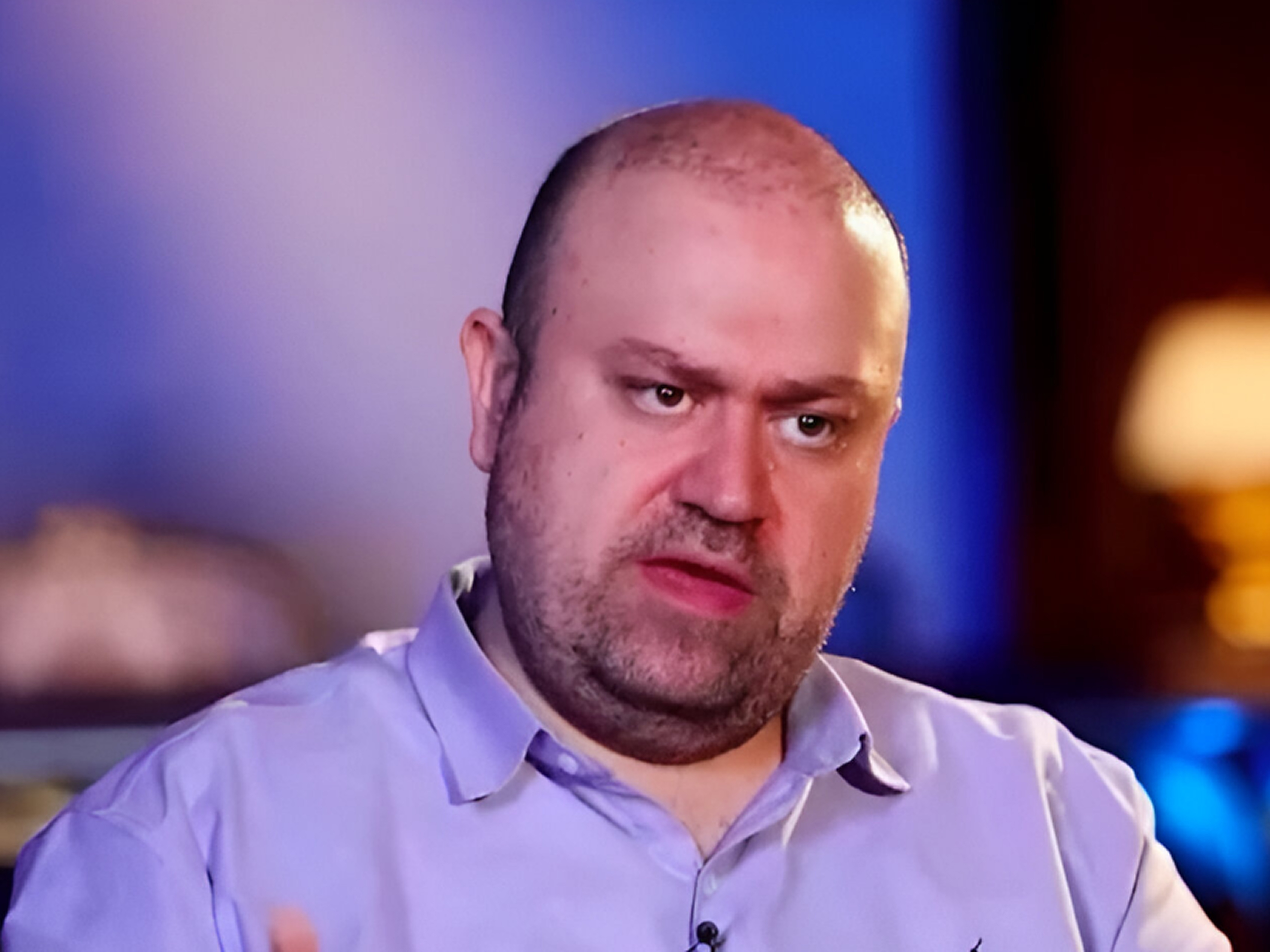
On the morning of August 6, 2025, Rouzbeh Vadi was executed at Ghezel Hesar Prison in Karaj, Iran. The 41-year-old senior nuclear safety expert at the Atomic Energy Organization of Iran had been convicted of espionage for Israel, specifically charged with leaking classified nuclear information to Mossad that allegedly led to the assassination of prominent nuclear scientists. His execution came weeks after a devastating 12-day war between the Islamic Republic and Israel, during which Israeli strikes exposed catastrophic security failures across Iran's military and nuclear infrastructure.
The official narrative portrayed Vadi as a traitor who, motivated by money and promises of foreign residence, sold state secrets through multiple clandestine meetings in Vienna. He allegedly confessed in detail, describing recruitment by Mossad operatives, the use of encrypted communications, and the transfer of sensitive data on uranium enrichment sites at Fordow and Natanz. Yet the circumstances surrounding his arrest, trial, and execution raise profound questions. Vadi was tried without independent counsel, denied family visits before execution, and his televised confession bore the hallmarks of coerced testimony that have characterized the Islamic Republic's security apparatus for decades. Relatives and independent observers claim he was tortured, that his mother was arrested to break his resistance, and that his execution served not to punish actual espionage but to deflect blame for systemic security failures the regime could not acknowledge.
This investigation examines Vadi's background, the allegations against him, the mechanisms of his prosecution, and the broader context of a regime desperate to shift responsibility for intelligence penetrations that reached the highest levels of its nuclear program.
Rouzbeh Vadi was born in 1984. He earned his bachelor's degree in mechanical engineering from Zanjan University before pursuing graduate studies in nuclear engineering with a focus on reactor design at Shahid Beheshti University. His master's thesis, "Safety Assessment of Bushehr Nuclear Power Plant Using Computational Fluid Dynamics," was among the first standardized research projects in this domain within Iran. His advisor was Dr. Ahmad Zolfaghari, a prominent nuclear safety expert and a leading figure in atomic reactor safety. In 2011, Vadi co-authored a paper with Zolfaghari and Dr. Abdolhamid Minoucher for the 18th Iranian Nuclear Conference, his first collaboration with senior managers of Iran's nuclear program. Fourteen years later, both Zolfaghari and Minoucher were killed in an Israeli missile strike during the 12-day war.
Vadi pursued doctoral studies at Amirkabir University of Technology, completing his PhD in 2016. His dissertation focused on the safety of nuclear facilities, emphasizing system resilience and multilayer analysis, supervised by Dr. Kamran Sepanloo, Director General of Nuclear Safety at the Atomic Energy Organization and Iran's scientific advisor to the International Atomic Energy Agency. In early 2017, shortly after completing his doctorate, Vadi was hired as a senior nuclear safety expert by the Nuclear Regulatory Authority of Iran, one of the most sensitive positions in the nuclear sector. Individuals in this role are responsible for directly reviewing safety standards and analyzing reports on vulnerabilities or resilience of atomic facilities.
Vadi had begun working on sensitive security projects approximately two years before his formal employment, while still a doctoral student. He participated as a technical expert in the safety assessment and analysis program for Tehran's research reactor. According to Amirkabir University's newsletter, Vadi was selected by Dr. Sepanloo to participate in specialized training courses organized by the International Atomic Energy Agency in Vienna, Austria. These courses were routine training programs for nuclear safety specialists, and other Iranian experts had attended before him. All of Vadi's trips to Vienna were authorized directly by Dr. Sepanloo, reflecting the regime's complete trust in him. Despite strict restrictions on foreign travel by personnel with access to sensitive nuclear information, Vadi was permitted to leave the country at least five times on official missions to Austria.
Following the 12-day war in 2025, during which Israeli strikes devastated Iranian military and nuclear sites with precision suggesting deep intelligence penetration, the judiciary announced Vadi's arrest. According to the Iran Human Rights Organization, Vadi had been detained approximately 20 months before the war began but was executed suddenly, weeks after the conflict ended, for disclosing classified nuclear information. Authorities claimed his leaks resulted in the assassination of a figure described as a nuclear scientist, though details remained vague.
The prosecution alleged that Vadi had been recruited by Mossad through online channels before his first trip to Austria. In his televised confession, Vadi described how an individual named Alex, purportedly a Mossad intelligence officer, contacted him via cyberspace, verified his identity, conducted preliminary assessments, and determined he was a valuable source given his workplace, access level, and field of activity. Days later, another officer named Kevin made contact, initiating formal cooperation. Kevin instructed Vadi to acquire a mobile phone, laptop, and two flash drives to establish a secure communication channel. After installing secure software and receiving training in encrypted communication, Vadi was allegedly ready to transfer information. His first trip to Vienna, according to the confession, was when the first face-to-face meeting with Mossad agents occurred.
The confession detailed elaborate security protocols: multiple location changes, physical searches requiring Vadi to strip to his underwear and socks, body scans, provision of new clothing for the meeting, and repeated transfers to prevent surveillance. The final meeting took place in a so-called Mossad safe house. Additional meetings followed the same protocols across multiple nights. Vadi underwent psychological tests and polygraph examinations to verify his honesty and the accuracy of his information. Only after passing these tests did Kevin confirm he met the requirements for cooperation. Vadi was then fully briefed on his assignments and returned to Tehran.
According to the Mossad instructions detailed in his confession, Vadi was required to send important classified nuclear information and answer questions posed by his handlers. In return, payment would be deposited in cryptocurrency to his digital wallet. Vadi stated, "I suggested to Kevin that I compile and send a weekly information package, and they gradually pay me. But the Mossad officer strongly opposed this approach and informed me that I must send all information at once and comprehensively so that after review and evaluation, appropriate compensation would be paid." He claimed to have transmitted data on the key facilities of Fordow and Natanz, both uranium enrichment sites, as well as information on the entry and exit of nuclear materials to uranium conversion facilities and fuel production plants.
Based on these confessions, Vadi was convicted of serious disruption of public order, extensive and knowing cooperation with Israeli intelligence services, and attempting to provide classified information in exchange for money. Citing Article 6 of the Law on Countering Hostile Actions of Israel Against Peace and Security, he was sentenced to death. Throughout the trial, he was denied access to independent, non-state-appointed lawyers. The Supreme Court of the Islamic Republic upheld the verdict. On August 6, 2025, in complete media silence and without a final visit with his family, Rouzbeh Vadi was executed.
The most controversial aspect of the case was the broadcast of Vadi's confession, in which he calmly and methodically described the details of his cooperation with Mossad, stating he had spied for Israel motivated by financial incentives and the promise of foreign residence for himself and his family. While confirming or refuting such confessions is difficult, many political analysts believe Vadi, like numerous political prisoners before him, was forced to confess under duress and torture, likely performing the scenario demanded by security interrogators in front of state television cameras to protect his family.
Months after Vadi's execution, an individual named Vahid Razavi, who identified himself as a relative of Rouzbeh, claimed the real reason for Vadi's arrest and espionage conviction was a dispute and conflict with managers at the Nuclear Regulatory Organization, and that no credible evidence had been presented by judicial or security authorities to prove the charges. According to Razavi, Vadi was subjected to severe torture during interrogation, resulting in the fracture of two ribs and one leg, yet he resisted. To break his resistance and force a confession, interrogators arrested his mother. They showed him photos taken during her detention and threatened that if he did not cooperate and confess on camera, his mother would also be tortured. Vadi, who had a strong emotional attachment to his mother, was compelled to cooperate with security agents to save her.
These allegations reinforce the view of those who believe Rouzbeh Vadi did not commit espionage and was forced to confess under torture. Given the Islamic Republic's history of fabricating cases and issuing unlawful execution sentences, it is not far-fetched that Vadi was another victim of the regime. Human rights organizations have repeatedly criticized the practice of forced confessions and the handling of security cases in the Islamic Republic's judicial courts. Like most Iranians, they believe the regime uses such confessions as tools to influence public opinion and document state narratives.
The process of adjudicating Vadi's charges, a trial without independent counsel, rapid issuance of the death sentence, broadcast of confessions, and sudden execution after the 12-day war, suggests the case served as a tool for the regime to send a security message and threaten the country's scientific community. The regime partly publicized the case to warn the public, especially those working on classified projects. In contrast, the Israeli government, as usual, remained silent, neither confirming nor denying the Islamic Republic's claim regarding Vadi's cooperation with Mossad. The Islamic Republic, aside from Vadi's confession, presented no credible evidence to prove the espionage of this nuclear expert.
The 12-day war was a turning point that exposed all the hidden security vulnerabilities of the Islamic Republic. Israeli forces struck sensitive military centers, command bunkers, and nuclear and missile sites with devastating precision. The heavy, lightning-fast attacks proved that security gaps were far deeper than the regime had imagined. Key military commanders close to Ali Khamenei, alongside senior managers of the nuclear project, were killed in the initial seconds of the war. Leaks of classified information led to the exposure of nuclear facility blueprints, the routes commanders used for movement, and even the timing of military meetings, demonstrating that security penetration had occurred at the highest levels of governance.
During those days of war, state media, most importantly the national broadcasting service, tried to portray the regime's crisis situation as entirely normal and under control, while reality was starkly different. A regime that considered itself the foremost regional power and threatened Israel with annihilation now found itself in a crisis caused primarily by years of internal corruption and incompetence. Ali Khamenei, who was supposed to order his forces to level Haifa and Tel Aviv, had retreated deep underground, and his trusted commanders, fearing Israeli strikes, were hidden in hospitals. After 12 days, the war ended, and as always, the regime claimed victory. Political and military officials, instead of being held accountable for this scandal and deep penetration, again spoke of Israel's defeat and the regime's power.
The regime chose its habitual path to navigate this crisis: security officials, using familiar terminology, blamed internal spies, infiltrators, and the enemy's fifth column for treason. The regime sought to conceal its security failures through media threats and the unveiling of newly manufactured missiles. But most people did not believe this show of power because they had seen with their own eyes that the missile capability and authority the regime claimed were merely a hollow shell that collapsed during those 12 days. For these people, the 12-day war was not just a military conflict. It was a mirror that showed the Islamic Republic its true nature, and because this image was unbearable, it decided to compensate for the catastrophic defeat by increasing repression and executions. Rouzbeh Vadi's execution was implemented as part of this policy.
The regime's contradictions are glaring. On one hand, it claims no serious security penetration exists within the system's structure. On the other, through extensive propaganda about Vadi's case, it admitted that Mossad forces succeeded in recruiting one of its senior nuclear experts. Vadi's execution did not compensate for the regime's security failure; instead, it made the scandal more apparent. Executing a senior expert at the Atomic Energy Organization means that even individuals with long track records, approved and trusted by the regime, with high-level access, can easily be targeted for recruitment by foreign services.
Amirkabir University's newsletter, in a report published after Vadi's execution, claimed there is no credible document proving Vadi voluntarily or for financial motives transferred classified information to Mossad. According to these reports, the regime's only basis for accusing Vadi of espionage was his educational trips to Austria and his efforts to advance the country's nuclear safety. Therefore, it appears the regime's scenario regarding secret meetings, body searches, polygraph tests, and transfer of classified information was fabricated to scapegoat Vadi.
Whether Vadi's online recruitment claim is true or not, intelligence services do use online platforms for recruitment. According to a report by the cybersecurity firm Mandiant, the Islamic Republic in recent years has executed extensive cyber and counter-intelligence operations to identify individuals whose likelihood of cooperating with foreign intelligence services, especially Israeli services, is high. Mandiant is a reputable global firm specializing in cybersecurity, focusing on identifying, analyzing, and countering cyberattacks and complex intelligence threats. The company typically collaborates with organizations, governments, and large corporations to identify and contain threats that could endanger data, networks, or critical infrastructure.
According to Mandiant, the Islamic Republic's cyber campaign, relying on social engineering tools, established a large network including 35 fake recruitment websites and dozens of fabricated accounts on social networks. Its main goal was to collect precise personal, professional, and educational information from Iranians living inside or outside the country who might pose a potential threat to the regime. Information gathered from these fake websites is highly valuable to Iran's security apparatus because it helps identify individuals interested in cooperating with governments the Islamic Republic calls hostile countries. It also enables tracking of political activists, dissidents, journalists, human rights defenders, and even Persian-speaking immigrants, and can be used to uncover espionage operations against the regime.
Based on Mandiant's analysis, the campaign's operation, in terms of objectives and structure, closely resembles the surveillance operations of the Islamic Revolutionary Guard Corps. Recruitment websites, as the main pillar of operations, presented themselves as human resources companies based in Israel or international recruitment centers for cyber and intelligence experts. To gain the trust of individuals interested in intelligence or security activities, they used images such as Israeli national symbols or famous Tel Aviv buildings. In the next phase, fake accounts on social networks, especially X (formerly Twitter), promoted these websites.
The websites, introduced as recruitment centers for employees and intelligence officers of the Islamic Republic or international firms active in security, cyber, and intelligence, displayed various promotional messages on their main pages, such as: "In the past year, we have successfully recruited hundreds of intelligence and cyber specialists. If you have relevant experience, join us. We guarantee your privacy. Intelligence background required. Excellent salary for selected individuals." These messages encouraged individuals with security backgrounds who wanted to cooperate with Israeli intelligence services to submit their identity, educational, and employment information without concern, enabling the Islamic Republic's cyber forces to use this data not only to create targeted profiles of different individuals and categorize potential threats but, when necessary, to use the data for actual security operations such as building security files, arrest, or threatening and harassing individuals and their families.
Despite executing this expensive cyber operation, it does not appear the regime's security vulnerabilities have been repaired. According to Yossi Cohen, former head of Mossad, Israel has penetrated the heart of the Islamic Republic in recent years, and intelligence services under Khamenei's command, both at the cyber and field levels, are structurally vulnerable to penetration by foreign services, especially Israel.
Rouzbeh Vadi's execution as a nuclear scientist convicted of selling classified information to Mossad was one instance that highlighted the structural weakness and deep vulnerability of the Islamic Republic. A regime that denied any internal involvement in Israeli operations, by exposing this case and executing Vadi, admitted that Mossad had accessed top-secret nuclear information and the internal structure of the Atomic Energy Organization. This means a security failure where the strictest layers of counterintelligence should have been in place.
It remains unclear whether Rouzbeh Vadi was a traitor who, as the regime claims, was willing to provide important nuclear secrets to Israel in exchange for money and a foreign passport, or whether he was a victim forced into a coerced confession and sacrificed in the regime's security scenario. Amirkabir University's newsletter, in its post-execution report, asserted there is no credible evidence proving Vadi voluntarily or for financial motives transferred classified information to Mossad. According to these reports, the regime's only justification for accusing Vadi of espionage was his educational trips to Austria and his work to advance the country's nuclear safety. It appears the regime's narrative of secret meetings, body searches, polygraph tests, and classified data transfer was fabricated to scapegoat Vadi.
The Islamic Republic, throughout its history, has weaponized execution as a tool of terror and control. Espionage charges, often opaque and unverifiable, provide a convenient pretext for eliminating perceived threats while deflecting blame for systemic failures. In Vadi's case, the timing, the lack of independent legal representation, the broadcast confession under duress, and the absence of credible evidence all point to a show trial designed to serve political ends rather than deliver justice.
For Iran's scientific community, Vadi's execution sends a chilling message: even those who serve the regime loyally, who hold advanced degrees, who are vetted and trusted, can be discarded when convenient. For the broader public, it is another reminder that the Islamic Republic's judicial system functions not to uphold law but to preserve power, sacrificing individuals to maintain narratives of strength even as the foundations of that strength crumble. The truth of what Rouzbeh Vadi did or did not do may never be known. What is clear is that his execution solved nothing, exposed much, and added one more name to the long list of those consumed by a regime that fears accountability more than any external enemy.