



Behind the Curtain: Allegations About Ali Khamenei's Secret Life and Inner Circle
Investigation into allegations about Ali Khamenei's private life and what they reveal about power.
|
Pars Barghandan
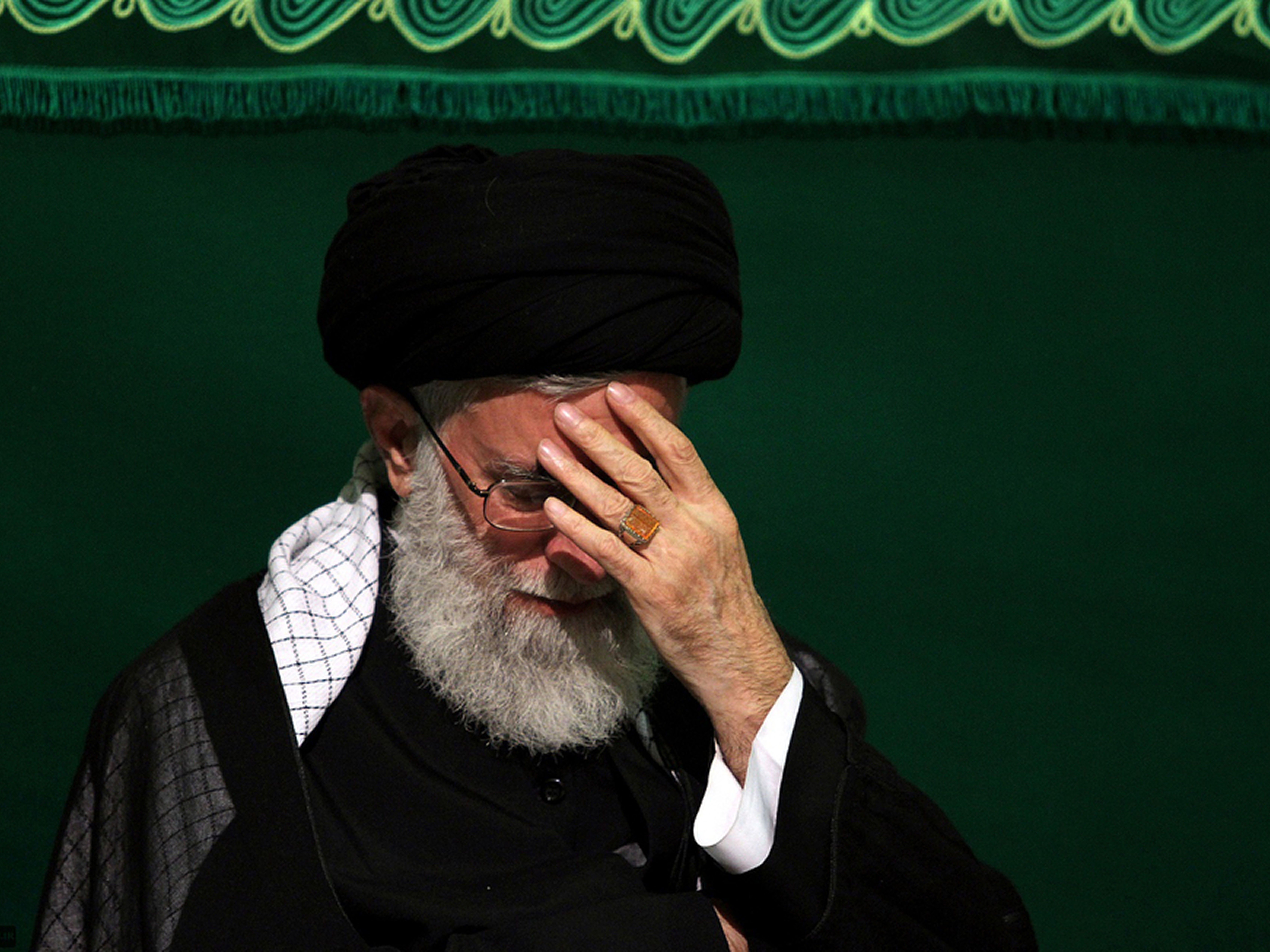
For decades, the official portrait of Ali Khamenei has been tightly controlled: a pious jurist, austere in personal life, devoted to worship and literature, and elevated above ordinary human weakness. This cultivated image, central to the legitimacy of the Islamic Republic, has long been protected by a thick wall of censorship and fear. Questioning his personal conduct was treated not simply as political dissent, but as a form of sacrilege.
Yet over the past years a parallel narrative has taken shape in memoirs, interviews and high profile testimonies from people who were, at different times, close to Khamenei or embedded deep within the system. A former cellmate from the Shah’s prisons describes a young, devout man whose later rule produced the very suffering he once vowed to abolish. A former relative by marriage, a senior cleric who became a dissident, recounts disturbing stories from Khamenei’s youth in Mashhad. A controversial journalist abducted and executed by the Islamic Republic linked Khamenei to the protection of a powerful Quran reciter accused of sexually abusing boys. And most explosively, a Western analyst who penetrated media structures close to his office, later exposed as linked to Israeli intelligence, publicly claimed knowledge of Khamenei’s intimate preferences and vulnerabilities.
Separately, none of these accounts would be sufficient to overturn an official narrative built over 36 years of absolute power. Together, and in the context of a regime shaken by war, protests and internal crisis, they form a mosaic that challenges the myth of an ascetic, unworldly leader. They suggest a more complex figure at the apex of a system where personal secrets, alleged misconduct and political repression are deeply intertwined.
This investigation does not claim to adjudicate the truth of every allegation. Rather, it examines who is making them, what they say, how the state has responded, and what their accumulation reveals about the structure and psychology of power around Khamenei at a moment when long standing taboos are finally cracking.
Ali Hosseini Khamenei was born in 1939 in Mashhad, into a clerical family. His trajectory from seminary student to the single most powerful man in the country maps directly onto the upheavals of modern Iranian history.
As a young cleric, he joined the Islamist opposition to the Pahlavi monarchy, was arrested several times and spent periods in prison and internal exile. After the 1979 revolution he quickly rose through the new hierarchy: from parliamentarian to Tehran Friday Prayer leader, then president after the assassination of Mohammad Ali Rajai. The decisive break came in 1989. With the death of Ayatollah Khomeini, and despite lacking the highest formal religious rank, Khamenei was elevated to the position of Supreme Leader after a constitutional change removed the requirement that the leader be a recognized marja.
From that point, he set about consolidating power inside what is known as the Beyt, the leader’s office. Over time, key nodes of the system were brought firmly under his influence: the Guardian Council, top commanders of the Revolutionary Guard, the judiciary, state broadcasting and major religious institutions. No significant decision in the Islamic Republic could realistically proceed against his will.
The public image that accompanied this consolidation was crafted with care. State media and loyal clerics emphasized:
personal modesty
devotion to classical Persian and Arabic literature
deep engagement in prayer and supplication
distance from personal luxury
In this narrative, Khamenei was simultaneously jurist, spiritual guide and national father figure, someone whose private life was as disciplined as his public persona appeared severe.
This aura of sanctity served a clear political function. Criticizing policy could occasionally be tolerated. Questioning the personal moral integrity of the leader, however, was framed as crossing a red line that placed one outside the bounds of acceptable discourse. For years, even many in opposition circles avoided publicly addressing rumors about his private conduct, focusing instead on repression, corruption and foreign policy.
That separation is now eroding. As the system has been shaken by a 12 day war that exposed its vulnerabilities, mass protests and deep economic crisis, the once untouchable image of Khamenei has come under unprecedented scrutiny, both domestically and abroad. The allegations examined in this report derive their explosive power not only from their content, but from the fact that they target the very core of the leader’s carefully built moral persona.
Among the most striking testimonies about Khamenei’s early years comes from Houshang Asadi, a left wing journalist imprisoned during the Shah’s rule. Asadi shared a cell with Khamenei in the mid 1970s in Tehran’s notorious Joint Committee detention center, later reused by the Islamic Republic itself.
Asadi’s recollections draw a portrait that sits uneasily alongside the record of Khamenei’s later rule. He recounts a man who:
prayed fervently, sometimes standing by the barred window to recite with tearful intensity because he found the cell floor impure
was gentle and courteous in personal interactions, fond of poetry and classical literature
wept after prayer and spoke of a future Islamic government that would end oppression and suffering
In one remembered winter scene from 1974, Asadi describes giving Khamenei a pullover his future wife had gifted him, because the cleric was shivering in the cold. Khamenei, he says, embraced him in tears and delivered a sentence that haunted Asadi for decades: once Islam is in power, “not a single tear of the oppressed will be shed.”
The power of this anecdote lies in its bitter contrast with what followed. Asadi later wrote that the same man who had once promised an end to tears presided over a system where “hundreds and thousands” were tortured, killed or crushed during uprisings. His memoir asks a direct question addressed to the now omnipotent leader: do you remember that promise, and how do you reconcile it with the orders for repression and executions given under your authority?
Asadi’s testimony does not deal with sexual misconduct or personal scandal. Its focus is moral and political: the metamorphosis of a devout, seemingly compassionate prisoner into the architect and guarantor of a security state. Yet it establishes two important foundations. First, that Khamenei’s sense of spiritual mission appears genuine in his youth. Second, that there is a long standing pattern of dissonance between his professed ethical ideals and the violent reality of the system he commands.
If Asadi represents an ideological outsider who once shared Khamenei’s cell, Sheikh Ali Tehrani stands for a very different type of witness: a clerical insider and close relative who later broke with the system.
Tehrani, once a respected cleric in the early years of the revolution, was married to Khamenei’s sister Badri. From this dual position inside both the family and the religious establishment, he later emerged as a fierce critic of the leader and the Islamic Republic, issuing public statements and interviews from exile.
Among the most controversial parts of his testimony concerns Khamenei’s youth in Mashhad. Tehrani alleged that as a young seminarian, Khamenei, along with several fellow students, regularly visited a public bathhouse in Mashhad known as Hammam Mansouri. According to his account, these visits were not for ritual ablutions alone but involved behavior that religious law would classify as grave sin. Tehrani claimed that inappropriate acts took place there and that Khamenei played a direct role. He further asserted that this was an open secret among neighborhood acquaintances and some contemporaries from his seminary days.
What gives these allegations particular weight in the eyes of some critics is not only Tehrani’s former proximity, but the silence that followed. Over the years, Badri Khamenei, his sister and Tehrani’s wife, never publicly denied or refuted this part of his narrative, even when she herself later distanced from the regime and labeled her brother a despot. For certain observers, that silence has been interpreted as tacit confirmation, although it must also be noted that family members can remain silent for many reasons unrelated to the truth or falsity of specific claims.
Former insiders such as Mojtaba Vahedi, once a senior adviser to reformist cleric Mehdi Karroubi, have stated in interviews that they regard Tehrani’s accounts as credible, given his long residence within the inner circles of power and the absence of any apparent incentive to fabricate such damaging stories late in life.
None of these claims has ever been directly addressed by Khamenei or his office. The allegations have neither been formally contested nor meaningfully investigated in any transparent forum. The result is a lingering unresolved narrative about the leader’s early moral conduct, one that resurfaced repeatedly in recent years as networked media undermined the regime’s ability to contain uncomfortable stories.
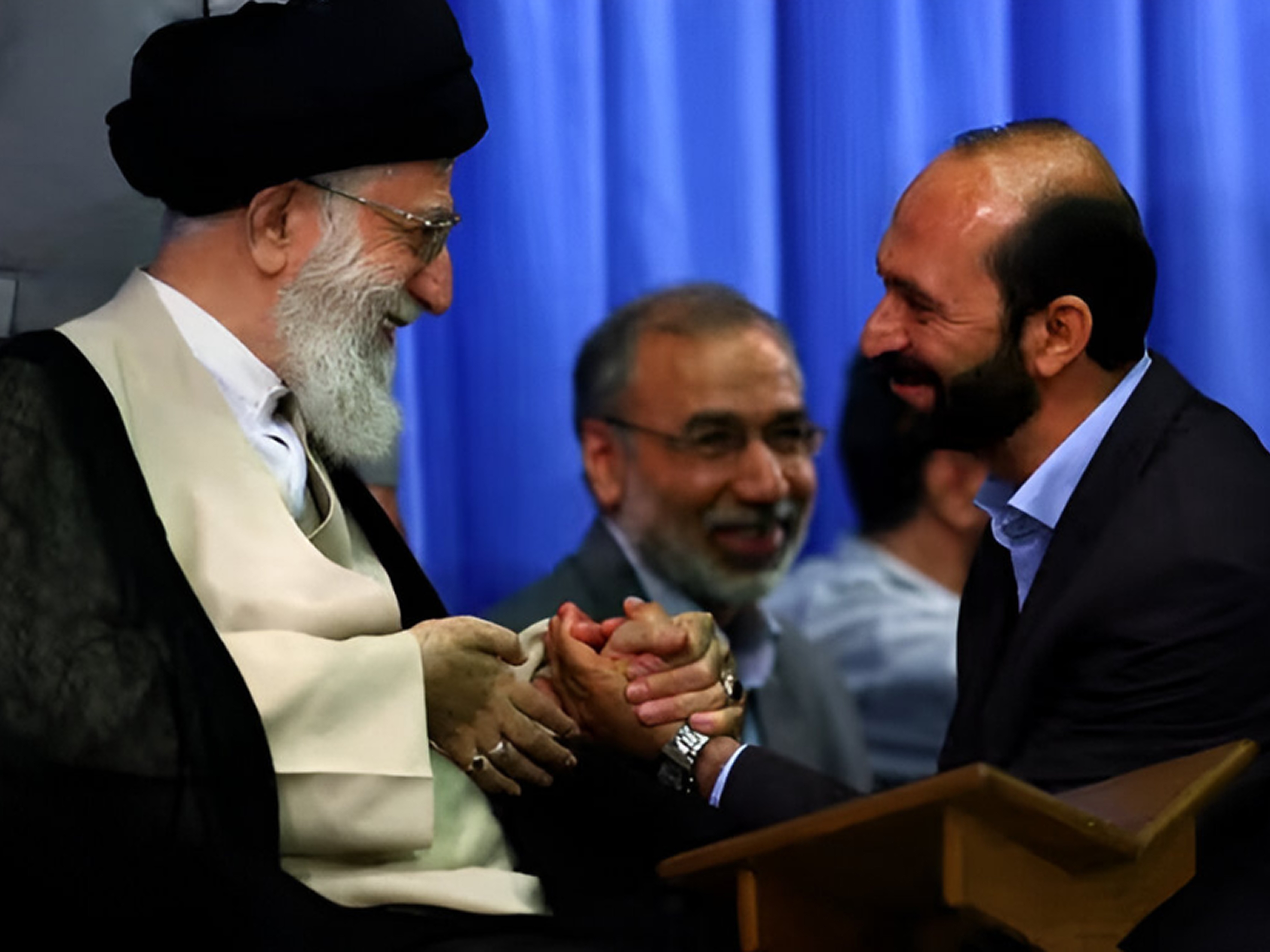
If Ali Tehrani’s recollections look back to Khamenei’s youth, another cluster of allegations focuses squarely on his conduct as leader in handling accusations against favored figures.
The most prominent case is that of Saeed Toosi, a well known Quran reciter closely associated with the leader’s circle. Toosi was accused by multiple families of sexually abusing teenage boys under his tutelage. According to public reports, at least 13 families came forward with formal complaints, backed, they said, by medical documents and recorded testimony from their sons. For a brief period, there were indications that the case had entered the judicial system.
Then, abruptly, the proceedings stalled. The charges were effectively neutralized and Toosi was ultimately cleared in a higher court. Despite the accusations, he continued to appear in official religious programs and at events connected to the leader’s office, as if nothing had happened.
The most detailed claims about what transpired inside the system came from Ruhollah Zam, the founder of the opposition channel Amad News. Zam, later lured into captivity, returned to Iran under false pretenses and executed after a high profile intelligence operation, had long alleged that Toosi’s protection came directly from Khamenei.
Zam claimed that:
the evidence against Toosi was considered sufficient by lower level judicial authorities
intervention from the highest political level stopped the case from proceeding
Khamenei’s office provided Toosi with substantial material support, including a residence in Tehran
Khamenei himself maintained a close, highly personal relationship with Toosi, including private visits in civilian clothing and overnight stays at the reciter’s residence
These allegations, if accurate, would suggest that the leader used his unrivaled authority to shield a favored associate from accountability in a case of systematic abuse against minors. They would also indicate that personal attachment or dependence, rather than legal principle, determined outcomes in the justice system.
Crucially, while state outlets worked to discredit Zam generally, neither Khamenei nor his office issued a clear, detailed refutation of his specific claims regarding Toosi. The absence of a transparent, independent investigation into the accusations against Toosi, combined with the reciter’s continued official prominence, has fueled the perception that proximity to the leader’s office can override even the gravest charges.
This perception is further shaped by how critics interpret Khamenei’s alleged pattern of preferences. Here, the figure of Katherine Shakdam enters the picture.
Katherine Shakdam, a French analyst of Jewish background who spent years writing for Iranian state linked outlets under an adopted Muslim name and appearance, represents an unusual kind of insider. She was not a lifelong member of the system, nor a relative, nor a cleric. Instead, she gained access through the media apparatus surrounding the leader.
For a time, Shakdam worked closely with platforms and organizations aligned with the Beyt, participating in religious and political programming, and positioning herself as a committed Shia voice defending the Islamic Republic’s line. Later, revelations emerged that she had maintained a relationship with Israeli intelligence. Whether this was an operational relationship or primarily one of information sharing remains contested, but Iranian officials themselves eventually labeled her an infiltrator.
In a subsequent American television appearance, Shakdam made a series of assertive claims about Khamenei and his milieu. She asserted that she had worked in such proximity to his office that only a single wall separated her from the room where he conducted daily affairs. She then moved into more explosive territory, claiming:
that Khamenei had “never had a problem” with sexual scandal involving women because he was fundamentally uninterested in them
that among senior officials it was taken for granted he preferred boys to girls
that this understood preference shaped how the inner circle viewed or handled potential personal scandals
These statements connected, in the minds of many, with earlier narratives about the Mashhad bathhouse and the Toosi case. While Shakdam did not present documentary proof, the convergence of themes around male adolescents and privileged protection for certain accused figures added to an already charged atmosphere.
From the state’s perspective, Shakdam is easily dismissed as a hostile asset, and indeed, once her links to Israel were acknowledged, official narratives portrayed her as part of an information warfare campaign. Yet this very status also underscores a structural weakness. If someone with her background was able to penetrate media channels so close to the leader’s office, it raises serious questions about the vetting and security protocols of the regime’s most sensitive propaganda outlets.
Beyond factual disputes, Shakdam’s intervention had two major effects. First, it shattered yet another taboo by speaking bluntly about the leader’s supposed intimate preferences on international television. Second, it created a bridge in public perception between disparate allegations previously dismissed as isolated rumors. Stories that had once circulated separately among dissidents and in the diaspora suddenly appeared, for many viewers, as interlocking parts of a single pattern.
For much of his rule, Khamenei benefited from a near total protective bubble in international discourse. Foreign governments criticized the Islamic Republic’s policies, but rarely addressed the leader’s personal life. At home, legal and physical risks made such discussion nearly unthinkable.
That environment has shifted. As the regime has faced growing domestic unrest and international confrontation, its opponents have become bolder, and foreign actors have shown less hesitation in targeting Khamenei himself.
In one high profile example, former US president Donald Trump publicly mocked Khamenei after a confrontation, imitating his solemn face and declaring that he had been “badly defeated” and needed to admit reality. Such direct personal ridicule of the Supreme Leader by a sitting or former American president would have been almost unimaginable in previous decades.
At the same time, the official Farsi language social media account associated with Israel’s Mossad published a post insinuating that Khamenei was either constantly sleeping or under the influence of narcotics, implying substance abuse. This claim, amplified by outlets such as Fox News and the Jerusalem Post, again lacked concrete evidence but nonetheless entered the global information stream.
Inside Iran and the diaspora, these external attacks intersect with internal testimonies. For many citizens, the idea of a leader cloistered in a palace like complex, detached from the lived reality of ordinary people and potentially reliant on medication or other substances, resonates with their perception of an aging, increasingly isolated ruler presiding over a system in deep crisis.
What is new is less the content of the rumors than their visibility. With social media and satellite television, lines once enforced by domestic censorship have become porous. Allegations about personal frailty, addiction, sexual preference or past misconduct that once lived only in private conversations now circulate widely, reaching millions in real time.
The result is a profound erosion of the aura of invulnerability that once surrounded Khamenei’s person. Whether or not specific allegations are accurate, the very fact that they can be voiced, repeated and debated without immediate erasure signals a decisive weakening of the censorship regime around his image.
It would be a mistake to view these allegations solely as a matter of voyeurism about one individual’s private life. Their real significance lies in what they reveal about the architecture of power in the Islamic Republic.
Several themes recur:
Secrecy and impunity: From the unresolved stories of Hammam Mansouri to the handling of the Saeed Toosi case, the pattern suggests that proximity to the leader’s office can provide effective immunity from scrutiny, even in matters as serious as sexual abuse of minors. This undermines any claim that the rule of law applies equally to all.
Personal loyalty over institutional integrity: The alleged interventions in judicial processes, and the persistent protection of compromised figures, indicate that personal bonds and perceptions of usefulness to the leader take precedence over legal norms or public morality.
Vulnerability to infiltration: The Shakdam affair, by the regime’s own admission, shows that the intense politicization of media and the hunger for foreign validation can create openings for adversarial intelligence services in the heart of the propaganda system.
Erosion of moral legitimacy: Witnesses like Houshang Asadi, who contrast the weeping young prisoner in the Shah’s jails with the unyielding leader who orders crackdowns on protesters, highlight a catastrophic gap between early ideals and later practices. The repeated emergence of sexual and personal misconduct allegations amplifies this moral collapse.
Collapse of taboo: Perhaps most importantly, the combined effect of internal dissent (including from Khamenei’s own sister), dissident testimonies, foreign intelligence narratives and popular anger has broken the previously unchallenged taboo around scrutinizing the leader’s private conduct. This signals a deeper crisis of symbolic authority than any policy dispute.
Whatever the precise factual contour of each specific claim, the overall picture is unmistakable. A system that for decades invested enormous resources into portraying its leader as an untouchable model of piety now finds that image contaminated by unresolved allegations, unanswered questions and visible hypocrisy.
The transformation of Ali Khamenei, in public perception, from an almost sacred figure into a fallible, secretive and possibly compromised man at the apex of an oppressive state is not simply a personal tragedy or a public relations problem. It is a structural fault line. In a theocratic system that rests so heavily on the presumed moral superiority of its supreme jurist, the exposure or even credible suspicion of serious personal failings carries political consequences far beyond any individual scandal.
As more voices from the past and present speak out, and as external actors exploit every crack in the façade, the question facing the Islamic Republic is no longer only about policies or succession. It is about whether a state built on the sanctification of one man can survive the slow but relentless desacralization of his image in the eyes of those it seeks to govern.