

Bodies in the Reservoir: How the Islamic Republic Disposed of Protesting Youth
Dozens of bound corpses discovered in Karaj Dam reveal systematic concealment of protesters killed in 2019 and 2022 uprisings.
|
Pars Barghandan
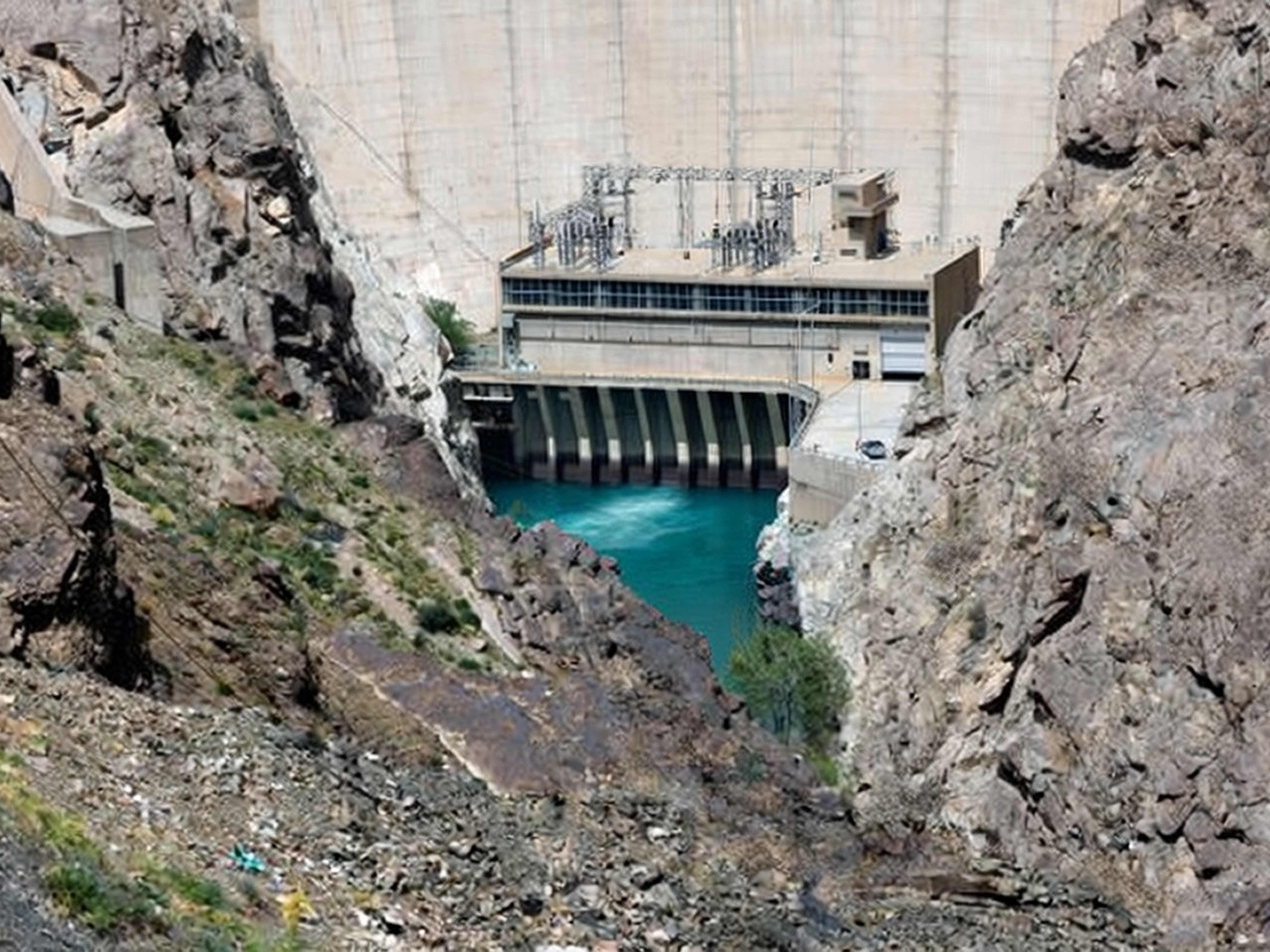
Years after the November 2019 massacre and the 2022 protests, a grim new dimension of one of the darkest chapters in the Islamic Republic's history has emerged. As the Karaj Dam receded due to drought, the earth revealed secrets it had hidden in its depths for years. In the dried reservoir bed, dozens of unidentified bodies were discovered. The provincial newspaper Payam Sepidar of Alborz province reported on Sunday, 18 Aban 1404, that from the beginning of the dam's drying process until Shahrivar 1404, at least 74 unidentified bodies had been found in the reservoir bed. Bodies that were mostly bound hand and foot and abandoned in the reservoir wrapped in plastic, carpets, or rugs. To date, judicial and security authorities have provided no information about their identities or causes of death. Hours after the report was published, this section was deleted from the web version of Payam Sepidar. But websites such as Ruyedad 24, Zamaneh, and Kayhan London republished the news, noting that security forces rapidly moved to prevent its spread. The regime hastily denied the report, and according to local sources, arrest and interrogation orders were issued for those who had a role in publishing it. The media environment in Alborz province came under complete control, and any reference to this matter faced immediate censorship.
But reviewing past events shows this is not the first time such discoveries have occurred. Official reports and independent testimony from 2019 until today have repeatedly spoken of a similar pattern: arrest of protesters, their sudden disappearance, and ultimately the discovery of bodies in dams and rivers across the country, from the Karun in Ahvaz to Zaribar in Marivan. All are signs of a systematic policy of elimination, concealment, and denial. This investigation unveils one of the most catastrophic methods of suppression in Iran's contemporary history, a method that displays not only violence but absolute cruelty. A catastrophe during which the regime, to hide the traces of its crimes, threw protesters' bodies into dams and rivers so that no trace of them would remain. This narrative is not only about the bodies discovered in Karaj Dam. It is about hundreds of freedom-loving youth who were arrested during the years of protest and never returned. Families who searched for their loved ones for months and years were met with only one sentence: we have no information.
Based on human rights reports, family testimony, and censored media documents, this investigation exposes one of the most inhumane crimes a regime has committed against its own people, a crime whose truth, even after years, still rises from the depths of the earth.
November 2019 was one of the bloodiest and darkest chapters in the history of the Islamic Republic. On the morning of Friday, 24 Aban, the regime made a sudden decision without public notification and tripled the price of gasoline. A decision made not through legal channels but by direct order of the Supreme Council for Coordination of the Heads of Powers, a council that, with Ali Khamenei's approval, effectively operated above parliament and law. Within hours, a wave of rage and protest began in Ahvaz, Mashhad, Sirjan, and Shiraz and spread to over one hundred cities nationwide. Streets filled with protesters demanding an end to poverty, corruption, and injustice, but instead of answers, bullets awaited them.
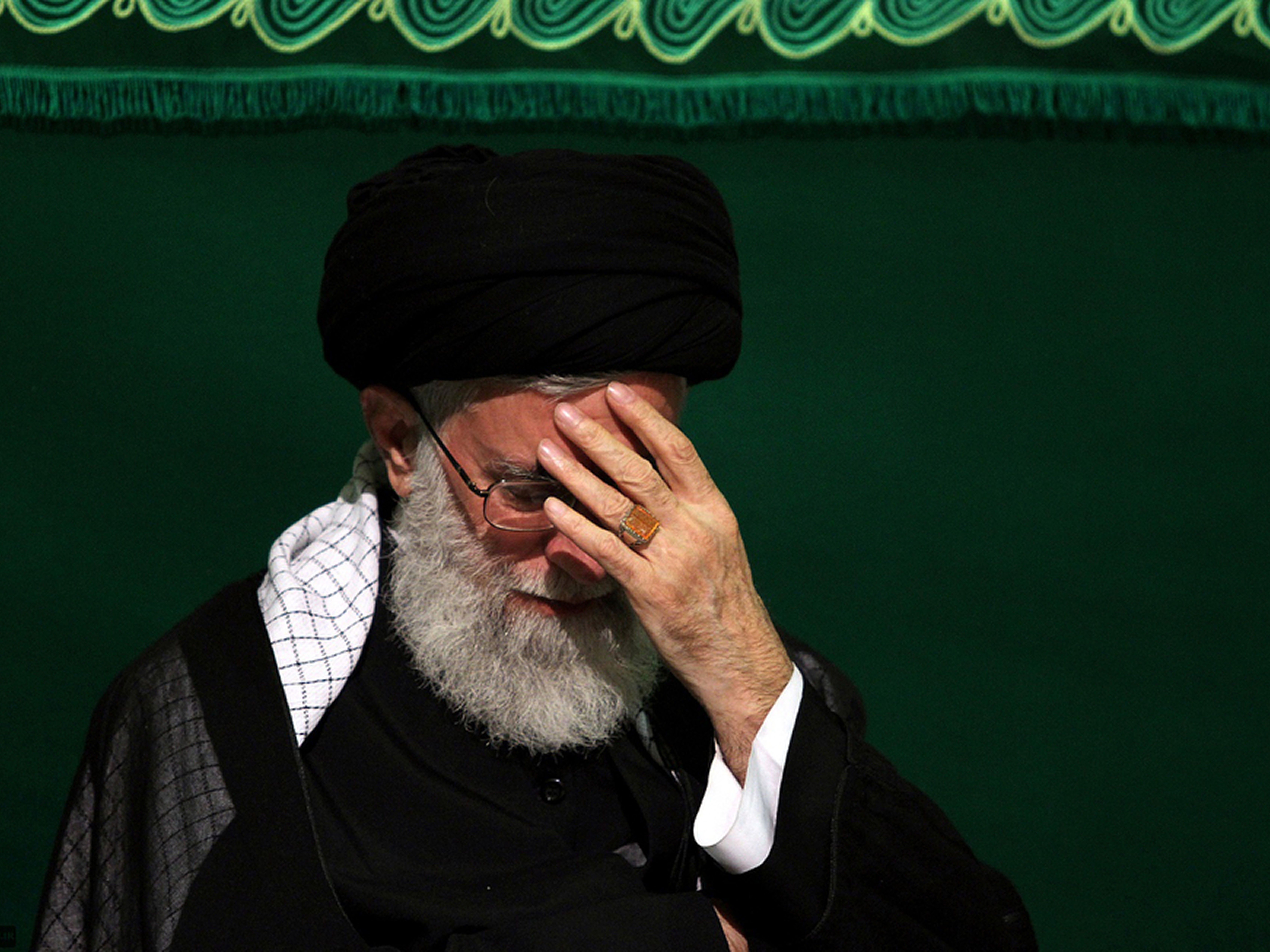
On Sunday, 26 Aban, an emergency session of the Supreme National Security Council chaired by Hassan Rouhani was convened. Ali Larijani in that session requested direct intervention by Khamenei, and the next morning the Leader of the Islamic Republic explicitly endorsed the crackdown in his jurisprudence lecture, stating: "I told the heads of powers to make this decision and it must be implemented." Minutes after that speech, the internet was cut off across Iran and the order to shoot was issued. Khamenei declared: "Insecurity is the greatest calamity for any country, for any society... I say no one should help these villains. No rational and worthy person who cares about their country, who cares about their comfortable life, should help them. These are villains. These acts are not the work of ordinary people... When a decision has been made by the heads of the three powers, it's not about the government, it's not about one ministry. The heads of the three powers of the country sat down and made a decision based on expert backing."
Within days, the streets of various cities became the scene of an unprecedented massacre. Reports spoke of direct shooting at unarmed civilians, and according to data collected from independent sources, more than 1,500 people were killed across the country, a figure later confirmed by Reuters. But what happened after the gunfire fell silent may have been even more horrific than the massacre itself. In the weeks and months afterward, countless families remained uninformed about their children's fate. The regime neither published precise statistics of the dead nor the names of those arrested. Many protesters' bodies were not delivered to families, and some were only contacted by unknown callers who, in exchange for silence, promised to hand over the corpse.
One month after the start of the protests, multiple reports were published from Kurdistan and Khuzestan provinces reporting the discovery of protesters' bodies in rivers and dams. One of the first cases concerned Ershad Rahmanian, a young man from Marivan who was arrested by security forces on the evening of 26 Aban in front of one of the city's hospitals, and his family heard nothing more of him from that day. On 24 Azar, exactly one month later, the dam keepers of Marivan returned his corpse. A body bearing signs of torture and injuries indicating a painful death. Local reports and human rights sources confirmed that a few days before, five other bodies had also been found in Vahdat Dam in Sanandaj: Rahimi, Masoud Amini, Reza Sadeghi, Soran Mohammadi, and Ali Javaheri, all detainees from the Marivan protests. It was also reported that four other corpses had been dumped in Zaribar Lake.
Hengaw, a human rights news website, wrote that Ershad Rahmanian, 28 years old and a graduate in emergency medicine, was arrested on Sunday, 26 Aban, while taking his mother to a medical center in Marivan, and his whereabouts had been unknown since then. A source close to the Rahmanian family stated that Ershad's body was discovered with his hands and feet broken and his head shattered by a bullet. Kamyar Ahmadi, Ershad Rahmanian's uncle, told some Persian-language media that security forces were pressuring the family to say Ershad had committed suicide. He said in an interview that security operatives were responsible for killing his nephew. Referring to the clashes in Marivan on 26 Aban, he said: "Even if someone had depression, on that day, in that chaos, would they find an opportunity to get caught, go outside the city several tens of kilometers, and then throw themselves into the water?"
Apparently there were four people, but they found Ershad in the Garan Dam, a reservoir outside Marivan. For four weeks the family searched for him, from the day of the 26th when he took his mother to the hospital, brought her home, went out, and never returned. The family went looking for him everywhere. He recalled: "I tried to tell them such things had happened. For two weeks I constantly talked to them. He had gone out on the 26th, the 26th was exactly in Marivan. He went out of the house and from that day he was gone. But in any case, he was someone well-known in that city, and everyone trusted him. If you ask anyone, he was a polite boy. In any case, he was a student. Now what bothers the family most is that, for example, they make up rumors or they go to the family and say you must say he committed suicide. They told them that. Then they told them now they've made up something else, like saying he loved some girl and then he committed suicide. But even if someone had depression, on that day, in that chaos, would they find an opportunity to get a taxi, go outside the city several tens of kilometers, then throw themselves into the water?"
The uncle confirmed that security officials had said this: "Yes, exactly. Just a few minutes ago, when I was talking, he said the security atmosphere is so heavy that no one dares to breathe. Right in front of his house, yesterday several people found a body in the Sedgaran compound. The body was transferred to forensics. One person from our second-degree relatives learned that such a body was found. He went for identification, then called the family at 5 a.m. yesterday: yes, this is Ershad himself. Ershad's mother and father still haven't seen the body." When asked about reports that the body was mutilated, he said: "According to the reports available, those who initially found the body say his skull was split and his bones were broken in several places. All my stress is that they won't give the body, or they'll want to bury it somehow and we won't know what they did to him."
In those very days when the smell of blood from November had not yet cleared from the streets, a video circulated on social media. An image of security forces and divers standing beside the Karun River, pulling out the body of a young man from the water. It was said he was one of the November protesters. A body, mutilated and lifeless, emerged from the water, but no official authority mentioned his name. The circulation of this video and similar news reinforced the hypothesis that the actual number of November casualties was far higher than the regime's undeclared figures. But the catastrophe did not end there. In subsequent days, images were published showing a diver from Kermanshah named Bahman Parvaresh pulling bodies from behind the dam, bodies with bound hands that appeared to have been intentionally thrown into the water. The publication of these images created a deep shock in society. The images were so painful they became a symbol of the regime's silent crime among the people.
But the Islamic Republic's response was not investigation, not transparency, but suppression of the news and construction of a false narrative. State media quickly went to work and aired a video of Bahman Parvaresh, forcing him to make a coerced confession in which he said the bodies were from an old incident and recent rumors were all lies. His tired face and broken tone in that video reminded many people of that same repetitive pattern: denial, distortion, and silencing of witnesses. Parvaresh, in a forced televised statement on 25 Azar 1398, said: "Today, approximately 9:30 p.m., news has been spread on social media, WhatsApp and Telegram. The news is a rumor. I have been the subject of rumors for about two years, rumors of my death or a rumor that several people in Karaj Dam were political prisoners who drowned. I was looking for a drowned person when I encountered these drowned bodies. Later, security forces came and detained me. All this news is rumors spread by incompetent and envious individuals. I am Bahman Parvaresh, a diver and rescuer from Kermanshah, servant of the people of Iran, who has been active in rescue operations for twenty years throughout the country."
From the Karun to the Sedgaran Dam, from Zaribar to Karaj Dam, a clear trace of a deadly policy can be seen: concealing bodies in water. Bodies that were thrown into the depths of dams in hopes of disappearing, so that perhaps no one would ask about their fate. While families were still searching for traces of their children and images of bodies from dams and rivers had shocked people, the response of Islamic Republic authorities was nothing but the familiar repetition: denial, distortion, and fabrication. Gholamhossein Esmaili, the then-spokesperson of the judiciary, in a press conference on 26 Aban 1398, in response to a journalist's question about finding protesters' corpses in rivers, said the judiciary investigates every suspicious death: "Wherever a body is discovered, even if a person died of a heart attack, we investigate... But entering into the story of creating casualties and making up statistics is another matter."
He brazenly called reports about discovered bodies with signs of torture the storytelling of ill-wishers and claimed: "Publishing such cases indicates that the enemies of the system want to create challenges for the Islamic Republic and the people." When journalists asked him about Amnesty International's report, which had declared the death toll at least 304, his answer was once again the same old pattern: "These are the false claimants of Amnesty International and human rights. We consider these reports propaganda scenarios."
While families were retrieving their children's bound bodies from the water, officials spoke of enemy statistics-making in front of cameras. While divers and citizens filmed the discovery of bodies, the regime tried with fabricated scenarios to reduce reality to a natural accident. This pattern was repeated over time. Each time after protests, bodies were found in waters, dams, and river banks. Bodies with bound hands, without identity, and in complete media silence. Human rights activists believe that many of the bodies found in dams and rivers had died under torture before being thrown into the water or were even executed summarily so that no trace of them would remain.
Now, years after that silent massacre, the discovery of dozens of bodies in the dried bed of Karaj Dam has once again revived that dark pattern. The signs and similarities are so obvious that one cannot consider this catastrophe separate from past crimes. Bodies with bound hands wrapped in rugs and plastic, without identity and without explanation, exactly as in November 2019 and afterward, when protesters would disappear and then be found in water or desert. No official authority has provided any explanation, and security apparatuses are hastily erasing traces, familiar behavior that reeks of cover-up and crime.
Most likely, these bodies belong to protesters and citizens who were arrested in the 2022 protests and subsequent months and were eliminated without name or trace, the same generation that shouted "Woman, Life, Freedom" in the streets and received bullets and batons in response. Now, with the lowering of Karaj Dam's water level, the bloody past has shown itself again. A fresh catastrophe that appears to be a continuation of that same chain of death, a crime that the regime tries to bury each time, but the truth keeps rising from under earth and water.
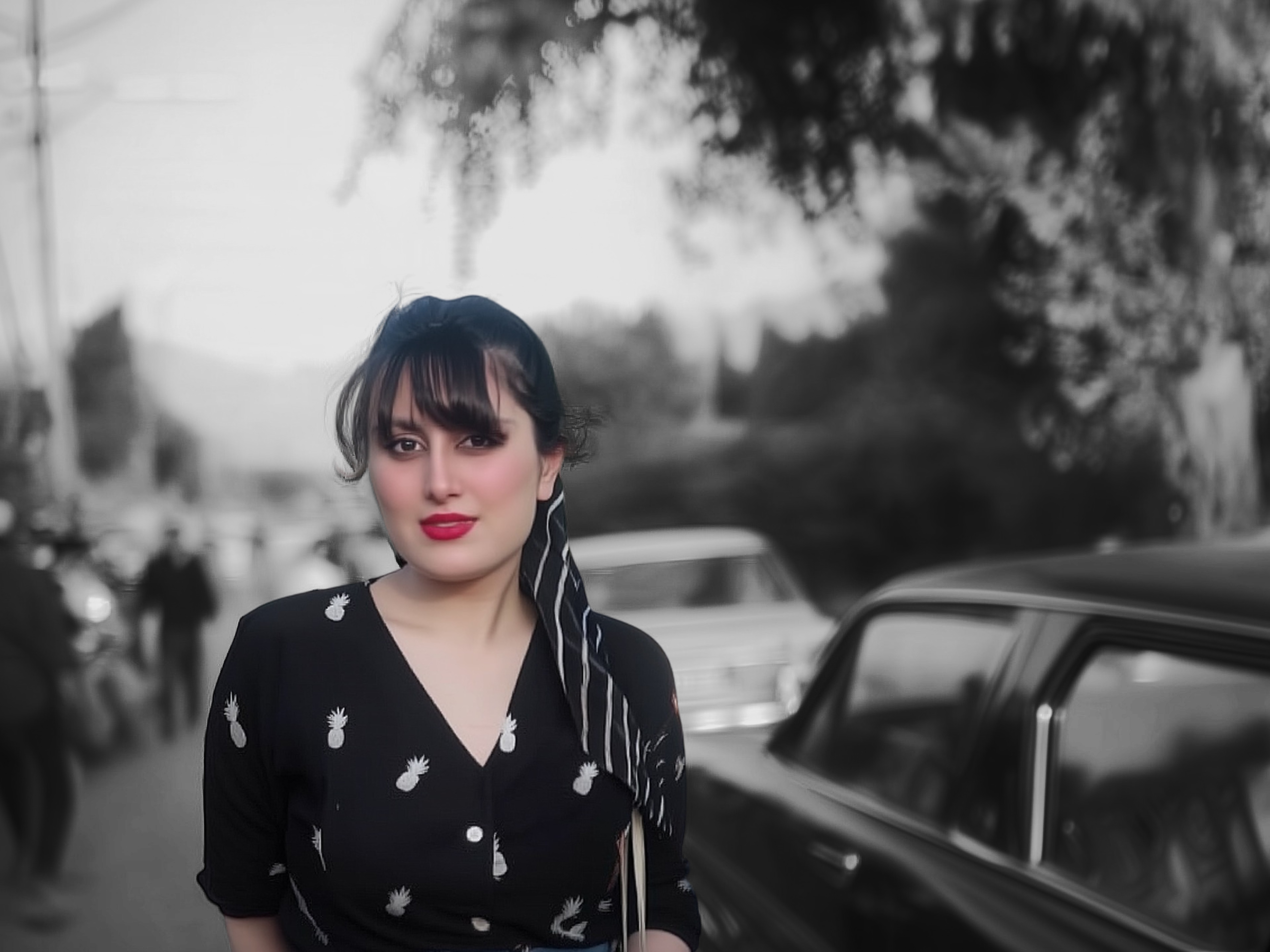
One of the most painful tragedies during the 2022 protests was the suspicious death of a brave girl in Khuzestan. Dunya Farhadi, a 22-year-old girl from Izeh, is one of the silent symbols of this cycle of crime. Born on 19 Esfand 1380, she was a student of architecture at Azad University in Ahvaz, a quiet, smiling girl who loved design. On Wednesday, 16 Azar 1401, coinciding with Student Day, Dunya clashed with Basij forces near the coastal boulevard and close to the cable bridge in Ahvaz during student gatherings. Witnesses saw several members of the Revolutionary Guards forcibly put her into a Land Cruiser vehicle and take her away. For eight full days her family searched for her, scouring the entire city, from hospitals to detention centers, from Guards Intelligence to the police station, but no one answered, until one dark morning in Azar month the Karun River returned Dunya's body.
Her body had been shot. Her hands and feet had been bound and signs of torture were visible on her body. No one took responsibility for this crime. No report, no prosecution, not even condolences. The only thing remaining was her gravestone with a sentence she herself had previously written: "Remember my smiles. Smile. I have seen the end of this darkness. Light is on the way."
Dunya Farhadi was neither the first victim of this cycle nor the last. She was one of dozens of youths who disappeared during the 2022 uprising and whose bodies were found in waters or deserts, victims of a generation who came to the streets with dreams of life and freedom and were silenced with naked and merciless violence.
In the collective memory of the Iranian people, recent years have been recorded as the darkest and bloodiest chapters of contemporary history, days when bullets replaced dialogue and streets became an unequal battlefield. A regime armed to the teeth against unarmed people whose only weapons were faith, hope, and love of freedom. From November 2019 to the 2022 uprising, the Islamic Republic mercilessly attacked the body of the nation. Thousands were killed, wounded, or disappeared across the country. Mothers who stayed awake at night in front of prisons to hear news of their children received only silence and threats in response. Many of those youths never returned. Their bodies were buried in deserts or consigned to the depths of rivers and dams so that no sign of the truth would remain.
The discovery of at least 74 unidentified bodies in Karaj Dam is not an isolated incident but rather the exposure of a systematic policy implemented at the highest levels of the Islamic Republic. This is a method of state terror designed to eliminate evidence, intimidate families, and deny accountability. The pattern is consistent: arrest during protests, disappearance without judicial process, execution or death under torture, disposal of bodies in water to prevent identification and investigation, intimidation and silencing of families who seek answers, censorship of media that report discoveries, and fabrication of alternative narratives such as suicide, accidents, or old bodies from unrelated incidents.
The refusal of authorities to provide information about the identities of those found in Karaj Dam, the immediate censorship of local reporting, and the arrest of journalists involved all follow the familiar script. The regime's systematic disposal of bodies in dams and rivers serves multiple purposes. It eliminates forensic evidence of torture and execution, prevents families from having burial sites that could become pilgrimage points and symbols of resistance, denies the regime's opponents the ability to document and count the dead, and sows terror among potential protesters by demonstrating that the state can make people vanish without trace.
Yet despite all efforts at concealment, the truth continues to emerge. The drought that lowered Karaj Dam's water level literally and metaphorically exposed what the regime sought to keep hidden. Families of the disappeared, human rights organizations, and ordinary citizens continue to document, remember, and demand accountability. The blood of those youths still flows in the veins of this land, and their silenced voices echo in the conscience of a nation. They neither lost nor were silenced. Their cry rises from under the earth, from under the water, from the heart of darkness, and has become light today.
History has shown that no system based on lies, repression, and the blood of innocents endures. A regime built on the bones of Iranian youth will sooner or later collapse under the weight of that very blood. A day will come when the cry of bereaved mothers will shatter the heavy sleep of executioners, when their sighs will catch the skirts of murderers, and this land will breathe freely again. And that day will undoubtedly come.
The mothers of November 2019 and the families of the 2022 disappeared have become, in their own words, the nightmare of those in power. One mother declared: "I have said it many times and I say it for the thousandth time: we will become your nightmare. I, Pezhman's mother, will become a nightmare. The mother who says I am that one, she says I am that one, she has the right. The mothers of gentlemen, we will become nightmares for you. When you plant a land mine, you must fear that tomorrow morning the mother of November might have done something, said something, made a move, sent a message. You must sleep with our nightmare now. You yourselves know you were destroyed with November, and this November continues."
The discovery in Karaj Dam is not merely a story of bodies found in water. It is evidence of a crime against humanity, a calculated system of disappearance and concealment that indicts the Islamic Republic at its highest levels. It reveals a regime so desperate to maintain power that it treats human beings as disposable, their lives erased, their families tormented with not knowing, their bodies hidden in the depths so they will be forgotten. But they are not forgotten. The earth and water give them back. The truth, no matter how deeply buried, rises again.