

The Architect of Fear: Inside the Rise of Iran's Most Trusted Security Commander
A four-decade career of interrogation, suppression, and protecting the Supreme Leader reveals the regime's succession strategy.
|
Pars Barghandan
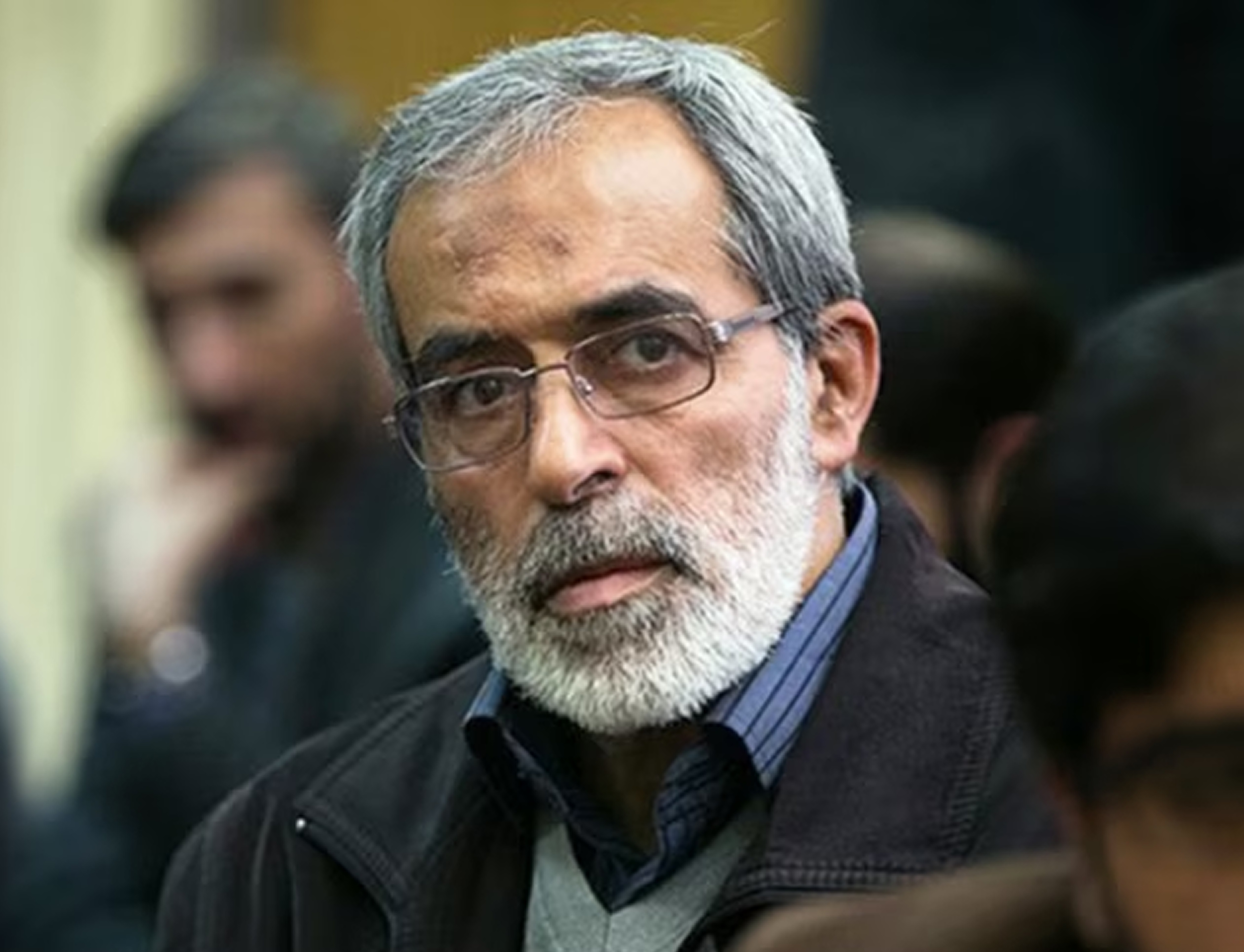
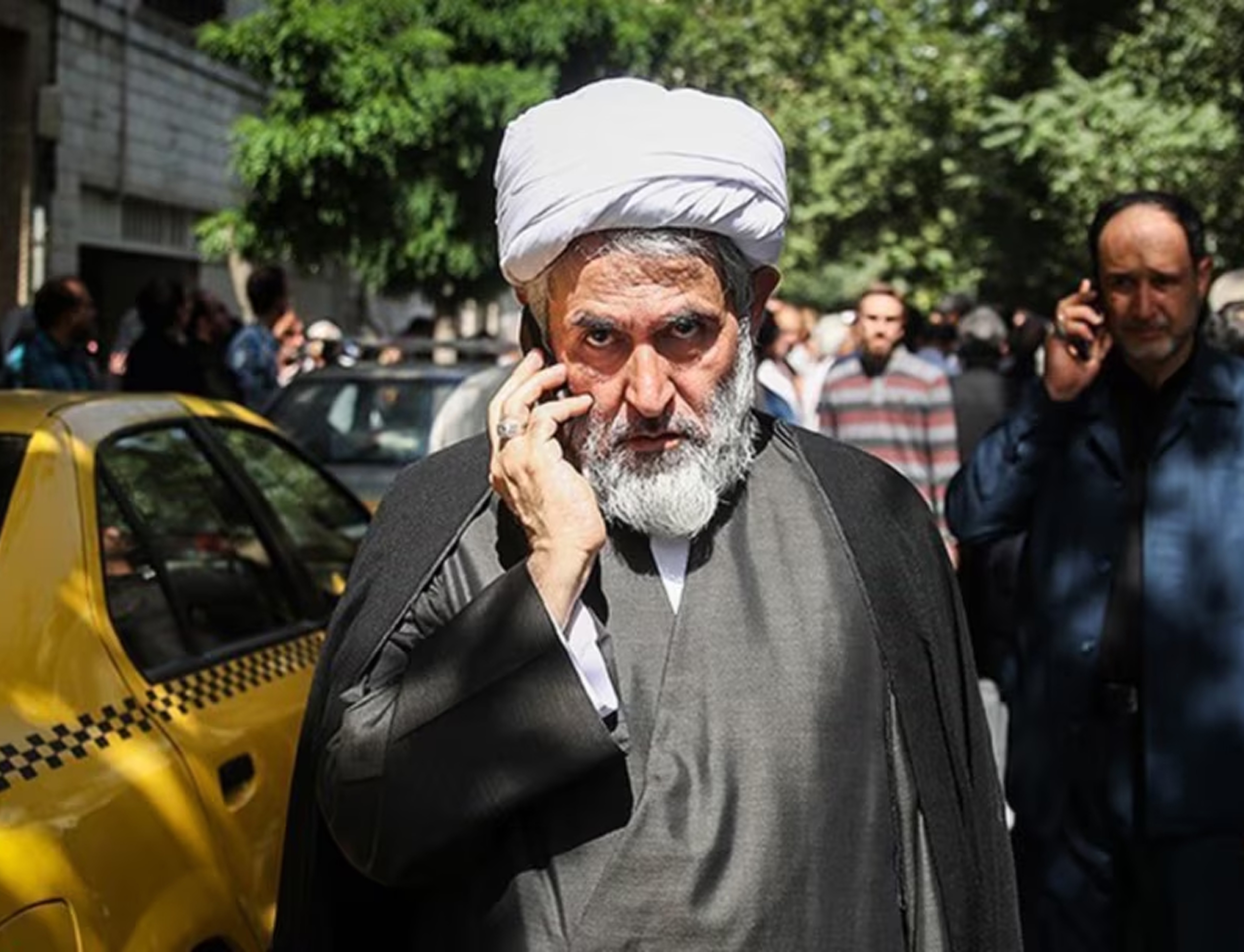
Mohammad Hossein Zibaei-Nezhad operates in the shadows of the Islamic Republic's security apparatus, yet his influence eclipses that of generals whose names dominate headlines. Known by the pseudonym "Nejat," or "salvation," this 71-year-old commander has spent more than four decades building the machinery of repression that keeps Iran's theocratic regime in power. From torturing political prisoners in the 1980s to commanding the forces that crushed the 2009 Green Movement, Nejat's career maps almost perfectly onto the regime's most violent chapters.
Evidence gathered from defected security personnel, leaked regime communications, and Western intelligence assessments reveals that Nejat may now be the second most powerful security figure in Iran after Supreme Leader Ali Khamenei himself. His authority reportedly exceeds that of the commander-in-chief of the Islamic Revolutionary Guard Corps, a position traditionally considered the pinnacle of military power. During both the 2009 and 2022 nationwide uprisings, Nejat personally accompanied Khamenei to underground bunkers beneath the Leader's compound, illustrating a level of trust granted to no other commander.
This investigation traces Nejat's trajectory from revolutionary militant to master interrogator to the guardian of Iran's succession planning, exposing how a single operative became indispensable to a regime preparing for its most dangerous transition: the eventual death of its 85-year-old Supreme Leader and the ascension of his son.
Nejat was born in 1954 or 1955 in Shiraz, in southern Iran, to a family whose political leanings would shape his destiny. He graduated from Iran University of Science and Technology in 1977 and began a master's degree at Sharif University of Technology, one of the country's most prestigious institutions, when the revolutionary fervor sweeping Iran interrupted his studies. Like thousands of young Iranians, he joined the movement against the Shah, aligning himself with the Mansouroun guerrilla organization, a small leftist Islamic group that opposed the monarchy.
After the 1979 revolution succeeded, Nejat became a member of the Mojahedin of the Islamic Revolution Organization, specifically its right-wing faction. This organization, despite its name, had no connection to the People's Mojahedin Organization of Iran, known as the MEK, which would become the Islamic Republic's most enduring domestic enemy. The regime founder, Ayatollah Ruhollah Khomeini, encouraged the formation of groups like the Mojahedin of the Islamic Revolution precisely to counter the MEK's influence among leftist revolutionaries. By 1982, Nejat and his comrades had been absorbed into the newly formed Intelligence Unit of the Revolutionary Guards, the military force Khomeini created to protect the revolution from internal and external threats.
The turning point came on 28 June 1981, a date seared into Iranian history as Haft-e Tir, when a massive explosion ripped through the headquarters of the Islamic Republican Party in Tehran. The bombing killed 72 senior officials, including the party's secretary-general and four cabinet ministers. The regime blamed the MEK, and Khomeini ordered an unprecedented crackdown. What followed was a purge of such ferocity that historians describe it as one of the 20th century's most brutal episodes of political repression. Between 1981 and 1982, security forces executed at least 2,665 people, 90 percent of them MEK members or suspected sympathizers. Nejat became a central figure in this machinery of death.
Assigned to hunt down MEK operatives and members of another leftist group, the Organization of Iranian People's Fedai Guerrillas, known as Peykar, Nejat helped establish and run Ward 209 of Evin Prison. This notorious section, identified by its internal telephone extension, became synonymous with torture. Prisoners held in Ward 209 described cells measuring one meter by two meters with ceilings four meters high, creating a suffocating vertical tomb. They were kept in solitary confinement for months, subjected to beatings, electric shocks, mock executions, and psychological torment designed to extract confessions and break their will. Nejat worked alongside Mohammad Bagher Zolghadr, another commander who would rise to the highest echelons of regime power. Together, they supervised interrogators like Taha Taheri, whose name survivors recall with dread.
During this period, torturers adopted pseudonyms to obscure their identities from prisoners who might one day be released. Nejat's choice of "salvation" as his nom de guerre suggests he believed his work was redemptive, a mission to save the revolution from its enemies. This conviction appears never to have wavered.
In 1983, Nejat played a direct role in two operations that dealt crippling blows to the opposition. The first was the raid on a safe house in Tehran's Zafaraniyeh neighborhood that killed Musa Khiabani and Ashraf Rajavi, senior MEK leaders. The second was the dismantling of Peykar's leadership, which led to the group's effective dissolution. By the mid-1980s, the MEK's armed wing had fled to Iraq, and the Islamic Republic had crushed organized domestic dissent.
The nadir of Iran's prison atrocities came in the summer of 1988, when Khomeini issued a fatwa ordering the execution of all imprisoned MEK members who refused to renounce their beliefs. Over the course of several months, "death commissions" interrogated prisoners with questions designed to identify those who remained loyal to the MEK. Prisoners who gave the wrong answers were taken to special rooms and hanged from cranes. Estimates of the death toll range from 2,800 to 30,000, with most sources placing the number between 5,000 and 10,000. More than 90 percent of the victims were MEK members or supporters.
Nejat's role in the 1988 massacre remains partially obscured, but his position in the intelligence apparatus during this period places him among those responsible for identifying prisoners for execution. Survivors from prisons like Qezel-Hesar and Gohardasht, where mass killings occurred, have testified to the involvement of IRGC intelligence operatives in selecting victims. The massacres were carried out in absolute secrecy. Bodies were buried in unmarked mass graves, and families were not informed of their relatives' deaths for weeks or months. The United Nations Special Rapporteur on Human Rights in Iran concluded in 2024 that the 1988 executions, along with earlier killings in 1981 and 1982, met the definition of genocide under international law.
Throughout the 1980s and 1990s, Nejat moved through a series of increasingly important roles. He served as head of IRGC Intelligence Protection, responsible for counterintelligence and safeguarding sensitive sites. He worked in the intelligence section of the Khatam al-Anbiya Headquarters, the IRGC's main construction and engineering arm, which would later become an economic empire controlling billions of dollars in state contracts. He held the position of parliamentary deputy in the Ministry of Defense and later became the IRGC's inspector general, a role that gave him insight into corruption and patronage networks throughout the military. For two years, he served as deputy to the Joint Staff, placing him in the upper tier of the IRGC command structure.
By the late 1990s, Nejat had proven himself indispensable. His loyalty, operational competence, and willingness to do the regime's dirtiest work had earned him the trust of senior commanders and, crucially, of Khamenei himself. Nejat's relationship with the Supreme Leader dated back to 1982, when Khamenei, then serving as president of Iran during the war with Iraq, attended National Security Council meetings where Nejat briefed officials on protection protocols for key figures. During the war, when Khamenei visited the front, Nejat personally oversaw his security.
This personal bond would define the rest of Nejat's career. In authoritarian systems, proximity to the ruler is the ultimate currency, and Nejat had secured a position in Khamenei's inner circle that few could rival.
In July 1999, Iran experienced its first major uprising since the revolution. On 8 July, students at Tehran University organized a peaceful demonstration to protest the closure of the reformist newspaper Salam. That night, plainclothes security forces and Basij militia members stormed the university's dormitories in a brutal raid. They beat students with batons and clubs, threw some out of windows, set fire to rooms, and killed at least one person, a visitor to the campus. News of the attack spread rapidly, and within days, approximately 50,000 students and ordinary citizens were protesting in Tehran, with thousands more demonstrating at universities across the country. They chanted slogans calling for freedom and democracy and, for the first time in public, criticized Khamenei by name.
The regime's response was swift and uncompromising. On 13 July, 24 senior IRGC commanders signed a letter threatening President Mohammad Khatami, a reformist, with a coup if he did not crush the protests. The letter declared their readiness for bloodshed to defend the system. Nejat was among the signatories. Within hours, security forces regained control of the streets. At least seven students were killed, 200 wounded, and 1,400 arrested. Some of those detained faced sentences of up to 10 years in prison.
For Nejat, the uprising served as a proving ground. Six months later, recognizing the need for a more robust security structure in the capital, the IRGC leadership granted the Sarallah Headquarters independent command status and appointed Nejat as its commander. Sarallah, whose name translates to "Allah will avenge Hussein's blood," is the IRGC's most important garrison, responsible for protecting Tehran, government institutions, and the Supreme Leader's residence from coups, uprisings, and external military threats. Its undeclared mission is the suppression of dissent.
Commanding Sarallah placed Nejat at the center of Iran's internal security architecture. The garrison operates through multiple corps, including intelligence units like the Imam Ali Corps and the Imam Hussein Corps, whose agents often work undercover. Sarallah played pivotal roles in suppressing the 1999 protests, the 2009 Green Movement, and the protests of 2018, 2019, and 2022. In each case, its forces detained, interrogated, and tortured demonstrators, often at facilities inside Evin Prison.
But Nejat's tenure as Sarallah commander was brief. In 2000, he was promoted to lead the Vali Amr Unit, the elite force tasked with protecting Khamenei. For the next decade, Nejat served as the Supreme Leader's personal security chief, a position that gave him unparalleled access and influence. The Vali Amr Unit is part of the Intelligence Protection Organization, an IRGC branch that reports directly to Khamenei and operates independently of the IRGC command structure. Its members undergo rigorous vetting, and loyalty to the Leader is the paramount criterion for selection.
Nejat took his responsibilities seriously. In one recorded conversation, he described purging luxury vehicles from Khamenei's motorcade, arguing that excessive displays of wealth contradicted the Leader's image as a modest cleric. He claimed to have removed or sold 220 vehicles from the security detail. Whether this reflected genuine austerity or political theater, it underscored Nejat's attention to how power is projected.
The 2009 presidential election set the stage for the Islamic Republic's greatest domestic crisis since the revolution. The campaign season had been unusually vibrant, with reformist candidates Mir Hossein Mousavi and Mehdi Karroubi drawing massive crowds. When the Interior Ministry announced on election night that the incumbent, Mahmoud Ahmadinejad, had won by 62.6 percent, allegations of fraud erupted immediately. Opposition representatives reported running out of ballots in major cities, early closures of polling stations despite promises to extend voting hours, and the exclusion of their observers from vote counts.
Mousavi called a press conference late on 12 June, declaring himself the winner and accusing the government of massive fraud. By the next day, hundreds of thousands of Iranians were in the streets. The demonstrations grew over the following week, culminating in a march on 15 June, known as 25 Khordad in the Iranian calendar. Estimates suggest that between one million and three million people participated in Tehran alone, making it the largest protest since 1979. Protesters carried green banners, the color of Mousavi's campaign, and chanted slogans demanding that their votes be counted. The Green Movement was born.
On 19 June, Khamenei delivered a Friday prayer sermon in which he endorsed the election results and dismissed the protesters' complaints as sore losers manipulated by foreign enemies, particularly Britain, Israel, and the United States. He drew a red line: the protests must stop. The next day, Neda Agha-Soltan, a 26-year-old philosophy student, was shot in the chest by a Basij militiaman while observing a demonstration on Kargar Avenue in Tehran. Video of her death, showing blood pouring from her mouth and nose as bystanders screamed, was uploaded to the internet and viewed millions of times. Neda became the face of the Green Movement, a symbol of the regime's willingness to kill unarmed civilians.
Nejat, as head of the Vali Amr Unit, was at the center of the regime's response. In a meeting with commanders responsible for protecting Khamenei's compound, he issued a chilling threat: if protesters approached the Leader's residence, he would open fire with Dushka heavy machine guns, a Soviet-era weapon capable of shredding human bodies. The threat was not rhetorical. Sarallah forces were deployed throughout Tehran with orders to use lethal force if necessary.
On 25 February 2010, opposition leaders called for another mass demonstration to mark the anniversary of the revolution. Despite government warnings, hundreds of thousands took to the streets in what became known as the 22 Bahman march. The turnout shocked the regime. In a high-level security meeting with Khamenei shortly afterward, commanders presented conflicting assessments. According to Nejat's own account, Khamenei was furious. He accused his security chiefs of incompetence, pointing out that just days earlier they had claimed the Green Movement was dead and could mobilize no more than 3,000 people. Now they were reporting that between 600,000 and 800,000 demonstrators had gathered across Tehran. "You do not know your own society," Khamenei reportedly said.
It was in this meeting that Nejat made a proposal that would define the next decade of Iranian politics. He suggested that the leaders of the Green Movement, Mousavi and Karroubi, be placed under house arrest. If that proved insufficient, he argued, they should be tried and executed. The judiciary chief endorsed the proposal, and the National Security Council approved it. By early 2011, Mousavi, his wife Zahra Rahnavard, and Karroubi had been confined to their homes, where they remain to this day, more than a decade later.
The Green Movement was crushed through a combination of mass arrests, trials, and torture. Thousands of demonstrators were detained in facilities like Kahrizak, a temporary detention center where prisoners were beaten, sexually abused, and subjected to conditions so horrific that several died. When the abuses became public, the regime closed Kahrizak and blamed rogue elements, but no senior officials were held accountable. The crackdown worked. By the end of 2010, large-scale street protests had ceased, and the Green Movement had been forced underground.
In December 2015, Nejat joined the IRGC Intelligence Organization as deputy to Hossein Taeb, the organization's long-serving chief. The Intelligence Organization, distinct from the Intelligence Protection Organization, is responsible for domestic surveillance, counterintelligence, and operations against dissidents. Under Taeb, it became the regime's most powerful internal security agency, sidelining the Ministry of Intelligence and assuming control of high-profile cases.
Nejat's tenure as deputy was marked by aggressive campaigns against journalists, activists, ethnic and religious minorities, and cyber activists. The Intelligence Organization arrested thousands of people in connection with the protests of 2017, 2018, and 2019. It also played a central role in the regime's response to the November 2019 uprising, the deadliest crackdown in the Islamic Republic's history. The protests, sparked by a surprise tripling of fuel prices, spread to more than 100 cities. Khamenei reportedly told security forces, "Do whatever it takes to end it." Over the course of five days, security forces killed between 304 and 1,500 people, according to various estimates. In the city of Mahshahr, where protesters clashed with security forces, tanks and heavy machine guns were deployed, resulting in a massacre that may have claimed between 40 and 148 lives.
But Nejat's position was not unassailable. In 2017, a scandal involving his son-in-law, Ali Zali, exposed the fault lines within the regime. Zali, who managed a website, published an audio recording known as the "8 million tape." In the recording, officials reportedly told Ahmadinejad that his real vote total in the 2009 election was 16 million, not the 24 million officially announced. The regime had inflated the numbers to make the victory seem overwhelming and avoid suspicions of fraud. Ahmadinejad objected, insisting that his actual vote count be announced. The leak was deeply embarrassing, and Nejat, despite his family connection, ordered Zali's arrest. Shortly afterward, Nejat's daughter separated from Zali due to family pressure.
In May 2019, financial scandals led to Nejat's quiet removal from the Intelligence Organization. The exact nature of the scandals has not been publicly disclosed, but they involved allegations of corruption serious enough to force his departure. Taeb, who was fiercely protective of his own authority, used the opportunity to sideline a potential rival. Nejat was reassigned to the IRGC's cultural affairs section, a largely ceremonial role that seemed to signal the end of his frontline career.
But authoritarian regimes rarely discard effective operatives, and Nejat's expertise in suppression was too valuable to waste. On 21 June 2020, IRGC Commander-in-Chief Hossein Salami appointed him deputy commander of Sarallah, effectively returning him to the role he had held two decades earlier. The timing was significant. The regime had weathered the 2019 uprising, but tensions remained high, and officials feared that economic collapse, compounded by U.S. sanctions and the COVID-19 pandemic, could spark new unrest. Placing Nejat in charge of Tehran's security was a signal that the regime was preparing for battle.
To understand Nejat's enduring influence, it is necessary to examine a little-known network of IRGC commanders who served together during the Iran-Iraq War. The Habib Ibn Mazahir Battalion was a unit of the IRGC's 27th Mohammad Rasoul Allah Division, which operated in Tehran. The battalion was ideologically extreme, even by Revolutionary Guards standards, and its members forged bonds of loyalty that persisted long after the war ended.
Among the battalion's members were Hossein Taeb, who would become head of the IRGC Intelligence Organization; Mohammad Kowsari, who later commanded the division; and, most importantly, Mojtaba Khamenei, the Supreme Leader's second son. Mojtaba, now in his mid-50s, is widely believed to be positioning himself to succeed his father, and the veterans of the Habib Battalion form the core of his support network. They occupy key positions in the IRGC, the judiciary, and the intelligence services, creating a parallel power structure that answers not to the IRGC commander but to Mojtaba and, through him, to the Supreme Leader.
Nejat is a central figure in this network. His decades-long relationship with Khamenei and his personal ties to Mojtaba give him influence that transcends his formal rank. According to defectors, Nejat personally accompanied Khamenei to underground bunkers during the 2009 protests and again during the 2022 Mahsa Amini protests, when the Leader feared the regime might collapse. The fact that Khamenei trusted Nejat to be by his side during moments of existential danger speaks to the depth of their relationship.
The Habib Battalion network, sometimes called the "Gerdaan-e Habib" or Habib Circle, is believed to be preparing for the transition of power after Khamenei's death. Mojtaba lacks his father's clerical credentials and religious authority, which will make his succession contested. To secure his position, he has placed loyalists in every critical security institution. The appointment of Nejat as Sarallah's deputy commander is part of this strategy. If unrest erupts during the succession, Sarallah will be the force responsible for crushing it.
Western intelligence agencies and Iranian opposition groups have expressed concern that the regime is prioritizing repression over governance. The placement of hardliners like Nejat in key positions suggests that the leadership expects widespread resistance to any attempt to install Mojtaba as Supreme Leader. The protests of 2022, sparked by the death of Mahsa Amini after she was detained by the morality police for wearing her hijab improperly, demonstrated that large segments of Iranian society, especially young people and women, reject the regime's legitimacy. At least 551 people were killed in the crackdown, according to human rights organizations, and tens of thousands were arrested.
During those protests, Nejat again played a coordinating role. Leaked IRGC intelligence reports indicate that Mojtaba personally oversaw the suppression, convening meetings at the Office of the Supreme Leader to direct security forces. Nejat's position as Sarallah's deputy placed him at the operational level of this command structure. The Sarallah garrison deployed anti-riot units throughout Tehran, arrested thousands of demonstrators, and used live ammunition to disperse crowds. International sanctions followed. In September and October 2022, the United States, the European Union, the United Kingdom, and Canada all sanctioned Nejat for serious human rights violations.
Throughout his career, Nejat has operated with near-total impunity. Despite overwhelming evidence of his involvement in torture, extrajudicial killings, and the suppression of peaceful protests, he has never faced prosecution. The Islamic Republic's legal system is designed to protect regime operatives, and the judiciary is controlled by officials who are themselves implicated in human rights abuses. Ebrahim Raisi, who served as Iran's president from 2021 until his death in a helicopter crash in 2024, was a member of a death commission that oversaw executions during the 1988 massacre. His elevation to the presidency signaled that participation in mass atrocities is not a barrier to advancement but a credential.
International efforts to hold Iranian officials accountable have been limited. The United Nations and human rights organizations have documented abuses in painstaking detail, but the Security Council, where Russia and China hold veto power, has blocked substantive action. Western sanctions target individuals like Nejat by freezing assets and banning travel, but these measures have minimal impact on commanders who rarely leave Iran and whose wealth is hidden in domestic networks. Advocacy groups have called for the establishment of a special tribunal to prosecute those responsible for the 1988 massacre and subsequent atrocities, but political will remains absent.
Survivors of Iran's prisons describe a system designed not merely to punish but to annihilate identity and resistance. In the 1980s, prisoners at Qezel-Hesar and other facilities were forced into "cages," plywood partitions so small they could neither stand nor lie down, where they remained in complete silence and isolation for months. Guards played religious dirges over loudspeakers 24 hours a day to create an atmosphere of relentless psychological pressure. Those who resisted were beaten, subjected to mock executions, or injected with substances that induced heart attacks. Some lost their sanity. Others were killed and buried in unmarked graves. A small number survived, and their testimonies form the historical record.
The chain murders of the 1990s, in which intelligence agents assassinated more than 80 dissidents, intellectuals, and activists, followed a similar pattern. Victims were stabbed, shot in staged robberies, injected with potassium to simulate heart failure, or made to disappear entirely. When a few of the killings became public in 1998, the regime blamed rogue elements in the Ministry of Intelligence and arrested several low-level operatives. But leaked documents later revealed that the murders had been authorized at the highest levels, by a committee that included representatives of the Supreme Leader's office and the IRGC. Mohammad Bagher Zolghadr, Nejat's colleague from the Ward 209 days, was among those overseeing the operation.
This pattern, deliberate brutality followed by denial and scapegoating, has allowed the regime to maintain a veneer of legality while systematically violating human rights. Officials speak in euphemisms, describing torture as "interrogation," extrajudicial killings as "legal procedures," and massacres as "restoring order." The language obscures the reality, which is that the Islamic Republic has constructed a state apparatus whose primary function is the preservation of its own power through violence.
Nejat's career, spanning from the purges of the early 1980s to the present day, offers a window into how authoritarian systems perpetuate themselves. He is not an aberration but a product of the Islamic Republic's logic, a man whose skills in repression have made him indispensable. His rise reflects the regime's priorities: loyalty over competence, ruthlessness over restraint, and the protection of power over the welfare of citizens.
The regime's current strategy, placing veterans of the Habib Battalion in key security roles, suggests that it anticipates major unrest in the coming years. Iran's economy is collapsing under the weight of sanctions, corruption, and mismanagement. Inflation has eroded the purchasing power of ordinary Iranians, unemployment is high, and public services are deteriorating. At the same time, the population has grown increasingly secular and disillusioned with clerical rule. Polls conducted by underground networks indicate that a majority of Iranians oppose the mandatory hijab, reject theocracy, and favor separation of religion and state.
The protests that erupted after Mahsa Amini's death demonstrated that women, in particular, have reached a breaking point. For months, women across Iran defied the hijab laws, appearing in public with uncovered hair, burning their headscarves, and chanting slogans like "Woman, Life, Freedom." The regime responded with arrests, beatings, and executions, but it has failed to reimpose compliance. The morality police, which enforces Islamic dress codes, was briefly withdrawn from the streets in late 2022 amid rumors that the hijab law might be repealed. Those rumors proved false, and the morality police returned in 2023, but the episode revealed the regime's uncertainty about how to respond to widespread civil disobedience.
The regime's fear is that Khamenei's death could trigger a cascade of unrest. Khamenei, now 85 and in declining health, has ruled Iran since 1989, and his longevity has created a cult of personality that his potential successors lack. Mojtaba Khamenei, despite his political maneuvering, has no clerical standing and little public support. If the Assembly of Experts, the body constitutionally charged with selecting the next Supreme Leader, attempts to install him, it is likely to face opposition not only from ordinary Iranians but from rival factions within the regime itself.
This is where figures like Nejat become critical. The regime's survival strategy depends on its ability to suppress dissent quickly and violently, before protests can gain momentum and spread. Nejat's role as Sarallah's deputy commander positions him to lead that suppression. The garrison has the authority, equipment, and personnel to lock down Tehran, arrest opposition leaders, and deploy lethal force against demonstrators. Whether it can do so effectively in the face of a mass uprising remains an open question, but the regime is betting that the memory of past crackdowns, combined with the brutality of new ones, will deter resistance.
Mohammad Hossein Zibaei-Nezhad, the man who chose "salvation" as his pseudonym, has dedicated his life to preserving a system built on violence and control. His career is a study in how authoritarianism functions at the operational level, where ideology meets practice and abstract commands become concrete acts of torture, detention, and killing. He has interrogated prisoners, planned suppression operations, protected a Supreme Leader, and now stands ready to do it all again.
The Islamic Republic has survived for more than four decades not because it enjoys popular support but because it has perfected the mechanisms of repression. Nejat is one of the architects of those mechanisms, a man whose expertise in breaking bodies and wills has made him invaluable to a regime that values obedience above all. His story is not unique. Iran's security apparatus is filled with men like him, commanders whose careers have been spent in prisons, interrogation rooms, and command centers, planning the next crackdown.
What distinguishes Nejat is the breadth of his experience and the depth of his access. Few operatives have participated in so many of the regime's darkest episodes, from the 1980s executions to the 1988 massacre to the suppression of the Green Movement and beyond. Fewer still have earned the trust of the Supreme Leader himself, to the extent that they are summoned to his side during moments of existential crisis. Nejat's power is not formal but relational, rooted in personal loyalty and decades of shared history.
The international community has sanctioned him, human rights organizations have documented his abuses, and survivors have named him as a perpetrator. Yet he continues to operate, protected by a system that has insulated itself from accountability. The regime's apparatus of repression is not a relic of the past but a living structure, constantly adapting to new threats and preparing for the battles it believes are inevitable.
As Iran approaches a potential succession crisis, with an aging Supreme Leader, a fragile economy, and a population increasingly alienated from the regime, the role of commanders like Nejat will become even more critical. They are the men who will be ordered to crush uprisings, arrest activists, and, if necessary, kill protesters in the streets. Whether they succeed will determine not only the fate of the Islamic Republic but the future of 85 million Iranians who have endured more than four decades of repression and who, in ever greater numbers, are demanding freedom.
Nejat's legacy is already written in the blood of the regime's victims. The only question is how many more will be added before the story ends.