



The Judge Who Carried a Pistol: Inside the Violent Career of Sadegh Khalkhali
An investigative profile of Sadegh Khalkhali, revolutionary judge whose brutal courts shaped early repression.
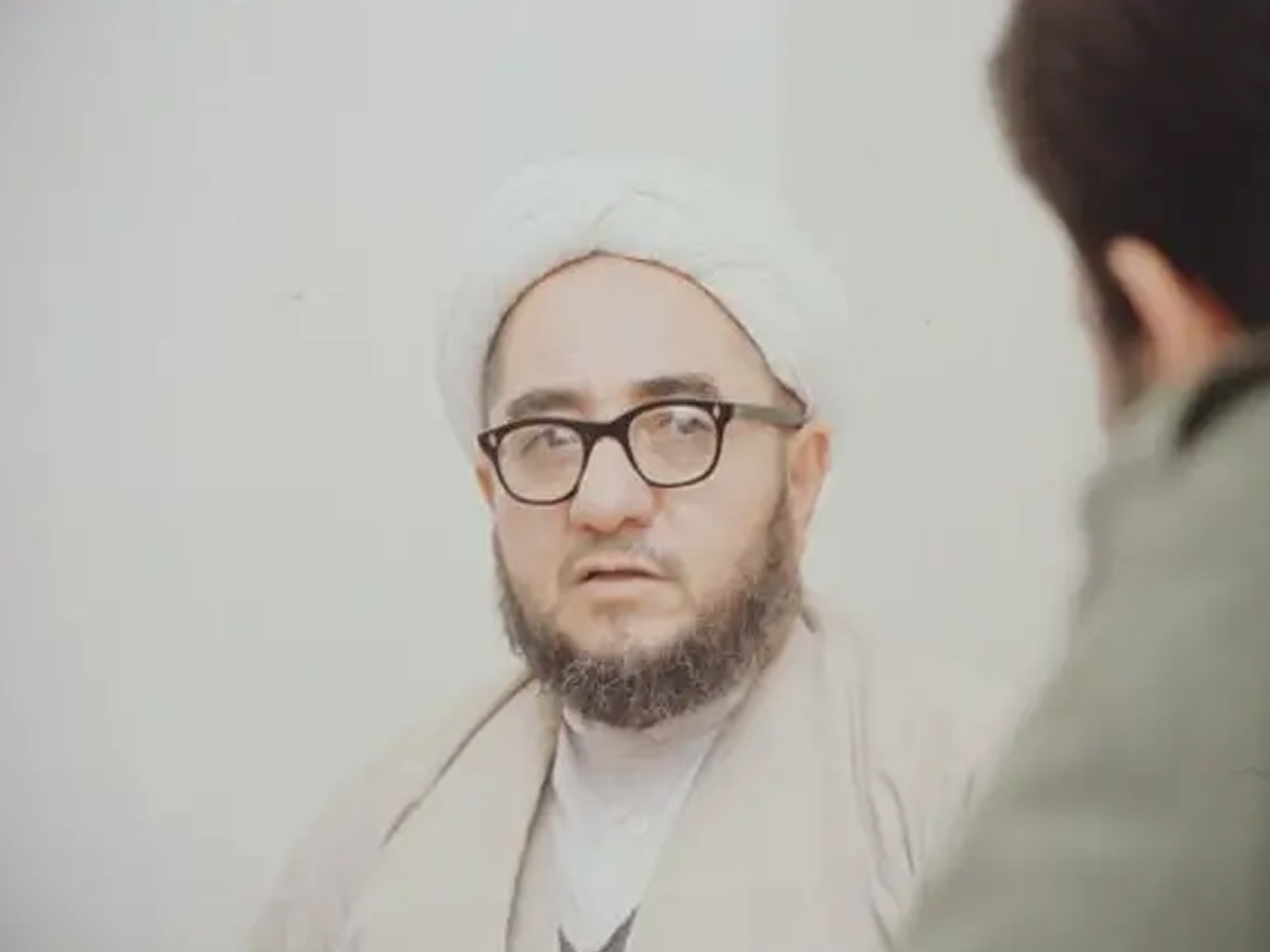
At the dawn of the Islamic Republic, one cleric came to embody the speed, severity, and ideological fervor of the new revolutionary justice: Sadegh Khalkhali. A village-born seminary student turned “revolutionary judge”, he presided over ad hoc tribunals that sent officials of the previous system, dissidents, suspected sympathizers of opposition groups, and later alleged drug traffickers to the firing squad, often within hours of arrest.
Khalkhali openly admitted that he stayed to watch executions and then went home to sleep peacefully. Supporters praised this as proof of revolutionary resolve. Critics, including some within the new state, saw in him a violent fanatic who turned the promise of justice into a conveyor belt of death.
Archival interviews and later memoirs suggest that in the months after 1979, Khalkhali stamped hundreds of death sentences, possibly more, frequently without defense counsel or meaningful evidence being presented. In his own account, he understood his mission as taking “revenge” on “enemies of Islam” and “mofsed fel arz” - a religious label denoting corruption on earth - rather than delivering due process. The accused, in his eyes, were not defendants but already condemned actors in a simple moral drama.
This investigation reconstructs Khalkhali’s trajectory from a poor youth near Khalkhal to his rise as the most feared judge of the early Islamic Republic, his signature episodes of violence and iconoclasm, the gradual but quiet sidelining that followed, and the contested stories surrounding his physical and moral collapse at the end of his life. It is also a study of how a system harnessed, rewarded, then carefully distanced itself from the very brutality on which it was built, without ever holding its chief executioner to account.
Sadegh Khalkhali was born into a poor craftsman’s family near the town of Khalkhal in northwestern Iran. Like many young men from that region with few secular options, he entered religious schools where seminary training functioned as an alternative to formal state education. Over time he joined the clerical opposition to the Shah and aligned himself with the circle that gathered around Ruhollah Khomeini.
By his own later telling, Khalkhali saw himself as a defender of the “oppressed” against “tyrants.” This self-image would become the moral lens through which he reinterpreted the events of his life: the hardship of his upbringing, his religious studies, his opposition activities, and eventually the authority granted to him after the fall of the monarchy.
The turning point came in February 1979. Within days of Khomeini’s return from Paris, the revolutionary leadership needed someone to formalize what was already happening in occupied barracks, schools, and prisons: the summary punishment of former officials and perceived enemies of the uprising. Khomeini’s handwritten order appointing Khalkhali as “shari’a judge” of the revolutionary courts transformed an obscure cleric into a central figure in the new system’s architecture of fear.
The appointment was extraordinary not only for its timing but for the power it conferred. In practice, Khalkhali became judge, jury, and, often, on-site witness to executions. He would later boast that this was not a burden but a calling. He framed the order as a mandate to “take the rights of the oppressed” from “the arrogant” and named high-ranking officials, generals, intelligence chiefs, landowners, and hundreds of unnamed officers and agents as those whose fate he held in his hands.
From the first days, his courts operated outside any recognizable framework of modern criminal justice. Proceedings were often conducted in repurposed schools or barracks, with the atmosphere of a rally rather than a trial. Accusations were general and sweeping: being a “pillar” of the previous regime, participating in “suppression” since 1963, or simply holding a senior post after Khomeini’s exile. That, in Khalkhali’s view, was sufficient to warrant death.
The early revolutionary tribunals under Khalkhali were characterized by three consistent features: speed, secrecy in procedure but openness in punishment, and a near-total rejection of legal safeguards.
In later memoirs and interviews, he articulated a stark doctrine: everyone who had held senior legislative, provincial, security, or military office after 1963, when Khomeini declared opposition to the Shah’s reforms, was automatically guilty of capital crimes. In his words, such officials were “mofsed fel arz” whose very participation in the system made them liable to execution. No granular inquiry into individual conduct was necessary.
He extended this logic to the first group of prisoners executed on the rooftop of Tehran’s Refah School. He recalled that on the night of 24 Bahman 1357 (mid February 1979), he had prepared death sentences for twenty four detainees, but “interference” meant that only four of the most prominent - intelligence chief Nematollah Nassiri, air force general Mohammad Reza Khosrowdad, police chief Reza Najafi (often cited as Nahji or Najji in accounts), and general Mehdi Rahimi - were executed that night. The rest, he said with evident satisfaction, were “gradually” executed in the weeks that followed.
One case symbolized his approach to justice more than any other: the trial and execution of Amir Abbas Hoveyda, the Shah’s long serving prime minister. In one recollected exchange, Hoveyda complained that the prison cells were too small. Khalkhali reportedly replied that the cells had been built under Hoveyda’s own government and that he was now merely experiencing the system he had overseen. He dismissed references to “systems” and “procedures” as Western constructs, insisting that Hoveyda’s years as prime minister automatically made him responsible for “the crimes of the regime” and therefore subject to execution.
Khalkhali did not hide his contempt for defense attorneys or legal formalities. He mocked contemporary lawyers as ignorant of Islamic jurisprudence and portrayed modern legal practice as a foreign import. The absence of defense counsel from his courts, he claimed, was not a violation but an outcome of reality: no lawyer wanted to defend hated officials, and under Islamic law, “mofsed fel arz” did not require elaborate process. In theory, he conceded that one might hire a lawyer for the sale of a house or carpet, so why not for one’s life. In practice, his courts were not set up to allow it.
He rejected the need for a Western style constituent assembly, echoing Khomeini’s public statements. In one interview, he went further, suggesting that if Khomeini personally endorsed a constitutional text, even a planned seventy five member assembly would be unnecessary. Its purpose, he said, was largely to “shut the mouths” of Western oriented critics. This attitude revealed how little weight he granted to institutional checks and how central charismatic authority was to his vision of politics and law.
Perhaps the most chilling example of his personal approach to punishment came from an arrest he recounted on a Tehran street. Returning home one night with guards, he spotted two teenagers, around fifteen or sixteen, exchanging something. Upon searching them, his entourage found copies of a newspaper linked to the Mojahedin-e Khalq. On the spot, without any formal proceeding, he ordered one of the boys shot. Later he told this story to foreign journalists as evidence of how “firm” he was in dealing with “hypocrites,” even when they were minors and from known families in Qom.
For Khalkhali, presence at executions was part of his job and his identity. He noted approvingly that a senior cleric, Azari Qomi, had praised him for standing beside the condemned until the final moment and then going home to sleep without disturbance. Far from being troubled, he framed this emotional detachment as a sign of strong faith. In other statements, he insisted that he was “soft hearted” and had cried at times in court, but he never conceded that an unjust death sentence had been issued. Asked years later whether any of those he executed had been wrongfully killed, he replied that if they were alive again he would execute them once more, even “a hundred times.”
Khalkhali’s concept of revolutionary justice extended beyond people to symbols and sites. Among his most notorious actions in the early months after the revolution was the demolition of Reza Shah’s mausoleum in Rey, adjacent to the shrine of Abdol Azim.
Witnesses from his entourage describe an operation that lasted more than two hundred days. The structure, heavily reinforced, withstood initial efforts with sledgehammers and basic tools. Multiple times, specialist engineers from the Rey cement factory were called in as demolition consultants. The team ultimately resorted to dynamite, gradually undermining the building until, in Khalkhali’s words, the “satanic décor” collapsed.
The pressure to finish the job appears to have come from the highest level. One account recalls that Ahmad Khomeini, his brother Hossein, and an associate named Jamarani arrived at night and relayed a message: Khomeini had ordered that no one leave the site until the mausoleum was levelled. The insistence on total erasure reflected not just political hostility to the Pahlavi dynasty, but the emerging doctrine that the old order must be uprooted physically and symbolically.
Khalkhali justified the destruction by invoking the 1935 Goharshad Mosque massacre, in which Reza Shah’s forces killed protesters in Mashhad. How, he asked, could the nation tolerate the burial of such a ruler beside a revered shrine when he had “killed people for their religious demands in a mosque.” The demolition thus tied his narrative of clerical victimhood under the monarchy to the new regime’s claim of moral entitlement to reshape public space.
His sphere of violence expanded further during the war years and in the campaign against armed opposition groups, especially the Mojahedin-e Khalq. After the failed Operation Mersad, when MEK forces and allied fighters attacked from Iraqi territory, accounts place Khalkhali along the road between Kermanshah and Islamabad-e Gharb. Accompanied by guards, he traversed the wreckage of burned vehicles and captured fighters.
Eyewitnesses, including a senior judicial official of the time, relate that Khalkhali formed on the spot “courts” in the field and personally executed prisoners with his sidearm. Television footage from the era shows him standing amid rows of male and female corpses, addressing a local audience. He describes the dead as deceived by “global arrogance” and Saddam Hussein’s Baathist regime, yet insists that revolutionary courts must respond decisively. He calls on prosecutors and judges to execute “at least fifty” of those captured so that “the people understand.”
The performance served multiple functions. It signaled to cadres of the Islamic Republic that clemency toward organized opposition would be seen as weakness. It warned local populations not to sympathize with infiltrating forces. And it reaffirmed Khalkhali’s preferred role as both judge and public propagandist of harshness.
This pattern of combining judicial office with militarized presence appeared again in his later anti narcotics role. In May 1980 he was appointed head of a national campaign against drugs. Rather than constraining his power, the post effectively extended it across the country. Reports from that period state that within the first weeks he signed 127 death sentences. By late summer, the number had reached at least 200.
Officially, these were drug traffickers caught with large quantities of heroin - 16 kilograms in one case, 200 kilograms in another, and 300 kilograms in an alleged manufacturing operation. In public speeches, he described heroin as a national catastrophe that destroyed youth and corrupted women, framing traffickers as traitors equivalent to foreign agents. Human rights advocates and some contemporaries, however, alleged that he used drug charges as a cover to execute leftist political prisoners who were on hunger strike.
Even within the system, this new portfolio strained the fragile justifications for his methods. According to a senior judicial colleague, the sheer breadth of his jurisdiction and the absence of a proper organizational structure led to “errors” that were reported up the chain. Khomeini, concerned about both domestic and international fallout, is said to have quietly removed him from his judicial post around 1981. The removal was described as “respectful” and never announced publicly on state media. Officially, after late 1980 he no longer held any role in the formal judiciary.
Removal from the bench did not mean loss of status. Khalkhali secured a seat in the first parliament, where he continued to act as an attack dog against liberal and nationalist currents. Accounts from fellow deputies describe him regularly disrupting speeches by figures from the Freedom Movement, the National Front, and religious nationalists, shouting insults and treating ideological opponents inside the hall with the same ferocity he had once reserved for defendants on the rooftop of Refah School.
Over time, however, the system that had elevated him began to distance itself. In the third and fourth parliamentary elections, the Guardian Council disqualified him as a candidate. The judge who once embodied revolutionary justice, shielded by Khomeini’s signature, was suddenly deemed politically unsuitable. No public explanation was offered.
In parallel, Khomeini instructed the prosecutor general of the revolutionary courts, Asadollah Lajevardi’s successor Hossein Ali Qoddousi, to review cases handled by Khalkhali. According to recollections, hundreds, perhaps thousands, of his judgments were reexamined and some sentences commuted. There is no indication that any formal inquiry into misconduct or criminal liability for wrongful executions was ever opened. The review was framed as technical correction, not accountability.
Khalkhali himself tried to control the narrative. In interviews years later, he insisted that he had worked “with pure intention” and portrayed criticism as “crocodile tears” for criminals and agents of repression. He boasted about cutting off the hands of thieves, executing “spies,” and breaking the networks of drug traffickers, and framed the outcry as evidence that he had hit the “leaders of corruption” where it hurt.
At the same time, he cultivated an image of personal piety and emotional sensitivity: he claimed to have wept in court at scenes of human suffering, described himself as compassionate toward the poor, and asserted that his severity was reserved only for “tyrants” and “exploiters.” The contradiction between this self portrait and the scale of executions under his signature remained unresolved.
Internationally, he fascinated journalists as a symbol of the new order’s ruthlessness. Western newspapers such as the San Francisco Chronicle and prominent magazines ran profiles that quoted his more extreme statements. In one interview with a major American daily he reiterated that those executed by his courts deserved to be killed “a hundred times” and that, even decades later, he felt no regret. He also repeated his view that in Islamic law there was no need for defense counsel in cases of “corruption on earth” and dismissed Western concerns about human rights as irrelevant.
His ideological hierarchy was explicit: Islam first, then Iran. Asked whether clerics prioritized religion over nation, he answered that “of course” Islam came before Iran and spoke approvingly of the Islamic Republic as a model that had already inspired armed religious movements in Afghanistan, Iraq, and beyond. He rejected accusations of exporting revolution, but celebrated the fear it had instilled in neighboring rulers.
The final years of his life are described very differently by those around him. One set of accounts depicts a man physically diminished and mentally broken. A neighbor who, by his own admission, was paid by a foundation connected to war dead to cook and clean for Khalkhali, recalled that the once intimidating cleric had shrunk in height to such a degree that he appeared like “a child in a cleric’s robe.” He spoke of erratic behavior, “madness,” and overwhelming frailty.
More lurid narratives, circulating among families of those executed by his courts, describe a terminal illness accompanied by open wounds, foul smell, and a body “full of worms and pus” that even relatives could not bear to approach. According to these stories, his grave in Qom was several times set on fire at night by relatives of victims. These accounts cannot be independently verified and are contested.
Khalkhali’s daughter has publicly rejected such depictions as slander. She has said that her father died at seventy seven after suffering from Alzheimer’s disease, that in his final years he did not recognize even his children, and that there was no medical report indicating bodily decay of the sort described by enemies. She also noted that she changed her surname in an effort to escape the stigma attached to his name.
What seems less disputed is his loneliness. Multiple witnesses recall that he spent his later years largely isolated from the center of power he had once served. In 1993, after the death of Mehdi Bazargan, the first post revolutionary prime minister whom he had often attacked from the parliamentary podium, Khalkhali reportedly threw himself on Bazargan’s coffin and asked his family for forgiveness. They refused. A similar scene is said to have occurred at the funeral of nationalist figure Ezzatollah Sahabi, where Khalkhali again sought absolution from relatives and again was turned away.
Another detail from his neighbor’s account captures his continued reliance on divine authorization. Khalkhali is said to have requested that the original letter of appointment from Khomeini be buried with him, so that he could present it as a defense on the Day of Judgment. Even at the threshold of death, the man who built his authority on a single handwritten order seemed to believe that the same document might shield him from reckoning in the next world.
Any assessment of Sadegh Khalkhali risks becoming an exercise in individual pathology: was he a fanatic, a sadist, or a product of his environment. His own language, speaking of “pleasure” in carrying out executions and indifference to global condemnation, invites such readings. Yet focusing exclusively on his personality obscures the system that appointed, empowered, and then quietly shelved him without ever declaring his actions criminal.
From his first days as revolutionary judge, Khalkhali operated with explicit backing from the highest authority in the Islamic Republic. His demolition of Reza Shah’s mausoleum was pursued under direct pressure not to leave the task half finished. His field executions after Operation Mersad were not clandestine incidents but televised performances. His anti narcotics campaign, with its wave of death sentences, was launched through a formal appointment to a national role.
The institutional environment incentivized precisely the qualities he displayed: ideological certainty, contempt for legal “formalism,” readiness to act without hesitation, and indifference to international opinion. Khalkhali delivered rapid, visible punishment at a moment when the new state sought to consolidate power, neutralize real and perceived enemies, and send a message to society that the old order was irreversibly gone.
At the same time, the leadership maintained deniability. When his methods began to generate blowback, or when the needs of the moment shifted from revolutionary terror to more managed governance, he was removed from judicial office in a way that preserved the sanctity of the system. There was no public trial, no truth commission, no formal repudiation of his verdicts. A quiet review of some files sufficed.
This dual approach - unleashing extreme actors to achieve short term goals, then distancing from them without accountability - has recurred throughout the history of the Islamic Republic. It allows the state to claim that “excesses” were the work of individuals while retaining the benefits of the fear they generated. The very vagueness around how many people died under Khalkhali’s hand, and how many of his judgments were later overturned, is part of this pattern.
Khalkhali’s story also illustrates how revolutionary legality can be built on an inversion of proof. Instead of the state bearing the burden to demonstrate individual guilt, entire categories of people are designated as inherently criminal: former ministers, generals, legislators, provincial governors, and later, drug suspects or ideological opponents. Once placed in such a category, a person’s biography becomes irrelevant; only their label matters.
In interviews, Khalkhali was explicit about this. He saw no need to separate those who had directly ordered shootings from those who merely sat in parliament or served as provincial governors after 1963. By his reasoning, everyone who had operated within the old system after Khomeini’s exile had, by definition, helped sustain “corruption.” Many were never tried at all. For those who were, the “trial” was a ritual preceding an already decided outcome.
The result was a form of justice that inverted the language of rights while preserving its structure. References to “the oppressed,” “the people,” and “Islamic law” cloaked a machinery in which real human beings rarely mattered beyond the role they played in a grand narrative of good and evil. The judge who cried on occasion in court yet shot a teenager in the street for possessing a newspaper was the personification of this contradiction.
In the end, Khalkhali died as he had lived: unrepentant in his own words, unforgiven by many of those whose lives he had shattered, and shielded from real legal scrutiny by the very state whose darker instincts he had embodied. The contested stories about his physical decay and the burning of his grave, whether accurate or embellished, testify to a society that never received an honest accounting of what was done in the name of justice.
The legacy of Sadegh Khalkhali is therefore not only the graves left behind by his firing squads, the demolished mausoleums, or the televised speeches in front of rows of corpses. It is also the enduring lesson that when a system fuses religious certainty with unchecked power, and elevates men who boast that they can watch executions and sleep soundly afterward, the line between law and revenge all but disappears.