



The Grandson Who Broke with the Revolution: Inside the Life of Hossein Khomeini
Profile of Hossein Khomeini, the dissenting grandson whose rebellion exposes fractures inside revolutionary power.
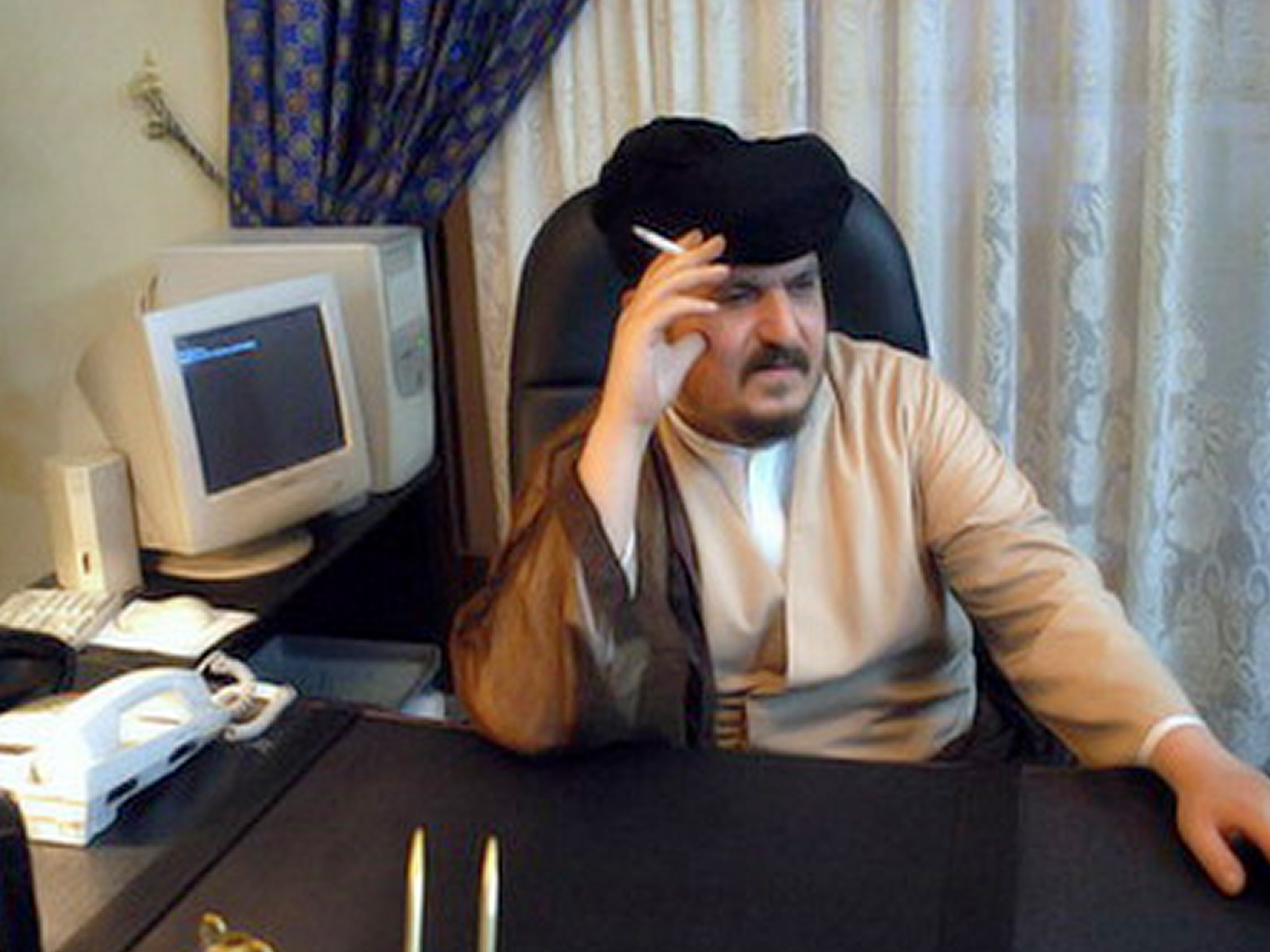
Hossein Khomeini, eldest paternal grandson of Ruhollah Khomeini, should have been among the most protected figures of the new Islamic Republic. Instead, from the early years after 1979 he became one of its most tightly controlled internal dissidents.
Born in Qom in 1959, raised in exile in Najaf alongside his grandfather, and tied by blood to the very man who led the revolution, Hossein Khomeini used his name not to consolidate power but to attack the system that emerged. He opposed the presence of clergy in government, denounced executions and confiscations, and later called the Islamic Republic a religiously colored dictatorship heading toward fascism.
His journey charts a rare trajectory: from insider to pariah, from private critic in the inner rooms of the leader’s house to public opponent speaking on foreign television, from a young cleric who drew a gun in a mosque courtyard to a middle aged man advocating a national referendum, and at one point even lobbying an American president to use force against the regime his own grandfather founded.
At every stage, the response of the Islamic Republic followed a familiar pattern: censorship, character assassination, threats against family, and ultimately quiet house arrest. Yet the system never dared to stage a public trial, apparently fearing that exposing the dissent of Khomeini’s own grandson would corrode the sanctified image of the founding leader.
The case of Hossein Khomeini lays bare the tension between revolutionary mythology and lived reality. It shows how even those who carry the most powerful surname in the country become expendable when they challenge the fusion of religion and power, and how threats, backroom bargains, and the silence of state media work together to erase uncomfortable voices from the record.
Hossein Khomeini was born in 1338 in the Iranian calendar, in Qom, into the heart of the clerical family that would soon dominate Iran’s political life. His father, Mostafa Khomeini, was Ruhollah Khomeini’s eldest son, companion in exile, and for many followers the natural heir to his father’s religious and political mantle. When Mostafa died under suspicious circumstances in Najaf in 1977, his death was presented by opposition networks as a key trigger for the protests that culminated in the 1979 revolution.
As a boy and teenager, Hossein followed his mother to join his father and grandfather in Najaf. There, he grew up inside an environment saturated with the rhetoric of Islamic governance and resistance to the Shah, yet early accounts suggest that even in these years he was uncomfortable with the idea of clerical rule. Later, he would openly oppose the principle of velayat-e faqih, arguing that during the occultation of the twelfth Imam no one had the right to establish a fully legitimate Islamic government.
In the first months after the revolution, Hossein briefly moved in the same circles as other prominent “children of the revolution” but soon diverged. The official narrative places many of Khomeini’s grandsons within a privileged class of “aghazadeh” with access to power and resources. Hossein was different. Compared to cousins like Hassan, Ali and Yaser, he quickly fell into the camp of those viewed as troublesome or “undesirable”.
The first major fracture came not with outside opposition groups but with the newly empowered clerical elite inside the Islamic Republic. While many of his contemporaries positioned themselves close to figures such as Mohammad Beheshti, Ali Khamenei, Akbar Hashemi Rafsanjani and Mohammad Javad Bahonar, Hossein gravitated toward the more populist and anti clerical current around Abolhassan Bani Sadr and Sadegh Ghotbzadeh. He is described as close to both men, while expressing strong dislike for Ebrahim Yazdi, another early foreign minister.
Very soon, it became clear to Ruhollah Khomeini that his grandson had two traits that would create problems for the emerging order: a principled opposition to the fusion of religion and power, and an unwillingness to keep that opposition confined to private conversations.
Stories from the earliest months of 1979 show that the conflict inside the ruling family burst into the open even before the institutions of the Islamic Republic had fully formed.
One widely cited incident took place at the Refah School in Tehran, which served as Khomeini’s headquarters on his return. On a day when large crowds were waiting to see the new leader, visitors were abruptly ordered out. From behind closed doors, witnesses heard an intense argument in the Imam’s room. The speaker, arguing non stop, fiercely criticized the behavior of some clerics and militant “Hezbollahi” groups, defended Bani Sadr, and warned against the concentration of power in the hands of a small group of clergy.
Fearing public scandal, Sadegh Khalkhali and several associates reportedly rushed in, removed the protesting figure and hustled him into a car. Only days later did it become widely known that the man confronting Khomeini so directly had been his own grandson, Hossein.
As conflicts inside the new leadership sharpened, especially around the presidency of Bani Sadr and the rise of the Islamic Republican Party, Hossein’s criticism moved from private rooms to public platforms. In 1979 and 1980, he spoke in defense of Bani Sadr, denounced executions and purges, and began calling openly for the separation of religion and state.
The confrontation reached a critical point in Mashhad. In 1979 or early 1980, with tensions between Bani Sadr and prime minister Mohammad Ali Rajai at their peak, Hossein traveled to the city and delivered a speech strongly supporting the president. The atmosphere turned violent. According to accounts, a crowd attacked him, attempting to beat him. Hossein, who was armed with a pistol, reached for his weapon. Members of the revolutionary committees intervened, disarmed him, and moved him to a separate room.
From there, officials contacted Khomeini’s office in Tehran, asking what to do with a grandson who had drawn a gun inside the shrine city. Ruhollah Khomeini’s response was telling. Through his son in law, Ahmad Ashraqi, he sent a two part order: Hossein should be arrested, escorted under guard to Tehran, and if he again reached for his gun, forces were to shoot him. Initially, Ashraqi delivered only the first part. When he returned to report, Khomeini pressed him and ordered him to call back and fully relay both elements, including the instruction to fire if his grandson went for his weapon.
This episode marked an informal but decisive turning point. From then on, Hossein’s political movements were tightly restricted. Some insiders describe it as an early form of house arrest. In the leader’s own circle, it was presented as an act of disciplinary justice that proved Khomeini would not show favoritism even toward blood relatives.
The push to erase Hossein from public life intensified in 1980 and 1981. A diary entry by Akbar Hashemi Rafsanjani dated to Ordibehesht 1360 recounts a meeting about Hossein’s latest speech in Mashhad. Rafsanjani records that Ahmad Khomeini and Mohammad Mousavi Khoeiniha’s ally Mohammad Mousavi Ardebili’s associate Mohammad Sanei dined with him and agreed to instruct all newspapers not to print Hossein’s words. They discussed how to “preserve” him by avoiding a frontal clash, preferring “guidance” to public confrontation, while blaming state television for giving him any airtime at all.
The decisive public break came on 11 Ordibehesht 1360, when Hossein spoke in the historic Goharshad Mosque in Mashhad. Drawing on the symbolism of a site associated with resistance to state violence since the Pahlavi era, he delivered a speech that directly challenged the character of the new regime.
In that address, he warned that the country was heading toward fascism more dangerous than anything in the past. He described the Islamic Republic as a dictatorship painted in religious colors, condemned the torture and imprisonment of dissidents, and called on progressive forces, including other clerics, to form a united front against religious fascism and despotism.
The event was hostile from the start. Hardline militants in the audience chanted “death to hypocrites,” delaying and then disrupting the speech. Finally, they intervened physically to cut it short.
Within two weeks, on 24 Ordibehesht 1360, Ruhollah Khomeini sent Hossein a letter that combined paternal rhetoric with a stern religious command. He warned that youth carries dangers only recognized with age, said he preferred relatives to stay out of the storm of politics, and framed this as both fatherly advice and a binding religious order. He instructed Hossein to leave politics, return to the Qom seminary, and devote himself to the study of Islamic sciences and self discipline.
Khomeini emphasized that his grandson should avoid “political games” and that it was a religious obligation to refrain from such clashes. The message was unambiguous: withdraw completely from public political life. Hossein complied. He went back to Qom, and for years his name largely vanished from domestic media.
Silencing at home did not end Hossein Khomeini’s dissent. It simply pushed it to new arenas and gave it a sharper edge.
Following the death of his grandfather in 1989 and the consolidation of Ali Khamenei’s leadership, Hossein found himself even further on the margins. His uncle, Ahmad Khomeini, initially played a central role in the transition of power, including the removal of designated successor Hossein Ali Montazeri. Later, as power coalesced around Khamenei and Rafsanjani, Ahmad reportedly came to understand that he had been instrumental in creating a system that marginalized even him.
Accounts from that time describe a remorseful Ahmad visiting his nephew Hossein in Qom, where both men now lived as sidelined figures in a power structure they had helped build. Eventually, Ahmad’s own sudden death was widely viewed by critics as suspicious. Some insiders have alleged involvement by security figures such as Saeed Emami. For Hossein, these developments reinforced a perception that the system had turned on the very family that had given it legitimacy.
In the late 1990s and early 2000s, Hossein left Iran and began speaking out from abroad. Interviews in Iraq and on Arabic satellite channels presented him as an insider critic willing to question foundational doctrines. He openly rejected the broad doctrine of velayat-e faqih, calling it a controversial jurisprudential theory rather than a settled Islamic principle. Where earlier Shia scholars had largely argued for clerical distance from direct political rule, he cited their views approvingly and warned that fusing religion with state power corrupted both.
In one interview, when asked directly whether he disagreed with his grandfather on this core issue, he answered yes, framing it as an “ijtihadi” or interpretive difference rather than a personal attack. Yet he went further, suggesting that if Ruhollah Khomeini had been alive to witness the “oppressive acts” of the current authorities, he would have joined the ranks of the opposition.
Pressed to explain, Hossein pointed to patterns he claimed persisted from the early 1980s to the present:
Executions carried out under the banner of Islam that, in his view, failed basic standards of justice.
Confiscations of property on political or ideological grounds.
Arrests of suspects held for long periods before any proof of guilt, then sometimes released when innocence was established, without redress.
He reminded audiences that he had publicly opposed executions and mass arrests as early as 1979 and 1980, including in his Mashhad speech. The problem, he said, was structural, not just the misconduct of a few officials.
His critique extended to the reform movement of Mohammad Khatami. Hossein argued that Khatami’s election in 1997 had raised hopes but delivered little because key centers of power blocked change. By Khatami’s second term, Hossein claimed, the system had not simply failed to reform but had rolled back even modest gains. He referenced Khatami’s own public complaints that his government was prevented from implementing promised changes.
From exile, Hossein advanced a clear proposal: a nationwide referendum on the political system itself. He noted that those who had voted in the 12 Farvardin 1358 referendum that created the Islamic Republic now represented only a minority of the population. The majority of Iranians, he said, had either been too young to vote or not yet born.
In this situation, he argued, the responsible path was to “sit down and think rationally” and hold a new plebiscite. If the people again chose the Islamic Republic, he said, then everyone would have to accept that decision and the system could face internal and external problems with renewed legitimacy. If not, the authorities should step down honorably, allowing a new order to form without bloodshed.
At this stage, Hossein also crossed one of the sharpest red lines in Iranian political discourse: he stated that if domestic forces could not achieve change, Iranians might need to call on external powers. In an appeal addressed to then U.S. president George W. Bush, he said that only the “free world” led by America could bring democracy to Iran if internal avenues remained blocked. He framed Iranians as prisoners who could not remain in jail forever, suggesting that at some point they might have to turn to outside help.
This position appalled many opposition figures opposed to foreign intervention and provided powerful ammunition to regime propagandists, who portrayed Hossein as a traitor inviting war. Yet it underlined the depth of his despair about the prospects of reform or peaceful transition from within.
During this period, he also traveled to the United States and met Reza Pahlavi, the exiled son of Mohammad Reza Shah. At that meeting, Hossein reportedly apologized for the suffering that revolutionaries, under his grandfather’s leadership, had inflicted on the late Shah. He asked Reza Pahlavi to return to Iran, but suggested that he abandon any claim to restore the monarchy. He described their encounter as a meeting of two young Iranians, both in different forms of captivity, seeking a way out for their country.
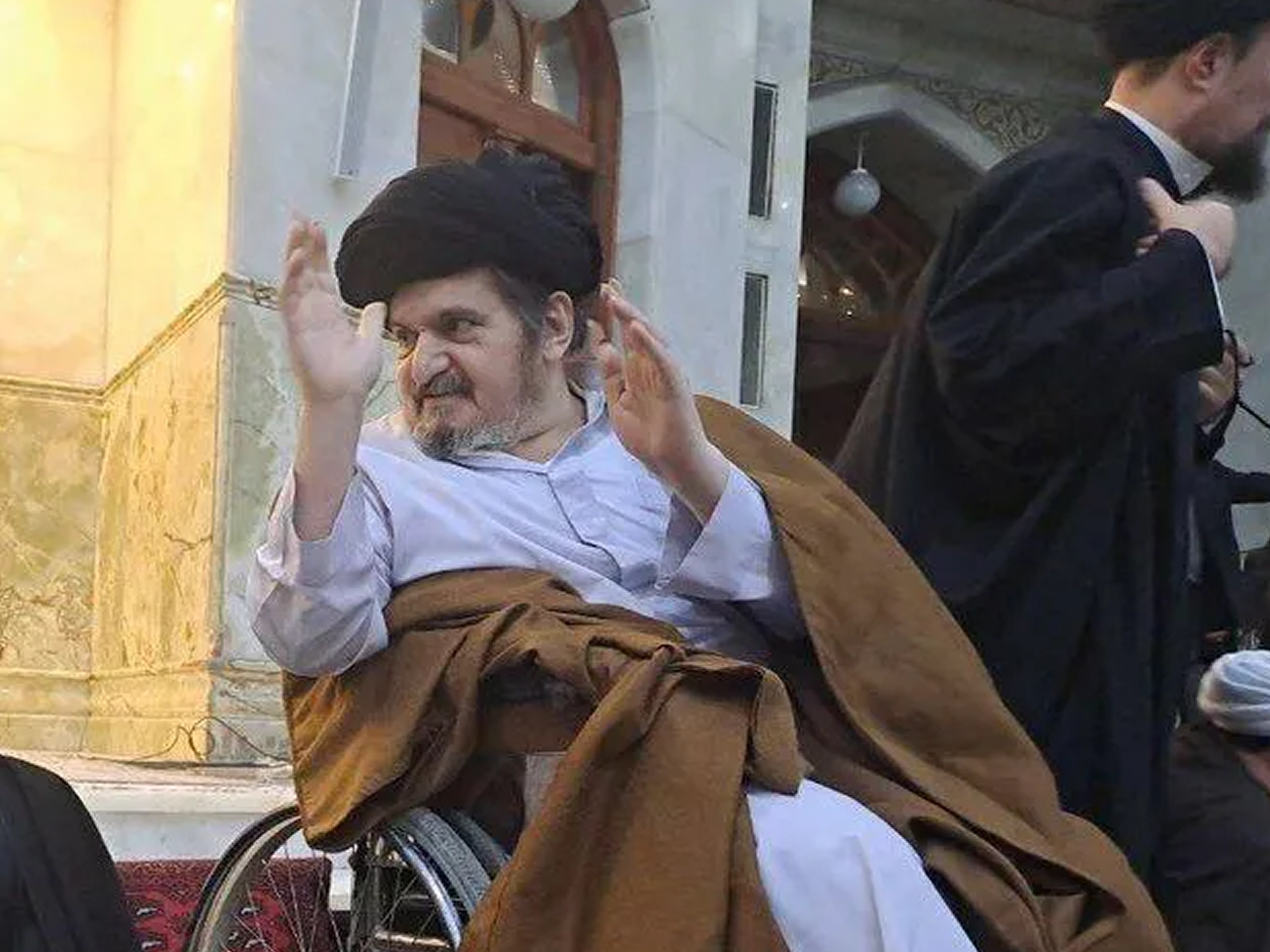
If leaving Iran enabled Hossein to sharpen his critique, returning posed existential risks.
Within six months of his vocal appeals from Iraq and America, a phone call from Iran warned that his wife and children would be killed. Friends and associates urged him not to go back. Yet Hossein chose to return and, before doing so, sought protection from one person whose moral capital the regime still feared: his grandmother, Khadijeh Saqafi, the widow of Ruhollah Khomeini.
Several versions circulate of what happened next, but they share a common theme. According to one account, Saqafi contacted senior figures, including Khamenei and Rafsanjani, and issued a blunt warning: if any harm befell Hossein, she would reveal “unspoken truths”, including alleged details of Ahmad Khomeini’s death and claims that documents in Khomeini’s name endorsing Khamenei’s leadership after his death had been forged or manipulated.
A second telling has her threatening a dramatic public act: if her grandson were arrested or hurt, she would remove her hijab and walk the streets in protest, an act that would have enormous symbolic weight in a system built on her husband’s image.
Whatever the exact wording, the threat appears to have been effective. The judiciary official handling Hossein’s case, Gholam Hossein Mohseni Ejei, quickly closed the file after only a few days. In a system often marked by long pre trial detentions and opaque legal processes, the speed with which the case was dropped is striking. The message seemed clear: the leadership preferred to neutralize Hossein quietly rather than risk a confrontation that might unleash damaging revelations from Khomeini’s widow.
Back in Iran, Hossein lived effectively under house arrest in Qom. Security surveillance and informal restrictions limited his contact with the public. Yet he resurfaced from time to time, particularly through interviews with the Saudi owned channel Al Arabiya.
In one such appearance, roughly two years after his return, he launched a direct attack on Ali Khamenei’s legitimacy as leader. He said the current ruler lacked the spiritual and moral standing of his grandfather and bluntly declared that he would rather run a small bookshop near the shrine of Imam Ali in Najaf than teach in Qom under the present system.
He also targeted one of the most visible tools of state control: compulsory hijab. He criticised the enforced black chadors and dark scarves worn by women, describing streets filled with black as suffocating. He argued that women should be free to choose their clothing, including the right to go unveiled, and that their beliefs and choices deserved social respect. The problem, he said, was not hijab as a personal conviction but its imposition “by force and with brutality.”
In the same interview, Hossein claimed that regime elements had sought to kill him in a staged car accident, which he described as an attempted assassination disguised as a crash. He did not provide extensive detail, but the allegation fit a pattern of suspicious accidents affecting other figures critical of the state.
After that broadcast, his voice again disappeared. For a period, he remained largely silent, confined in Qom with minimal public presence.
On 28 May 2009, however, he spoke once more to Al Arabiya. This time, with another presidential election approaching and slogans of reform again in the air, Hossein mounted a frontal attack on the entire electoral system.
He began by praising earlier Shia scholars who had insisted on separating religious authority from state power. He then argued that the Islamic Republic’s elections were fundamentally hollow because the real power to choose winners rested with the ruling establishment, not the people. Using the example of Khatami, he said that although people had brought the reformist president to office, Khatami had been unable to use that victory to satisfy popular demands for change because he lacked the institutional authority.
Turning to Mehdi Karroubi’s campaign promises about restructuring the political system, combating corruption, and defending ethnic minorities, women and intellectuals, Hossein quoted a Persian proverb: “The house is ruined from the foundation, and the lord is decorating the veranda.” Karroubi’s proposals, he said, were like polishing the facade of a collapsing building.
Again, he returned to the idea of a foundational solution: a binding referendum on the political system’s future.
By this point, Hossein was in his mid sixties and still living under informal house arrest in Qom. In interviews he hinted at “untold stories” about his father’s death and events in the early years of the revolution. Many observers wondered whether he would eventually share these secrets, and if he did, whether he would meet the same fate as his uncle Ahmad.
In one striking remark, he summarized both his sense of inherited responsibility and his desire for redress: his grandfather, he said, had brought this calamity upon the Iranian people; his own mission was to try to free Iran from it.
The story of Hossein Khomeini is more than a family drama. It is a lens onto how the Islamic Republic deals with dissent at the very center of its symbolic universe.
First, it shows that no degree of blood relation protects those who challenge the core logic of clerical rule. Ruhollah Khomeini’s willingness to authorize the shooting of his own grandson if he again reached for a gun in Mashhad was presented as proof of impartiality. Yet in context, it demonstrated something else: the primacy of political obedience over family ties. From that moment onward, Hossein’s rights as an individual were subordinated to the needs of the new state.
Second, his trajectory highlights the system’s reliance on soft erasure in cases where hard repression risks damaging foundational myths. With ordinary dissidents, the regime has often used public show trials, forced confessions, and heavy prison sentences as warnings. With Hossein, the approach was different. Media were instructed not to report his speeches. Powerful figures such as Rafsanjani and Ahmad Khomeini discussed how to “protect” him by avoiding open confrontation while ensuring he disappeared from view. Later, when he returned from exile, a judicial file that might have led to prosecution was closed in days. In practice, he was punished not through a formal sentence but through sustained, quiet house arrest.
Third, the family’s internal dynamics reveal the costs of hybrid systems that mix charisma, inheritance and ideology. Many supporters of the Islamic Republic assume a unified “line of the Imam”. Hossein’s public rejection of velayat-e faqih and his assertion that his grandfather would have opposed current injustices crack this image. For a state deeply invested in sanctifying the founder, the idea that his closest descendants denounce present policies as un Islamic and dictatorial is profoundly threatening.
Fourth, his evolution from internal critic to advocate of foreign intervention underscores how blocked domestic channels can radicalize even those initially committed to change from within. Hossein’s decision to appeal directly to an American president for help in overthrowing the regime founded by his grandfather illustrates a sense of desperation and lack of faith in internal mechanisms. At the same time, it provided authorities with a convenient pretext to dismiss him as a tool of foreign powers and to ignore the substance of his criticisms about executions, confiscations and sham elections.
Finally, his case illuminates the systemic role of fear and informal leverage. The apparent impact of Khadijeh Saqafi’s threats on the handling of Hossein’s case suggests that, behind the scenes, even in a tightly controlled system, certain figures and certain secrets can still force the state to back down. That such leverage had to be deployed merely to prevent the imprisonment or killing of a grandson shows how precarious the position of high profile dissidents has become.
In the end, Hossein Khomeini’s life reads as an indictment written from inside the house of power. As a youth, he confronted his grandfather behind closed doors over executions and clerical domination. As a young cleric, he went to a historic mosque and warned that the country was heading toward a new, religiously framed fascism. As a middle aged exile, he apologized to the son of the overthrown Shah, called for a referendum, and even asked foreign powers to help free his country. As an older man, he sat confined in Qom, promising that one day he would speak openly about deaths and deceptions at the revolution’s core.
Whether or not he eventually does, the arc of his dissent already tells a powerful story. It shows that the Islamic Republic is not a monolith but a contested project, even among those whose blood ties to its founder are strongest. It demonstrates that silencing can be achieved not only with prisons and bullets but with censorship, controlled invisibility and the quiet tightening of surveillance around a single house in Qom. And it leaves open a final question: if the grandson who broke with the revolution ever speaks without restraint, what other myths might crumble in the process.