



The Quiet Killing of a Revolutionary Insider: The Case of Ayatollah Lahouti
An in-depth investigation into Hassan Lahouti’s rise, dissent, and suspicious death inside Evin.
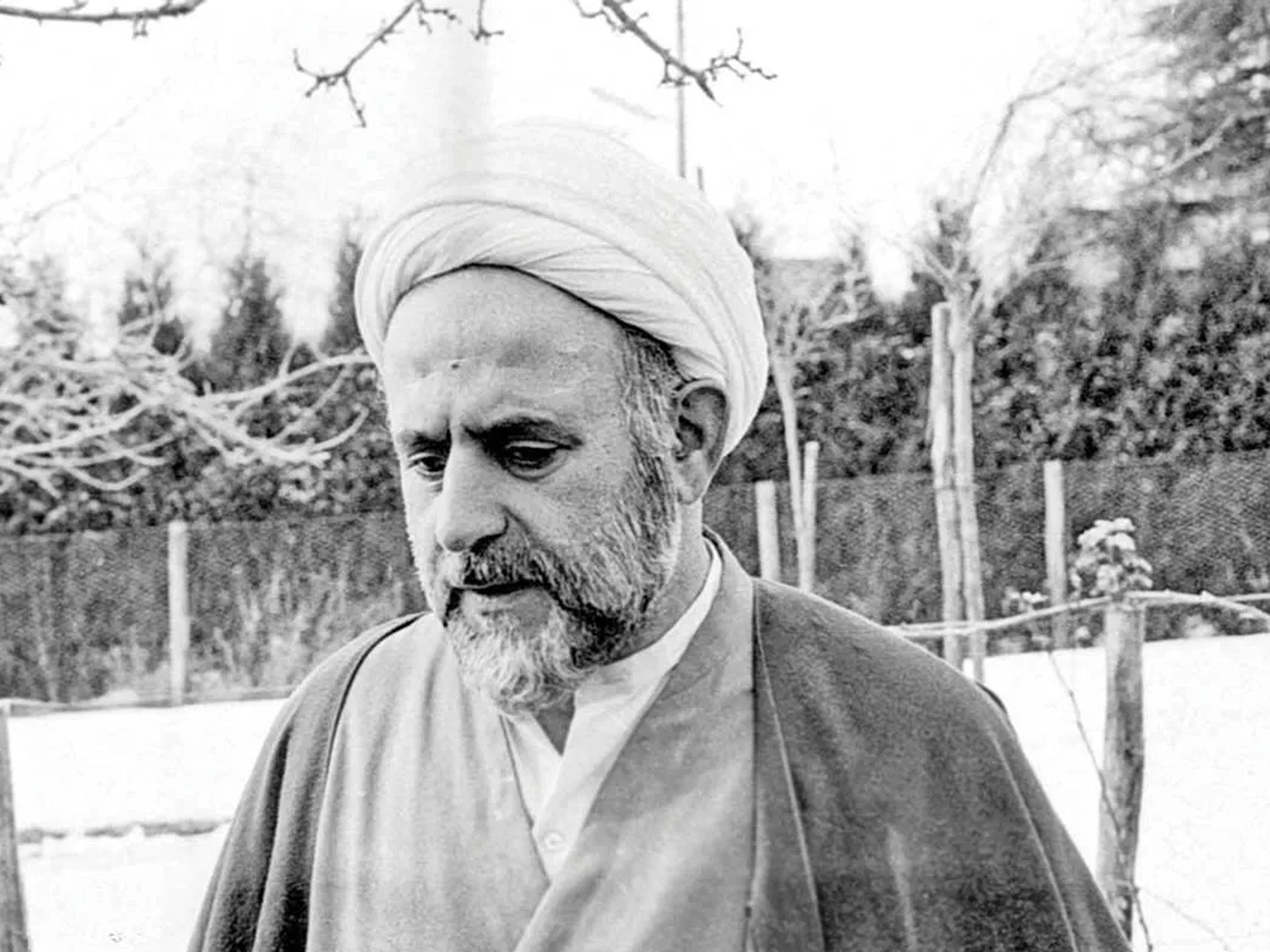
In the autumn of 1981, security agents of the Islamic Republic stormed the home of Hassan Lahouti Eshkouri, a cleric who had been among Ayatollah Khomeini's most trusted companions. Two days earlier, they had detained his son, Vahid. Father and son were taken to Evin prison. Neither returned alive.
The official explanation was stark and simple. Vahid had allegedly committed suicide by throwing himself from a building. Hassan, the state announced, had died of a heart attack. Neither narrative withstood scrutiny. Vahid’s body was never handed to his family. Hassan’s was buried in haste, before a proper funeral could be held. Years later, a forensic report emerged indicating that Hassan had died from strychnine poisoning, administered through his food.
The trajectory of Hassan Lahouti’s life encapsulates a key paradox of the Islamic Republic: how a man celebrated as “the light of my eyes” by Khomeini himself could later be eliminated under suspicious circumstances while the system denied responsibility, silenced his family, and suppressed investigative reporting about his death. The case reveals the mechanisms by which a revolutionary regime turns on its own: how criticism is recast as betrayal, how security institutions gain autonomy from political oversight, and how official narratives are enforced through censorship and fear.
Hassan Lahouti was not an opportunist who arrived late to the revolution. He was part of the generation of clerics and activists who opposed the monarchy at significant personal cost. For years before 1979, he was repeatedly imprisoned and severely tortured. According to contemporaneous accounts, he remained in jail until Aban 1357 (late 1978), only months before the Shah fell. The scars of those interrogations reportedly remained visible on his body decades later.
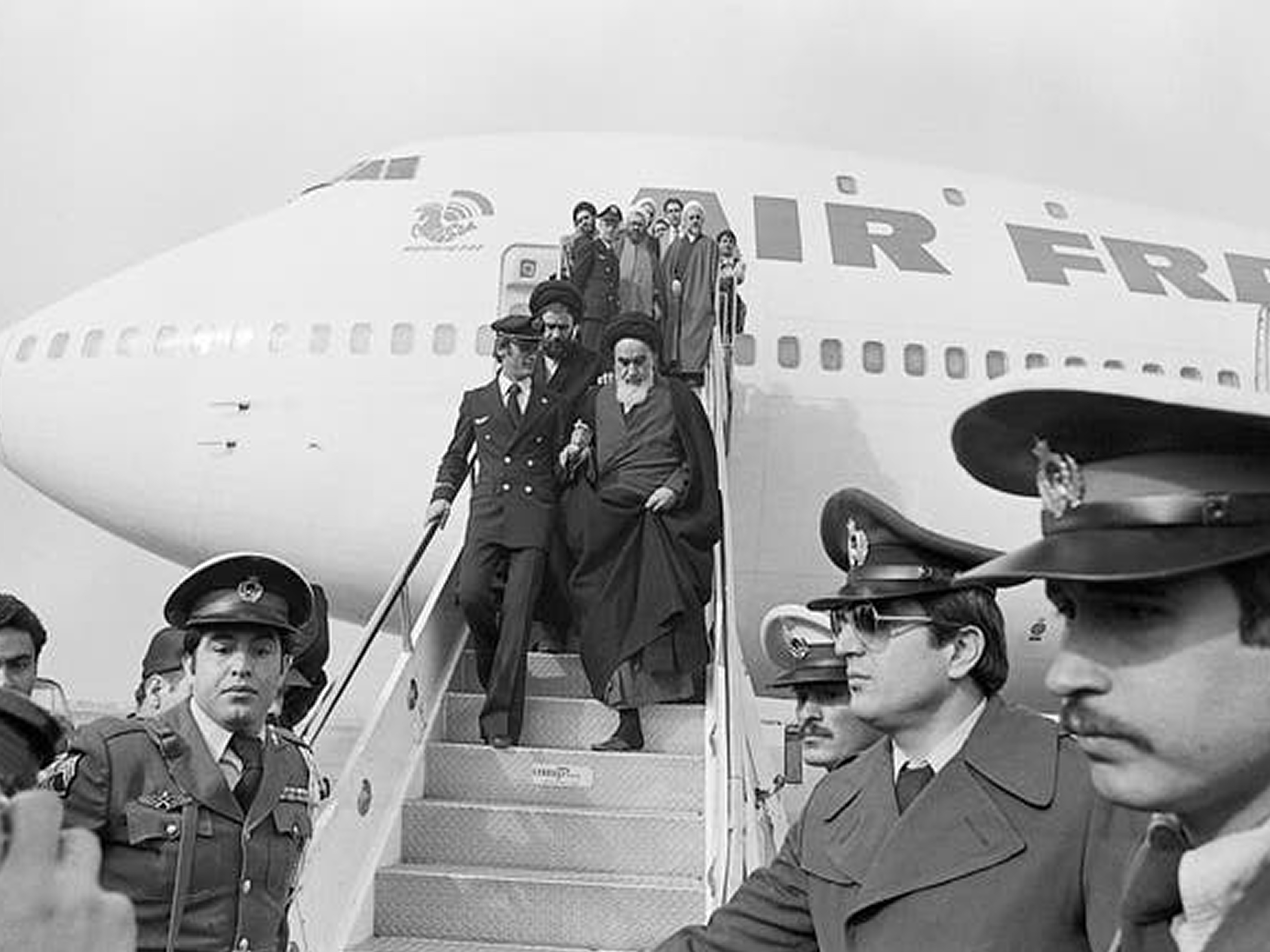
Within a month of his release, Ahmed Khomeini summoned him to Paris. There, in the village of Neauphle-le-Château, Lahouti joined Khomeini’s inner circle. He returned to Tehran on the same “revolution flight” that carried the exiled leader back to Iran. In the first two years after the revolution, he was not a marginal figure but a central ally and instrument of the new order.
Khomeini’s trust in Lahouti was formalized on 25 Shahrivar 1358 (September 1979), in a letter that assigned him some of the most sensitive responsibilities in the new Islamic Republic. The order appointed him as supervisor of the Islamic Revolutionary Guard Corps (IRGC). It instructed him to attend all sessions of the High Council of Coordination and Decision-Making of the Guards, to maintain direct oversight, and to report weekly to Khomeini himself. The letter stressed that Lahouti must ensure that the Guards embodied Islamic ethics and were “in every way the complete manifestation of the soldier of Islam.”
In parallel, Khomeini entrusted him with the Friday prayer leadership of Rasht, signaling both political confidence and religious endorsement. Publicly, the ayatollah expressed admiration unusual even for his close companions. In a meeting with Revolutionary Guards where Lahouti was present, Khomeini reportedly pointed to him and said: “This gentleman is the light of my eyes. I have a long history with him. He has endured so much suffering under that corrupt regime that even now, someone told me the marks of torture are still visible on his body. He resisted. Know his worth. He is not an ordinary man.”
Within months, Khomeini again praised Lahouti by name, acknowledging his pre-revolutionary struggle and sacrifice. This combination of public affection, formal power, and direct access positioned Lahouti at the heart of the newly formed system. Few figures stood closer to the center of revolutionary legitimacy.
Yet Lahouti did not cling to all of his positions. He eventually relinquished both the IRGC supervisory post and the Rasht Friday prayer, choosing instead to serve as a member of parliament representing Rasht in the first Islamic Consultative Assembly in 1359 (1980). This shift from executive oversight and religious authority into the legislature would prove consequential. In parliament and public life, Lahouti encountered the consolidation of power more directly than before and began to express growing unease.
Lahouti’s break with the emerging system did not come overnight. It began with disillusionment over the trajectory of the revolution and intensified as the Islamic Republic hardened into a one-party state in all but name.
Soon after entering parliament, Lahouti became disturbed by what he perceived as monopolization of power, disregard for the rule of law, and a willingness to trample ethical norms in pursuit of political dominance. He concluded that the system was rapidly drifting away from the ideals claimed in 1357. His criticisms, initially voiced in private gatherings, gradually moved into public speeches and interviews. He spoke “compassionately and courageously” about excesses, abuses, and the dangers of ideological intolerance.
By 1359, in the political taxonomy of the time, Lahouti was labeled a “liberal” cleric. This label was not descriptive so much as accusatory: it marked him as an obstacle to the consolidation of the ruling faction centered around the Islamic Republican Party. His speeches became targets for organized disruption by Hezbollahi vigilantes - groups of armed men who, in practice, functioned as quasi-official street enforcers.
A key turning point came on 25 Bahman 1359 (14 February 1981). Lahouti traveled to his electoral constituency in Gilan for a speech. At the Jameh Mosque in the town of Kuchesfahan near Rasht, armed Hezbollah militants attacked the event. According to accounts, they assaulted him, trapped him in the mosque for nearly two hours, and wounded his bodyguard badly enough to require hospitalization.
The violence was sufficiently extreme that President Abolhassan Banisadr, who was then in open tension with the clerical establishment, sent a telegram condemning the attack and its instigators in strong terms. Ahmed Khomeini also wrote to members of parliament, referring to Lahouti’s personality and revolutionary record and expressing astonishment that officials had failed to arrest the perpetrators. Authorities promised Lahouti that those responsible would be identified and prosecuted. No such action materialized.
As the crackdown on opposition intensified, the press came under direct pressure. With the start of mass closures of critical newspapers in early 1360 (1981), Lahouti issued a public statement on 22 Farvardin 1360. The text, one of the few surviving documents expressing his political stance in his own words, linked the suppression of the press to a broader pattern of authoritarian consolidation. It reflected his view that the revolution was being hijacked by a faction bent on eliminating pluralism and silencing dissent.
He did not stop there. Lahouti repeatedly warned that if the authorities continued to ignore the attack on his speech in Gilan and similar abuses, he would “tell the people what must be said.” The acceleration of events in 1360 - the impeachment and removal of Banisadr, clashes with the Mojahedin-e Khalq, widespread executions, and war with Iraq - meant that the outlets through which he might have spoken were rapidly shut down. Newspapers that could have amplified his warning no longer existed. The state controlled radio and television and framed events through the lens of “protecting the revolution.”
Lahouti’s alignment with Banisadr and his opposition to the Islamic Republican Party became more visible. In the parliamentary vote of confidence for Banisadr, he, like other so-called “liberals,” boycotted the session in protest. Within the emerging logic of the system, such stances were increasingly interpreted not as legitimate dissent but as betrayal.
Crucially, Lahouti’s criticisms extended beyond named factions to the core of power. Memoirs from the period depict him in private meetings voicing discontent not only with the party and parliament but also, carefully yet clearly, with the leader himself. He reportedly questioned how far the system had strayed from law, justice, and its own religious and revolutionary claims. In a political culture where “the leader” was rapidly placed beyond criticism, this was dangerous territory.
The autumn of 1360 brought the final act. According to multiple accounts, in that period agents of the Revolutionary Prosecutor in Tehran, operating under the authority of Asadollah Lajevardi, raided Lahouti’s residence with a warrant. They searched the house and detained him. Two days earlier, his son Vahid had been arrested. Both were taken to Evin prison.
Officially, Vahid’s death was recorded as suicide. The family was told that he had thrown himself from the upper floors of a building, in some versions named as the Plasco high-rise in central Tehran. Officials claimed he had jumped to his death. Yet his body was never released to the family. They were only shown a grave that they were told was his. For a family steeped in political struggle and accustomed to state deceit, the gaps in the narrative were impossible to ignore.
Years later, one of Lahouti’s daughters-in-law described her own attempts to verify the official version. As a young, unknown woman, she went to the Plasco building months after the supposed incident and quietly asked shopkeepers, one by one, whether any young man had recently killed himself by jumping from the building. All denied any knowledge of such an event. None of the workers or owners recalled a dramatic suicide. To her, this was confirmation that Vahid’s alleged suicide had been fabricated.
Hassan Lahouti’s death was presented as natural. Lajevardi informed parliamentary leaders that Lahouti had no charges and had merely been summoned to clarify documents related to Vahid. According to this account, he suffered a sudden heart attack upon entering the prison and medical efforts at the heart hospital failed. The implication was that his death was an unfortunate coincidence without anyone to blame.
The handling of his body tells a different story. When the death was reported to parliament, the Speaker, Akbar Hashemi Rafsanjani, broke down in tears while announcing it in an open session. He later wrote that he could not control himself, and that some criticized him while others praised his reaction. Behind the scenes, he recounts that he objected when the prosecutor’s office attempted to bury Lahouti quietly, without public ceremony, and insisted that parliament’s public relations office handle the announcement of the funeral.
Even that small concession was circumvented. The family members present in parliament - including Rafsanjani’s own relatives, as two of his daughters were married to Lahouti’s sons - informed him that the prosecutor’s office had moved the body to the cemetery at 3 pm, an hour before the scheduled time for the funeral, without waiting for mourners. When Rafsanjani protested to Lajevardi, the latter blamed an unnamed “self-willed committee.” It was a familiar pattern: the state acted with deliberate speed and secrecy, then attributed irregularities to rogue elements.
The most explosive details emerged decades later. Twenty-seven years after Lahouti’s death, three close relatives - two of Rafsanjani’s daughters and Lahouti’s eldest son, Hamid - gave an interview to the magazine Shahrvand-e Emrouz. They revealed that the forensic medical report listed strychnine poisoning as the cause of death. The poison, they said, had been mixed into his food and administered shortly after his arrival in prison.
According to their account, Rafsanjani had shown them the forensic document but demanded their silence “for the sake of the revolution.” The magazine that published their testimony was subsequently shut down. The timing and the state’s reaction fit a larger pattern: revelations that contradicted sanitized revolutionary narratives were treated as threats to “the system” and suppressed.
Later, in an interview with documentary maker Hossein Dehbashi, the same daughter-in-law reiterated that Lahouti had been killed in prison rather than dying of natural causes. She also pointed to the contradictions surrounding Vahid’s death, describing again her investigation at the Plasco building and her conclusion that no suicide had occurred there. In a university seminar, she spoke more broadly about the case, acknowledging that she did not believe Khomeini personally ordered Lahouti’s killing, but linked the act to “personal decisions and discretionary powers,” explicitly naming Lajevardi as the symbol of that apparatus.
The chain of events illustrates how impunity operated. A man whom Khomeini had once called the “light of my eyes,” who had supervised the IRGC and led Friday prayers at Khomeini’s own appointment, was taken to prison and killed with poison. His son disappeared into a fabricated suicide story and an unverified grave. The family’s attempts to speak were met with demands for silence “for the revolution” and, when they finally spoke publicly decades later, with the closure of the outlet that gave them a platform.
There were no public trials, no independent inquiries, no official acknowledgement of wrongdoing. Khomeini, presented with the prosecutor’s report, apparently accepted the version he was given. He issued no condolence message to the family, no public statement of regret, and no directive for investigation. The leader who had once urged the Guards to “know the value” of Lahouti remained silent as his former confidant became a casualty of the system he had helped build.
The story of Hassan and Vahid Lahouti is not simply a personal tragedy. It is a case study in how a revolutionary system treats internal dissent, rewrites narratives, and weaponizes loyalty.
First, it shows how rapidly revolutionary capital can be revoked. Lahouti’s years of imprisonment and torture under the monarchy, his early alliance with Khomeini, his appointment over the IRGC, and his public praise as an exemplary struggler did not protect him once he began to criticize the new power structure. In the logic articulated by one of his relatives, “What matters is the present state of individuals. That they fought yesterday and were tortured is not important. What matters is that today they have opened their mouth to criticism, including criticism of the system.” In that framework, no past sacrifice grants immunity. The system has “not contracted friendship with anyone.”
Second, the case exposes the structural autonomy and brutality of security institutions. Lajevardi, often depicted as the embodiment of harsh repression at Evin, emerges as the central operational figure. The use of poison, the speed of burial, the denial of bodies, the fabrication of suicide narratives, and the suppression of forensic findings all point to a security apparatus that operated with minimal oversight and substantial license. While some insiders later suggested that such actions occurred at the level of individuals rather than the “whole system,” the absence of accountability and the silencing of those who attempted to speak undermine this distinction.
Third, the events highlight how families of insiders are constrained. Lahouti’s relatives were themselves deeply embedded in the ruling elite. Two of his sons married into Rafsanjani’s family. Yet even they were pressured into silence, instructed not to reveal what they knew “for the sake of the revolution.” When they eventually did, the cost was institutional rather than personal: a magazine was shut down, and the subject once again became sensitive. This dynamic shows that even the families of high-ranking figures are expected to subordinate truth and grief to the imperatives of regime stability.
Fourth, the handling of Lahouti’s memory demonstrates how history is managed. Official narratives omit mention of the forensic report, the allegations of poisoning, and the contradictions surrounding Vahid’s death. Public references, where they exist, repeat the language of “heart attack” and “suicide.” The gap between the private knowledge of insiders and the official account offered to society is maintained by censorship, the closing of publications, and the fear of repercussions for those who speak.
Finally, the case reveals the internal logic of “protecting the system at any cost.” The formula “preserving the system is the highest obligation” becomes, in practice, a justification for silencing even those whose past credentials are unimpeachable. The very fact that Lahouti had once been held up as a model revolutionary made his later dissent more dangerous. Eliminating him, and controlling the narrative of his death, was part of the broader process by which the Islamic Republic secured itself against not only external enemies but also internal critics with moral authority.
The quiet killing of Hassan Lahouti is therefore more than a historical footnote. It shows how a revolutionary regime can consume its own, how legal and medical institutions can be recruited into cover stories, and how memory is negotiated between families, power-holders, and a system that views truth as a variable rather than a principle. It suggests that within the Islamic Republic, dissent from within, especially when voiced by those once closest to the center, may be regarded as the most intolerable threat of all.
The unanswered questions remain stark. Who ordered the poisoning? How far up the chain did knowledge of the method and timing of Lahouti’s death go? What happened to Vahid, if he did not commit suicide as claimed? And how many other cases followed a similar pattern without leaving behind relatives as connected, or as willing, to speak?
What is clear is that the mechanisms revealed in this case - secret detention, fabricated narratives, suppressed forensic findings, and enforced silence in the name of preserving the revolution - form part of the foundational practice of the system. The story of the man once called “light of my eyes” who died, unacknowledged, in a prison cell, is a stark reminder of how quickly revolutionary loyalty can turn into liability, and how ruthlessly a state built on the language of sacrifice can treat those who question its course.