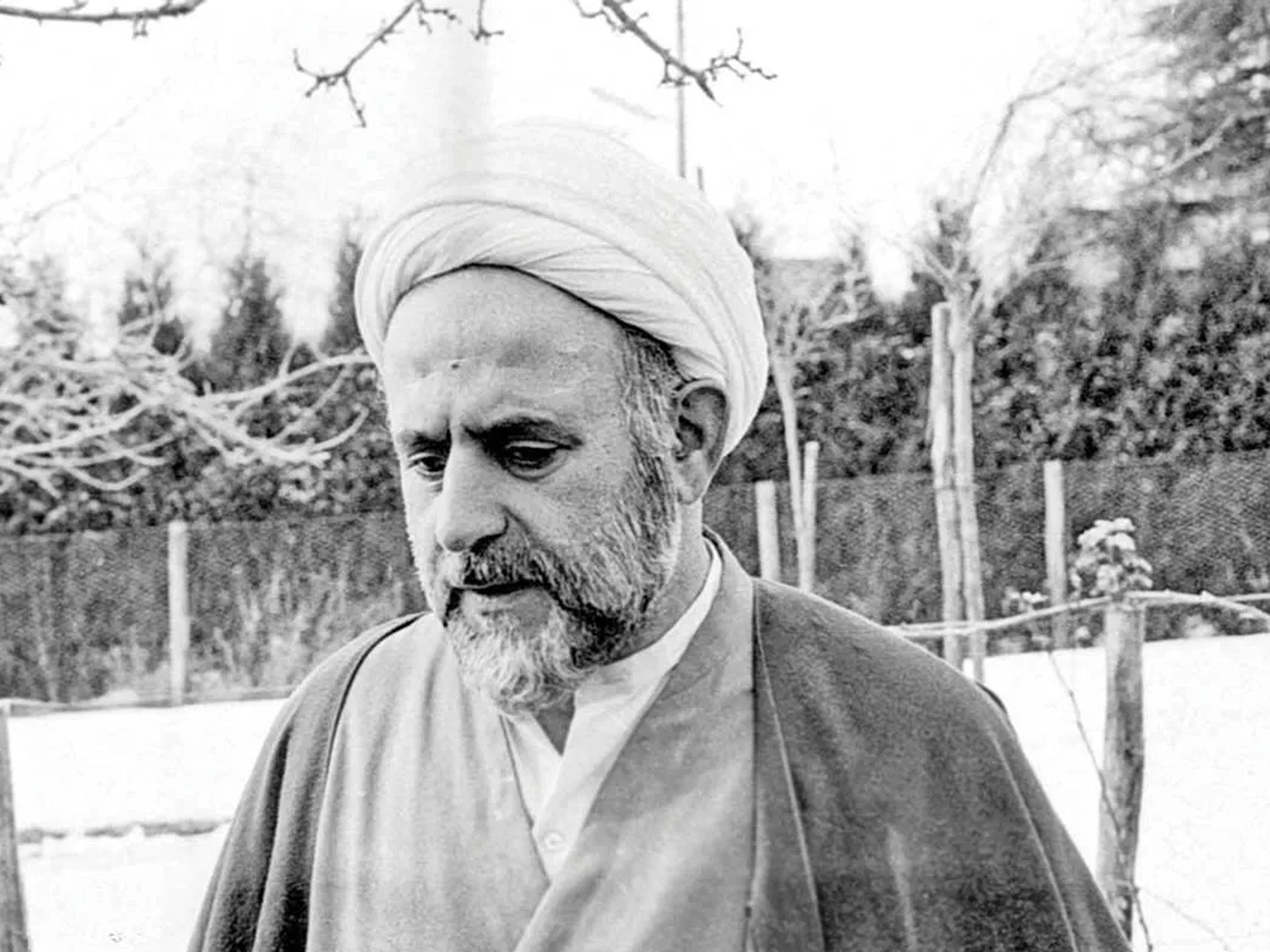




The Enigma of Khomeini's Shadow: How a French Intelligence Officer Spent 37 Years Inside the Islamic Republic
An investigation into Gerard Bataouche reveals decades of unexplained access to revolutionary Islamic Republic's inner circle.
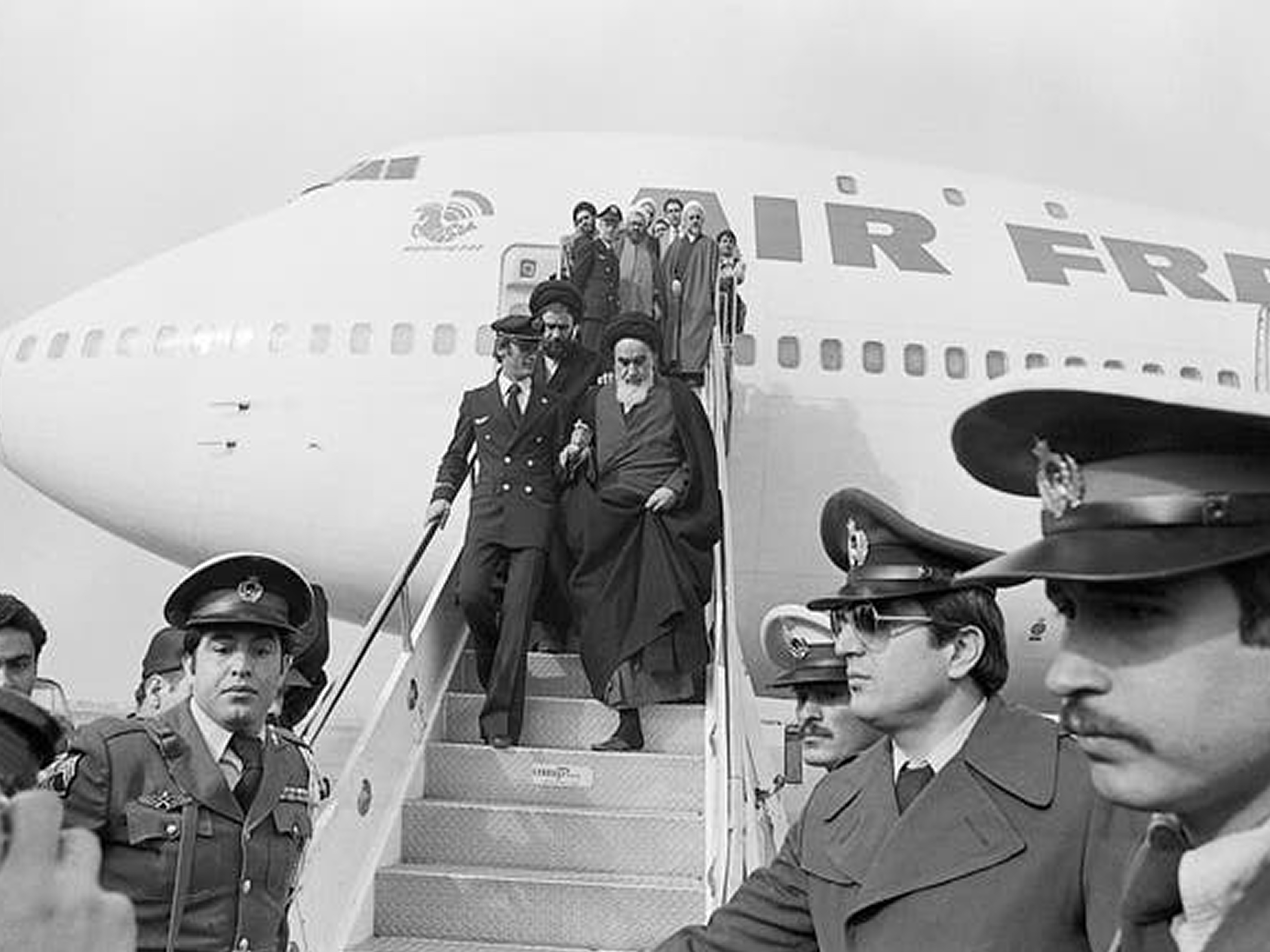
On February 1, 1979, an Air France Boeing touched down at Tehran's Mehrabad Airport carrying the most consequential passenger in modern Iranian history. Ayatollah Ruhollah Khomeini, aged 77, was returning after 15 years of exile to complete a revolution that would reshape the Middle East. Millions of Iranians waited in euphoric anticipation. Yet when the aircraft door opened, the world witnessed an unexpected scene: Khomeini descended the stairs not with any of his famous Iranian companions, but on the arm of a stranger in pilot-like attire and sunglasses.
The man was not a member of the flight crew. His name was Gerard Jean Fabien Bataouche, a 35-year-old French citizen of Algerian origin. Born on May 10, 1943, Bataouche had spent the previous 116 days as Khomeini's personal bodyguard during the ayatollah's exile in the Parisian suburb of Neauphle-le-Château. The image of the two men descending together became one of the defining photographs of the Islamic Revolution, reproduced countless times in government ceremonies and revolutionary commemorations.
What the millions watching did not know was that Bataouche was a serving officer in the French police. According to a 2009 investigation by the French newspaper Le Figaro, he was in fact an agent of French intelligence services, tasked with gathering information about Khomeini and his movement during the critical final months of exile. Even more remarkably, Bataouche would not leave Iran after that historic arrival. Instead, he would remain in the Islamic Republic for 37 years, holding positions far beyond his qualifications, until his death in 2016.
The story of Gerard Bataouche raises fundamental questions about intelligence penetration, revolutionary security, and the hidden bargains that shaped the Islamic Republic. It suggests that at the very heart of Iran's revolutionary leadership, from the moment of its triumph, sat a French intelligence operative with sustained access to military and economic decision-making. Whether Bataouche remained an active spy, became a mercenary opportunist, or transformed into something else entirely, his career reveals extraordinary vulnerabilities in a regime built on paranoia and purges.
Khomeini arrived in France on October 6, 1978, after Saddam Hussein expelled him from Iraq under pressure from the Shah. The ayatollah initially sought refuge in Kuwait, then Syria, but both countries refused him entry. His advisers, particularly the American-educated Ebrahim Yazdi, argued that France offered superior communication infrastructure to spread the revolutionary message globally. The French government, a long-time ally of the Shah, nonetheless permitted Khomeini's entry, calculating that the cleric posed no direct threat to French interests.
In the quiet village of Neauphle-le-Château, roughly 30 kilometers west of Paris, Khomeini established his operational headquarters. From a modest house, he granted interviews to international media, recorded speeches that were smuggled into Iran on cassette tapes, and coordinated with revolutionary cells inside the country. The French police assigned several officers to protect the controversial exile, but Khomeini rejected them one by one. According to Bataouche's own account, published decades later by Iran's Islamic Revolution Documentation Center, Khomeini accepted him immediately upon their first meeting.
The reason was simple: Bataouche spoke Farsi. This linguistic capability, rare among French security personnel, made him invaluable. He could communicate directly with Khomeini without intermediaries, understand conversations among the Iranian entourage, and navigate the complex networks of exiles and revolutionaries who passed through Neauphle-le-Château. For 116 days, Bataouche shadowed Khomeini, visible in photographs walking behind the ayatollah and his companions, ensuring that "nothing bad happens".
But his presence served a dual purpose. In February 2009, Le Figaro published an article explicitly identifying Bataouche as an agent of French intelligence services. The report stated that "the man who was in an official blue uniform on the stairs was an agent of the French intelligence services who had a mission to gather information about Ayatollah, who went into exile after years of living in order to inflame the emotions of the Iranian masses". The newspaper described him as "an official spy a spy on behalf of France figure out of Khomeini's works".
This assessment aligns with broader patterns of intelligence failure that surrounded the Iranian Revolution. American intelligence agencies, overly reliant on the Shah's SAVAK and lacking Farsi-speaking operatives, completely failed to predict the revolution's success. The French, hosting Khomeini on their soil, had a unique opportunity for direct human intelligence collection. Bataouche's positioning, linguistic abilities, and sustained access made him an ideal asset for understanding Khomeini's intentions, mapping his network, and assessing the revolutionary movement's strength.
When Khomeini boarded the Air France flight on January 31, 1979, Bataouche was among the passengers. The aircraft carried 120 journalists and 17 members of Khomeini's staff, including figures who would become central to the new regime: Ahmad Khomeini (the ayatollah's son), Abolhassan Banisadr (future president), Sadegh Ghotbzadeh (future foreign minister), Ebrahim Yazdi, and others. Yet when the moment came to disembark before millions of Iranians and a global audience, Khomeini chose to descend with the French operative rather than any of his Iranian lieutenants.
What should have been the end of Bataouche's assignment became, inexplicably, the beginning of a new career. Rather than return to France with the journalists and flight crew, Bataouche remained in Tehran. According to his own statements, he told Ahmad Khomeini that he wished to stay in Iran out of personal devotion to the ayatollah. When Ahmad expressed concern about the French government's reaction, Bataouche claimed he would simply retire from his police position. He stated that with the "agreement of Imam and Ahmad and getting the retirement order," he came to Iran and began collaborating on "various tasks" with Mostafa Chamran and others.
Mostafa Chamran was one of the revolution's most significant military figures. Born in 1932, he held a PhD in electrical engineering and plasma physics from UC Berkeley, had worked at Bell Laboratories and NASA's Jet Propulsion Laboratory, and had trained in guerrilla warfare in Cuba and Egypt. In the 1960s and 1970s, Chamran was a key member of the Iranian opposition's external wing, founding the Special Organization for Unity and Action (SAMA) in Egypt and helping establish the Amal movement among Lebanon's Shi'a. After the revolution, Khomeini appointed him the first defense minister of the Islamic Republic. Chamran led military operations against Kurdish insurgents and later fought in the Iran-Iraq War until his death in June 1981, reportedly from friendly fire.
Why would Chamran, a sophisticated engineer and guerrilla warfare expert, collaborate with a French police officer on unspecified "various tasks"? The pairing makes little operational sense unless Bataouche possessed either valuable intelligence connections or skills not reflected in his official biography. Documents later revealed that Bataouche served as Khomeini's military adviser for 11 years. This is an extraordinary claim. A foreign national with no documented military training or combat experience was allegedly advising the founder of the Islamic Republic on military matters during the most sensitive period of the new regime's existence, including the Iran-Iraq War (1980-1988).
Bataouche converted to Islam on November 6, 1979, changing his name to Reza. Yet the conversion did not secure him Iranian citizenship. Despite repeated attempts, he never obtained an Iranian passport or birth certificate. This failure is revealing. The Islamic Republic granted citizenship to numerous foreign supporters, particularly those who joined the revolutionary cause or married Iranians. That Bataouche, allegedly close to Khomeini himself, could not obtain basic legal status after decades of residence suggests either bureaucratic obstruction or deliberate policy to keep him in an ambiguous position.
Nevertheless, official documents confirm that Bataouche held multiple positions within the Iranian system. On November 14, 1990, Ayatollah Sadegh Khalkhali, one of the most notorious figures of the early revolutionary period, signed a letter appointing Bataouche as an automotive consultant. Khalkhali, known as the "hanging judge" for ordering hundreds of summary executions as head of the Revolutionary Courts, wrote that Bataouche's "technical personality is recognized and approved by the respected authorities of the Islamic Republic of Iran". The letter stated that Bataouche had provided "meritorious services" to Iran and possessed "complete acquaintance" with European automobile manufacturing industries, particularly in France.
The mission was to investigate and monitor contracts between Iranian companies and French manufacturers Peugeot and Renault, which had become central to Iran's automotive industry. In the 1990s, Iran Khodro and Saipa, the country's two main automotive companies, were attempting to modernize production through partnerships with European firms. Peugeot had established production of the 405 model in Iran starting in 1990, and these partnerships were critical to Iran's efforts to maintain industrial capacity despite international sanctions.
Yet there is no evidence that Bataouche possessed any expertise in automotive manufacturing, engineering, or industrial management. His background was in police work and security. The appointment appears to have been a sinecure, a formal position that provided him access to sensitive commercial negotiations between Iranian and French entities. Khalkhali's letter, written 11 years after Bataouche's conversion to Islam, still addressed him as "Gerard" rather than "Reza," suggesting that his Iranian identity had never fully taken hold even among regime insiders.
The document carries another curious detail: it bears the seal of the guardianship of the Abdul Azim Shrine in Tehran. In 1990, Khalkhali simultaneously served as a member of the Islamic Consultative Assembly (parliament) and the Assembly of Experts for Leadership while overseeing this religious shrine. Why a shrine's seal would appear on a letter concerning automotive industry contracts is unexplained, but it illustrates the informal, networked nature of power in the early Islamic Republic, where religious, political, and commercial authority flowed through personal relationships rather than institutional structures.
Bataouche claimed he also worked as a "road and construction engineer" and participated in the 1995 Esaba Livestock and Dairy Industries Partnership Project (ESBA) of France with Iran's Tirdam Agriculture Company. Each of these positions, spanning military affairs, automotive consulting, construction, and agriculture, suggests a pattern: Bataouche was being inserted into areas where Iranian and French interests intersected, particularly in contracts and partnerships that might involve technology transfer, sanctions evasion, or dual-use equipment.
In 2002, more than two decades after the revolution, an incident occurred that cast Bataouche's motives in a different light. Shahrokh Sultan Ahmadi, nephew of Kazem Akhavan, contacted Bataouche after receiving his phone number from the child of another Iranian connected to a decades-old mystery. Akhavan was one of four Iranians who had been kidnapped in Lebanon on July 4, 1982, and never seen again.
The four men, driving from a meeting toward the Iranian embassy in Beirut, were stopped at a checkpoint near Barbara controlled by the Phalangist militia, a Christian Lebanese force that had collaborated with Israeli forces during the 1982 invasion of Lebanon. The group consisted of Ahmad Motevaselian, a 27-year-old Islamic Revolutionary Guard Corps commander and military attaché at the Iranian embassy; Seyed Mohsen Mousavi, the chargé d'affaires; Taghi Rastegar Moghadam, an embassy employee; and Akhavan, a photographer for Iran's Islamic Republic News Agency (IRNA).
Their disappearance became one of the Islamic Republic's enduring mysteries and propaganda tools. Iran accused Israel of kidnapping the men and holding them in secret prisons, despite Israeli denials. Multiple sources, including former Phalangist commanders and Israeli investigative journalists, concluded that the four Iranians were executed shortly after their capture. Robert Hatem, head of security for Phalangist commander Elie Hobeika, explicitly stated in interviews that he remembered executing the hostages. Yet Iranian authorities maintained for decades that the men were alive, using their disappearance to fuel anti-Israeli sentiment and rally domestic support.
In 2002, Bataouche contacted Sultan Ahmadi claiming he possessed information about the four missing Iranians. He stated that he had personally seen each of them in a multi-cell prison in East Beirut, an area controlled by the Phalangists. According to Bataouche, the Phalangists were prepared to release them in exchange for a ship full of Iranian oil. When Sultan Ahmadi met Bataouche at a Tehran tire shop to assess his claims, the Frenchman said he had witnessed the prisoners in 1996.
The timeline immediately raised suspicions. By 1996, the Lebanese Civil War had ended, the Phalangists had lost their military power and territorial control, and they no longer possessed prisons or barracks at their disposal. When confronted with this contradiction, Bataouche claimed he had been transported to the prison blindfolded and could not recall any specific details about the location.
More tellingly, Bataouche demanded payment for his information: he wanted an Iranian passport, identity card, and a house in exchange for mediating the hostages' release. This was not the first time he had attempted such an exchange. Bataouche made similar claims to Nosrat Kashani, who was then head of Iran's Veterans Organization. Kashani later stated that he suspected Bataouche of being a spy and that close friends had warned him to avoid contact with the Frenchman.
Hamid Davoodabadi, a researcher and writer who investigated the Iran-Iraq War and the missing diplomats case, characterized the episode as evidence that Bataouche was "a fraud". The timing of the approach is significant. By 2002, Bataouche had been in Iran for 23 years without ever securing citizenship. He may have been attempting to leverage one of the regime's most emotionally charged unresolved cases to finally obtain legal status and financial security. The fact that he tried the same tactic with multiple regime officials suggests desperation rather than genuine intelligence.
Yet the incident also demonstrates that Bataouche maintained connections and information about Lebanese affairs, Phalangist operations, and possibly Israeli intelligence activities from the 1982 period. Whether his claims had any basis or were pure invention, he evidently felt confident enough to approach senior Iranian officials with the story, suggesting he believed his access and reputation would protect him from accusations of fraud.
To understand how Bataouche sustained his presence in Iran for 37 years, it is necessary to examine the context in which he operated. The Islamic Republic, from its inception, was obsessed with foreign infiltration and espionage. The SAVAK, the Shah's notorious secret police, had been heavily infiltrated by foreign intelligence services, particularly those of the United States and Israel. One of the revolution's driving forces was the desire to expel foreign influence and restore Iranian sovereignty.
Yet the revolutionary leadership itself was riddled with contradictions and competing factions. Mehdi Bazargan's provisional government sought to maintain some continuity with pre-revolutionary institutions and preserve relations with Western powers. Khomeini and the clerical faction were determined to consolidate Islamic rule and eliminate all rivals, whether monarchist, communist, or nationalist. This internal struggle created spaces where individuals like Bataouche, who could navigate between Iranian and foreign worlds, might find protection.
The purges began almost immediately. Ayatollah Sadegh Khalkhali, Bataouche's later patron, was appointed head of the Revolutionary Courts on February 24, 1979, less than two weeks after the revolution's victory. Khalkhali earned the title "hanging judge" by ordering the execution of hundreds of former regime officials, ethnic minorities, political opponents, and alleged drug traffickers in summary trials where he served as both prosecutor and judge. In August and September 1979, Khalkhali traveled to Kurdish regions and ordered the execution of up to 60 people per day, including men, women, and boys accused of supporting Kurdish autonomy movements.
Between 1981 and 1985, revolutionary courts executed more than 8,000 opponents, primarily members of leftist organizations like the Mujahedin-e Khalq (MEK) and the Tudeh Party (Iranian communists). The death toll during these years was 50 times higher than the number of executions carried out during 30 years of the Shah's rule. Khomeini systematically eliminated the independent workers' councils (shuras), Islamic associations, and neighborhood committees (komitehs) that had been the grassroots foundation of the revolution, replacing them with state-controlled Islamic Revolutionary Guards (pasdaran) and intelligence services.
In this environment of paranoia and mass violence, how did a French intelligence officer not only survive but thrive? Several factors likely contributed to Bataouche's protection. First, his association with Khomeini himself from the moment of the revolution's triumph gave him a kind of revolutionary legitimacy. He was, quite literally, in the iconic photograph. To question Bataouche was, in some sense, to question the narrative of Khomeini's return. Second, his linguistic and cultural abilities made him useful as a bridge to French commercial and political interests at a time when Iran was internationally isolated and desperate for foreign technology and capital.
Third, and perhaps most importantly, the fragmented nature of power in the early Islamic Republic meant that no single institution controlled all aspects of security and intelligence. The SAVAK had been dismantled, but its replacement, the Ministry of Intelligence and Security (MOIS), was still being formed. The Revolutionary Guards had their own intelligence apparatus. Individual clerics maintained personal networks and militias. In this chaotic landscape, someone like Bataouche, attached to powerful patrons and operating across institutional boundaries, could exploit gaps in oversight.
French intelligence services had strong motivation to maintain an asset inside Iran. France had been a major arms supplier to the Shah and had nuclear cooperation agreements with Iran dating to the 1970s. After the revolution, France initially attempted to maintain pragmatic relations with the new regime, even as it faced Iranian-backed terrorism in Lebanon and on French soil. An intelligence officer embedded in Iranian commercial and military networks would have provided invaluable insight into sanctions evasion, weapons procurement, nuclear ambitions, and factional politics within the regime.
The 2009 Le Figaro report identifying Bataouche as a French intelligence agent was published 30 years after the revolution and only seven years before his death. Why French media would expose an intelligence operation decades after the fact is unclear, but it may reflect changed circumstances. By 2009, France under President Nicolas Sarkozy had aligned closely with American policy toward Iran, supporting harsh sanctions over Iran's nuclear program. Revealing Bataouche's role could have served as a signal to Tehran that France possessed deep knowledge of the regime's inner workings, or it could have been an attempt to protect French intelligence assets by suggesting that Bataouche had been the extent of French penetration.
By the early 2000s, Bataouche's position had deteriorated significantly. His failure to secure citizenship left him in legal limbo. His marriage to an Iranian woman named Bita Ahi, with whom he had two children—a son and a daughter—ended in divorce. Bataouche later claimed that his wife "took over his house and his life," leaving him displaced in his old age. He moved from friend to friend, living day-to-day without stable housing or financial security.
The children from his marriage reportedly travel between the United States and Iran, suggesting they may have obtained foreign citizenship through their mother or other family connections. For a man who spent 37 years inside the Islamic Republic's power structures, this descent into poverty and homelessness is remarkable. It suggests that whatever protection Bataouche had enjoyed did not extend to financial security, and that by the 2000s, his patrons had either died, lost interest, or found him no longer useful.
On February 11, 2015, Bataouche made his final public appearance, giving a speech to a crowd in Nahavand during ceremonies marking the anniversary of the Islamic Revolution. One year later, on January 17, 2016, Gerard Bataouche died. He was buried in Behesht Zahra cemetery in southern Tehran, the massive burial ground that holds many of the revolution's martyrs and prominent figures. Khomeini himself is entombed at Behesht Zahra, in a monumental shrine that has become a site of pilgrimage.
Bataouche's gravestone records his birth year as 1942 rather than 1943, a minor discrepancy that encapsulates the ambiguities of his entire biography. Even in death, the basic facts about Gerard Bataouche remain contested.
The story of Gerard Bataouche illuminates several uncomfortable truths about intelligence operations, revolutionary regimes, and the nature of political power. It demonstrates that even the most ideologically rigid and security-obsessed states can be penetrated when intelligence services possess patient, linguistically capable operatives who embed themselves at critical moments. Bataouche's presence on the February 1, 1979 flight, his appearance in the iconic photograph, and his immediate acceptance into Khomeini's circle gave him a form of revolutionary capital that proved difficult to revoke.
The case also reveals the instrumental nature of ideological commitment. Bataouche's conversion to Islam, his adoption of the name Reza, and his professed devotion to Khomeini did not translate into genuine integration. The regime never fully trusted him enough to grant citizenship, yet simultaneously employed him in sensitive positions. This suggests that Iranian authorities may have known or suspected his intelligence background but calculated that his usefulness outweighed the risk, or that different factions within the regime had competing assessments of his loyalty.
The Lebanese hostage affair illustrates how the line between intelligence operative and opportunistic fraudster can blur over time. By 2002, Bataouche appears to have been attempting to monetize whatever knowledge and connections he possessed, approaching multiple Iranian officials with dubious claims in exchange for legal status and property. Whether this was desperation born of abandonment by French intelligence, or a final attempt at asset development by exploiting Iranian sensitivities, remains unclear.
From a counterintelligence perspective, the Bataouche case represents a significant failure. For 37 years, a known foreign security officer operated inside the Islamic Republic with access to military advisory roles, commercial negotiations involving sanctions-sensitive industries, and high-level regime figures. If Bataouche remained an active French intelligence asset throughout this period, the strategic value to France would have been immense: insights into Iran's military planning during the Iran-Iraq War, its procurement networks, its automotive and industrial sectors, and its relationships with Lebanese Shi'a militias.
Even if Bataouche ceased active reporting after the early 1980s, his mere presence represents a vulnerability. Intelligence services rarely fully retire valuable assets; they may go dormant for years before being reactivated when circumstances change. The fact that Le Figaro published its exposé in 2009, suggesting Bataouche had been an intelligence agent all along, indicates that French services had reason to remind Tehran of this penetration, possibly as leverage in nuclear negotiations or other diplomatic confrontations.
The broader significance lies in what the case reveals about the construction of revolutionary narratives. The photograph of Khomeini descending from the Air France flight, aided by Bataouche, was reproduced countless times as a symbol of the Islamic Revolution's triumph. Government ceremonies and revolutionary commemorations enshrined this moment. The regime could not easily erase Bataouche from the historical record without calling into question the authenticity of the revolution's founding mythology. This gave him a measure of protection, but it also meant that any exposure of his intelligence role would undermine the regime's own carefully constructed narrative.
Finally, Bataouche's story demonstrates the limits of revolutionary transformation. The Islamic Republic, which came to power promising to expel foreign influence and restore Iranian sovereignty, ended up hosting a French intelligence officer in positions of trust for nearly four decades. The revolutionary regime, which executed thousands for alleged espionage and foreign connections, could not or would not eliminate a man whose intelligence background was, at minimum, strongly suspected. This suggests that the pragmatic necessities of governance, the value of maintaining foreign technical and commercial connections, and the protection offered by personal relationships with powerful clerics outweighed ideological purity.
Many aspects of Gerard Bataouche's life remain mysterious. Did French intelligence maintain contact with him after 1979? If so, through what channels and with what objectives? Did his appointments to positions involving automotive contracts, agricultural partnerships, and other French-Iranian commercial relationships serve intelligence collection purposes, providing France with insights into Iran's sanctions evasion strategies and dual-use technology acquisition?
Why did multiple powerful figures within the Islamic Republic, including Mostafa Chamran, Sadegh Khalkhali, and potentially Khomeini himself, choose to trust and employ a foreign national with obvious intelligence connections? Was this a calculated decision, reflecting confidence that Bataouche had been turned or neutralized? Or did different factions within the regime have competing views, with some seeing him as useful and others as dangerous?
What information did Bataouche provide to French intelligence about Khomeini's plans during the critical months in Neauphle-le-Château? The failure of American and other Western intelligence services to predict the revolution's success is well documented. Did French intelligence possess superior insight because of Bataouche's access, and if so, how did they use it? The United States and France had limited intelligence sharing on Iran during this period, a failure that has been described as "baffling".
Why could Bataouche never obtain Iranian citizenship despite living in Iran for 37 years, converting to Islam, marrying an Iranian, having children, and holding multiple official positions? Was this bureaucratic dysfunction, or deliberate policy to keep him in a vulnerable position where he could be expelled or arrested at any moment if necessary?
The most fundamental question is whether Bataouche's presence inside the Islamic Republic represents an extraordinary intelligence success or a cautionary tale of an asset who became a liability. Intelligence operations are measured not just by access but by actionable intelligence and strategic advantage. If Bataouche provided valuable reporting for decades, he would rank among the most successful long-term intelligence penetrations of a hostile regime in modern history. If he ceased to be operational early in his Iranian residence and merely survived as an opportunist trading on past connections, he represents the kind of abandoned asset who creates risks without providing benefits.
What can be stated with certainty is that the Islamic Republic allowed a French intelligence officer to operate within its structures for 37 years, and that this reality coexisted with the regime's claims of revolutionary purity, anti-Western resistance, and uncompromising defense of sovereignty. The gap between rhetoric and reality, between ideological commitment and pragmatic accommodation, defines the Bataouche affair and offers a window into the contradictions that have shaped the Islamic Republic since its founding.
In the end, Gerard Bataouche came to Iran holding Khomeini's arm and died there decades later, buried among the revolution's believers. Whether he remained a spy throughout, became something else, or was always an enigma even to himself may never be fully known. What is certain is that his story, hidden in plain sight within the revolution's most iconic image, reveals that the founding mythology of the Islamic Republic is more complicated, more compromised, and more penetrated by foreign intelligence than the regime has ever acknowledged.