



The Missing Oil Rig: How Iran's Fortuna Scandal Exposed Corruption Under Sanctions
An $87 million oil rig vanished after full payment, revealing a complex fraud network.
|
Pars Barghandan
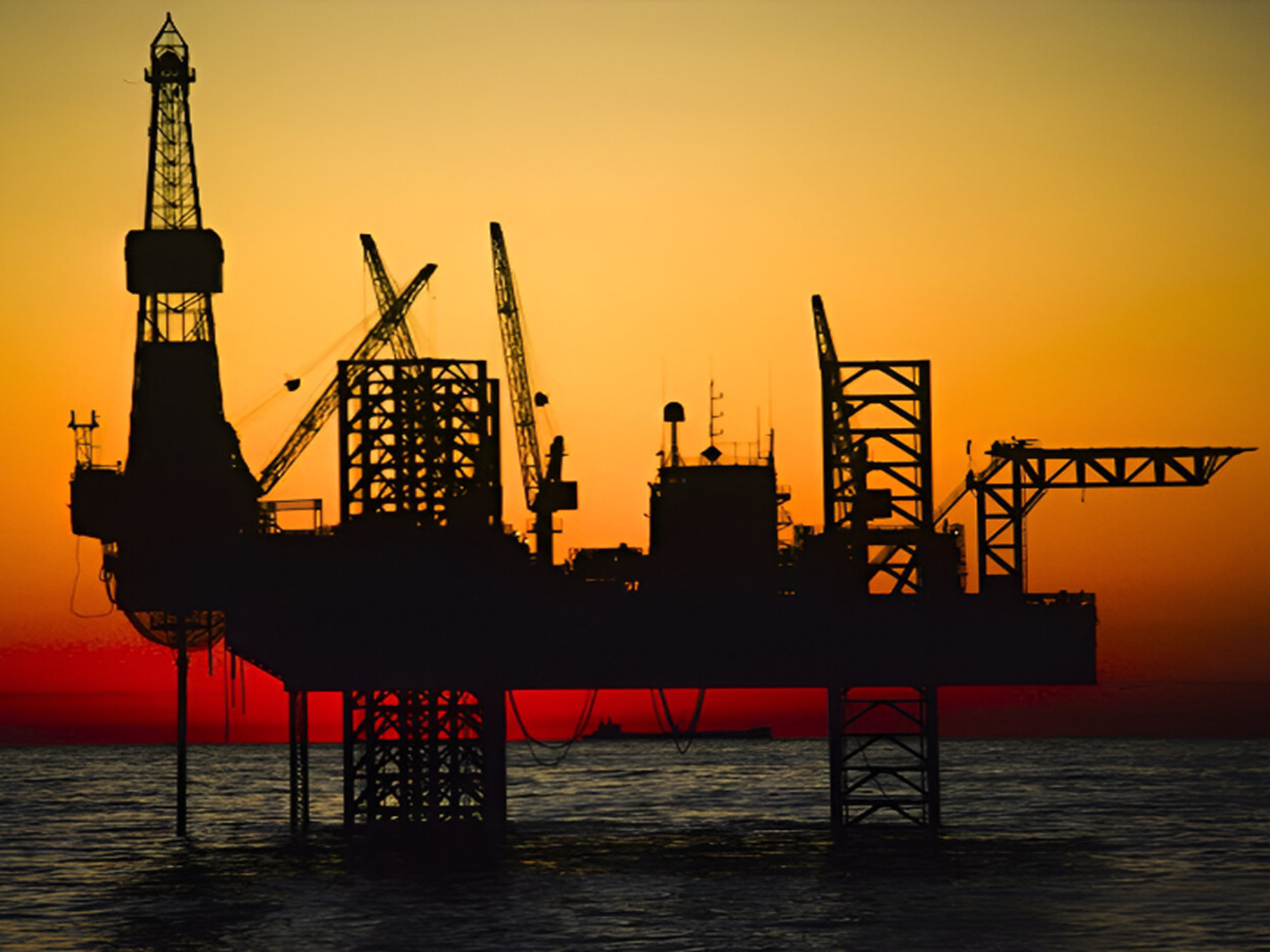
In November 2014, fourteen members of Iran's parliament revealed a stunning case: an oil drilling rig purchased for $87 million in 2011 had never arrived in the country, despite full payment. The scandal, which came to be known as the "Fortuna case," exposed a sophisticated network of corruption involving sanctioned shell companies, powerful intermediaries, and regime officials who circumvented international sanctions through fraudulent deals. At its center stood Ali Taheri Motlagh, CEO of Iran Marine Engineering and Construction Company, alongside two notorious oil brokers, Reza Mostafavi Tabatabaei and Morad Shirani, whose shell companies orchestrated the fraud.
The case illuminated a broader system in which sanctions evasion infrastructure doubled as a vehicle for embezzlement, where oversight mechanisms failed or were deliberately bypassed, and where regime insiders operated with near impunity. While convictions were ultimately handed down, the money was never recovered, and the masterminds faced minimal consequences, continuing their activities abroad.
The story begins in the final years of Mahmoud Ahmadinejad's presidency, when international sanctions against the Islamic Republic's nuclear program tightened dramatically. Iran Marine Engineering and Construction Company, a subsidiary of the Oil Industry Pension Fund, won a contract for Phase 14 of the South Pars gas field. To fulfill its obligations, the company needed an offshore drilling rig. However, the firm had been placed on international sanctions lists, making legitimate procurement through normal channels impossible.
According to defense lawyer Mehdi Noude, the company's board had approved purchasing a rig up to $200 million. For six months, management sought legal pathways before resorting to sanctions evasion through shell companies. Rental was considered, at an estimated daily cost of $150,000, but ultimately rejected in favor of outright purchase.
The company was not unknown in global oil circles. Before sanctions, it had maintained contracts with GSP Romania, the eventual seller of the Fortuna rig. But sanctions forced a detour through intermediaries. This is where Reza Mostafavi Tabatabaei entered the picture. An oil broker with ties to Iran's intelligence apparatus, Tabatabaei introduced himself as having access to a used drilling rig available for purchase. His partner, Morad Shirani, served as advisor to Ali Taheri Motlagh, the company CEO, creating a fateful conflict of interest that would define the scandal.
To circumvent sanctions, a layered structure of shell companies was constructed. Iran Marine Engineering signed a contract not with the Romanian seller, GSP Romania, but with Dean International Trading, a paper company registered in the United Arab Emirates. Dean's nominal manager was a Jordanian lawyer named Omar Kamel, but documents later revealed that Tabatabaei was the true owner. Dean, in turn, was supposed to contract with GSP Romania for the rig.
The Iranian company Sepanta International was designated as technical supervisor, responsible for monitoring the rig's refurbishment and delivery. Critically, Sepanta was jointly owned by Tabatabaei and Shirani, the same brokers who had brokered and supervised the deal. This meant the introducer, the intermediary shell company, and the technical overseer were all controlled by the same two individuals, while one of them also served as advisor to the buyer.
The contract stipulated payment in three installments: 20 percent upfront, 40 percent after refurbishment confirmation by Sepanta, and the remaining 40 percent upon delivery. The first payment of $17.4 million was transferred on April 25, 2012. Five months later, Sepanta certified that refurbishment was complete, triggering the second payment of $40 million. Just 50 days later, Ali Taheri Motlagh signed a delivery receipt, authorizing the final $29 million payment on November 24, 2012.
But no rig ever entered Iranian waters. What actually happened was that after the first installment, the contract between Dean and GSP Romania was canceled. Neither Dean nor Sepanta reported this to the Iranian buyer. Instead, they allegedly pressured for accelerated payment of the second and third installments, totaling $69 million, even though no underlying contract for delivery existed. The result: full payment for a rig that never arrived.
The scandal broke publicly in late October 2014, during a period when Ahmadinejad's administration was under intense scrutiny for economic corruption. Fourteen parliamentarians wrote to the speaker demanding answers. Bijan Namdar Zanganeh, oil minister in the new Rouhani government, confirmed the rig had never entered Iranian waters and that legal proceedings had begun.
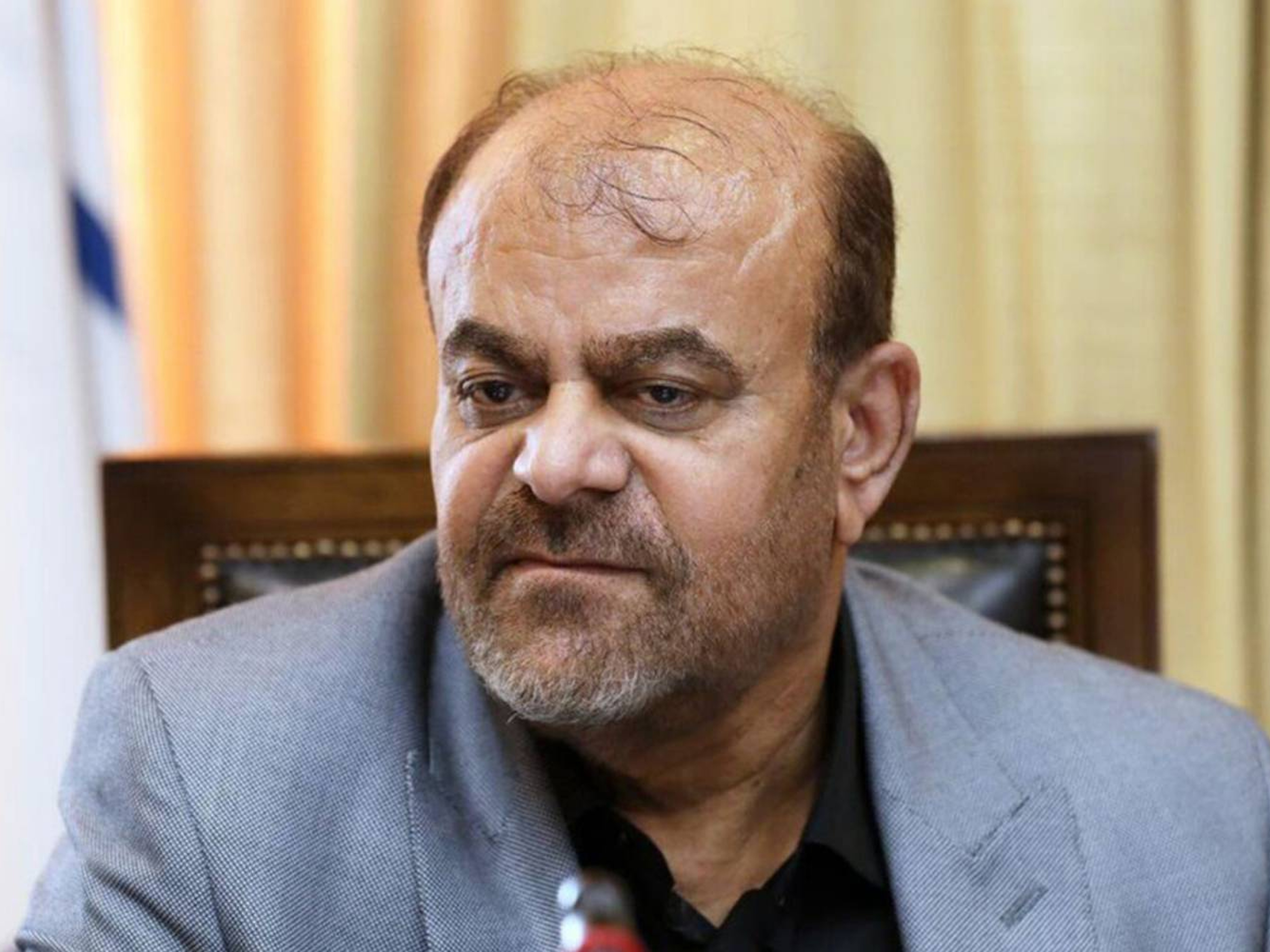
Former oil minister Rostam Ghasemi, who had overseen the sector during the contract period, dismissed the story at first, claiming a drilling rig cannot simply disappear because it requires a crew of at least 50 and has strict movement protocols. His denial did little to quell the uproar.
Investigations revealed that the brokers at the heart of the deal had deep histories in Iran's oil sector. Morad Shirani had worked for the National Iranian Oil Company and National Iranian Drilling Company since the 1980s, rising to management before being dismissed in 2001 for financial misconduct. He reemerged in 2002 as head of Sepanta International, a small service contractor. With the advent of sanctions and Ahmadinejad's presidency, Shirani found new opportunity as a sanctions-busting intermediary. His close friendship with Massoud Mirkazemi, Ahmadinejad's first oil minister, secured lucrative contracts. In 2011, despite his 2001 ban, Shirani was appointed special advisor to Iran Marine Engineering's CEO, just as the Fortuna deal was being negotiated.
Reza Mostafavi Tabatabaei was an employee of a trading firm run by Ali Toraghijah, a bazaar merchant active in oil equipment. Fluent in English and familiar with international trade, Tabatabaei quickly became indispensable. In 2006, Toraghijah was arrested in connection with the Crescent Petroleum corruption scandal. Tabatabaei allegedly cooperated with the Ministry of Intelligence against his former boss, providing documents that led to Toraghijah's detention. As a reward, according to unofficial sources, Tabatabaei was introduced to Shirani in 2007 by an Intelligence Ministry middleman. Their partnership flourished.
Their first major project together involved procuring the Sahar rig for North Drilling Company. According to investigative outlet Baztab, the Intelligence Ministry's economic deputy rigged the tender, disqualifying all competitors so that Sepanta won without contest. This set the pattern: Sepanta, managed by Tabatabaei and Shirani, became a key supplier of oil equipment, using intelligence cover and sanction-evading networks.
Four main defendants were identified: Ali Taheri Motlagh, Morad Shirani, Reza Mostafavi Tabatabaei, and Omar Kamel. Taheri and Shirani were arrested in Iran. Tabatabaei and Kamel, both abroad, were not.
Iran's Economic Crimes Court convicted Taheri and Tabatabaei of breach of trust and destruction of national resources, sentencing each to three years in prison. Shirani received six months. The court also ordered restitution of the full $87 million. Omar Kamel, as a non-Iranian who signed contracts abroad, was exempt from prosecution.
A parallel case was filed in the United Kingdom. The High Court of England and Wales found the three main defendants liable and ordered financial penalties roughly equivalent to the transaction amount. But neither the Iranian restitution order nor the UK judgment was enforced. Omar Kamel disappeared. Taheri and Shirani served brief sentences and were released. Tabatabaei, who was outside Iran during the trial, faced no punishment.
Legal advisor Massoud Amani of Iran Marine Engineering had promised that foreign defendants would be arrested and assets frozen. The High Court allegedly banned Tabatabaei from transactions and froze his assets. Yet Iranian media later reported that Tabatabaei continued to operate freely between the United States, France, and Dubai, maintaining active business offices in Dubai. According to claims by Omar Kamel cited by defense lawyer Noude, Tabatabaei took the funds to France, investing them in a winery, a restaurant, and reportedly contributing to Donald Trump's 2016 presidential campaign. These claims remain unverified, but the broader point is clear: the money was never recovered.
Mehdi Noude, Taheri's lawyer, acknowledged this reality, stating that Iran's intelligence apparatus tried to trace the funds but lacked the international banking cooperation necessary. He concluded that officially, no one knows where the money went.
The Fortuna scandal was not an isolated case of fraud. It was emblematic of a sanctions-era system in which regime insiders constructed parallel economic structures nominally to evade international pressure, but which simultaneously enabled massive embezzlement. The very mechanisms designed to keep oil flowing and revenue coming in, bypassing sanctions through shell companies and covert deals, created opportunities for self-dealing that were nearly impossible to oversee or punish.
Shell companies registered in Dubai and Malta, controlled by the same individuals acting as advisors and supervisors to state firms, represented a deliberate blurring of roles. The involvement of intelligence services, which facilitated some sanctions evasion, further complicated accountability. When fraud was exposed, prosecutions were half hearted and penalties symbolic. Convictions were handed down, but money vanished into offshore accounts and foreign investments, beyond the reach of Iranian authorities and ignored by foreign jurisdictions.
For ordinary Iranians, the case was a bitter reminder of the costs of corruption. The $87 million, drawn from the Oil Industry Pension Fund, represented resources that could have supported infrastructure, salaries, or social programs. Instead, it disappeared into the pockets of brokers who operated with impunity, protected by connections, complexity, and the opacity of sanction-evading networks.
The scandal also illustrated the failure of oversight. How could the CEO of a state company sign a delivery receipt for a rig that never arrived? How could a technical supervisor owned by the same brokers who brokered the deal certify work that was never done? These questions point to a system where formal procedures existed on paper but were routinely ignored in practice, and where the intertwining of state and private interests, regime insiders and intelligence operatives, made accountability nearly impossible.
The Fortuna case ultimately revealed not just fraud, but the structural corruption embedded in the Islamic Republic's sanctions-era economy, a system in which those tasked with circumventing external pressure exploited their positions to loot national resources, confident that even if caught, consequences would be minimal and recovery of stolen funds virtually impossible.