



The Wrestler and the Gallows: How Iran Executed a Champion and Buried the Truth
A champion wrestler tortured into false confession, executed in secret, and buried under cover of night.
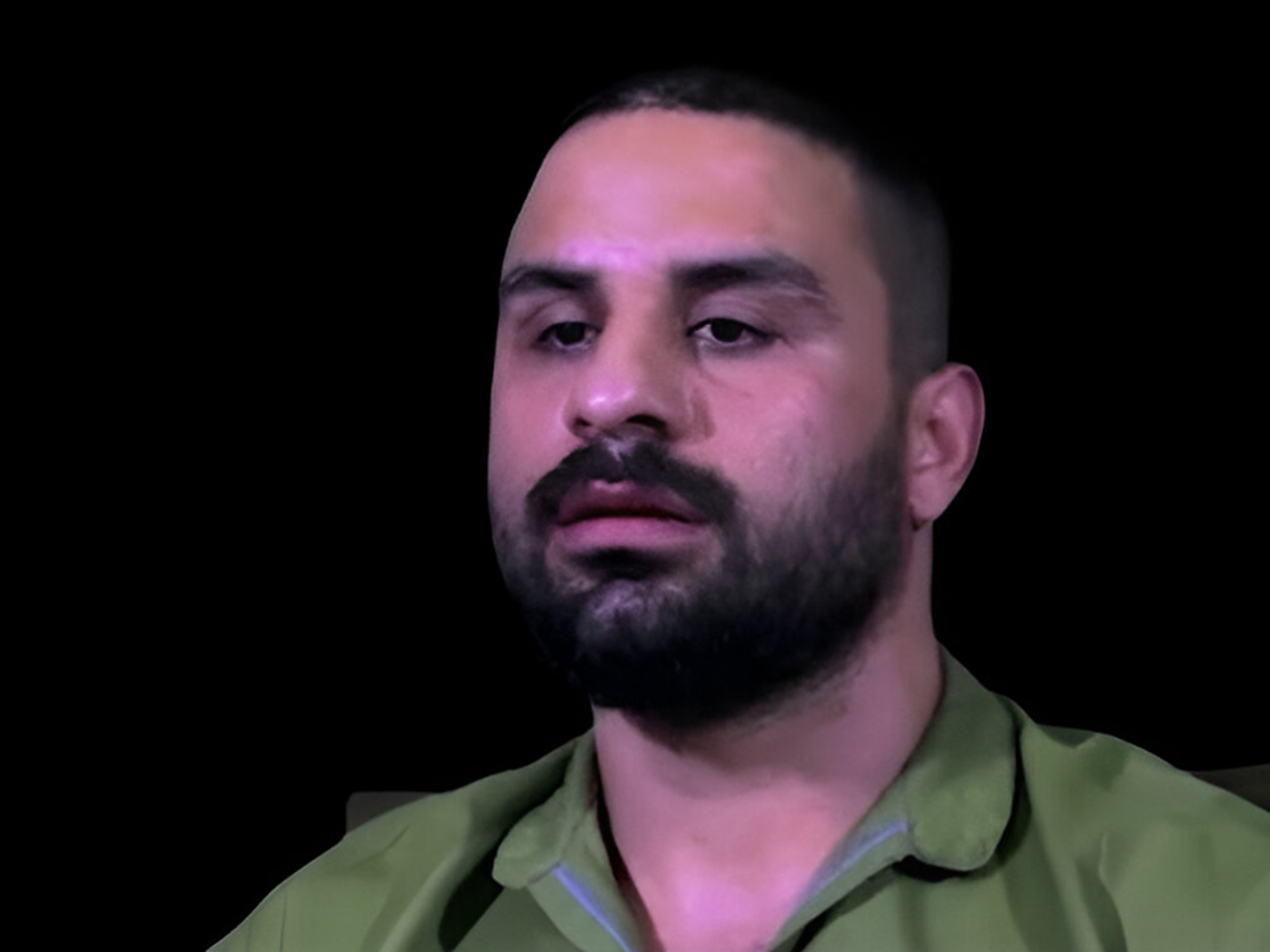
Before dawn on a September morning in 2020, in the southern city of Shiraz, prison officials at Adelabad Prison hanged 27 year old champion wrestler Navid Afkari. His family had received no notice. His lawyer had been kept in the dark. Even the family of the man he was accused of killing, whose presence was required under Iranian qisas law for a retribution execution, were not informed in advance.
Only hours earlier, Afkari had spoken by phone with his brother. His voice sounded hopeful. He believed that he and his brothers would be transferred to Tehran. Nothing in his tone suggested he knew an execution was imminent. Yet, by the time the sun rose, his body was in the custody of security forces, on its way to a remote village graveyard where he would be buried at night under strict surveillance.
Afkari was not a household name before his arrest. He was a working class athlete from Shiraz who split his time between construction sites and wrestling mats. His trajectory changed in August 2018, when he joined protests against rising prices, corruption, and economic collapse. Weeks later, after a security guard was stabbed to death near a protest site, he became the target of a prosecution that would reveal, in unusually sharp relief, how the judicial apparatus of the Islamic Republic functions as an instrument of political repression rather than justice.
This investigation reconstructs the path from the protests in Shiraz to the gallows at Adelabad. It draws on prison testimony, leaked courtroom audio, detailed reports from human rights organizations, statements by foreign governments and sports bodies, and rare first hand accounts from those who saw Afkari in detention or shared his ordeal. The picture that emerges is not of an isolated miscarriage of justice, but of a system in which torture is normal, courts are subordinated to security agencies, and executions are used as tools of intimidation.
The story is also about what followed. Even after killing Afkari, authorities continued to harass his family, destroy parts of his grave, keep his brothers in long term solitary confinement, and silence a key witness who later died in custody under suspicious circumstances. Those actions reveal a regime that fears not just protests in the streets, but the persistence of memory.
Navid Afkari was born on the last day of Tir 1372 in the Iranian calendar, equivalent to July 22, 1993, in the town of Kadron in Fars province. He grew up in a poor household. From the age of seven he sold gum and balloons in Shiraz parks to help his father cover basic expenses. School fell by the wayside. What sustained him emotionally was wrestling, a sport that holds a special place in Iranian culture as both physical discipline and moral code.
Under the influence of his older brothers, Habib and Vahid, Navid began training at local clubs. Coaches quickly noticed his talent. He won several provincial titles in youth categories and competed nationally, earning a reputation as one of the promising wrestlers from Fars. For a time, a path toward the national team seemed possible.
That path was narrow and precarious. Participation in extended national training camps requires financial stability and the ability to stop working for long periods. Afkari did not have that luxury. He worked as a construction plasterer and day laborer to support his family. At 18, he was forced to put wrestling ambitions on hold to complete compulsory military service. Even during his service he competed in military tournaments and collected medals, but on his return, persistent financial pressure kept him from committing fully to elite sport. His stated dream, according to those close to him, was to stand on the world championship podium with a gold medal and hear the Iranian anthem for his mother. Instead, he found himself back on construction scaffolds.
By 2017 and 2018, the mood across much of Iran had darkened. The nuclear deal had raised expectations that sanctions would ease and life would improve. Instead, under the weight of structural corruption, mismanagement, and renewed U.S. sanctions, inflation soared and unemployment rose. In late December 2017, protests erupted in Mashhad over economic conditions and quickly spread to more than 160 cities. Unlike the 2009 protests, which were heavily concentrated among middle class urbanites in Tehran, these demonstrations drew large numbers from working class and provincial communities.
The authorities crushed the Dey 1396 protests with force, killing and arresting demonstrators, but underlying grievances remained. In early August 2018, as the rial collapsed and the dollar crossed the psychologically important threshold that symbolized free fall, protests flared again. In cities across the country, crowds chanted against both President Hassan Rouhani and Supreme Leader Ali Khamenei. The slogans were sharper and more openly anti system than in many past protests.
Shiraz was one of the cities that saw significant unrest. On a day in early August, Navid and his brothers joined a demonstration against rising costs and corruption. Riot police and plainclothes security forces eventually dispersed the crowd with batons and tear gas. The brothers returned home like thousands of others.
Four nights later, a man named Hassan Turkman was stabbed on a street not far from where protests had occurred. Official versions of his role varied. At different points, he was identified as a plainclothes security agent, a Basij affiliated operative, or a security guard employed by the Shiraz water and wastewater company. He died of his wounds at the scene. The killing was quickly framed as a serious security incident.
The combination of protests and a dead security related employee created the conditions for a show case. Security agencies had an opportunity to make an example of someone who had taken part in the demonstrations. Navid Afkari, a visible young athlete from a poor neighborhood with a record of attending protests, fit the profile. On September 17, 2018, intelligence officers raided the Afkari family home and arrested Navid and Vahid. They disappeared into an opaque network of detention sites and interrogation centers.
For three months, the family had no reliable information about where the brothers were being held or on what charges. Only later did it become clear that both had been taken to a Ministry of Intelligence facility known as Center No. 100 in Shiraz, an unofficial detention center outside the normal prison system. Habib was arrested several months later, accused of participating in protests and associated with his brothers' case.
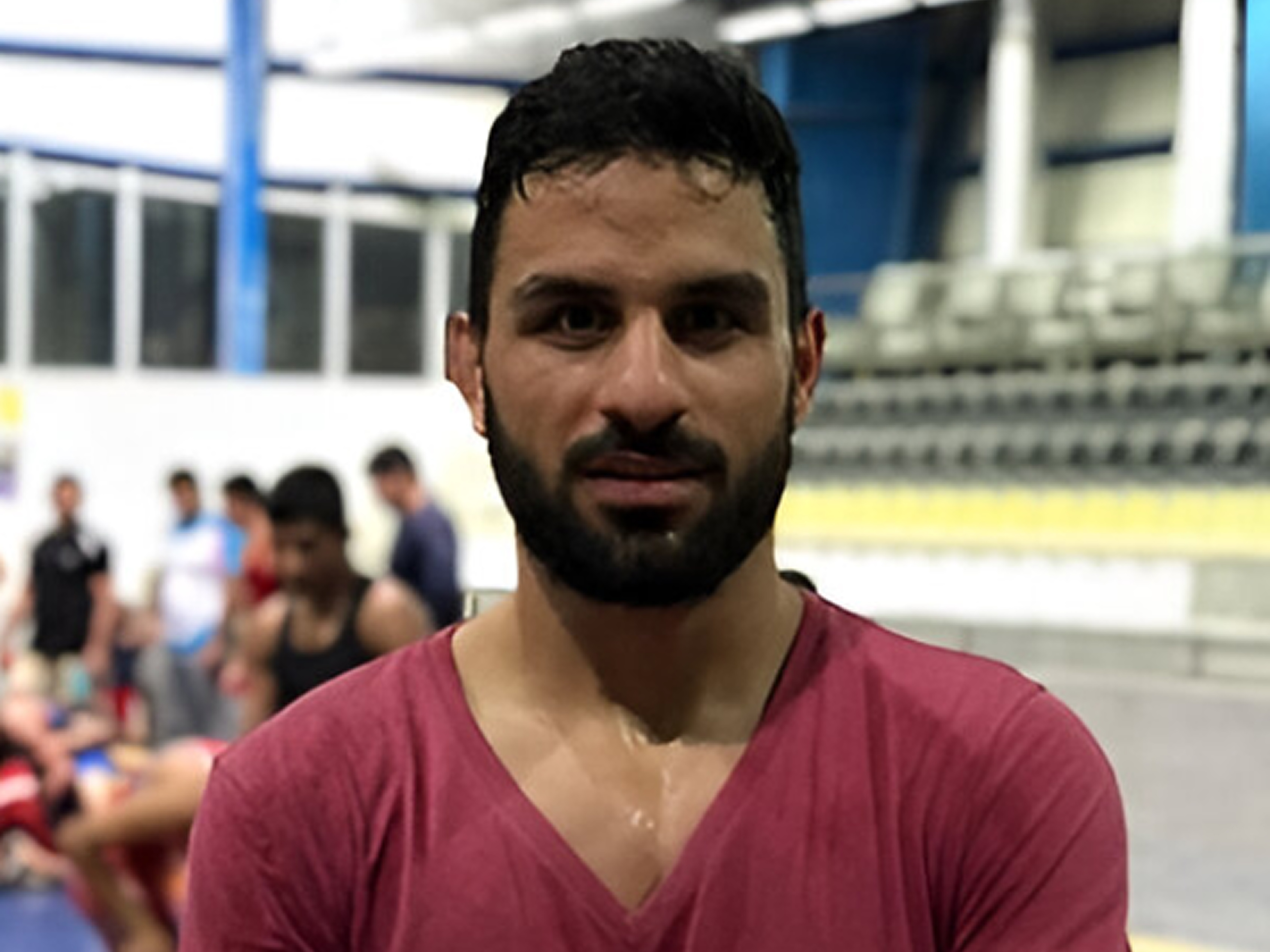
What happened to Navid Afkari and his brothers in the months after their arrest is known from three main sets of sources: their own audio messages smuggled from prison, accounts by family members and cellmates, and the testimony of a fourth detainee who later died in custody.
According to these accounts, the brothers were subjected to a sustained campaign of physical and psychological torture designed to extract confessions and link them to both the murder of Hassan Turkman and participation in anti state activities.
Interrogators beat Navid with batons, cables, and metal rods. They repeatedly struck his arms and hands. At one point, a blow broke one of his hands, leaving it swollen and misshapen. Medical attention was delayed or denied. He was hung from the ceiling, beaten while suspended, and subjected to simulated drowning or suffocation when guards placed plastic bags over his head. Interrogators poured alcohol into his nose and shouted insults as he choked. He was deprived of sleep and kept in isolation for long periods.
The torture extended beyond his body to his relationships. Interrogators told him that his father had been arrested and that his brother Vahid had attempted suicide. They threatened to rape his sister and imprison his mother. They forced him to watch as guards beat Vahid, and forced Vahid to watch as they beat Navid. The message was that resistance would bring further pain on the entire family.
Initially, Navid refused to sign any confession. But the combination of physical torture, threats against loved ones, and hopelessness in an incommunicado detention center eventually broke him. Under these conditions, he signed a statement admitting to stabbing Turkman during a confrontation near the protests. Later, once in regular prison and with access to a lawyer, he repeatedly retracted this confession, stating that it had been dictated to him and did not reflect reality.
The existence of torture was not just asserted by Afkari himself. It was also described by another detainee, Shahin Naseri, a business consultant who was arrested on financial charges and held in the same intelligence detention center. In a detailed written statement submitted to judicial authorities, and in audio clips later shared with human rights organizations, Naseri recounted witnessing guards beat Navid in a hallway while he lay on the floor, begging them to stop. Naseri described seeing the broken hand and hearing interrogators shout that he had to confess to the murder.
Naseri's testimony was legally significant. Iranian law, at least on paper, prohibits torture and invalidates confessions obtained under duress. A credible witness to torture should have triggered a formal inquiry. Instead, the judiciary ignored his statement. When Navid's case came to court, the judge refused to summon Naseri to testify, even though the defense explicitly requested it.
The consequences for Naseri himself were severe. After Navid's execution, Naseri continued to speak about what he had seen, describing in interviews how he had watched the torture unfold. Security officials repeatedly threatened him to recant. On the first anniversary of Navid's execution, prison authorities abruptly transferred Naseri to solitary confinement. Within days, his family was informed of his death. Officials suggested suicide, but there was no independent investigation and no clear explanation. To human rights monitors, the timing and circumstances suggested that a key witness in a sensitive case had been silenced.
Taken together, the testimonies of Navid, his brothers, and Naseri form a consistent picture of a coercive investigation in which torture was used systematically, and in which the goal was not to establish the truth but to produce a usable narrative that would justify predetermined charges.
Once in the hands of the judiciary, the Afkari case moved quickly through three separate courts. The process was fragmented, opaque, and permeated by the influence of security agencies.
The first case, in Branch 1 of the Criminal Court of Fars province, concerned the killing of Hassan Turkman. Navid was accused of premeditated murder. Vahid was charged as an accessory. The main evidence presented against Navid was a set of surveillance camera images from a nearby shop, which prosecutors claimed showed him passing by on a motorcycle near the time of the stabbing. The images were grainy. The person in them was not definitively identifiable. Other key elements did not withstand scrutiny. Witnesses who initially claimed to have seen two men on a specific motorcycle near the scene later failed to identify the brothers in court, and the license plate they provided did not match Vahid's motorcycle registration.
Navid, for his part, asked the court to obtain footage from a different camera, at a poultry shop located even closer to the site of the killing. He argued that this footage would show he was not present at the time of the crime. The judge refused to request or view the additional footage. Navid also demanded that his interrogators be summoned to explain how his confession was obtained and that an independent medical examination be conducted to document torture related injuries. These requests were brushed aside.
The second case, in Branch 1 of the Revolutionary Court in Shiraz, focused on political charges. Navid and Vahid were accused of moharebeh, or "enmity against God," a capital offense interpreted to include actions framed as armed rebellion or serious disturbance of public order against the Islamic system. They were also charged with forming a group to disrupt national security and with insulting the Supreme Leader.
The presiding judge in the Revolutionary Court, Seyyed Mahmoud Sadati, set the tone from the first hearing. According to leaked audio, Sadati recited a Quranic verse prescribing severe punishment for those who "wage war against God," then told Navid that he was a "mohareb" and an enemy of God and that he would personally see him executed in the main prayer grounds of Shiraz. The declaration came before any evidence had been reviewed or any defense heard.
Throughout subsequent sessions, Sadati repeatedly cut off Navid when he attempted to speak. When Navid asked on what legal basis he was being prosecuted and what proof existed beyond a tortured confession, Sadati reportedly replied that this was a Revolutionary Court and that such courts did not require conventional evidence. He is quoted as saying that on the day of execution he would attend to "watch your life being taken."
The third case, in Branch 2 of the Criminal Court, involved an array of related charges: participation in illegal gatherings, disturbing public order, inciting others to protest, and insulting senior officials. Here too, the courts imposed heavy sentences. Navid and Vahid each received several additional years in prison and 74 lashes. Habib, whose charges focused primarily on protest participation, was sentenced to approximately 16 years and 74 lashes.
Throughout, the family requested open hearings. They wanted the public and independent observers to see the process. Instead, the trials were held largely behind closed doors. Observers were barred from taking notes. There is no indication that the court made official recordings available, despite legal requirements.
Appeals to higher courts did not remedy the fundamental defects. The Supreme Court upheld the convictions and death sentences, accepting the confessions at face value and declining to engage with torture allegations or evidentiary gaps. A request for judicial review was rejected.
In effect, the courts ratified a narrative constructed by security agencies rather than testing it. The proceedings were not trials in the sense recognized under international law. They were formalities in a process where the outcome had already been decided.
As word of Navid Afkari's impending execution spread, activists inside and outside Iran mobilized. His voice messages, in which he insisted on his innocence and described torture, were shared widely on Persian language social media. Human rights organizations issued urgent calls to halt the execution and investigate his case properly.
The sports world became a key arena of advocacy. Wrestling federations, athlete unions, and prominent wrestlers publicly appealed for clemency. The International Olympic Committee expressed concern. The global union of professional athletes, World Players Association, called for the cancellation of Iran's right to host or participate in major sporting events if the execution proceeded.
Then came a highly unusual intervention: U.S. President Donald Trump used his Twitter account to ask Iranian leaders to spare Afkari's life, describing him as a popular wrestling champion whose only act had been to take part in anti government protests. Other Western officials, including senior figures in European governments and the United Nations, issued statements emphasizing the case's serious fair trial violations.
The Islamic Republic responded through state media. Prosecutors doubled down on portraying Afkari as a common murderer. State television broadcast edited footage in which he appeared to confess, without providing context about the conditions under which the confession was obtained or his later retractions. The segment framed calls for his release as foreign interference, particularly from the United States, and cast Afkari as a pawn in a political game.
In parallel, there were reports that activists in Shiraz were quietly raising funds for diya, the monetary compensation that, in theory, can persuade a victim's family to forgive and halt a qisas execution. But the judiciary moved faster than these efforts. Without warning, and in violation of norms that require notifying defense counsel and families, authorities set a date and carried out the hanging.
On the night before his death, Navid phoned his brother Saeed. According to Saeed's later account, Navid was upbeat. He spoke about a planned transfer of all three imprisoned brothers to a facility in Tehran and showed no awareness that an execution was imminent. This either indicates that authorities intentionally misled him, or that the decision to proceed was made and implemented with extreme secrecy and speed.
In the early hours of September 12, 2020, guards took Navid from his cell in Adelabad Prison. He was executed shortly thereafter. Hours later, provincial judicial officials announced that the qisas sentence for the murder of Hassan Turkman had been carried out.
The handling of the body raised further questions. Under Iranian law and customary practice, the family of a person sentenced to qisas is usually given an opportunity for a final visit and can be present at the execution if they wish. In this case, neither Afkari's family nor Turkman's relatives were informed in advance. Navid's parents were later allowed a brief view of his face before burial. His brother reported visible injuries that had not been present at prior visits, including a broken nose and bruising, leading to speculation that he may have been beaten severely before the execution itself. Authorities did not permit an independent medical examination or autopsy.
The burial was conducted under heavy security at a cemetery in the village of Sangar. Family members were surrounded by security personnel. The grave was kept simple. Any attempt at a memorial beyond the most basic marker would soon face state obstruction.
International reaction was swift and harsh. Human rights organizations described the execution as a "judicial murder." The United States and several European governments condemned it as an example of the Islamic Republic's disregard for due process and human rights. The case further damaged Iran's standing in global sports, prompting debates about whether its wrestling federation should face sanctions.
Within the country, anger simmered. For many Iranians, particularly the young and those who had protested in recent years, Navid's fate confirmed that courts could not be trusted to deliver justice in politically sensitive cases. His execution became a symbol of a wider system that uses the death penalty as a political tool.
The execution did not end the authorities' interest in the Afkari family. If anything, their campaign intensified. It shifted from punishing a specific individual to controlling memory and silencing those who might turn his story into a rallying point.
Inside Adelabad Prison, Vahid and Habib were moved into prolonged solitary confinement. Their conditions were extreme. They were held in small concrete cells with no windows, minimal bedding, and a combined toilet and wash area that also served as the only source of drinking water. They were denied regular phone calls and visits. Guards beat them repeatedly, sometimes in retaliation for public campaigns that mentioned their names.
Habib later described how, before Navid's execution, all three brothers were held in separate solitary cells. When they realized that something was about to happen, Vahid and Habib forced their way out and tried to reach Navid's cell. They shouted his name, and he heard them. Navid, in turn, smeared shampoo on his body and attempted to break down his cell door, hoping to escape or at least resist. Guards swarmed them, beating them so viciously that, according to Habib, some of the guards were gasping for breath from the effort. The brothers shouted slogans for Iran and for freedom as they were being beaten. Then each was thrown back into isolation.
Outside prison walls, authorities focused on the grave. When the family began modest construction work at the cemetery to build a simple enclosure around Navid's resting place, security forces intervened. On one day in December 2020, police and intelligence agents surrounded the site and arrested Navid's father, a brother, another relative, and a worker. They were held and questioned for hours, then released. The following day, heavy machinery arrived. The partial walls around the grave were demolished.
Images of the destruction, posted online by Navid's sister Elham, showed broken bricks and shattered concrete around a freshly turned grave. The caption accused authorities of being afraid of even a simple tomb. In response, state agents targeted Elham herself. She was later arrested, and her social media accounts were seized. Videos of Navid's forced confessions, previously broadcast on state television, were uploaded to her account, while posts criticizing the judiciary were deleted. It was a crude attempt to manipulate narrative and humiliate the family.
Security agencies also used the brothers' fate as leverage. They reportedly told the family that improved treatment for Vahid and Habib depended on their willingness to accept a state written epitaph for Navid's tombstone and to participate in interviews denouncing Western governments and foreign media that had highlighted the case. The family refused to cooperate, insisting that recognition of injustice could not be conditioned on scripted loyalty.
On the anniversaries of Navid's execution and at key moments in the brothers' ordeal, family members and supporters who gathered near Adelabad Prison were beaten and detained. The message was that public grief and commemoration were themselves forms of dissent that would be punished.
The suspicious death of witness Shahin Naseri added another layer. By eliminating a key corroborating voice and then refusing to conduct a transparent investigation, the authorities signaled that even those whose only "crime" was to speak about torture could pay with their lives. In effect, they extended the coercive logic of the interrogation room to anyone who might challenge the official version of events.
These practices fit a longer pattern in the Islamic Republic. Families of executed political prisoners from the 1980s describe similar harassment: intimidation at gravesites, destruction or removal of tombstones, bans on public mourning ceremonies, and threats against relatives who speak to the media. The aim is to sever the link between individual injustice and collective memory, preventing victims from becoming symbols that could mobilize resistance.
Yet, paradoxically, such efforts often have the opposite effect. By attacking graves and persecuting families, the state underscores the political nature of the executions and deepens public anger. In the case of Navid Afkari, the destruction of his grave walls and the treatment of his brothers became widely known and fueled further outrage.
The case of Navid Afkari is both unique and typical. It is unique in that his status as an athlete and the international campaign around him exposed in granular detail the inner workings of an otherwise closed judicial system. It is typical in that the methods used against him are the same as those used against countless lesser known prisoners.
The structure of power in the Islamic Republic places the judiciary under the tight control of the Supreme Leader. The head of the judiciary is appointed directly by the Supreme Leader and is accountable to him, not to parliament or the public. Major judicial figures, including current and former chiefs, have themselves been implicated in major human rights violations, from the mass executions of 1988 to the violent suppression of recent protests.
Within this framework, Revolutionary Courts act as political tribunals. They routinely accept confessions obtained under duress, deny defendants access to chosen lawyers, hold closed door hearings, and issue harsh sentences based on vague charges like moharebeh or "spreading corruption on earth." In cases related to protests or political activism, judges often treat security agency reports as decisive, rarely questioning their content or methods.
The use of the death penalty amplifies these abuses. Iran executes more people per capita than almost any other country. Official figures are incomplete, but independent monitoring suggests that in recent years the number of executions has risen sharply. Many of those executed are poor, members of ethnic minorities, or convicted of drug offenses. Others are protestors, activists, or people like Afkari whose alleged crimes are intertwined with moments of political unrest.
The qisas system, in theory, decentralizes responsibility by giving victims' families a formal role in deciding whether a convicted murderer is executed, pardoned, or required to pay or receive diya. In practice, the state retains overwhelming control. Courts can restrict access to information, manipulate families through pressure or propaganda, and rush executions before alternatives can be arranged. In politically sensitive cases, the margin for forgiveness narrows further.
International mechanisms for accountability remain weak. While specific judges, prison officials, and institutions like Adelabad Prison have been sanctioned by Western governments for their role in cases like Afkari's, those measures have not significantly altered behavior inside Iran. Domestic avenues for justice are effectively blocked. Complaints about torture or unfair trials are almost never properly investigated. Judges and interrogators operate with near total impunity.
Afkari's execution did, however, have political costs for the regime. It damaged Iran's reputation in global sport, prompted rare public criticism from international sports federations, and contributed to a narrative that the state is willing to kill even its own champions when they step out of line. Within Iran, his name has become shorthand for the broader phenomenon of protest related executions, invoked alongside those of other young men hanged after the November 2019 and Mahsa Amini protests.
The logic behind such executions appears to be deterrence. By imposing the ultimate punishment on a small number of individuals and publicizing their supposed crimes, authorities hope to instill fear in a much larger population. Yet repeated waves of protest suggest that this strategy is losing effectiveness. Economic collapse, environmental crises, and deep political disillusionment continue to drive people into the streets, especially younger Iranians who have grown up under the current system and see little future within it.
In that sense, Navid Afkari's story illuminates a larger contradiction. The Islamic Republic has built a sophisticated coercive apparatus that includes security forces, intelligence agencies, and a pliant judiciary. It can kill, torture, and imprison on a large scale. But it has not been able to rebuild the legitimacy that might have made such force unnecessary. Each case like Afkari's erodes that legitimacy further.
The journey from a poor neighborhood in Shiraz to the gallows of Adelabad Prison is a stark illustration of how dissent is criminalized and punished in the Islamic Republic.
A young man takes part in protests against economic hardship. Weeks later, a security related employee is killed near a protest site. Security agencies, under pressure to demonstrate control and avenge one of their own, seize on a visible protester and athlete as a convenient suspect. He is disappeared into an intelligence detention center. Under torture, he confesses. Courts, rather than questioning the confession or investigating torture allegations, build their case around it. Judges who openly threaten defendants with death preside over hearings that last minutes and ignore basic evidentiary standards. Appeals are cursory. International outcry is dismissed as foreign meddling. The execution is carried out at dawn without notice. The body is buried at night. The grave is later attacked. The family is harassed. A witness to torture dies in custody.
This chain of events is not the product of accidental errors or individual misconduct. It reflects a system designed to protect itself at all costs. At every stage, institutional incentives favor closure, punishment, and obedience to security imperatives over truth, fairness, or the protection of rights.
What distinguishes the Afkari case is not the injustice itself, but the visibility. Because he was an athlete, because international sports bodies and heads of state intervened, and because his voice reached the outside world through clandestine recordings, the mechanisms usually hidden behind prison walls and courtroom doors were exposed.
For decision makers, activists, and observers outside Iran, the case carries several implications.
First, piecemeal reforms or appeals to legal norms inside the existing structure are unlikely to protect political defendants when their cases intersect with security priorities. The problem is not just individual bad judges or rogue interrogators, but a vertically integrated system that takes its cues from the Supreme Leader and security agencies.
Second, international pressure can raise costs and slow down certain actions, but on its own it has not prevented executions in high profile cases. In Afkari's case, the authorities chose to demonstrate defiance, signaling that no amount of foreign attention would dictate their decisions. That choice suggests that external pressure must be combined with long term efforts to document abuses, support survivors and families, and lay the groundwork for future accountability.
Third, memory matters. The intensity of the state campaign against the Afkari family and even against his grave shows that authorities understand how individual stories can become symbols. The same system that relies on fear also fears the power of narrative. Preserving accurate accounts of what happened to people like Navid is therefore not just an act of commemoration, but an investment in any future process that seeks to reckon with past crimes.
Finally, the case illuminates the limits of repression. The Islamic Republic can execute protesters and athletes. It can torture witnesses and threaten families. Yet the grievances that drive people into the streets remain unresolved. Economic collapse, inequality, corruption, and lack of basic freedoms continue to fuel cycles of protest and crackdown. The execution of a champion wrestler did not prevent the eruption of the largest protests in the country's recent history after Mahsa Amini's death in 2022. If anything, such cases have deepened public conviction that meaningful change cannot be achieved within the current framework.
Navid Afkari cannot be brought back. But his story continues to shape how Iranians and the outside world understand the nature of power and justice in Iran today. It stands as a detailed case study of a system where the law is deployed as a weapon, where courts legitimize rather than limit state violence, and where the ultimate punishment is used not to protect society, but to preserve a ruling order.
In that light, the true subject of this investigation is not just one executed wrestler, but an entire architecture of repression that his fate helped expose.