

The Scientist Who Knew Too Much: Inside the Assassination of Masoud Molavi
An AI engineer working for Iran's cyber warfare unit leaked secrets about the regime corruption and was murdered in Istanbul.
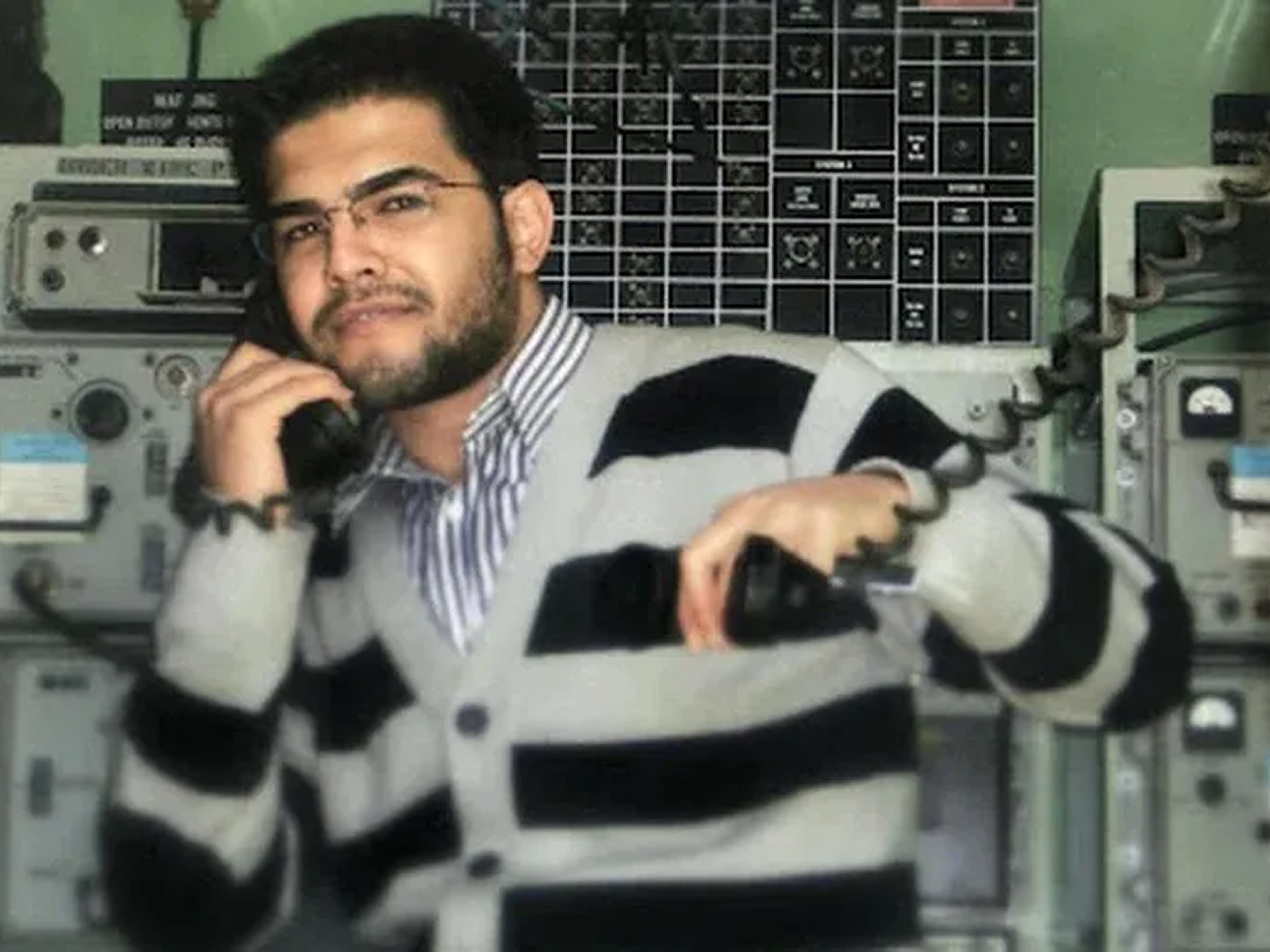
On the night of 23 November 2019, at 9:50 p.m., on the crowded streets of Sisli in Istanbul, Masoud Molavi, a man who had exposed the dark secrets of the Islamic Republic, was gunned down with eleven bullets. Surveillance footage shows him walking with his friend Ali Esfanjani toward a café in central Istanbul. Suddenly a figure approached rapidly from behind and fired eleven shots. Molavi collapsed on the pavement and died instantly. The shooter, later identified as Abdolwahab Kochak, fled the scene without hesitation. The killing was captured on closed-circuit cameras and broadcast across Turkish media. Yet this was merely the opening chapter of a sinister security operation orchestrated by the Islamic Republic.
Turkish investigators later established that Ali Esfanjani, walking beside Molavi that night, played a central role in executing the operation. He was in fact a regime informant who had been feeding Molavi's movements to security forces. That same morning, Esfanjani had visited the Iranian consulate in Istanbul and met with intelligence operatives. The investigation revealed that two intelligence officers traveling on diplomatic passports were also present at the consulate and participated in organizing the assassination. The operation bore the hallmarks of meticulous planning and the Islamic Republic's extensive reach in extraterritorial operations.
Before fleeing to Turkey, Masoud Molavi had been an elite intelligence operative in Iran's cyber security and artificial intelligence sector. After arriving in Turkey, he launched the Telegram channel "Black Box" and began publishing documents exposing corruption in the Leader's office, the judiciary, and the Intelligence Organization of the Revolutionary Guards. For the Islamic Republic, these documents constituted an existential threat because they revealed secrets that could undermine the regime's credibility and power. That is why the decision was made at the highest levels of the state to assassinate Molavi and silence his revelations permanently.
Masoud Molavi Vardanjani was born on 17 April 1988 in Isfahan. He came from an ordinary family and displayed exceptional talent in science and technology from a young age. He completed a bachelor's degree in civil engineering at Najaf Abad Azad University and then pursued a master's degree in artificial intelligence and robotics at Tehran University, where his abilities became increasingly evident. As a young scientist and innovator, he quickly gained recognition in Iran's academic circles.
During his studies he built a humanoid robot that earned the admiration of many Iranian professors and scientists. Another of Molavi's well-known inventions, discussed in Iranian media, was a paper-thin lamp that consumed virtually zero electricity and was featured on a state television program. The invention demonstrated his ability to solve complex problems with simple, practical solutions.
His work on advanced AI systems also attracted attention. Around 2001, Molavi began developing an AI system called "Saman Houshyar Pars," which he claimed to be among the world's most advanced. The project aimed to create a computer that could converse naturally in Persian, understand images, animate facial expressions synchronized with speech, and respond to user commands without a keyboard or mouse. Though artificial intelligence as a field had a fifty-year history globally, Molavi's ambition was to push the boundaries in Iran. Many professors at the time doubted such a project could succeed domestically, but the work eventually gained academic acceptance. Molavi also registered multiple patents internationally, including a multi-aspect fast-processing algorithm for AI systems registered with the World Intellectual Property Organization for 220 years. He reportedly won a gold medal at the World Invention and Innovation Computer Cup in China, affirming his capabilities beyond Iran's borders.
His talents, especially in artificial intelligence and robotics, drew the attention of military institutions, including the Islamic Revolutionary Guard Corps and the Ministry of Defense. According to a former classmate, Molavi gradually became a mysterious figure with suspicious comings and goings, distancing himself from friends and family, making it clear he had fallen into the trap of collaborating with the regime. He spent time as data security manager at a Chinese telecommunications company and simultaneously held the position of deputy for research and development and network security consultant at the Islamic Republic of Iran Broadcasting for about three years. Subsequently he served for five years as deputy for research and development at the Iran Helicopter Support and Renovation Company, affiliated with the Aviation Industries Organization, and concurrently was among the senior managers of the Cyber Defense Headquarters under the General Staff of the Armed Forces for approximately seven years.
Iranian media referred to Molavi as head of the Advanced Technologies Research Center at Azad University and designer of AI systems with new three-dimensional algorithms. The design had applications in unmanned aerial vehicles and was connected to government and private entities. Molavi played a key role in advancing military and intelligence projects. He participated in the Islamic Republic's cyber defense program and built tools to protect sensitive military information and develop offensive cyber capabilities. Some of his classified work for Iran's armed forces included responsibility for strengthening Iran's cyber defenses, protecting sensitive military information, designing bird-inspired robots for military reconnaissance and espionage, and developing systems for data processing, pattern recognition, and automated decision-making in warfare.
One of his notable achievements was designing flying robots manufactured for Iran's armed forces. Inspired by falcon flight, these robots possessed capabilities such as navigation in complex environments, intelligence gathering, and participation in combat scenarios while evading detection through biomimetic design. Moreover, his AI expertise led to the development of systems capable of processing vast amounts of data, recognizing patterns, and making automated decisions, critical functions in modern warfare where speed and precision are paramount.
Molavi also had a significant impact on Iran's defense industry. His work included strengthening cyber warfare capabilities for the Revolutionary Guards, encompassing development of defensive and offensive tools in the digital sphere. He also participated in projects ensuring the security of military networks and protecting sensitive information against cyber threats.
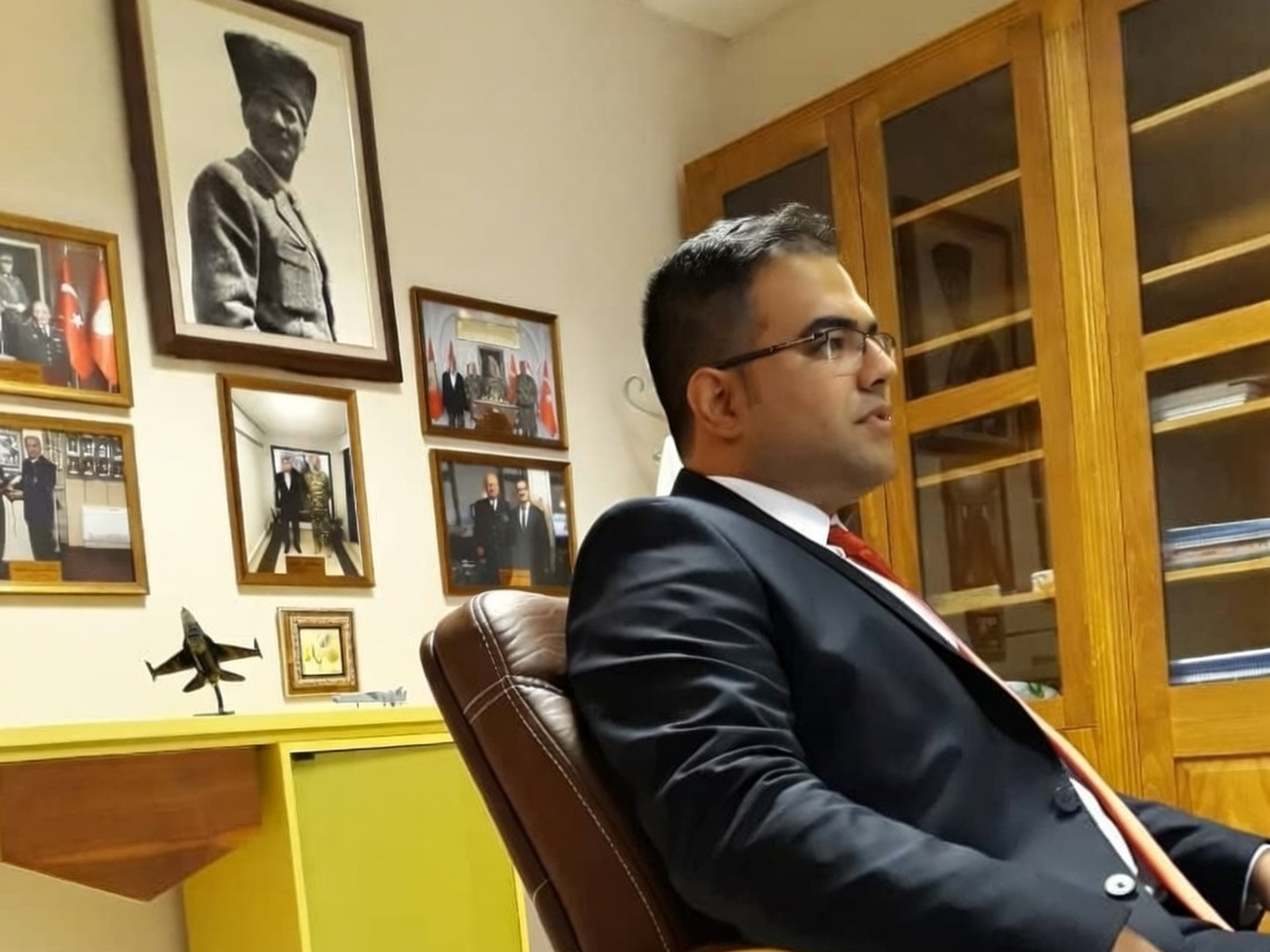
According to his own account, once he began working in cyber security and military projects, he had access to sensitive information that gradually opened his eyes to realities behind the scenes. Molavi, who had become a highly useful scientist for the Guards and the Islamic Republic system, was well supported financially by the regime and lived a comfortable life in Iran. But the deeper he advanced into the system, the more he encountered corruption, abuse, and crimes with which he could not reconcile. In his final years, he said, he could no longer tolerate the situation. He saw that his inventions and abilities were being used for purposes that harmed people, enabled suppression of protests, and not only brought no benefit to Iran and Iranians but actually caused harm to the people of his own country.
In his own words: "I saw these things and I couldn't stay silent. You know me, you know how I was. I couldn't stay silent. At first I tried, together with Mohammad Hossein, we documented these things and gave them to the president, gave them to the head of the judiciary, gave them to the Leader's office so they would fight it. We saw there was no fight. We saw that the deputy minister himself was a thief, the deputy minister himself was smuggling narcotics, smuggling goods. Deputy of which minister? Intelligence. Intelligence. When? We said, well, the same Haj Habibollah, the same Mr. Ahmad Khazaei Pirouz, who was deputy for counterintelligence, was removed. Now he's gone and set up an institute for himself in Qom, Hojjat al-Islam Ahmad Khazaei. Look at these people and many others, many others. These people were not healthy people. Whether the economic deputy or the same Mr. Adibi who is now in the economic deputy position, these were not healthy people, not righteous people. These were people who took money, took bribes, and much more."
Reports indicate that during his collaboration with the regime, he gained access to documents exposing corruption in the Leader's office, the judiciary, and the Guards' Intelligence Organization. He learned how money and power circulated among a limited elite and how dissidents were forced into silence. This information was like a moral awakening for Molavi. He felt that if he remained in Iran, he would either have to continue cooperating with the regime's power structures and mafia networks or become a victim of the same thoroughly corrupt system. That is why he made a fateful decision that would change the game for both him and the regime.
His exit from Iran was a story full of suspense and stress. Molavi knew that to escape the clutches of the Islamic Republic and the Revolutionary Guards, he had to act with precision and speed because he might be under surveillance at any moment. In his final years of collaboration with the regime, he devised a flawless plan to flee and extract sensitive information and documents from Iran. According to him, during this period he began covertly and secretly collecting sensitive documents, files and records that could later be used in exposés. He undertook this work at high risk, knowing full well that if anyone in Guards Intelligence or the Ministry of Defense suspected him, there would be no escape route. He hid the information on digital storage devices and encrypted them so that only he could access them.
Yet it was during these very efforts that in 2017, Guards Intelligence and security agencies became suspicious of him and he was sent to Evin Prison for one year on charges of acting against national security. The reason for his arrest in Iran was not limited merely to the Guards' suspicions. Because of his expertise in cyber security, he had access to projects about which very few knew. In his final years of cooperation, the regime realized that Molavi was no longer the loyal figure he once was. Apparently Guards Intelligence suspected him and discovered that Molavi had collected sensitive information and was in contact with people outside the regime's mafia system. In prison he faced pressure and harsh interrogation, but thanks to connections he had within the system, he managed to secure his release. This arrest was apparently the final warning for him. Molavi understood that he could no longer remain in Iran because at any moment he could be arrested again, and this time there would be no escape.
Masoud Molavi fled Iran via the western borders by land into Turkey. This route was a dangerous path that many regime opponents used. At that time, Molavi had to be very careful not to leave a trace. Regarding his exit from Iran, he said he experienced extremely stressful and suspenseful conditions: "Imagine someone who has worked for years at the heart of the security system, now with a bag full of classified documents, moving on mountainous and winding roads toward the border. My heart was pounding. Every sound of a car coming from afar could be a serious threat to me. This escape was a moment full of suspense and fear because if I was caught, it would all be over. When I reached Turkey I breathed a sigh of relief, but I knew I was still in danger."
The sensitive information Molavi brought out of Iran with him was like a priceless treasure and at the same time a dangerous bomb. In Turkey he decided to use these documents and created the Black Box channel. It was in that channel that he began exposing the secrets he had witnessed about the regime, from corruption in the Leader's office to the role of Guards Intelligence in assassinations. His actions were exactly what terrified the regime and caused the Guards to want to eliminate him by any means necessary. Molavi knew this information could both awaken the world and get him killed. Now, from a scientist serving the system, he had become a dangerous enemy who had put everything at risk and intended to tell the world the truth.
One of Masoud Molavi's most significant exposés was revealing financial and moral corruption in the Leader's office. In the Black Box channel he published documents showing that individuals close to the Leader of the Islamic Republic, such as Mohammad Mehdi Golpayegani, head of Khamenei's office, were involved in a major corruption network. Molavi claimed these individuals abused power to move large sums of money and were partners with the Larijani brothers in illegal projects. This exposé was a direct blow to the heart of the system, because until then few had dared, after leaving the system, to make such significant revelations about the Leader's office.
Molavi, who had previously worked in the Islamic Republic's security system, had firsthand information about covert operations by Guards Intelligence. In his channel he revealed that Guards Intelligence played the primary role in assassinating opponents both inside Iran and abroad. One specific example that caused an uproar was his claim about the Guards' involvement in assassinating Iran's own nuclear scientists. Molavi stated that these assassinations, contrary to the regime's claim that they were Israel's work, were partly designed by Guards Intelligence itself to silence internal opponents. This exposé further enraged Guards security apparatuses toward Molavi.
Regarding the Special Operations Division of the Ministry of Intelligence, he revealed: "Look, this is the Special Operations Division of the Ministry of Intelligence. What was its job? Khomeini himself ordered its establishment. Its job is kidnapping, murder, assassination, torture, and special arrests. Because the entire Ministry of Intelligence makes arrests and conducts special operations. It's not like there's a separate place for this. It was established. The Bakhtiar assassination, the Mykonos incident, the one in Argentina, these were started. When these were started, after a while they said we need to do some work domestically in some places. This coincided with Mohsen Morteza Rezaei becoming Guards commander. He went to Khomeini and came back and told him that if our revolution is to progress greatly and so on, we need to have control in some other areas. He said where? He said, for example, if narcotics are not in our hands, they're in theirs, so we should take it into our own hands. He accepted this. Now they conduct narcotics transit or, for example, he invoked a jurisprudential rule called 'more corrupt than corrupt.' He said if, for example, it's necessary to kill an innocent person somewhere so that the Islamic government's reputation is preserved, so that the Islamic government's foundations are preserved, it was Khomeini's jurisprudential rule, he said there's no problem. And this led to, for example, the Imam Reza shrine bombing, the Ministry of Intelligence itself did it. The Majles explosion, Seyed Shohada of Shiraz, the Ministry of Intelligence itself did it."
Another exposé that caused enormous controversy on social media was the publication of chats between Judge Abolqasem Salavati and a woman. Molavi published these messages in the Black Box channel and said that this corrupt judge of the system, known for issuing heavy sentences against dissidents, had extensive moral corruption in his personal life. This exposé severely shocked the Islamic Republic's judiciary and showed for the umpteenth time that even those who appear strict and religious on the surface have a different face behind the scenes.
Another issue Molavi addressed was his own participation in eavesdropping and video control projects of the Leader's office. He claimed he once worked in a group managing closed-circuit cameras in Khamenei's room and the Leader's office Husseiniyeh. This claim confirmed what sensitive information Molavi had access to and why the regime did not want him alive.
Months before his assassination, Molavi wrote on his Twitter account: "I am exposing the root of corruption and the Guards commanders' mafia. Pray they don't kill me before that." This threat was apparently the final warning to the regime that he intended to expose top-secret information. He was also making a documentary called "Absolute Guardianship of Corruption" and had promised to reveal everything in ninety episodes with audio files, videos, and documents. However, only the first episode of this documentary was published, but even that was enough for the regime to understand that Molavi would not back down and that the Guards and the regime's mafia had no choice but physical elimination.
These exposés made Masoud Molavi a serious threat to the Islamic Republic. With the courage he possessed, he not only exposed corruption at the highest levels of power but also specified how the regime tries to silence dissenting voices through assassination and suppression.
On the night of 23 November 2019, on Sisli Street in Istanbul, Molavi, as usual, was leaving his house and walking down the street. Beside him was Ali Esfanjani, who later turned out to have played the main role in planning his assassination. Suddenly someone rapidly approached from behind and fired eleven bullets at him. Molavi collapsed on the ground right there and lost his life. The moment of his assassination was recorded by surveillance cameras and later broadcast on Turkish media. The shooter, whose name was Abdolwahab Kochak, quickly fled the scene.
This was a calculated operation in which the fingerprints of Guards Intelligence and the regime's consulate in Istanbul were found. After the assassination, Molavi's body was transferred to Sisli Hospital in Istanbul and his death from eleven gunshot wounds to his body was confirmed. There is not much information about where he was buried because Masoud Molavi's family in Iran was under severe pressure and the regime would not let them speak freely about him. Unofficial reports claim he was likely buried in a local cemetery in Istanbul, but his exact burial place was never publicly announced. Molavi's parents, who later wanted to go to Turkey for the trial of his killers, had their passports confiscated at Khomeini Airport and could not leave Iran. This very fact shows that the regime, even after his death, did not want his family to get close to the truth.
Molavi's assassination opened a major case in Turkey. Turkish police arrested fifteen people a few days later on charges of involvement in the assassination, one of whom was Abdolwahab Kochak, the main killer. Investigations revealed that Ali Esfanjani, who was beside Molavi on the night of the assassination, was the mastermind of this operation. He had gone to the Iranian consulate in Istanbul on the morning of the assassination day and met with intelligence operatives. After the assassination, he fled illegally to Iran with the help of a forged passport prepared for him by Mohammad Reza Naserzadeh, a consulate employee.
Naji Sharifi Zindashti, a narcotics trafficker who worked with the Iranian government, played a role in coordinating this operation. The trial of the accused in Istanbul lasted several years. In various sessions, fourteen people were tried, including Turks and Iranians who were involved in this assassination. In July 2022, the court announced its verdicts. Abdolwahab Kochak, who fired the bullets, was sentenced to life imprisonment plus two years and one month. Three others, including Changiz Akay, who played a role in designing the assassination, were sentenced to fifteen years in prison.
However, the main figures in this assassination project, such as Esfanjani, Naserzadeh, and Zindashti, because they had fled to Iran, were not present at the trial and effectively escaped prosecution and are still free in Iran. Also, some of the second and third-degree accused in this case were conditionally released, such as Siavash Abazari, who helped Esfanjani escape. Although the Turkish government punished some of the accused, the masterminds of this assassination escaped justice.
The Turkish government had a two-sided reaction to Molavi's assassination. On one hand, its police and judiciary quickly took action and arrested the accused. A Reuters report also confirmed that two senior Turkish officials told the agency that the assassination order was issued from the Iranian consulate. Mohammad Reza Naserzadeh, the consulate employee, was even detained for a while but was later released for diplomatic reasons and returned to Iran. On the other hand, the Erdogan government never officially accused the Islamic Republic. This silence was likely due to political and economic relations with Iran. Turkey did not want this issue to turn into a diplomatic crisis, especially since Iran and Turkey were cooperating on regional issues such as Syria in those years.
Some analysts claimed that the acquittal of some of the accused and separate handling of the case of the main figures in this assassination project, such as Esfanjani and Zindashti, indicated a political deal between the Islamic Republic and Turkey. Iran pressured to keep this issue from becoming too big, and Turkey in some way accepted this request and backed down. Nevertheless, the trial and issued verdicts at least clarified some of the truth and confirmed that this assassination was the work of an organized network directed by the Guards and the Islamic Republic.
In the end, it can be said that Masoud Molavi was a talented, elite scientist who, if Iran were under the governance of a national government, could have worked on the country's development and elevating Iran's scientific level. But because the Islamic Republic throughout its forty-six-year lifespan has only thought about suppressing people and war, it takes scientists and elites like Molavi into its control and throws them into dirty mafia games. When their work with these individuals is finished, either they eliminate them themselves or they make conditions so difficult for them that they themselves think of suicide or escape.
This is the bitter narrative of a scientist who could perhaps have worked toward his country's flourishing, but the Guards and the mafia government wrote this dark fate for him. The case reveals several systemic patterns that extend far beyond one assassination.
First, the Islamic Republic operates a coercive recruitment system for scientific talent. Molavi's trajectory from promising young engineer to entrapped military researcher illustrates how the regime identifies, cultivates, and ultimately controls individuals with specialized skills. The pressure to collaborate, the comfortable lifestyle offered in exchange, and the barriers to exit create a trap from which few can escape without consequences.
Second, corruption pervades the highest levels of the system. Molavi's testimony about deputy ministers involved in narcotics smuggling, bribery networks extending into the Leader's office, and the Special Operations Division conducting false-flag bombings within Iran confirms that criminality is not aberration but method. When an insider attempted to report this corruption to the president, the judiciary, and the Leader's office, nothing changed. The system protects its own.
Third, the regime maintains capacity for transnational assassination. The Istanbul operation demonstrated sophisticated planning, diplomatic cover through the consulate, infiltration of the target's inner circle, coordination with criminal networks, and ultimately impunity for the masterminds who returned to Iran. The use of diplomatic passports, consular facilities, and forged documents indicates state-level resources. Turkey's muted response, despite clear evidence of Iranian state involvement, shows how regional politics can override accountability.
Fourth, digital-age dissent triggers lethal response. Molavi's Black Box channel, with its documentary evidence of systemic corruption, represented an existential threat precisely because it was specific, verifiable, and reached international audiences. Unlike traditional defectors who spoke to intelligence agencies, Molavi published directly to the public. His promise to release ninety episodes of documentary material, complete with audio, video, and written proof, meant the damage would compound over time. The regime calculated that assassination was cheaper than allowing the exposés to continue.
The human cost extends beyond Molavi himself. His family, prevented from attending his trial or visiting his grave, became secondary victims. His colleagues who witnessed his trajectory learned that collaboration with the regime can be a one-way street. And the countless other scientists, engineers, and intellectuals working under similar constraints now understand that expertise does not confer protection; it confers vulnerability.
For the Islamic Republic, the Molavi case reveals a critical weakness. The system depends on technical expertise to maintain military and intelligence capabilities, yet the very access required for these experts to perform their duties exposes them to information about systemic corruption and abuse. Every recruit is a potential defector. Every insider is a potential threat. The solution, demonstrated here, is to make the cost of defection so high through assassination, family persecution, and international manhunts that few will dare follow Molavi's path.
Yet the exposure continues. The Black Box channel's materials remain accessible. The Turkish court proceedings are public. International media covered the case. Molavi succeeded, in death, in confirming what many suspected: that Iran's cyber warfare capabilities rest on coerced expertise, that its military projects serve a corrupt elite, and that its intelligence agencies operate assassination networks abroad with the knowledge and support of the diplomatic corps.
This is not simply the story of one brave whistleblower. It is a case study in how authoritarian regimes manage the contradiction between needing scientific talent and fearing informed dissent. The Islamic Republic's answer to that contradiction is coercion, surveillance, and when necessary, murder. Masoud Molavi's assassination in Istanbul was not an isolated incident but a predictable outcome of a system that cannot tolerate truth.