

Broken Hands, Broken Silence: Inside the Suspicious Death of Kiumars Pourahmad
Investigation into filmmaker Kiumars Pourahmad's suspicious death and what it reveals about power.
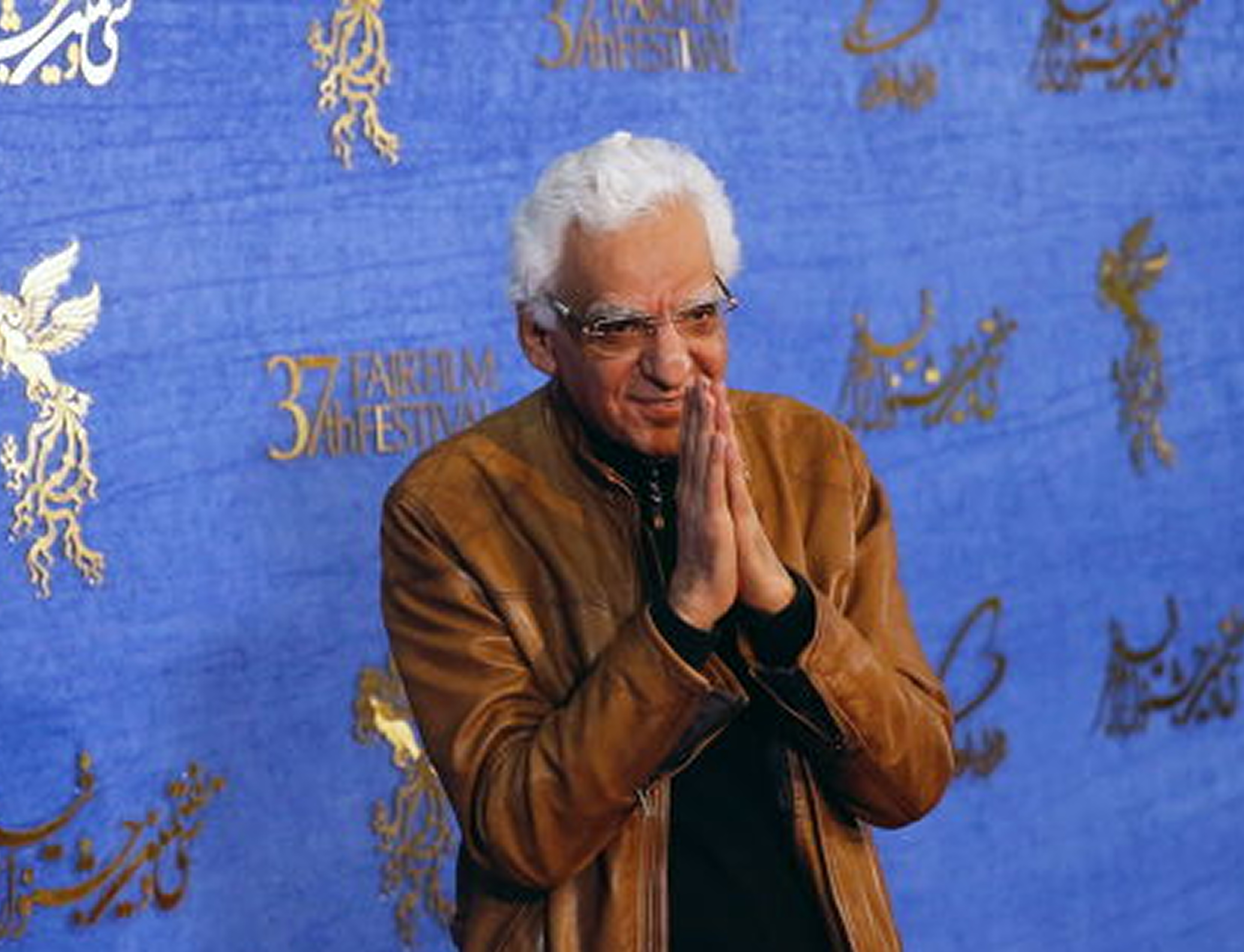
The official story of celebrated filmmaker Kiumars Pourahmad’s death is simple and self contained: a renowned but aging director, allegedly weighed down by depression, financial strain, and declining popularity, hanged himself alone in his seaside villa in Bandar Anzali in Farvardin 1402. Authorities say they found an eight page farewell note beside his body. They insist it was suicide.
Almost every serious piece of evidence points in a different direction.
Photographs from the death scene show a heavyset 74 year old man suspended in a way that, according to experienced observers, would have allowed him to save himself by placing a foot on a nearby radiator. Deep wounds on his hands and the unnatural angle of his arms suggest force and fracture, not a calm and deliberate self execution. The alleged farewell note has never been released. Family members, friends and colleagues describe a man who, only hours before his death, was working, joking and planning future projects.
Over the months that followed, scattered fragments of information surfaced. They point to a convergence of three factors in the last years of Pourahmad’s life: his open and escalating confrontation with the Islamic Republic, his secret authorship of fiercely anti system fiction published abroad under a pseudonym, and a private meeting in Paris with exiled former empress Farah Pahlavi that apparently enraged security agencies and cost him his passport and freedom to travel.
By Farvardin 1403, his sister publicly broke the family’s silence and wrote that he had been tortured and his lifeless body hanged. At the same time, a photograph of his meeting with Farah Pahlavi, in which he is seen kissing her hand, began to circulate online. Those who have studied past political murders of intellectuals see all the familiar signatures: prior interrogation and pressure, a carefully staged scene of supposed self harm, broken bones, and a story that closes the file quickly while avoiding any transparent investigation.
This case is not only about one filmmaker. It fits into a four decade pattern of how security institutions in the Islamic Republic have dealt with outspoken writers, artists and journalists: from the chain murders of the 1370s to the suspicious killing of director Dariush Mehrjui and his wife, and now, according to mounting testimony, the elimination of Kiumars Pourahmad. Examining his life, his final years and the circumstances of his death reveals how cultural dissent is policed, punished and, at times, erased.
Kiumars Pourahmad was born on 25 Azar 1328 in Najafabad, in Isfahan province. He began directing in 1360 with the television series "Next Summer," and over the following decades became one of the most recognizable storytellers of post revolutionary Iranian cinema and television. His work on the series "The Tales of Majid" fixed his name in the collective memory as a chronicler of ordinary lives and everyday moral dilemmas.
For many viewers, he belonged to the generation that had tried to build a new cultural life after 1357. Yet from the early years of the new order he began to distance himself from power. He later recalled walking along Enghelab Street with a beard and a military style coat, noticing that the same men who looked like him were smashing and burning a bookstore. He said he went home that day and shaved his beard, a personal break with the new revolutionary orthodoxy.
Over time, his criticism of the political system sharpened and moved from private disillusionment to public confrontation. He supported Mir Hossein Mousavi during the contested 1388 election and backed the Green Movement. He signed collective statements against the killing in custody of imprisoned writer Baktash Abtin, against the violent repression of protests in Khuzestan in the summer of 1400, against the long term cooperation agreement with China, against censorship in literature and cinema, and against the imprisonment of environmental activists.
As the years passed, a pattern emerged in his public appearances. At the funeral of film producer and critic Ali Moallem, he bluntly called senior officeholders "corrupt statesmen" and described officials as "filth from head to toe" who constantly hid their private privileges and corruption. At the funeral of screenwriter Khashayar Alvand in Esfand 1397, he turned his eulogy into an indictment of the previous four decades, asking which day in forty years had truly been a good day. Laughter, he said, had been treated as sinful or forbidden, and citizens had been told again and again that they were living in a "sensitive period" that required silence, self censorship and fear.
In a separate talk in 1398, during a session in Rasht, he explained why he no longer wanted to make films. In the 1360s and 1370s, he said, he could direct one feature a year. Now the gap between films had stretched to five or six years. It was not a question of energy or desire. It was the political environment. According to him, the authorities wanted his generation to disappear. They would be happy if older independent filmmakers had heart attacks and died, and if younger independent directors died in convenient "accidents". The films the authorities preferred were, in his words, empty comedies without ideas or critical thought.
This was not a marginal figure grumbling at the edges. He had been, for years, part of the cultural mainstream. That made his evolution into a ruthless public critic of the Islamic Republic especially sensitive. It also meant that when he spoke, audiences listened.
The pressure on Pourahmad did not begin with his final film, but that project crystallized the conflict.
His last feature, "Open Case," centers on a 15 year old boy facing execution and explores the machinery of retribution and capital punishment. When the film was selected for the Fajr Film Festival, Pourahmad publicly opposed its participation. With the 1401 protest movement still unfolding and hundreds of demonstrators killed or jailed, he wrote on Instagram that Fajr was no longer a festival of Iranian cinema but a celebration for "two or three special organs." In this "bloody and painful" year, he said, he saw no value in appearing at a state festival that had lost legitimacy.
He also made clear that, under industry rules, the producer as rights holder could decide whether to submit the film, regardless of the director’s wishes. The producer and some crew members chose to go ahead, and "Open Case" screened in what Pourahmad openly called a "government festival." His refusal to attend the press conference and his denunciation of the event intensified the confrontation.
Soon after, the hardline daily Kayhan published a personal attack. It praised his earlier work yet claimed that with commercial films like "Gole Yakh" and later works such as "Where Are My Shoes," "The Fifth Step," and "Blade and Termeh" he had entered a downward spiral and effectively buried his career. It dismissed "Open Case" as a shallow film full of slogans and narrative errors, concluding that he had nothing left to say.
Behind the scenes, however, the dispute went beyond criticism in the press. According to one of his close associates, after his public boycott of Fajr, he was repeatedly summoned and interrogated. He was, this account says, pressed to sign a statement of regret. During one session he reportedly snapped at an interrogator that the interrogator’s generation had grown up with "The Tales of Majid" and now expected its creator to write a letter of repentance.
The same source says that security officials forced a change to the ending of "Open Case," altering key sequences against Pourahmad’s will. The edits wounded him professionally and politically. At the same time, he was placed under a travel ban, blocking him from visiting his daughter in Paris. His passport was confiscated.
A different, apparently even more explosive, factor emerged around the same time. In London, a novel titled "We Are All Accomplices" was published in 1400 by Mehri publishing, under the pseudonym Hamid Hamed. Months after Pourahmad’s death, the publisher’s director stated publicly that the author had in fact been Kiumars Pourahmad. The book is an unrestrained critique of the revolution and of the Islamic Republic. The protagonist, who mirrors the author, expresses regret for his early support of the upheaval and uses harsh language for the political and clerical leadership. At one point, a character hearing Ayatollah Khomeini speak about universities remarks that in any other country "they would have sent this man to a mental asylum." Elsewhere the narrator predicts a bloody dictatorship and describes the system as a malignant leprosy under Iran’s skin.
In a second book, a collection of stories published later in London under the title "Corpses Multiply," one story in particular stands out. In it, a character closely resembling the author travels to a friend’s house in the north of the country. The host’s real name, later linked to the villa in which Pourahmad would die, is given explicitly. On the way, security agents abduct him. The story includes images of hanging and physical abuse that, in retrospect, track chillingly with the pattern of his own demise.
The most symbolically charged episode, however, took place far from Tehran. Some months before his death, in Paris, he met Farah Pahlavi, the exiled former empress. In the photograph that would later leak online, he is seen holding and kissing her hand. For an artist who had been identified with the post revolutionary cultural establishment, this was not a casual gesture. According to people close to him, when security agencies learned of the meeting, they treated it as a provocation by a prominent filmmaker who had already, in public, called top officials corrupt and declared the system irreparable. His passport was reportedly taken on his return and he was barred from travelling abroad to see his daughter.
Those who reconstruct the final year of his life see these three strands converging: public defiance at a flagship state festival, underground authorship of anti system fiction in exile, and a highly symbolic act of respect toward one of the Islamic Republic’s most hated royal figures. Taken together, they placed a popular, recognizable filmmaker on a direct collision course with the security establishment.
On 16 Farvardin 1402, news broke that Kiumars Pourahmad’s body had been found, hanged, in his private villa in Bandar Anzali. Initial reports suggested a heart attack. Within days, the narrative shifted. A Revolutionary Guard affiliated outlet claimed he had suffered from a nervous condition and had been on medication. Then the provincial prosecutor, forensic officials and police commanders announced that, based on a handwritten note and "available evidence," they had concluded he had taken his own life. Domestic media reported that he had written an eight page farewell letter found beside his body and now in police custody.
That letter has never been made public.
Almost immediately, a photograph from the death scene surfaced online. It shows his large frame suspended by a ligature, one arm unnaturally bent, his hands visibly injured. The radiator beside him is close enough that, according to observers trained in basic forensic reasoning, he could likely have saved himself simply by placing a foot on it and easing the pressure on his neck. Those familiar with drowning and hanging note that even desperate victims usually instinctively struggle for life at the last moment, clawing, pushing or seeking any support.
The leaked image, later confirmed by multiple sources as genuine, ignited a wave of questions. Why were his hands wounded and apparently broken. Why was he hanging in a way that made self rescue seem physically possible but unrealized. If he had carefully prepared an eight page farewell note, why would he choose one of the most painful and prolonged methods of death.
Government aligned media responded by trying to explain the scene scientifically. Tasnim, a news agency linked to the Revolutionary Guard, published a long article citing a forensic medicine textbook on hanging and rigor mortis. It argued that the position of his arms could be explained by post mortem muscle stiffening, and that bruising and discoloration on his body might be the result of disrupted blood flow after death. It concluded that hanging was the "probable scenario" and suggested that economic hardship and the weak reception of his recent work had contributed to a depressive state. According to the agency, the eight page letter spoke of financial troubles and asked family members not to tell his children the truth about his suicide.
No independent expert was allowed to review the body or the alleged letter. There was no publicly documented inquest. The funeral took place under the watchful eye of security agents. Friends who attended say the presence and behavior of those agents suggested a case under active security management, not a straightforward domestic tragedy.
Inside the family, reactions were divided and shaped by fear. His wife, Mehraneh Rabii, was not at the villa that night. She never saw the body and, at the urging of others, agreed to forgo an autopsy. For almost a year she remained publicly silent. On the first anniversary of his death, in a personal note, she alluded indirectly to his injured hands, writing that "everyone knew your hands would one day be destroyed" and wondering how she could have imagined that fate. She described walking past his towel still hanging behind the bathroom door, unable to move his belongings.
One of his daughters, Pegah, broke the internal narrative more explicitly. On the fortieth day after his death she wrote on Instagram that her father had been extraordinarily active and hopeful up to the very end. In the last days and hours, she recalled, he had been on the phone with colleagues, friends and relatives, exchanging voice messages full of humor and plans for future work and gatherings. He was focused, as usual, on writing in solitude. The idea that such a man would, in the space of a few hours, decide to mutilate himself and die by slow hanging, she suggested, was incompatible with everything she knew of him.
Then, one year after his death, his sister, Touran, took a decisive step. In a comment under a post about the killing of protester Hamidreza Rouhi, she wrote that her brother’s foot had not become trapped, as some had claimed in an online analogy. Instead, she said, "first they tortured him and then they hanged his lifeless body." This was the first time a close family member publicly rejected the suicide story and used the word "killed."
Around the same time, the photograph of his Paris meeting with Farah Pahlavi began to circulate widely. A film critic inside Iran, speaking anonymously for fear of reprisals, argued that the timing was not accidental. In his view, the combination of Touran’s claim of torture and the image of Pourahmad kissing the hand of the former empress pointed squarely to a political murder by security agencies. According to this critic, the deliberate breaking of both his hands carried a clear message: these were the same hands that had recently been clasped with "the blood enemy" of the system.
Friends abroad reinforce the picture of a man targeted for his views rather than crushed by private despair. Abbas Bakhtiari, an artist and director of a cultural center in Paris, says he spoke with Pourahmad eight hours before the body was found. He describes a long conversation about cinema, including a detailed eleven or twelve minute voice message on Abbas Kiarostami and the founders of modern Iranian film. He recalls that Pourahmad’s political stance after the "Woman, Life, Freedom" uprising had hardened into explicit calls for the fall of the Islamic Republic and the death of Ali Khamenei, and that he believed firmly that the system was doomed.
Bakhtiari also points to what he calls the "heavy hand" of security agencies around the funeral. If this was merely a suicide, he asks, why did the Ministry of Intelligence and other organs seem so involved. Why was there such a climate of fear around the family. Why was there resistance to any independent scrutiny of the case.
Taken together, these elements form a pattern that is hard to reconcile with the clean official storyline. A prominent dissident filmmaker, under interrogation and travel ban, with two openly anti system books abroad and a royal meeting behind him, ends up hanged with broken hands in a villa already foreshadowed in his fiction. The authorities declare suicide, with an unseen eight page note as their central proof. The family is pushed toward silence. Only later do individual relatives and associates, in scattered statements, draw a different picture.
To understand why many intellectuals see the death of Kiumars Pourahmad not as an isolated case but as part of a longer pattern, it is necessary to revisit the history of how the security apparatus has dealt with cultural dissent.
In the 1370s, the chain murders of writers and dissidents shook Iranian society. Under the leadership of Saeed Emami, then a senior official in the Ministry of Intelligence, a covert unit targeted authors, translators, poets and political activists. Many were abducted, stabbed, strangled or made to disappear. The killings were framed as robberies or accidents. Only after a public outcry did the authorities acknowledge that "rogue elements" in the ministry had been responsible. Emami was later arrested, and officials claimed he killed himself in prison.
Yet the mindset that drove those operations did not vanish. Former insiders and victims describe a worldview obsessed with "cultural invasion" and "soft war," in which independent filmmakers, writers and journalists are treated as soldiers of an enemy camp. According to this logic, financial corruption inside the state or external threats are less urgent than controlling narratives at home.
Even during the presidency of Mohammad Khatami, when a more reformist discourse was in the air, security figures continued to exert pressure on artists. Emami personally summoned renowned filmmakers such as Bahram Beyzai and Masoud Kimiai to Hotel Esteghlal, seeking their participation in projects aligned with his agenda. Beyzai reportedly refused outright. Some critics have long believed that Kimiai made the film "Sultan" under Emami’s shadow, noting that Emami’s name allegedly appeared in reverse in the credits. Kimiai has denied making propaganda films for him and has offered a different account of their interactions. Regardless of the precise details, the episode illustrates the degree to which security officials saw cinema as a field to be commanded.
When the chain murders became a scandal, Khatami announced that Emami’s team had been purged from the Ministry of Intelligence. However, according to multiple accounts, key operatives resurfaced in what became known colloquially as "parallel intelligence." Under the protection of figures such as Gholamhossein Ramazani, a powerful but discreet security boss, a network grew outside formal ministry structures. Legislators were told at one point that this parallel apparatus had ten times as many operatives as the official ministry.
By the early 1380s, this network was reportedly operating under the cover of the Morality and Public Places Department in Tehran, summoning prominent cultural figures to its offices on Motahari Street. Intellectuals such as Beyzai, philosopher Dariush Shayegan, painter Aydin Aghdashloo and filmmaker and writer Kaveh Golestan were among those called in. Some were interrogated and humiliated. Around the same period, the journalist Siamak Pourzand, accused of distributing foreign money to writers, was arrested, tortured and eventually died in what was officially described as a suicide.
Later, as the internet expanded, the same apparatus turned to online writers. Several film critics and bloggers were arrested, taken to undisclosed locations, and tortured for forced confessions. Those who refused to invent crimes were, by their own accounts, beaten and abused. A group of freed bloggers met judiciary chief Mahmoud Hashemi Shahroudi and presidential aide Mohammad Ali Abtahi to describe their ordeal. Newspapers at the time reported that Abtahi wept as he heard their stories. Shahroudi later issued an order banning blindfolding and the use of unknown detention sites. For parallel intelligence, operating with direct access to higher offices, such orders seem to have meant little.
The judicial lever of this system was judge and Tehran prosecutor Saeed Mortazavi, backed by deputies like Saberi Zafarghandi. In the mid 1380s this network expanded its reach further when its preferred candidate, Mahmoud Ahmadinejad, captured the presidency. The state grew more centralized. Security organs operated with greater impunity.
From that point on, every wave of protest and dissent was met with an increasingly sophisticated and ruthless mix of surveillance, intimidation, and, at times, elimination. Artists who crossed political red lines found themselves interrogated, banned from work, or facing mysterious tragedies. Critics point to what they see as a distinctive signature in certain deaths: a combination of public vilification, prior summons to security offices, followed by sudden "suicides" with staged elements and limited investigations.
In this light, the killing of veteran director Dariush Mehrjui and his wife in their home, and now the suspicious death of Kiumars Pourahmad, are seen as part of a continuum rather than aberrations. The details differ, but the structure is familiar: prominent cultural figures with increasingly oppositional voices, in an environment where parallel intelligence networks and overlapping agencies operate without transparent oversight, under a system that has repeatedly labeled independent artists as fronts for foreign enemies.
The alleged breaking of Pourahmad’s hands fits this reading in two ways. Symbolically, it can be interpreted as the destruction of the hands that wrote and directed anti system works and clasped the hand of a former empress. Operationally, it mirrors accounts from the 1401 protests, where detainees like Majidreza Rahanvard were, according to an interview recorded before his execution, tortured and had limbs broken before being hanged. Rahanvard’s left hand, bearing a tattoo of the Lion and Sun, was said to have been deliberately fractured before his rushed execution.
Seen against this backdrop, the Bandar Anzali villa does not look like the scene of a private, impulsive act by a depressed artist. It looks, to many observers, like a textbook case study in how the state manages the visible exit of a troublesome cultural figure while preserving deniability.
Kiumars Pourahmad’s life traced the arc of an entire generation. He entered the post revolution cultural space as a young storyteller, helped build its television and cinema, and created works that defined childhood and family viewing for millions. Over time he watched the closing of the public sphere, the politicization of joy, and the encroachment of security logic into every corner of cultural production. He responded not by retreating, but by sharpening his voice.
In his public remarks, he lamented that laughter and dancing had been treated as sinful, and that people had been told for forty years they were living in "sensitive times" that justified silence. In his late fiction, published under a pseudonym abroad, he recorded his regret at having once believed in the revolution and drew a picture of a country diseased by a system it could not escape. In his last film, he focused on the life of a teenager facing the noose of state justice.
If the testimony of his sister, daughter, colleagues and friends is accurate, his own death completed that story in a way he had already imagined. Tortured. Hands broken. Lifeless body hanged in the very kind of northern villa he had described in a short story, with the name of its owner written in black and white. An official narrative of suicide, supported by a secret farewell note no one is allowed to read. A grieving family nudged toward closure instead of investigation.
This is not just about the fate of one director. It illustrates how the Islamic Republic’s relationship with culture has evolved. In the early years, it sought to shape and guide artists. Later, it tried to co opt or marginalize them. When they refused to fall in line and gained too much moral authority, it treated them as threats to national security. In that framework, a man whose stories helped educate a generation, who had stood alongside the Green Movement, the Khuzestan protesters and the "Woman, Life, Freedom" uprising, and who ended his life calling for the end of the system, became an intolerable anomaly.
The case also exposes the structural absence of accountability. Powerful security actors function in overlapping, opaque networks. Their lines of command run upward to offices insulated from scrutiny. When deaths occur in their shadow, public prosecutors and forensic officials rarely act as independent checks. Instead, they often provide legal and medical narratives that seal files rather than open them.
For artists, this environment generates a specific kind of fear. It is not only the fear of censorship, lost permits or travel bans, although those are real. It is the knowledge that stepping too far beyond the shifting red lines can lead to erasure in ways that are later called suicide, street crime or tragic coincidence. That knowledge shapes what is written, filmed and spoken. It shrinks the horizons of what can be imagined in public.
The suspicious death of Kiumars Pourahmad therefore stands at the intersection of art, power and impunity. It raises questions that go far beyond whether one man did or did not choose to end his life. It asks whether a political system that treats independent culture as an existential threat can ever allow its most critical voices to grow old in peace. It asks how many more stories will end off screen, in rooms where the only witnesses are broken bones, missing documents and official statements that arrive too quickly, asking the public to stop asking questions.