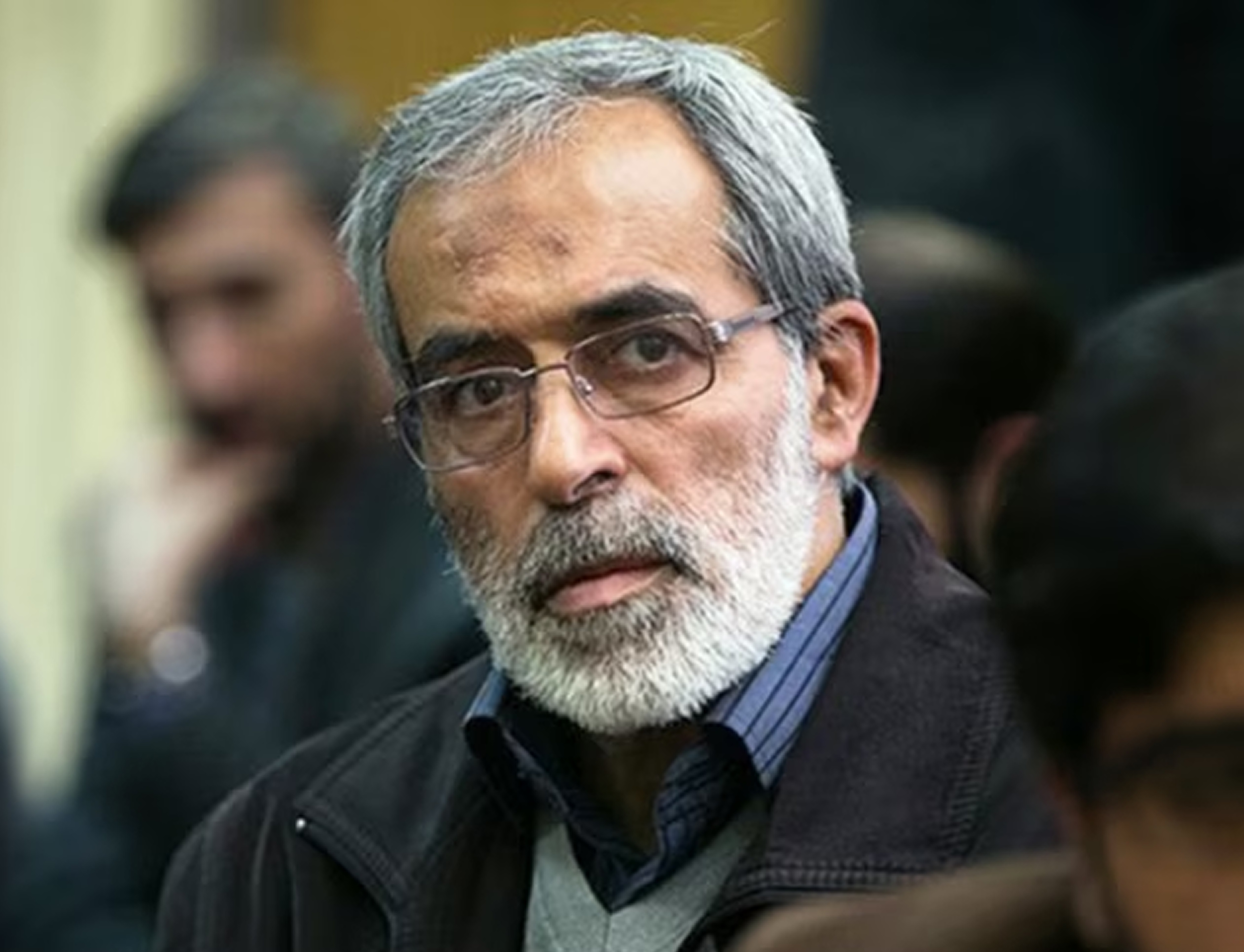




The Black Box of Power: Inside Hossein Taeb’s Parallel Security State
An investigation into Hossein Taeb's secretive security empire, internal rivalries, and human cost.
|
Pars Barghandan
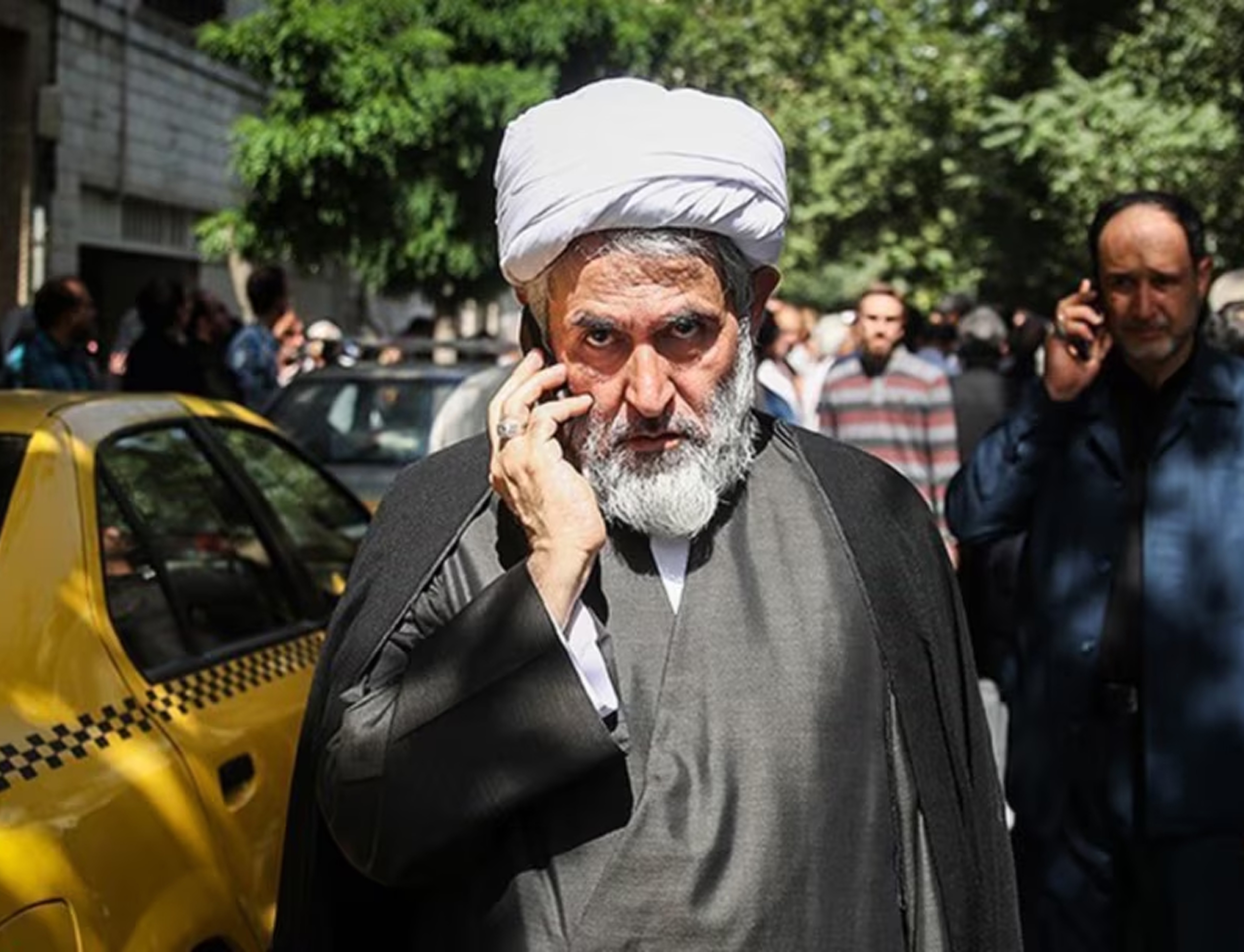
For more than a decade, few officials inside the Islamic Republic wielded as much unaccountable power, and inspired as much fear across both dissidents and insiders, as Hossein Taeb. Known in security circles by his wartime nickname “Haj Meysam”, he presided over the Intelligence Organization of the Revolutionary Guards while answering directly to the Supreme Leader’s inner circle, especially Mojtaba Khamenei.
According to a constellation of testimonies and internal accounts, Taeb oversaw a vast, largely opaque network that blended clerical authority, revolutionary militancy and raw intelligence power. His organization is accused of orchestrating crackdowns on protesters, engineering high profile show cases, running parallel judicial channels, and using disinformation to cover up grave abuses. At the same time, he is tied to major corruption schemes and internal power struggles at the highest levels of the state.
This investigation traces the trajectory of Hossein Taeb from an obscure seminary student and mid level Revolutionary Guard officer to the “black box” of the security apparatus, then follows his spectacular fall in 2022 amid a wave of security failures and infighting. It examines the methods attributed to his network: outsourcing violence to thugs, weaponizing the judiciary, manufacturing confessions, and turning propaganda into a shield for impunity. Finally, it explores what his rise and removal reveal about the structure of power in the Islamic Republic and the cost borne by ordinary citizens.
By official biographical accounts, Hossein Taeb was born in 1963 in Tehran, originally registered as Hassan. He grew up in the Shahbaz neighborhood near Jaleh Square, an area deeply marked by revolutionary politics. After basic schooling he entered the seminary, beginning a dual identity that would define his career: both cleric and security operative.
In 1982, at the height of the Iran–Iraq war, Taeb joined the Revolutionary Guards. He served in Tehran’s Region 10 and later in the Guards’ units in Qom and Razavi Khorasan. As his influence grew he became part of an elite family network: he married into the family of Seyed Ali Akbar Mousavi Hosseini, a well known cleric and former member of parliament, and became the brother in law of Seyed Hossein Shahmoradi, a figure with his own standing in religious and political circles.
Simultaneously, Taeb cultivated his clerical credentials, continuing seminary studies in Tehran, Qom and Mashhad while holding sensitive security posts. His early security resume is said to include:
Commanding the Guards’ Protection Intelligence unit
Serving as deputy for counter intelligence at the Ministry of Intelligence during Ali Fallahian’s tenure
Briefly rising to the rank of deputy intelligence minister
His first major fall came with the politically charged case of Mehdi Hashemi, son of then power broker Akbar Hashemi Rafsanjani. After involvement in a controversial file targeting Hashemi and his associates, Taeb was pushed out of the Ministry of Intelligence. According to later testimony, he was effectively purged for factional scheming, only to be rescued by the Supreme Leader’s office.
Following his ouster, Taeb was brought into the Leader’s office as a “coordination official”. In practice, this meant building a bespoke, loyal security structure for the Leader, operating in parallel to formal institutions. It was from this vantage point that his ascent accelerated.
Former insiders describe his primary mission in those years as “grounding” or crippling the reformist government of President Mohammad Khatami. Among the early emblematic operations attributed to his network was the high profile corruption case against Gholamhossein Karbaschi, the powerful reformist mayor of Tehran, which weakened Khatami’s urban and political base.
Over time, accounts from former security officials who later broke with the system began to place Taeb’s name in connection with some of the darkest episodes of the 1990s: the “chain murders” of intellectuals, the killing of three Christian clergy, and the bombing at the Imam Reza shrine in Mashhad. These cases, in which the Ministry of Intelligence has been repeatedly accused of staging atrocities to blame opposition groups, would later reappear in detailed insider testimonies that also place Taeb in key coordinating roles.
By adopting the name of his brother, who was killed in the war, Hassan became officially known as Hossein. Under the pseudonym “Haj Meysam”, he developed a reputation inside security structures as the man trusted to handle “dirty work” in defense of the Leader and the ruling circle. That trust, shielded from scrutiny, is what allowed his parallel empire to grow.
The core of Hossein Taeb’s power lay not in a formal government ministry but in a sprawling network that blurred the lines between state and parallel institutions, law and extrajudicial force.
After his stint in the Leader’s office, and on the recommendation of Mojtaba Khamenei, Taeb was appointed head of the Basij in 2005. This role placed him in charge of mobilizing one of the regime’s most flexible instruments: millions of paramilitary volunteers and semi professional forces embedded in neighborhoods, workplaces, universities and mosques.
Multiple accounts credit Taeb with reshaping the Basij into a more disciplined political machine geared toward electoral engineering. He is widely accused of playing a decisive role in using Basij networks to pave the way for Mahmoud Ahmadinejad’s presidential victory, particularly by mobilizing low income and security linked constituencies while intimidating rivals.
Taeb’s trajectory mirrors the gradual sidelining of the official Ministry of Intelligence by Revolutionary Guard structures. In 2007, the Guards’ command underwent a major reorganization. Under commander Mohammad Ali Jafari, the intelligence wing of the Guards was upgraded into a formal “Intelligence Organization”. Taeb, already a trusted security operator close to the Leader’s camp, was placed at its head.
Insider descriptions depict this organization as a fusion of at least seven distinct security components, including:
The Leader’s own intelligence office, known as “Department 101”
Communications and cyber security units
Plainclothes Basij squads
Elements of the police’s paramilitary forces
Specialized surveillance and enforcement teams
Crucially, the Intelligence Organization of the Guards did not operate alone. Selected judges from the judiciary were reportedly embedded with it, forming a kind of dedicated judicial arm. These judges, working closely with interrogators and case officers, could rapidly issue search warrants, authorize surveillance and sign off on arrests and heavy sentences. In effect, this bypassed the normal bureaucratic channels that might otherwise act as weak checks on security power.
Former officials from within the system describe this as a “shortcut” designed to avoid the “burden” of administrative and legal procedures. For those caught in its net, it meant detention, interrogation and even sentencing without meaningful oversight.
Politically, this structure allowed Taeb to push the Ministry of Intelligence aside in key domains such as internal security, counter espionage and politically sensitive investigations. From 2009 onward, several intelligence ministers, including Mahmoud Alavi under Hassan Rouhani, would publicly complain about the Guards’ Intelligence Organization sabotaging their operations and hijacking major cases.
Beyond formal units and judges, Taeb’s network is alleged to have relied heavily on informers, loyal clerics, media operatives and a cadre of security trained “experts” or pundits. These actors populated television studios, quasi independent think tanks, and semi official outlets, pushing narratives aligned with the security line and justifying crackdowns as “defense of the revolution” or “fighting infiltration”.
The resulting configuration resembled a state within a state: a parallel security empire nested inside the Islamic Republic, answerable primarily to the Supreme Leader’s immediate circle and personified by Hossein Taeb.
Over nearly three decades, Taeb’s name has appeared, directly or indirectly, in a series of cases that collectively illustrate the methods and reach of his network. Many of the allegations come from former insiders, imprisoned security operatives, or regime loyalists who later broke ranks. They sketch a pattern of operations that combine political repression, staged scenarios, and systemic use of torture and coerced confessions.
Former officials and political figures have linked Taeb to the “chain murders” of writers and intellectuals in the 1990s, and to the killings of three Christian religious leaders: Pastor Haik Hovsepian Mehr, Pastor Mehdi Dibaj and Bishop Mikaelian. In one detailed account by a former regime insider, security officers allegedly used three young women as bait, sending them to the priests under the pretense of seeking to convert to Christianity. When the priests met them, security agents reportedly stormed in, killed and dismembered the clergy in front of the women, then forced the women under intense pressure to confess on camera that they had been sent by the opposition group Mojahedin-e Khalq to carry out the assassinations. According to this account, the women themselves were later executed to erase witnesses.
The same former insider ties this modus operandi to the 1994 bombing at the Imam Reza shrine in Mashhad, where dozens were killed and hundreds injured. He claims the bombing was orchestrated from inside the security apparatus to generate public hatred of regime opponents, with scapegoats later presented as terrorists after extracting confessions. Another senior reformist official, Mostafa Tajzadeh, has publicly stated that during the chain murders scandal some in the security establishment proposed a “Mashhad style” solution: find expendable suspects, force them to confess on television and execute them to close the case and “cleanse” the Ministry of Intelligence.
In these narratives, Taeb appears not as the sole mastermind but as a central operative in a system that weaponized staged violence and coerced confessions as political tools, particularly when the reputation of the security apparatus itself was at stake.
One of the most chilling cases attributed to Taeb’s tenure involves Abbas Yazdanpanah Yazdi, an Iranian-British businessman close to Mehdi Hashemi. In the late 1990s, on Taeb’s orders while he was still a senior counter intelligence figure, Yazdanpanah was reportedly detained and pressured into providing statements against Hashemi in a corruption related context. He was eventually released and left the country.
Years later, in 2013, Yazdanpanah testified by video link from Dubai in an international arbitration case in The Hague. Just hours after that testimony, he vanished. According to accounts circulated by dissident sources and some Iranian media, he was abducted and killed, his body never recovered. The pattern mirrors earlier cases: a politically connected target tied to an internal power struggle, an intelligence led operation, a disappearance, and no transparent investigation.
Taeb’s most visible and widely documented role came during the 2009 election crisis and the mass protests that followed the disputed reelection of Mahmoud Ahmadinejad. As head of the Guards’ Intelligence Organization and a former Basij commander, he sat at the nexus of the security response.
Multiple testimonies and reports credit Taeb with:
Directing the repression of student activists, including night time raids and violent arrests
Acting as the Leader’s messenger to notorious prosecutor Saeed Mortazavi, coordinating judicial repression of protesters
Authorizing the arming and deployment of plainclothes Basij battalions with carte blanche to beat and shoot demonstrators
According to a senior Guards commander who later spoke publicly, around 5,000 “thugs and hoodlums” were recruited into special Basij units. These men, accustomed to knives and street violence, were turned into an instrument of “jihad” and unleashed in the 2009 unrest. Their role, as described by that commander, was to infiltrate otherwise peaceful protests, set fires, provoke clashes and create the pretext for a violent crackdown.
One of the most emblematic tragedies of that period is the case of Taraneh Mousavi. According to witness testimonies and opposition investigations, Mousavi, a young woman participating in a gathering near Qoba mosque in Tehran in July 2009, was arrested by forces of the Sarallah base, a core Guards unit under Taeb’s influence. She was reportedly taken to a clandestine detention facility, tortured, raped and killed. Her body, according to these accounts, was then burned to destroy evidence.
When the story began to circulate, it posed a serious challenge to the regime’s narrative. The response illustrates both the tools and reflexes of the Taeb network. State television produced a segment claiming Taraneh Mousavi was alive and well, living in Canada. A woman of that name was put on screen via a staged phone call, while her parents appeared in Iran to laugh off the story of her death as foreign propaganda. Later, opposition leader Mehdi Karroubi revealed that this “alternative” Taraneh was the daughter in law of a well known clerical figure: Seyed Hossein Shahmoradi, Taeb’s own brother in law. Shahmoradi, in a letter that effectively confirmed the connection, said he had never shared the real story of the incident with senior figures and would not do so “for various considerations”.
Associates of Karroubi later stated that the family had acted “out of goodwill, under pressure, or out of ignorance of the true story”, and that they had regretted participating in the televised scenario. The episode laid bare how tightly knit family networks, state television and the security apparatus could be woven together to erase an inconvenient victim and protect the security establishment.
Hossein Taeb’s reach extended beyond crushing public dissent. He was also deeply involved in internal purges and factional wars within the ruling elite.
A striking testimony came from Mohammad Hossein Rostami, a hardline activist and former manager of the “Amarion” website, a platform aligned with the Guards’ ideological current. In an audio recording made from prison, Rostami accused Taeb of reemploying interrogators who had been permanently dismissed from the Ministry of Intelligence over their roles in the chain murders and the Saeed Emami scandal. Despite court rulings banning these men from service, Taeb allegedly hired them into his parallel structure and rewarded them with expensive housing near the Leader’s residence.
Rostami went further, claiming Taeb had opened files against senior Guards commanders such as Ali Fadavi, then deputy commander of the Guards, and was plotting to bring them down through engineered corruption or security cases. He listed a series of episodes tied to Taeb’s history: from the “Isabel case” and the arrests of Tudeh Party members, to opaque operations involving the Badr Corps and strange “lot drawing” methods to identify supposed spies.
Rostami’s conclusion was stark: an officer once expelled from the intelligence ministry for misconduct had become head of a “parallel security organization” with no clear legal mandate, yet with power to fabricate cases against virtually anyone.
Former president Mahmoud Ahmadinejad, once a beneficiary of Taeb’s Basij mobilization, later turned against him after falling out with the Leader’s camp. In public remarks, Ahmadinejad confirmed that Taeb had been expelled from the Ministry of Intelligence and described him as unbalanced, someone whose “job is case fabrication”. He questioned how such a person could be entrusted with an organization wielding absolute power and operating outside legal frameworks.
Under Taeb, the Guards’ Intelligence Organization became notorious for high profile cases targeting dual nationals, environmentalists and senior insiders.
The arrest of environmental activists, including university professor Kavous Seyed Emami, on espionage charges is widely attributed to Taeb’s organization. The Ministry of Intelligence reportedly concluded there was no basis for espionage accusations, yet the Guards’ Intelligence pressed ahead. Seyed Emami died under suspicious circumstances in prison; authorities claimed suicide.
Similarly, the Guards’ Intelligence is reported to have orchestrated “dual nationality” cases against members of the Rouhani administration and technocrats linked to the nuclear negotiations, aiming to depict the government as infiltrated by foreign agents and to sabotage diplomatic openings.
In the electoral sphere, Taeb’s organization played a central role in compiling and supplying “security dossiers” used by the Guardian Council to disqualify major figures from standing in presidential and Assembly of Experts elections. Among those targeted, according to political insiders, were Akbar Hashemi Rafsanjani, Hassan Khomeini and Ali Larijani. One particularly controversial file against Larijani was later implicitly disavowed by the Supreme Leader himself, who called for “compensation” after it emerged that the accusations were baseless. Sadegh Amoli Larijani, a former judiciary chief, publicly denounced the pattern of security led case fabrication against his family.
Former foreign minister Mohammad Javad Zarif, in a leaked classroom audio, described how commanders like Mohammad Ali Jafari and Hossein Taeb effectively predetermined electoral outcomes through behind the scenes engineering, reducing formal politics to a managed spectacle.
If repression and case fabrication formed one pillar of Taeb’s empire, money and media formed another. The same network that pursued “security” cases was deeply enmeshed in lucrative economic schemes and aggressive propaganda operations.
One of the most prominent corruption controversies tied to Taeb centers on the YAS Holding conglomerate, a Guards linked economic network implicated in large scale embezzlement and profiteering from public contracts. Internal critics have alleged that Taeb maintained close ties with key figures in YAS, including Mahmoud Seif, and that his organization shielded them from accountability while sharing in the spoils.
Former state broadcaster chief Mohammad Sarafraz, appointed by the Leader and once considered firmly within the loyalist camp, later turned into an unexpected whistleblower. In his memoir and subsequent public statements, Sarafraz accused Taeb and senior Guards officer Jamaluddin Aberoumand of interfering directly in IRIB’s lucrative advertising tenders. According to Sarafraz, they sought a share of the advertising market by muscling into competitive bidding processes, pressuring IRIB to grant them privileged access and favorable contracts.
These allegations did not remain in the realm of rumor. Sarafraz has stated that official oversight bodies investigated and confirmed significant irregularities, bringing Mojtaba Khamenei’s name into the picture as a political protector of Taeb’s network. As pressure mounted, Sarafraz ultimately resigned and left the country under significant personal threat. His close associate and former IRIB inspector, Shahrazad Mirgholikhan, also made multiple public accusations against Taeb and eventually felt compelled to flee Iran for fear of her life.
In a video recorded during the nationwide protests sparked by Mahsa Amini’s death, Sarafraz linked the repression of demonstrators directly to the same circle: Mojtaba Khamenei and Hossein Taeb. He stated that both he and Mirgholikhan had written their wills and were prepared to face “whatever may happen” as a consequence of speaking out.
The reach of Taeb’s network allegedly extended beyond Iran’s borders. According to the prison audio of Mohammad Hossein Rostami, Taeb was involved in an extraordinary episode in the 1990s when a German businessman and his daughter were taken hostage in Iran. The incident reportedly occurred in the context of a sensitive diplomatic visit by a senior Iranian security official to Germany. The hostages were used as leverage to influence legal proceedings or political decisions abroad, effectively turning a family into bargaining chips in a high stakes security game.
More recently, as head of the Guards’ Intelligence Organization, Taeb reportedly authorized or supervised transnational operations against perceived Israeli targets. According to regional reporting, one such operation aimed at killing a former Israeli consul in Turkey failed badly. Turkish authorities arrested the alleged hit team, and a public scandal followed. This botched operation, combined with a series of embarrassing security breaches inside Iran attributed to Israel, would contribute to Taeb’s fall from grace.
Parallel to covert operations and economic schemes, the Taeb network invested heavily in propaganda and ideological production.
At the height of his power, he was a celebrated figure in hardline media. State television aired fictionalized films and “docudramas” glorifying the Guards’ intelligence work and dramatizing the threat of “infiltration”, particularly by the Mojahedin-e Khalq and Western intelligence agencies. Notably, just after his eventual dismissal in 2022, state television aired the film “Ma’jaraye Nimrooz” (“Midday Adventures”), centered on infiltration in the 1980s, followed the next day by a laudatory segment praising Taeb’s record in fighting corruption and “economic mafias”. Official narrators claimed that under his leadership, the Guards’ Intelligence had returned over 49 trillion tomans to the treasury and secured more than 200 years of cumulative prison sentences for corrupt actors.
At the social media level, regime aligned activists describe how, in the late 2000s and 2010s, a wave of “soft war” initiatives generated an entire ecosystem of pro regime content creators. Under banners such as “Ammar”, “jihad of cyberspace” and “soft war camps”, security linked foundations funded blogs, Telegram channels, Instagram pages and pseudo independent news sites. These outlets repeated talking points produced by the security core, demonized reformists and moderates, and framed any criticism of the Guards or the Leader’s office as treason.
One of the most searing internal critiques of this system comes from Vahid Ashtari, a self described “Basiji loyalist” who emerged as a whistleblower on corruption in the circle of powerful conservative politician Mohammad Bagher Ghalibaf. Ashtari later circulated a video of Taeb speaking at a university, in which the intelligence chief mispronounced Elon Musk’s name as “Elon Max” and confidently predicted that he would become president of the United States, apparently unaware that the US constitution bars foreign born citizens from the presidency.
Ashtari’s broader point was not the gaffe itself but what it symbolized: that “the brain of the intelligence apparatus of an 80 million country” was so poorly informed, yet had shaped the destiny of millions of young Iranians for nearly two decades. He described a generation of Basijis raised on security bulletins, conspiracy theories and enemy centric worldviews produced by people like Taeb, while the same individuals mismanaged elections, shielded allies, ruined reputations and drained state resources.
The propaganda machine kept Taeb’s stature polished on screen, but inside the system, fissures widened.
On 23 June 2022, after 13 years at the helm of the Revolutionary Guards’ Intelligence Organization, Hossein Taeb was abruptly removed from his post and reassigned as an “advisor” to the Guards’ commander. Official announcements were terse, but the timing and context were telling.
In the months leading up to his removal, the Islamic Republic had suffered a string of humiliating security failures. Sensitive nuclear facilities had been sabotaged, senior officers and scientists were assassinated on Iranian soil, and Israeli media openly boasted of deep infiltration of Iranian security structures. The failed plot in Turkey to attack Israeli citizens or officials, reportedly overseen by Taeb’s deputy for counter espionage, ended with the arrest of Iran linked suspects and public accusations from Ankara. Israeli outlets, in a calculated move, reported Taeb’s impending dismissal days before it became official, as if to underscore their reach.
Inside the system, there were signs of a broader “security cleansing”. The man chosen to replace Taeb was Mohammad Kazemi, a long time head of the Guards’ Protection Intelligence, known as a secretive figure with close ties to the Leader’s office. According to past leaks, Kazemi’s unit had been responsible for monitoring senior Guards commanders for signs of “infiltration” or disloyalty, and had played a role in arresting officers accused of spying.
The choice of Kazemi sent a dual message: the Leader’s circle still trusted the Guards, but now preferred a different guardian at the gate. Whether Taeb fell solely because of Israeli penetration of his networks, or because internal rivals successfully leveraged those failures to unseat him, remains unclear. Both interpretations are plausible and not mutually exclusive.
The state’s own handling of his dismissal was contradictory. On one hand, the timing and low ranking advisory title suggested clear demotion. On the other, state television quickly broadcast a glowing tribute to his 13 year record, highlighting his supposed achievements in fighting corruption and thwarting plots. Guards commander Hossein Salami praised his “brilliant role at the peak of intelligence battles with the enemy”, while a chorus of curated social media posts thanked him for everything from dismantling fuel smuggling networks to busting “deviant ideological groups”.
Meanwhile, other voices inside the conservative camp quietly labeled him a liability, even a suspected conduit for Israeli penetration. The once feared “guardian of secrets” found himself, at least rhetorically, facing the same accusation he had spent years leveling at others: being an “agent of foreign intelligence”.
Whatever the precise balance of reasons, his removal marked the end of an era. For over a decade, detainees in the Ministry of Intelligence had been threatened with the phrase: “We will hand your case to the Guards’ Intelligence”, a warning that implied a descent into a harsher, less accountable realm. Now the architect of that realm had been publicly sidelined.
The story of Hossein Taeb is not simply a tale of one ambitious cleric turned security boss. It is a window into how the Islamic Republic’s power structure has evolved, and why it has become so resistant to reform.
First, his career illustrates how the boundaries between clerical authority, military force and intelligence work have been systematically erased. A mid rank cleric became a military intelligence chief and economic power broker, all under the protective umbrella of the Supreme Leader’s household. This fusion eliminates traditional checks and balances: there is no independent judiciary to challenge security abuses, no parliament capable of scrutinizing budgets, no media free to expose wrongdoing without risk of imprisonment or exile.
Second, Taeb’s network shows how “security” is used not only against declared enemies of the system but also as an instrument of internal political control. Reformist presidents, powerful clerical families, former presidents like Ahmadinejad, senior Guards commanders and even relatives of top judiciary figures all found themselves vulnerable to files compiled by the Guards’ Intelligence Organization. The constant threat of case fabrication, selective leaks and “corruption dossiers” keeps rival elites in line.
Third, the episodes linked to his name reveal a consistent logic: when crimes by the security apparatus threaten to surface, the reflex is not to investigate and punish perpetrators but to script alternative realities. In the case of Taraneh Mousavi, a dead woman was effectively “replaced” on screen by a namesake tied to the security family network. In the chain murders and Mashhad bombing narratives, scapegoats are manufactured, their confessions crafted in interrogation rooms, then broadcast as truth. When environmentalists and dual nationals are targeted, security narratives of “espionage” override the assessments of technical ministries.
Fourth, the human cost is borne by those with the least power: students beaten in 2009, families whose loved ones vanish like Abbas Yazdanpanah, activists and journalists facing courts where the judge sits beside the interrogator from the same organization that arrested them. It is also borne by whistleblowers like Mohammad Sarafraz and Shahrazad Mirgholikhan, who are driven into exile, and by dissident insiders like Mohammad Hossein Rostami, imprisoned after trying to expose the system’s inner workings.
Finally, Taeb’s fall underscores a paradox at the heart of the Islamic Republic’s security state. The very apparatus that claims to protect the system from “infiltration” and “soft war” has, by concentrating power in unaccountable parallel structures, made the state brittle. A security chief so central that he becomes the “black box” of the system is also a single point of failure. When he is compromised, or simply becomes too costly to protect, the system can change the face without changing the logic.
In the end, whether Hossein Taeb spends the rest of his life as a quietly retired advisor or is recycled into another opaque role, the structures he helped build remain. Any meaningful reckoning with the abuses and corruption documented here would require not just the trial of one man but an unwinding of the parallel security state itself: its secret courts, its propaganda machinery, its economic networks and its family based patronage. Until that happens, the cases linked to his name - from murdered priests and bombed shrines to vanished businessmen and silenced protesters - will stand as evidence of a system in which impunity is not an anomaly but a central operating principle.