



From Revolutionary Judge to Executed Outcast: The Rise and Fall of Fathollah Omid Najafabadi
An inside look at revolutionary judge Fathollah Omid and how secret purges consumed their architects.
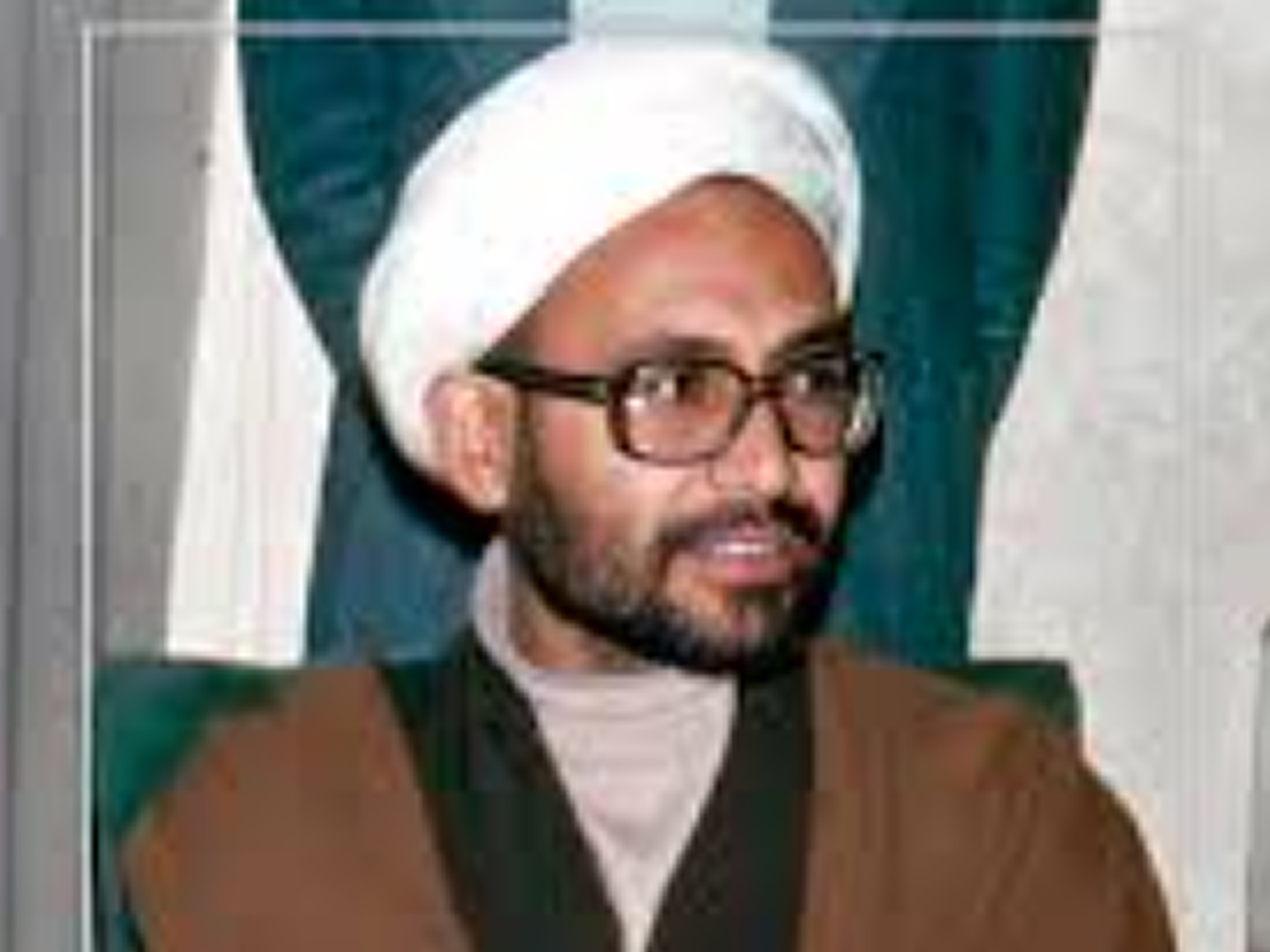
The trajectory of Fathollah Omid Najafabadi encapsulates the inner logic of early revolutionary justice in the Islamic Republic: a system built on religious authority, emergency tribunals, and political violence that eventually turned its own instruments against one another.
Born in 1943 in Najafabad near Isfahan, Omid rose from provincial seminarian to a prominent cleric closely tied to leading figures of the revolutionary movement. He became both an intellectual collaborator of well known ideologues and a hands on architect of early post revolution repression as the first powerful religious judge in Isfahan. His court rapidly gained notoriety for issuing dozens of death sentences against perceived enemies, often in rushed proceedings that blurred the line between justice and vengeance.
Omid then entered parliament with a strong electoral mandate, moved in the inner circles of power, and became entangled in two highly sensitive domains. First, factional armed struggles in Isfahan, culminating in the judicially sanctioned killing of a local revolutionary commander. Second, the secret contacts with US officials known as the McFarlane affair, in which his proximity to an arms dealer and to Ayatollah Hossein Ali Montazeri placed him at the intersection of arms deals, covert diplomacy, and internal rivalries.
By the late 1980s, the same system that had empowered Omid as a revolutionary judge recast him as a moral deviant and political liability. Arrested in connection with the Mehdi Hashemi case, he faced opaque proceedings in a special clerical court. Official narratives portrayed him as the head of a “corruption” ring involving sexual relations with men. Alternative accounts from senior clerics, political insiders and former prisoners insist that the charges were at best unproven and at worst manufactured to neutralize a politically inconvenient figure and to resolve unfinished scores over earlier scandals.
Omid was ultimately executed in 1988, reportedly by firing squad, after months of solitary confinement and torture that cost him the sight of one eye and the hearing of one ear. His fall illuminates several recurring mechanisms in the Islamic Republic’s internal struggles:
the grant of near absolute power to early revolutionary judges and the lack of formal safeguards
the use of judicial orders to legitimize lethal operations that functioned as political assassinations
the central role of sexual and moral accusations in elite purges and character destruction
the capacity of the system to erase or rewrite the contributions of once trusted insiders
Taken together, the case offers a rare window into how revolutionary justice was weaponized both against declared opponents and against its own architects, and how accusations of “corruption” could mask deep political conflicts within the ruling elite.
Fathollah Omid, son of Mahmoud, was born in 1322 in the solar calendar in Najafabad, a town that would later become a symbol of militant religiosity and political mobilization. After primary school he entered the local seminary, then moved to the religious centers of Isfahan and eventually Qom, progressing through the standard curriculum of Islamic jurisprudence and theology.
In Qom he studied under some of the most influential clerics in the emerging revolutionary current, including Ruhollah Khomeini, Hossein Ali Montazeri and Allameh Tabatabaei. Omid was not only a student but also a collaborator of the prominent ideologue Morteza Motahhari. His most visible intellectual role came through the preparation of Motahhari’s well known work “Attraction and Repulsion of Ali”, which Omid compiled from recorded lectures, edited and annotated.
In the original pre revolution editions, Motahhari explicitly praised Omid’s contribution, noting that a “highly learned and virtuous” Omid had borne the burden of revising and completing the lectures, and that roughly half of the book was drafted in Omid’s own hand after transcription from tape. After Omid’s execution, later editions quietly removed this passage. The deletion is a small but telling example of how the system retrospectively purged his name from its own intellectual canon.
Omid’s political alignment was clear from early on. He supported Khomeini’s movement and paid a personal price for it. For his activism, he spent time in prison and was exiled for a period to Bandar Torkaman on the Caspian coast. These experiences reinforced his identification with the most militant strand of opposition to the monarchy and with the idea that political change could legitimately be pursued through radical means.
When the monarchy collapsed in 1979, Omid’s profile as a revolutionary cleric with both ideological and activist credentials made him an ideal candidate for a new kind of judicial role: the religious judge empowered to administer “Islamic justice” in the chaotic aftermath of regime change. It was a role that offered immense discretion with almost no institutional oversight.
Soon after the revolution, Khomeini appointed Omid as religious judge in Isfahan, effectively making him the ultimate authority in politically charged trials in one of the country’s most important provinces. Testimonies from those years describe a rapid and brutal consolidation of power through the courts. Omid issued scores of death sentences against former officials, perceived enemies and alleged “counter revolutionaries”, earning a reputation for severity even by the standards of the time.
Among the most notable cases were the executions of Habibollah Eshraghi, the mayor of Isfahan under the monarchy, and Mehdi Mir Eshrafi, an army officer and well known businessman of the Pahlavi era. Omid not only sentenced Mir Eshrafi to death but also ordered the execution of his son, signaling a willingness to extend punishment beyond the immediate accused. According to contemporaneous reporting, senior figures lobbied Khomeini intensely to overturn Mir Eshrafi’s death sentence, and the leader reportedly agreed, sending an order to stop the execution. The instruction arrived too late. The daily Kayhan later framed the killing with bitter irony, noting that “fortunately or unfortunately” the message had reached Isfahan only after the sentence had been carried out.
Omid’s harsh approach was not limited to high profile figures. During the summer of 1978, as protests and strikes swept Najafabad, local crowds demanded the retrial and execution of individuals associated with the old order. Omid, presented as the new religious judge, reportedly calmed the streets by issuing death sentences against two such men in a late night session and having them executed immediately. Witnesses recall that on at least one occasion, in October 1979, he recorded the final statements of defendants and then signed their death warrants on the spot, instructing revolutionary guards that if they were not killed that same night “they would no longer be reachable”.
The pattern reveals several structural features of early revolutionary justice in the Islamic Republic:
Trials were often summary, with minimal procedural protections and no effective right of appeal.
The religious judge concentrated in one person the roles of investigator, prosecutor and sentencer.
Executions were used instrumentally, not only as punishment but as a tool to manage public anger, assert authority and resolve political tensions.
The sheer pace and volume of executions in Isfahan eventually provoked unease even within parts of the ruling elite. A member of the Revolutionary Guard from Isfahan later recalled complaining to Ayatollah Hossein Khadami, a senior local cleric, that “as soon as Omid became a judge he started killing people” and handing down death sentences for dozens. Khadami reportedly wrote a letter to Khomeini, describing Omid as “an unbeliever” unfit to serve as religious judge in Isfahan. According to this account, it was this letter, delivered personally to Khomeini by the complaining guard, that led to Omid’s removal from his judicial position in late 1979.
Even after his dismissal as judge, Omid did not leave the political stage. In the first parliamentary election of 1980, he stood as a candidate in Isfahan and won a seat with more than 326,000 votes, around two thirds of the ballots cast. The result suggests that his severe record in the revolutionary courts did not prevent him from securing mass electoral support, likely reflecting the climate of the time, in which uncompromising violence against perceived enemies was still widely valorized in sections of the revolutionary base.
The next phase of Omid’s trajectory unfolded against the backdrop of intense factional conflict in post revolution Isfahan. Two clerics symbolized the competing currents. Ayatollah Jalaleddin Taheri, viewed as representing the more radical “line of the Imam” and aligned with Montazeri, was associated with the Revolutionary Guard in Isfahan. Ayatollah Hossein Khadami, seen as more conservative, was linked to the Revolutionary Committees.
These rival networks clashed repeatedly over control of security and governance. The conflict was not merely rhetorical. It spilled into armed confrontations between units of the Revolutionary Guard and the Committees, including deadly incidents in the town of Falavarjan and elsewhere. Testimony from the then governor of Isfahan, Kazem Mousavi Bojnourdi, indicates that several people were killed in these exchanges, with one episode in 1982 alone leaving 11 dead.
Within this volatile environment, the figure of Amir Abbas Bahreinian, head of the Revolutionary Committees in Isfahan, became central. Bahreinian represented the camp associated with Khadami and the Committees and was thus a key rival to forces linked to Taheri and elements of the Revolutionary Guard.
According to Bojnourdi’s account, at the height of the conflict senior military and security figures gathered in his home, including the Guard commander in Isfahan, Ahmad Salek, as well as Yahya Rahim Safavi, Ali Sayad Shirazi and Hashem Sabbaghian. At one point, a proposal was made to attack the Committees’ forces with grenades. The tension escalated to such a degree that the office of Khomeini intervened, with Hasan Sane’i reportedly telephoning to order a halt to any armed confrontation.
Ultimately, it was decided that Mohammad Javad Bahonar, a member of the Revolutionary Council, would travel to Isfahan to mediate the dispute and oversee the dissolution or restructuring of the Committees. On the very day of Bahonar’s arrival, Bahreinian was killed at his workplace.
What transforms this killing from another episode of revolutionary violence into a revealing case study is the nature of its authorization. According to Bojnourdi, Bahreinian’s death was not an extrajudicial hit by rogue elements, nor the work of armed opposition groups. It was carried out by forces linked to Revolutionary Guard intelligence and backed by a formal judicial order signed by none other than Fathollah Omid, then religious judge of Isfahan.
Official narratives later presented the killing as the work of Mehdi Hashemi, a prominent figure in the Guard and brother in law of Montazeri, framing it as a factional crime inspired by Hashemi’s radicalism. Yet some participants in those events have named Mohammad Atrianfar, then in command roles within Guard intelligence, as the operational mastermind. The precise division of responsibility remains disputed.
What is less contested is that Omid signed a judicial ruling that authorized the operation as a form of “legal” killing rather than arrest and trial. In other words, a revolutionary judge used his authority not only to condemn prisoners after formal proceedings but to legitimize what functionally resembled an assassination of a sitting revolutionary official.
Later, senior judicial figure Ali Razini would acknowledge that Omid faced a case file related to Bahreinian’s killing. Razini explained that under religious legal principles, ordering a killing of this sort should lead to life imprisonment for the issuer of the order and possible retributive execution for the direct perpetrators. In practice, however, Omid avoided such punishment by obtaining the forgiveness of Bahreinian’s family in exchange for paying blood money (diya) and issuing a personal apology. The retributive aspect of the case was thus neutralized, leaving room for the state to address Omid’s fate through a different, more politically malleable file.
Omid’s judicial record and factional alignments might have been enough to place him at risk in an environment of shifting power balances. Another highly sensitive involvement made matters worse.
During the secret contacts between Iranian officials and representatives of the Reagan administration in the mid 1980s, known in the West as the Iran Contra or McFarlane affair, Omid reportedly played a role in delivering confidential correspondence to Montazeri. His proximity to an arms dealer, Manucher Ghorbanifar, who had long supported him financially and through publicity efforts even before the revolution, gave him a unique position at the crossroads of clandestine arms deals and high level religious politics.
When the McFarlane affair exploded into a public scandal, it badly damaged Montazeri’s standing and intensified struggles within the leadership. According to Montazeri’s own later recollections, Omid ultimately became one of the victims of this controversy. In his memoirs, Montazeri writes that Omid, already a theological authority and no longer young, was accused in prison of “acts contrary to chastity” and executed on those grounds. He questions whether such accusations were plausible against a man of Omid’s profile and suggests that Omid was sacrificed as a result of the fallout from McFarlane.
By 1987, Omid had been arrested in connection with the wide ranging case built around Mehdi Hashemi, which the authorities used to settle multiple accounts at once: internal dissent in the Revolutionary Guard, the McFarlane scandal, and certain ideological challenges to the leadership. Alongside Omid, several other clerics were reportedly detained, and at least five were said to have been executed on charges of same sex relations, including a cleric and first and second term parliamentarian identified as Mir Ali Naqi Seyed Khavari from Langarud. Some observers have questioned whether all of these executions actually took place as described, but the allegations themselves became part of the official narrative of a “moral cleansing” within the clergy.
The state’s public justification for Omid’s eventual execution rested not on his role in the mass executions of 1979 or the Bahreinian killing, but on allegations of sexual misconduct with men. According to Ali Razini, Omid had a second, separate “moral” case file, in which he was portrayed as a leader of a “large ring of corruption” involving repeated sexual acts with multiple partners, the viewing of pornographic films in groups, and similar conduct allegedly carried out “dozens of times”. Razini insisted that evidence for these acts existed and that multiple individuals were involved.
Yet other insiders tell a different story. Mojtaba Vahedi, a political figure active in that era, recalls speaking shortly after Omid’s execution with a parliamentarian who knew both Omid and then intelligence minister Ali Fallahian. The MP, furious with Fallahian, recounted that the minister had claimed Omid, after being told he would be executed the next morning, had spent his last night engaging in sexual activity with a cellmate. The MP challenged the plausibility of this story, pointing out that Omid had endured severe torture, had lost vision in one eye and significant hearing, and had been left in a physically fragile state that made such behavior highly unlikely.
Former prisoner and writer Mohammad Shouri adds another layer. He reports sharing a cell with Omid in late winter 1987, shortly after being released from the special clerical court’s prison in Evin. Shouri describes Omid as physically disciplined and still exercising regularly but confirms that he bore visible signs of abuse, including bloodied toes, and had recounted months of solitary confinement, flogging and the loss of one eye’s vision and one ear’s hearing due to torture. Shouri states that despite repeated appeals by Omid’s family to Khomeini and then president Ali Khamenei for clemency, the requests were denied, and Omid was executed in 1988 together with another cleric, officially on charges of homosexual acts.
Ahmed Khomeini, in a sharply worded letter addressed to Montazeri known as the “Ranj nameh”, invoked Omid’s case to criticize Montazeri’s political judgment. He asserted that Omid’s “corruptions” were such that his fate was “tied to the people of Lot”, using a Quranic reference associated not just with homosexual behavior but with divine destruction. Khomeini’s son argued that no amount of past revolutionary service, including involvement in printing and distributing religious treatises or participating in struggle, could justify defending a person condemned to death for such acts. In his telling, Montazeri’s support for Omid, like his stance on other controversial cases, stemmed from naivety and manipulation by those around him.
Rafsanjani’s diaries add yet another angle. In an entry from November 1988, he notes that Radio America had reported the execution of eleven clerics, including Omid, and that the program portrayed the events as a politically driven purge reflecting conflicts between him and Montazeri. Rafsanjani counters that the executions were “for corruption” rather than political divergence.
Between these competing versions, some patterns emerge. The state’s official narrative emphasizes moral depravity and denies political motivation. Montazeri, Shouri, Vahedi and other dissenting voices see the sexual charges as at best doubtful and at worst a pretext to remove a figure associated with embarrassing scandals and factional rivalries. The earlier handling of the Bahreinian file, where legal retribution was neutralized through blood money and apology, supports the view that Omid’s execution was ultimately decided on grounds other than the direct consequences of his judicial actions.
Omid’s case did not occur in a vacuum. It fits into a wider pattern in which sexual and moral accusations became central tools of political control and character assassination.
From the earliest years after the revolution, official announcements about executed or detained opponents routinely emphasized the discovery of alcohol, gambling implements, pornography, contraceptive pills or evidence of illicit sexual relations in their homes or offices. When security forces stormed the headquarters of political groups, statements would quickly follow claiming that “large quantities” of such items had been seized, regardless of the political orientation of the target. Over time, even religious opponents of the leadership were portrayed in this way.
According to political activist testimonies, the security apparatus developed a clear understanding of the power of sexual stigma. Interrogations of writers and intellectuals in later years similarly revolved around real or alleged relationships, trying to extract confessions that could destroy reputations. The aim was not only legal punishment but humiliation and the delegitimization of entire currents of thought.
Analyst Reza Alijani, reflecting on these methods, situates them within broader intelligence practices worldwide. He notes that intelligence services, including those of adversaries such as Israel, routinely use sexual entrapment to blackmail targets into cooperation. The difference in this context, he argues, lies in the open use of such accusations as domestic political weapons by a state that claims moral and religious guardianship.
Alijani traces this approach in part to Khomeini himself. In pre revolution audio statements, Khomeini is heard discussing the permissibility of slander and even sexual accusations against clerics aligned with the monarchy or hostile to his movement. He indicates that in certain circumstances, accusing such “corrupt clerics” of grave moral offenses could be religiously allowable or even obligatory to protect Islam from their influence. The concept, framed as an extreme measure within religious jurisprudence, was gradually normalized as a political tactic: discredit a cleric by portraying him as sexually deviant, thereby protecting “the people’s faith” and the revolution’s image.
This logic appears repeatedly in Omid’s story. Once he became politically inconvenient, he was no longer described as a harsh but loyal judge. Instead, he was reconstructed as a “band leader” of sexual corruption, retroactively fitting him into the same moral category he had long invoked against others. The fact that he had spent years condemning opponents to death on charges that included “moral deviation” and “corruption on earth” made the reversal particularly striking.
A popular phrase among politically experienced activists captures the vulnerability created by this environment. They speak of the need for three “zips” a politician must keep tightly closed: the trousers, the pocket and the mouth. The first refers to sexual behavior and susceptibility to traps, the second to financial corruption, and the third to loose talk that can be used against them. Omid’s case provided a cautionary tale of what could happen when the state decided, rightly or wrongly, that one of those zips had been opened.
The pattern also blurs the line between genuine accountability and political fabrication. Some sexual or corruption charges against officials may well have had factual basis. But the systematic intertwining of moral accusations with factional battles and high stakes political disputes makes it difficult for the public to distinguish truth from constructed narrative. In this ambiguity, the state maintains broad discretion to destroy reputations and terminate careers with little transparent evidence.
Beyond the political intrigue and doctrinal debates, the story of Fathollah Omid Najafabadi carries a heavy human and institutional cost.
As a judge, Omid presided over death sentences that extinguished lives after hasty trials, left families without recourse and cemented a culture in which killing became a routine administrative tool. The casual manner in which some of these decisions were made, with orders that executions must be carried out the same night to prevent any later obstacle, reflects a profound erosion of legal safeguards. The victims ranged from former officials to businessmen and ordinary individuals swept up in waves of revolutionary revenge.
The Bahreinian case shows how this mentality extended to the revolutionary camp itself. A sitting official of the new order, heading the Committees in a major city, was effectively condemned to death not by an overtly hostile state but by a rival faction within the same system, using the cover of judicial process to eliminate him during a delicate mediation mission. The later compromise over blood money and apology did nothing to restore the life lost or to establish a precedent of transparent accountability.
As a defendant, Omid experienced directly the same mechanisms he had once wielded. Months of solitary confinement, physical torture, partial blindness and deafness, and opaque proceedings in a special court with no clear public record marked the final chapter of his life. His family’s appeals to the highest authorities were ignored. His name was then largely erased from the official story, his earlier contributions excised from key texts, and his memory preserved mainly through hostile references in official polemics or through fragmented recollections by dissidents and former prisoners.
At a broader level, Omid’s rise and fall underline several features of the Islamic Republic’s internal order:
Power was concentrated in religious judges operating without institutional checks, who could authorize mass executions and even targeted killings of officials.
Legal frameworks, such as the concepts of “corruption on earth” or religious exemption for slander against “corrupt clerics”, provided flexible tools that could be stretched to cover both external enemies and internal rivals.
Special courts, particularly the special court for the clergy, functioned as instruments for disciplining and purging insiders, often through proceedings shielded from public scrutiny.
Sexual and moral accusations offered a powerful means to destroy not only individuals but also the political currents associated with them, diverting attention from underlying policy disputes or strategic failures.
Omid’s case also illustrates how revolutionary movements can devour their own symbols. A man who had been imprisoned and exiled for his support of Khomeini, who had helped canonize one of the revolution’s chief ideologues and who had enforced its harshest early measures, was ultimately branded as both a moral monster and a political liability. His execution did not mark a break with the culture he embodied. Rather, it demonstrated that within that culture, no one was fully protected from the tools of repression.
In this sense, the story is less about an individual’s personal guilt or innocence than about the structural dynamics of a system that normalized extraordinary violence in the name of religious justice. Once such mechanisms are established, they can be redirected against almost any target when political necessity demands. What began as revolutionary purging of “enemies” became, in cases like Omid’s, an inward turning purge of the revolution’s own engineers.
For observers of the Islamic Republic’s evolution, the life and death of Fathollah Omid Najafabadi remain a stark reminder that the boundary between judge and defendant, accuser and accused, can be dangerously thin in a system that prizes ideological loyalty over transparent law, and that relies on moral scandal and secret courts to manage its deepest internal conflicts.