



The Ghost General: Unmasking the Mastermind of Transnational Repression
An investigation reveals the commander directing a global machinery of assassination, abduction, and terror against dissidents.
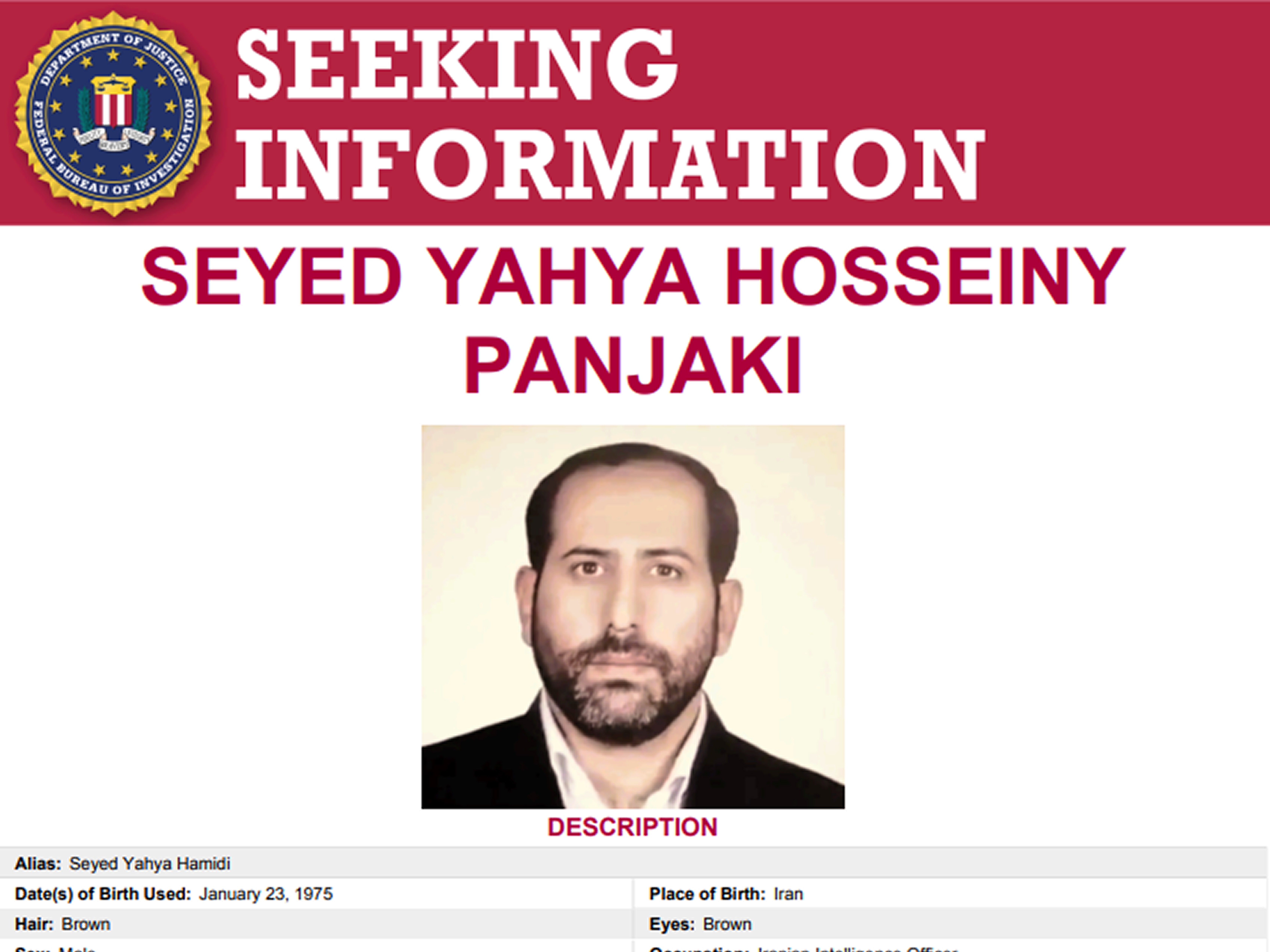
At the heart of the Islamic Republic’s long-standing campaign to silence critics abroad sits a little-known but powerful security official, whose identity and operational reach have until now remained obscured. This investigation identifies Seyed Yahya Hosseini Panjehki, also known by the alias Seyed Yahya Hamidi, as the deputy for internal security at the Ministry of Intelligence and the pivotal architect of the regime's extraterritorial operations. Internal sources describe Panjehki as a member of a new generation of intelligence managers personally trusted by the Supreme Leader, Ali Khamenei. His command extends over a sophisticated, hybrid structure that blends official diplomatic stations with organized crime networks to conduct assassinations, kidnappings, and sabotage across Europe and the Middle East, all while cultivating plausible deniability for Tehran. The mechanisms under his control reveal a systemic and institutionalized policy of transnational repression, implicating the highest levels of the state in acts of international terrorism.
Seyed Yahya Hosseini Panjehki was born on January 23, 1975, in Karaj. His academic background includes a doctorate in political science from Islamic Azad University of Tabriz, and he has authored articles published in security journals affiliated with the Iranian defense establishment. These works focus on topics such as "hybrid threats" and countering "Takfiri terrorism in cyberspace," reflecting a mindset attuned to asymmetric and non-confrontational warfare.
His rise within the Ministry of Intelligence coincided with a broader shift toward more aggressive foreign operations. Panjehki is credited with founding the "Martyr Soleimani Headquarters" within the ministry, a unit named in honor of the slain Quds Force commander Qassem Soleimani, which is dedicated to conducting overseas sabotage in cooperation with other Iranian intelligence agencies and the Islamic Revolutionary Guard Corps (IRGC). According to internal sources, Panjehki maintains a very close working relationship with the IRGC, having traveled frequently to Syria and Lebanon to collaborate with Hezbollah and the Quds Force. However, sources also indicate that senior IRGC officials view his personal ambitions with some wariness, suggesting bureaucratic friction even within the repressive apparatus.
A critical expansion of his portfolio came via direct order from Supreme Leader Ali Khamenei, who tasked Panjehki with an additional, high-priority role: heading the "Israel desk" at the Ministry of Intelligence. This dual authority has reportedly funneled greater financial and human resources toward offensive operations against Israeli interests. Panjehki succeeded Saeed Hashemi Moghadam, a veteran ministry official who was sanctioned by the European Union and Britain. While the position of deputy for internal security remains under EU sanctions, Panjehki's own name has not yet been added to that list, despite his alleged central role.
The system overseen by Panjehki operates through two parallel, often intertwined, channels designed to project power while obscuring the state's hand. The first is the official diplomatic pathway. Intelligence officers are stationed under diplomatic cover in the Islamic Republic's embassies and consulates abroad, leveraging the protections and logistical support of these missions.
The second, more clandestine channel involves dispatching military-intelligence operatives under commercial or non-official cover. These individuals are responsible for planning operations, but the execution is typically outsourced to proxy forces to leave no direct trail back to the Ministry of Intelligence. Notably, the ministry's primary contractors for these wetworks are not traditional intelligence assets but major international drug traffickers and criminal gangs. This partnership provides the regime with deniable, violent actors already embedded in transnational illicit networks, while the traffickers gain protection and patronage from the state.
This hybrid structure has been implicated in a series of operations across Europe:
The 2018 plot to bomb a rally of the opposition Mojahedin-e Khalq (MEK) organization in Paris, orchestrated by Assadollah Assadi, a diplomat stationed at the Iranian embassy in Austria. The plot was foiled, leading to Assadi's conviction, though he was later repatriated in a prisoner swap.
The assassination of Mohammad Reza Kolahi Samadi, an MEK member accused of involvement in a 1981 bombing in Iran, who was shot dead outside his home in Almere, Netherlands, in 2015.
The killing of Ahmad Mola Nissi, an Arab political activist, in The Hague in 2017.
The murders of journalist Saeed Karimian, manager of Gem TV, and Masoud Molavi, manager of the Telegram channel "Black Box," both in Istanbul.
Investigations and court documents from these cases have repeatedly pointed back to this same machinery. For instance, prior to Molavi's killing, then-Minister of Communications Mohammad Javad Azari-Jahromi, himself a named employee of the Ministry of Intelligence under an alias, reportedly called and threatened the journalist. A Turkish investigation led to the brief detention of an employee from the Iranian consulate, who was quickly released and returned to Iran. Court papers from the Molavi case referenced collaboration with two senior Ministry of Intelligence officials known only as "Hajji" and "Hajji Agha."
The proxy force repeatedly identified as a key instrument of this machinery is led by Naji Sharifi Zindashti, an internationally wanted drug trafficker based in Urmia, Iran. Operating under the cover of a charity foundation and in cooperation with the IRGC to transit drugs to Europe, Zindashti's gang is alleged to have carried out operations on behalf of Panjehki's department. His group is accused of kidnapping Habib Chaab (or Aslou), an Iranian-Swedish dissident, from Istanbul and delivering him to Iranian authorities. Chaab was executed in Iran in May 2023.
The collaboration between state intelligence and organized crime is not incidental but a foundational component of the system. It provides the regime with agile, deniable violence, while the state offers criminals sanctuary and resources. This symbiosis ensures a constant pool of personnel for high-risk operations that formal agents cannot undertake without exposing the state. Impunity is baked into the model: operatives under diplomatic cover enjoy protection, while non-state proxies are either untouchable in Iran or are exchanged in prisoner swaps, as was the case with Assadi. The ability to repatriate convicted operates sends a clear message to the ranks about institutional protection.
The activities directed from Panjehki's office are not a series of isolated incidents but represent a sustained, strategic campaign. The pattern reveals a clear modus operandi: meticulous planning by intelligence officers, often using state resources, followed by execution by criminal proxies, creating a buffer of plausible deniability. The targets are consistently political opponents, journalists, and activists deemed threatening by the regime, regardless of their location.
This investigation exposes more than the identity of one senior official. It lays bare a permanent, institutionalized structure for extraterritorial repression within the Islamic Republic. The integration of diplomatic missions, the formal intelligence apparatus, and transnational criminal networks under a single command demonstrates that cross-border assassination and abduction are not rogue operations but sanctioned state policy. The system is designed to evade accountability under international law while systematically eliminating opposition and spreading fear among diaspora communities. The enduring impunity it enjoys underscores a fundamental challenge to global security and the principle of sovereign non-interference, revealing a regime that operates a professional, state-sponsored terror enterprise from within its own security ministry.