

Behind the Curtain: The Hidden Illnesses and Succession Crisis of Iran's Aging Supreme Leader
A decades-long campaign of medical secrecy conceals the declining health of Khamenei.
|
Pars Barghandan
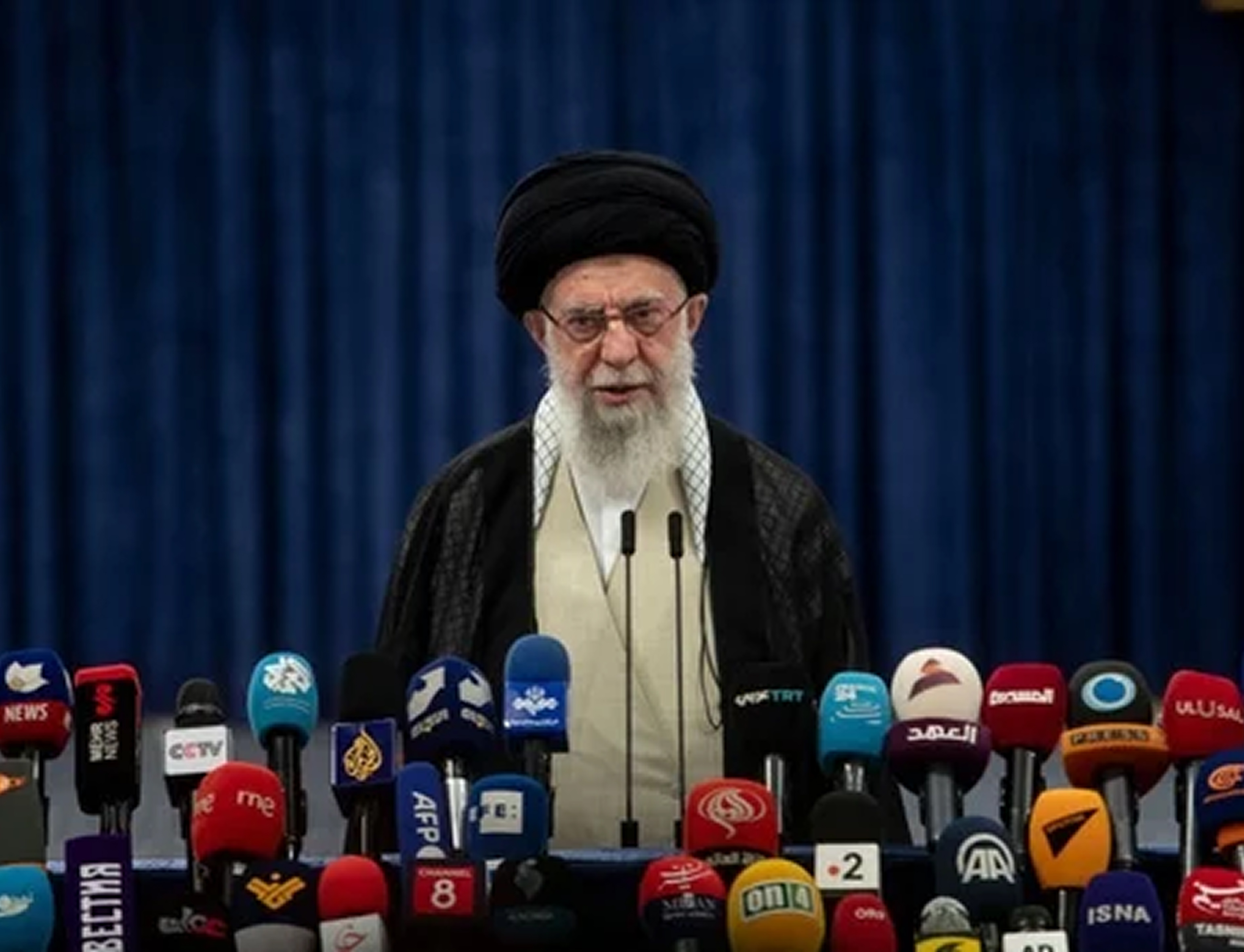
For more than three decades, the Islamic Republic has maintained an iron grip on information concerning the health of its Supreme Leader, Ali Khamenei. At 85 years old, Khamenei stands as one of the world's oldest serving heads of state, yet the regime presents him as vigorous and immortal, a symbolic pillar of a system built on the concept of absolute clerical rule. Behind this carefully constructed facade lies a far more fragile reality: a leader battling chronic heart disease concealed for 23 years, a history of emergency surgeries conducted in secrecy, and mounting evidence that his deteriorating condition has triggered an accelerating succession crisis within the highest echelons of power.
This investigation reveals the systematic suppression of medical information, the regime's use of propaganda to project an image of invincibility, and the political calculations driving the search for a successor in a country where popular anger has reached a boiling point. The evidence comes from leaked memoirs of former president Akbar Hashemi Rafsanjani, diplomatic cables, rare medical disclosures, eyewitness accounts, and analysis of Khamenei's public appearances over the past decade. What emerges is a portrait of a leadership consumed by the twin anxieties of mortality and popular revolt, a regime racing against time to manage a transition that could determine whether the Islamic Republic survives into the next generation.
The stakes extend far beyond one man's health. The succession process will determine whether the Islamic Republic maintains its theocratic structure or slides further into overt military dictatorship under the Islamic Revolutionary Guard Corps. It will shape Iran's regional ambitions, its posture toward the West, and the fate of millions of Iranians who have repeatedly taken to the streets demanding fundamental change. Yet the regime has ensured that this process unfolds almost entirely in darkness, shielded from public scrutiny and democratic accountability.
On June 27, 1981, Ali Khamenei stood at the pulpit of the Abu Dhar Mosque in Tehran, addressing congregants in his capacity as the city's Friday prayer leader and representative of Ayatollah Ruhollah Khomeini in the Supreme Defense Council. The Islamic Republic was barely two years old, convulsed by internal purges and the onset of war with Iraq. At 42 years old, Khamenei was a rising figure within the revolutionary clergy, known for his ideological fervor and organizational skills.
As he spoke, a tape recorder positioned on the lectern exploded. The bomb, attributed to the Mujahedin-e-Khalq opposition group, tore through Khamenei's right side with devastating force. His right shoulder was shattered, the arm and its nerve network paralyzed, ribs broken, and nerves and blood vessels in the armpit area severed. He was rushed to the hospital in critical condition, losing blood at a rate that should have killed him within minutes.
Dr. Hadi Monafi, then serving as Minister of Health, would later describe Khamenei's survival as medically miraculous. The surgical team worked for four hours, harvesting veins from his leg to reconstruct the destroyed vascular pathways in his upper body. Four days after the attack, Khamenei appeared on state television from his hospital bed, his voice steady despite the trauma. He deflected attention from his own condition, inquiring instead about his bodyguards and asking for paper and pen to communicate when he could not yet speak. When asked what worked, he replied that his tongue and mind were intact, and that was sufficient.
Less than three months later, with his right arm still largely paralyzed and his body bearing the deep scars of the assassination attempt, Khamenei was elected president of the Islamic Republic following the impeachment of Abolhassan Banisadr. The regime made a deliberate choice to present his disability as inconsequential, a badge of revolutionary sacrifice rather than a limitation. For the next eight years of his presidency, no detailed medical reports were released, and the official narrative emphasized his vigor and dedication.
The pattern was established: Khamenei's health would be a matter of state secrecy, and any suggestion of weakness would be suppressed.
In the late spring of 1998, Iran was entering a period of relative political openness under the reformist presidency of Mohammad Khatami. Civil society had expanded, newspapers proliferated, and debates about the nature of the Islamic Republic filled public discourse. Behind closed doors, however, a medical crisis was unfolding that would remain hidden from the Iranian people for more than two decades.
On May 30, 1998, Ali Akbar Natiq Nouri, then speaker of the Iranian parliament, informed Akbar Hashemi Rafsanjani, the former president and chairman of the Expediency Council, of troubling news: Supreme Leader Ali Khamenei was gravely ill. The diagnosis was cardiac, and doctors had ordered complete rest. Khamenei was scheduled to deliver a major speech at the annual commemoration of Ayatollah Khomeini's death on June 4, but his condition made this increasingly uncertain. Rafsanjani, who had been instrumental in elevating Khamenei to the leadership in 1989, immediately grasped the political implications.
The next day, Hassan Khomeini, grandson of the Islamic Republic's founder, contacted Rafsanjani and confirmed that Khamenei would be unable to speak at length. Rafsanjani was asked to lead the ceremony in his place. Concerned and without prior notice, Rafsanjani went to Khamenei's residence on June 1, only to learn that the Supreme Leader had traveled to Qom for complete rest on the advice of his doctors. Conversations with Mohammad Mohammadi Golpaygani, head of Khamenei's office, and other aides confirmed the gravity of the situation. The phrase used again and again was "complete rest," a euphemism for a leader too unwell to perform even basic duties.
On June 2, Rafsanjani met with Hassan Rouhani, then secretary of the Supreme National Security Council. Rouhani expressed alarm not only about Khamenei's health but about the broader decline in his popularity and public standing. Both men understood that a prolonged absence or visible frailty could destabilize the entire system.
When June 4 arrived, Khamenei appeared at the commemoration, supported by medication. Rafsanjani, who was present, observed the weakness etched into his face and noted the tremor in his voice. At the end of his brief remarks, Khamenei made a cryptic public reference to his condition, saying that friends and doctors would not permit him to speak further. The statement triggered immediate speculation in international media, which reported that Iran's Supreme Leader was suffering from an unknown illness.
Rafsanjani recorded in his diary that global outlets were focused on the mystery because the regime had not explicitly stated that it was heart disease. The regime's instinct, even in the face of obvious signs, was to obfuscate and deny. On June 6, Khamenei's office issued a terse statement through Golpaygani, describing the ailment as minor and assuring the public that there was no cause for concern. The nature of the illness was not disclosed.
Rafsanjani finally learned the full truth during a private meeting with Khamenei on June 14. The diagnosis was aortic stenosis, a narrowing of one of the heart's valves that restricts blood flow and can lead to sudden cardiac arrest if untreated. It is a serious, chronic condition requiring careful management. Khamenei was tired, visibly weakened, and unable to engage in extended discussion. Rafsanjani left the meeting saddened, aware that the man at the center of the Iranian state was far more fragile than anyone outside a small circle knew.
Analysis of Khamenei's public schedule in the months following the diagnosis reveals the severity of his condition. In April and May 1998, he had delivered seven public speeches. In June, this dropped to three. In July and August, just two. By October, he appeared to rally, giving eight speeches, but in the winter months, his public appearances again tailed off sharply.
The cardiac condition would remain a closely held secret for 23 years, until the publication of Rafsanjani's memoirs in 2021, three years after Rafsanjani's own death under circumstances his family has alleged were suspicious. During those years, the regime allowed speculation and rumor to swirl, occasionally deploying Khamenei in carefully stage-managed appearances to dispel talk of imminent demise, but never acknowledging the underlying reality.
Dr. Alireza Marandi, Khamenei's longtime personal physician, has been a key figure in managing this secrecy. In interviews, Marandi has repeatedly downplayed health concerns, emphasizing Khamenei's discipline and work ethic. In 2024, at the age of 85, Marandi's public advice to Khamenei was to eat more fruit and take daily walks. The suggestion that fruit consumption was the primary health concern for a man with documented chronic heart disease, a history of major surgeries, and advancing age strained credulity and underscored the regime's commitment to presenting an image utterly disconnected from reality.
Beyond the assassination injuries and concealed heart disease, Khamenei has undergone a series of surgical procedures that offer rare glimpses into the medical realities the regime works so hard to obscure.
In May 1991, Khamenei experienced severe abdominal pain that his doctors initially attributed to chronic stomach issues dating back to 1974. The pain intensified during the final days of Ramadan that year, culminating in an excruciating episode on the night of Eid al-Fitr. Medical examinations revealed the true cause: gallstones requiring surgical removal. On May 11, 1991, Khamenei underwent gallbladder surgery at Rajaei Heart Hospital in Tehran. Rafsanjani, still president at the time, was present in the operating room and recorded details of the procedure in his diary. The surgery, performed by Dr. Iraj Fazel using an electric scalpel to minimize bleeding, removed a gallbladder described as blackened and filled with stones.
Before the operation, Khamenei gave a brief televised interview explaining that he needed surgery but that there was no cause for alarm. He asked the public to pray for him, a gesture that framed the procedure as an ordinary event rather than a moment of vulnerability. The regime's media apparatus covered the surgery and recovery extensively, with officials visiting him in the hospital and offering reassurances. The message was clear: the system was stable, and the leader was in control, even from a hospital bed.
More than two decades later, in September 2014, the regime adopted a more proactive media strategy. On September 8, shortly before undergoing prostate surgery, Khamenei again spoke to a single state television reporter. He explained that he was heading to the hospital for a routine operation and requested prayers, but insisted there was no need for worry. The surgery was performed at a public hospital under local anesthesia, a detail emphasized to project an image of transparency and ordinariness.
After the procedure, the regime released photographs and video of Khamenei in his hospital bed, meeting with visiting officials including President Hassan Rouhani. The images were unprecedented in their intimacy, showing the Supreme Leader in a vulnerable state but surrounded by the machinery of power. The decision to publicize the surgery and recovery was reportedly made at Khamenei's insistence, a recognition that in an era of social media and instant communication, attempting to hide such an event would only fuel more damaging speculation.
The day after the surgery, Khamenei participated in a 10-minute televised interview, far longer than the brief pre-surgery statement. Rather than focusing on his health, he used the platform to attack the United States over its response to the Islamic State in Iraq and Syria. He mocked American officials for claiming they did not want Iranian involvement in the coalition against ISIS, revealing that the U.S. had in fact requested Iranian participation through diplomatic channels and that Iran had refused. It was a calculated performance, designed to demonstrate that even in the immediate aftermath of surgery, he retained the clarity and combativeness that defined his public persona.
The prostate surgery also addressed persistent rumors that Khamenei was suffering from advanced prostate cancer. While the regime confirmed the surgery, it characterized the condition as a benign enlargement common in men of his age. Dr. Marandi described it as a routine procedure that had been recommended by specialists and delayed only until an opportune moment. No pathology reports were ever made public, and the cancer rumors, while never confirmed, have continued to circulate.
In September 2022, The New York Times, citing four informed sources, reported that Khamenei had undergone emergency surgery for an intestinal obstruction after experiencing severe abdominal pain and high fever. The surgery was performed at a makeshift clinic in his residence and office complex, and his condition was described as critical. Doctors were concerned that he was too weak to sit up in bed, and he remained under round-the-clock monitoring.
Iranian state media initially offered no comment, but within days, Khamenei appeared in public at a religious ceremony marking the end of a 40-day mourning period. State television broadcast footage of him walking without assistance, addressing the crowd, and receiving mourners. The message was unmistakable: reports of grave illness were exaggerated, and the Supreme Leader remained in command. Yet the speed and timing of the appearance, combined with the credibility of the original reporting, suggested a regime scrambling to contain a narrative that threatened to spiral out of control.
During a visit to the holy city of Mashhad around the time of the intestinal surgery, Khamenei reportedly told confidants that it might be his last such trip given his age. The statement, relayed by sources to The New York Times, carried an air of resignation, a private acknowledgment of mortality that stood in stark contrast to the public bravado. Since that visit, Khamenei has not officially returned to Mashhad, sending his son Mojtaba in his place to perform religious rituals, a substitution that has not gone unnoticed.
On January 8, 2017, Akbar Hashemi Rafsanjani, the man who had been both Khamenei's kingmaker and later his rival, died suddenly after suffering a heart attack while swimming. His death, officially attributed to natural causes, has been the subject of intense speculation, with family members alleging assassination. Rafsanjani's body was taken to Jamaran, the former residence of Ayatollah Khomeini, where it lay in state for public mourning.
Khamenei arrived to lead the funeral prayers. As he stood over the body of his former ally and longtime adversary, the ceremony was broadcast live on state television. After completing the prayers, Khamenei was immediately surrounded by his bodyguards and aides. Two individuals, later identified as medical personnel, approached him and reached into his robes, placing their hands on his chest. A third figure, widely believed to be Vahid Haqqanian, a senior aide, directed the operation with hand signals. The individuals appeared to be checking a device implanted under Khamenei's clothing, likely in the chest area near the heart.
Video analysis of the incident revealed a moment of visible concern. The two medical personnel examined the device, then nodded to Haqqanian, signaling that everything was functioning properly. When Khamenei stood to leave, one of them attempted to check the device again, but Khamenei, aware that cameras were recording, waved the hand away.
The episode ignited speculation about the nature of the device. Security and medical analysts concluded that it was most likely a wireless cardiac monitoring system, a technology that allows real-time tracking of heart function and can alert medical teams to arrhythmias or other dangerous changes. Such devices are typically implanted under the skin in the chest and communicate with external receivers via Bluetooth or similar wireless protocols. They represent the cutting edge of remote cardiac care and are reserved for patients with serious, life-threatening heart conditions.
During Rafsanjani's funeral, the Iranian authorities had, as a security precaution, shut down all mobile and internet communications in the immediate area, a standard measure during major public events to prevent coordinated attacks. If Khamenei's cardiac monitor relied on wireless communication, the signal disruption could have severed the link between the device and the external monitoring system, triggering an alarm condition. The rapid intervention by medical personnel, checking the device and ensuring it was functioning, fits this scenario. For a man with documented chronic heart disease and a history of aortic stenosis, the failure of a monitoring system, even temporarily, could have catastrophic consequences.
Regime-affiliated media outlets later attempted to downplay the incident, suggesting that the individuals were merely adjusting Khamenei's microphone or checking his robes. These explanations were widely dismissed as implausible given the clear nature of the physical examination visible in the footage.
A similar moment occurred during the COVID-19 pandemic, when Khamenei appeared in a video message thanking healthcare workers. Seated alone in what appeared to be a study, he was filmed with a small button or device visible on the armrest of his chair, within easy reach of his left hand. The device, positioned for immediate access, bore the hallmarks of a medical alert system, possibly connected to the implanted cardiac monitor. Opposition media seized on the image, speculating about the Supreme Leader's true health status, but the regime offered no clarification.
These incidents, while brief and often dismissed by state media, provide rare visual evidence of the medical infrastructure that surrounds Khamenei. They are reminders that behind the facade of strength and permanence lies a man dependent on advanced medical technology to sustain his life.
The Soviet Union under Stalin and his successors was notorious for the secrecy surrounding the health of its leaders, a tradition that extended to the final years of the USSR. In the Islamic Republic, a similar culture has taken root, in which the health of the Supreme Leader is treated as a state secret, shielded from public knowledge and manipulated for political purposes.
The justification offered by regime officials is that public knowledge of Khamenei's illnesses would destabilize the system, fuel opposition hopes, and invite foreign adversaries to act more aggressively. This logic, however, also serves the interests of an inner circle that derives its power and legitimacy from proximity to Khamenei. His mortality is a threat not only to the abstract idea of stability but to the concrete positions, wealth, and influence of those who have built their careers around him.
Dr. Alireza Marandi, Khamenei's personal physician for decades, occupies a unique position of trust. His public statements, carefully calibrated to reassure without revealing, serve as the regime's primary tool for managing health-related speculation. In April 2024, Marandi appeared on state media to discuss Khamenei's condition. He noted that the Supreme Leader, at 85, was in excellent health. His main recommendation, Marandi said, was for Khamenei to consume more fruit. He described a leader who worked long hours, studying and writing, preparing meticulously for speeches, and engaging deeply with the minutiae of governance. The only concession to age was a suggestion that Khamenei walk more often to maintain circulation, given the amount of time he spent at his desk.
The absurdity of framing fruit consumption as the primary health issue for a man with chronic heart disease, a history of major surgeries, advanced age, and visibly declining physical condition was not lost on observers. It was propaganda in its purest form, a message designed not to inform but to shape perception, to create an image of vitality that bore no resemblance to the documented medical reality.
Yet the regime's control over medical information is far from absolute. The publication of Rafsanjani's memoirs in 2021, three years after his death, provided an extraordinary window into the concealed history of Khamenei's heart disease. The diaries, which covered events from 1998, included detailed accounts of conversations with senior officials, descriptions of Khamenei's physical state, and revelations about the extent to which even high-ranking figures had been kept in the dark. The regime could not suppress the publication without drawing even more attention to the contents, and so the information entered the public domain, fundamentally altering the historical record.
Rafsanjani himself, who died under circumstances that his family insists were suspicious, had emerged as a critic of Khamenei in his final years. In 2016, he publicly stated that he had made a mistake in choosing Khamenei as Supreme Leader, a remarkable admission from the man most responsible for that choice. According to political analyst Mehdi Mahdavi Azad, pressures on Rafsanjani intensified in the months before his death. His daughters reported that he received warnings of a threat to his life. On the day Rafsanjani died, Khamenei delivered a speech that appeared to criticize him, using wordplay on his first name, Akbar, which means "greater" in Persian, to suggest that a misguided brother could become the greater Satan misleading the people.
An official investigation led by Ali Shamkhani, then secretary of the Supreme National Security Council, concluded that Rafsanjani's death was natural and without ambiguity. Yet the family has cited numerous irregularities: delays in transporting him to the hospital, lack of access to CCTV footage from the swimming pool and his office, the absence of a post-mortem examination despite requests, a rushed burial, and the disappearance of his diaries and will from his office safe shortly after his death. According to the family, the official investigation report stated that Rafsanjani's body contained radiation levels ten times the safe limit, a finding never fully explained.
Whether or not Rafsanjani was assassinated, his death removed one of the last figures within the establishment willing to speak openly about Khamenei's limitations and mistakes. It also ensured that the next phase of the succession struggle would unfold without the moderating influence of a figure who had witnessed both the Islamic Revolution and the consolidation of absolute clerical rule.
The most visible sign of Khamenei's decline is not found in leaked medical reports or hidden devices, but in his public appearances. For decades, Khamenei was known as a skilled orator, capable of speaking for extended periods without notes, modulating his voice for effect, and projecting authority even when delivering the harshest condemnations of enemies foreign and domestic. That version of Khamenei is gone.
In recent years, his speeches have become noticeably shorter, his voice tremulous, and his breathing labored. During a speech before the 2024 presidential election, footage showed him struggling to complete sentences, pausing frequently for breath, and occasionally losing the thread of his argument. His face, once animated, appears drawn and weary, the signs of age and illness no longer possible to conceal through makeup or camera angles.
State media has attempted to manage these appearances by limiting their duration, providing edited highlights rather than full recordings, and staging events in controlled environments where lighting and camera placement can minimize visible frailty. Yet even these efforts cannot entirely mask the reality that Khamenei, at 85, is no longer the vigorous figure of the past.
The contrast is particularly stark when compared to earlier moments in his tenure. During the 2009 protests following the disputed re-election of Mahmoud Ahmadinejad, Khamenei delivered a forceful sermon at Friday prayers, drawing a red line and warning demonstrators that continued unrest would be met with severe consequences. His voice was firm, his demeanor unyielding. That speech effectively ended the Green Movement's hope of overturning the election results. A decade later, during the 2019 protests sparked by fuel price hikes, Khamenei again issued a direct command, telling security forces to do whatever was necessary to end the demonstrations. According to Reuters, he said, "The Islamic Republic is in danger. Do whatever it takes to end it. This is my order."
But the manner of delivery has changed. Where once he spoke with the confidence of a leader certain of his power and longevity, he now speaks as a man aware of time running short. His instructions have become blunter, more urgent, reflecting not strength but anxiety.
The regime's attempt to maintain the illusion of vitality has included the release of photographs showing Khamenei engaged in activities meant to convey health and vigor. In past years, state media circulated images of him hiking in mountainous terrain, a direct refutation of rumors about illness. These images were clearly staged, designed to send a message that the Supreme Leader was not only alive but physically robust. In recent years, such images have become rarer, replaced by carefully framed shots of Khamenei meeting officials, reviewing documents, or delivering speeches from a seated position.
The decline in Khamenei's speaking ability and physical presence has coincided with the regime's increasing reliance on violence to maintain control. The protests of November 2019, known as Bloody Aban or Bloody November, resulted in the deaths of an estimated 1,500 demonstrators, shot down by security forces acting on Khamenei's orders. The regime imposed a week-long internet blackout to prevent images of the massacre from reaching the outside world. Three years later, the death of Mahsa Jina Amini in the custody of the morality police triggered the Woman, Life, Freedom uprising, in which over 500 protesters were killed and more than 22,000 arrested.
In both cases, the regime's response was defined by a recognition that it could no longer rely on popular legitimacy or even passive acquiescence. The bond between rulers and ruled, if it ever truly existed, had been severed. What remained was coercion, surveillance, and the deployment of state violence on a scale unprecedented since the early years of the revolution. And at the apex of this system stood a leader visibly diminished by age, clinging to power through the instruments of repression and the loyalty of the Revolutionary Guards.
The question of who will succeed Ali Khamenei has haunted the Islamic Republic for years. It is a question that implicates not only the structure of the regime but its very survival, and it is a question that cannot be discussed openly without risking reprisal.
Under the Iranian constitution, the Assembly of Experts, an 88-member body of senior clerics elected every eight years, holds the responsibility for selecting the Supreme Leader. The assembly also has, in theory, the power to supervise and even dismiss the leader if he becomes incapacitated or fails to meet the required qualifications. In practice, the assembly has functioned as a ceremonial body, affirming rather than deciding, and exercising no meaningful oversight over Khamenei.
Within the Assembly of Experts, a special commission, often referred to as the Commission of Articles 107 and 109, is tasked with investigating and evaluating potential successors. The commission, composed of just three members, operates in total secrecy. Its deliberations are not made public, and only the Supreme Leader himself is privy to its findings. This structure ensures that Khamenei retains decisive influence over his own succession, a paradox that reflects the fundamentally authoritarian nature of the system.
The secrecy surrounding the commission's work is justified on the grounds that naming a successor in advance would create a rival power center, undermining the current leader's authority. Yet it also means that the transition process, when it occurs, will be opaque, vulnerable to manipulation, and potentially destabilizing. Article 111 of the constitution states that if the leader dies or becomes incapacitated, a three-member interim council, consisting of the president, the head of the judiciary, and a jurist from the Guardian Council elected by the Expediency Council, will assume leadership duties until the assembly selects a permanent successor. The constitution does not specify a deadline for this selection, raising the possibility of a prolonged interregnum.
For years, analysts and insiders have speculated that Mojtaba Khamenei, the Supreme Leader's second son, was being groomed for succession. Mojtaba, a mid-ranking cleric, has operated behind the scenes since the late 1990s, reportedly managing an informal power network within his father's office that includes intelligence officials, military commanders, and senior administrators. According to Mohammad Sarafraz, a former insider, Mojtaba assembled this group in 1997 with the initial mission of countering the reformist wave that accompanied Mohammad Khatami's presidency. Over time, the group evolved into a training ground for Mojtaba, allowing him to practice political management on a smaller scale in preparation for larger responsibilities.
Mojtaba's close ties to the Islamic Revolutionary Guard Corps, his involvement in suppressing the 2009 and 2022 protests, and his visibility in his father's inner circle all lent credence to the theory that a quasi-dynastic succession was being planned. Yet such a transition would violate both the letter and spirit of the Islamic Republic's founding ideology. The Supreme Leader is supposed to be a qualified jurist, a marja, or source of emulation, whose religious and scholarly credentials justify his authority. Mojtaba lacks the theological standing required for the position, and installing him would transform the leadership from a religious office into a hereditary monarchy, a move that would alienate significant portions of the clerical establishment and the public.
In June 2025, The New York Times reported, citing senior Iranian officials, that Khamenei, operating from an underground bunker amid escalating conflict with Israel, had selected three senior clerics as potential successors, and that Mojtaba was not among them. The report suggested that Khamenei had concluded that appointing his son would provoke internal strife and legitimacy crises the regime could not afford. The identities of the three clerics were not disclosed, but the exclusion of Mojtaba was interpreted as a deliberate signal that dynastic succession was off the table.
Another figure who has been mentioned is Alireza Arafi, the director of Iran's seminary system and a member of the Guardian Council. Arafi holds the necessary religious credentials and is well-connected within the clerical establishment. He is seen as a hardliner committed to the principles of the Islamic Revolution and the doctrine of absolute Velayat-e Faqih, the guardianship of the Islamic jurist that grants the Supreme Leader unparalleled authority. Arafi's selection would represent continuity, a signal that the regime intends to preserve its theocratic structure.
Yet continuity is not the only consideration. Hassan Khomeini, grandson of the Islamic Republic's founder, has also emerged as a potential candidate, particularly in the context of the current conflict with Israel and the United States. Hassan Khomeini, while associated with the reformist wing of the establishment, carries the symbolic weight of his grandfather's legacy. His selection would be a gesture toward reconciliation, both domestically and internationally, and might be perceived as less threatening than a hardline successor. However, his reformist leanings make him unacceptable to the Revolutionary Guards and conservative factions that dominate the current power structure.
The role of the Revolutionary Guards in the succession process cannot be overstated. Over the past two decades, the IRGC has evolved from a military organization into a sprawling economic and political empire, controlling vast sectors of the Iranian economy, running sanctions-busting networks, and maintaining parallel intelligence and security structures. The Guards are the regime's ultimate guarantor, the force that crushes dissent and defends the system from external threats. They will not accept a successor who threatens their interests or questions their role.
Analysts at institutions such as the Middle East Institute and the International Crisis Group have warned that the next Supreme Leader, whoever he is, will be weaker than Khamenei, both in terms of personal authority and religious credentials. He will be more dependent on the Revolutionary Guards for legitimacy and survival, and the IRGC will leverage this dependence to expand its influence further. In this scenario, the Islamic Republic would transition from a theocracy with a strong military component into a military dictatorship with a clerical figurehead, a transformation that would have profound implications for Iran's future.
What complicates every calculation about succession is the question of popular sentiment. In November 2019, Iranians took to the streets to protest a sudden increase in fuel prices. The demonstrations quickly escalated into a broader uprising against the regime, with protesters chanting slogans that called for the overthrow of the entire system. Khamenei's order to crush the protests was carried out with brutal efficiency: an estimated 1,500 people were killed in a matter of days, thousands more arrested, and the internet shut down to prevent the world from witnessing the massacre.
Three years later, in September 2022, the death of Mahsa Jina Amini, a 22-year-old Kurdish woman detained by the morality police for improperly wearing her hijab, ignited another wave of protests. This time, the movement was explicitly feminist, anti-authoritarian, and uninterested in reforming the system. The rallying cry, "Woman, Life, Freedom," echoed across Iran, and for months, demonstrators tore down posters of Khamenei and Khomeini, burned hijabs, and confronted security forces with a level of defiance that shook the regime to its core. More than 500 protesters were killed, over 22,000 detained, and many subjected to torture and show trials. Yet the protests revealed something the regime could no longer ignore: large segments of the Iranian population, particularly the young, no longer viewed the Islamic Republic as legitimate or reformable. They wanted it gone.
The regime's paranoia about Khamenei's health is inseparable from this reality. Every rumor of his death, every speculation about his successor, becomes a moment of potential instability, an opportunity for the opposition to mobilize. This is why the regime invests so heavily in projecting an image of Khamenei as vigorous and immortal, and why it responds so aggressively to any challenge to that image. But the strategy is failing. Iranians have learned to read between the lines, to recognize propaganda for what it is, and to understand that the system's survival depends on the life of an 85-year-old man with chronic health problems.
When Rafsanjani died in 2017, millions of Iranians attended his funeral, not out of loyalty to the regime but because he had, in his final years, become a symbol of opposition to Khamenei's authoritarianism. When Ebrahim Raisi, Khamenei's protege and the sitting president, died in a helicopter crash in May 2024, the public response was muted. There were no tears, no mass mourning, only a grim satisfaction that one of the architects of the 1988 prison massacres had met an abrupt end. Raisi's death, which many Iranians privately celebrated, was a preview of what might happen when Khamenei dies: not a moment of national grief but a moment of reckoning.
The doctrine that underpins Khamenei's authority is known as Velayat-e Motlaqaye Faqih, the absolute guardianship of the Islamic jurist. It is a concept developed by Ayatollah Ruhollah Khomeini in the years leading up to the 1979 revolution and enshrined in the constitution of the Islamic Republic. In its original formulation, Velayat-e Faqih granted the Supreme Leader authority over religious and legal matters, ensuring that the new state adhered to Islamic principles. But in 1988, facing challenges to his authority, Khomeini expanded the concept, declaring that the guardian jurist's power was absolute, extending even to the temporary suspension of essential religious rites such as the pilgrimage to Mecca. He argued that obedience to the jurist was as incumbent on believers as the performance of prayer, a formulation that rendered the leader's will superior to all other considerations.
Khamenei has taken this doctrine to its logical extreme. Over the course of his 36-year tenure, he has systematically eliminated rivals, marginalized independent power centers, and concentrated authority in his own hands to a degree that exceeds even Khomeini's rule. He appoints the heads of the judiciary, the military, the Revolutionary Guards, and the state broadcasting apparatus. He names half the members of the Guardian Council, which vets candidates for elected office, ensuring that only loyalists can run. Through the Expediency Council, he arbitrates disputes between branches of government. And through the bonyads, vast religious foundations that control significant portions of the Iranian economy, he wields economic power that extends into every sector.
This system of absolute rule has no mechanism for peaceful transition. It is designed to perpetuate the leader's authority, not to replace him. The Assembly of Experts, theoretically empowered to select and supervise the leader, is in practice controlled by the leader himself through his influence over the Guardian Council, which vets its candidates. The result is a closed loop, a system in which the leader selects his own electors and ensures that only those loyal to the principle of absolute rule can participate in the succession process.
The problem is that absolute rule is inherently brittle. It cannot accommodate dissent, adapt to changing circumstances, or tolerate the existence of alternative power centers. It demands total loyalty and punishes any deviation. And when the leader at the center of this system is visibly declining, the entire structure becomes vulnerable.
The greatest mystery is not what the regime says about Khamenei's health, but what it refuses to say. The gaps in the narrative, the evasions, the sudden public appearances timed to dispel rumors, the medical interventions acknowledged only when secrecy is no longer tenable, all speak to a leadership consumed by the fear of what will happen when the man at the center can no longer perform his role.
The Islamic Republic has survived external wars, internal revolts, crippling sanctions, and the assassination of key figures. It has adapted, evolved, and endured. But it has never faced the succession of a Supreme Leader as powerful and as central to the system as Khamenei. Khomeini's death in 1989 occurred in a different context, when the regime was younger, its legitimacy less contested, and the Assembly of Experts still retained some semblance of independence. The transition to Khamenei, while contested behind closed doors, unfolded without major violence or instability.
The next transition will be different. The Revolutionary Guards are more powerful, the clerical establishment more divided, the public more alienated, and the regional environment more volatile. The absence of an obvious successor with the stature and authority to command loyalty across the system means that the process will be contested, and the outcome uncertain.
And so the regime does what it has always done: it controls information, it suppresses dissent, it projects strength where there is weakness, and it buys time. But time, in the end, is the one resource that cannot be controlled. The devices implanted in Khamenei's chest, the round-the-clock medical monitoring, the propaganda campaigns, and the brutal suppression of protest are all measures designed to delay the inevitable. They cannot prevent it.
The Islamic Republic is now in a race against mortality, and the only certainty is that mortality always wins.