



The Invisible Hand: Inside Iran's Secret Succession Plot and the Rise of Mojtaba Khamenei
A clandestine power structure operates behind closed doors, engineering elections and suppressing dissent across Iran.
|
Pars Barghandan
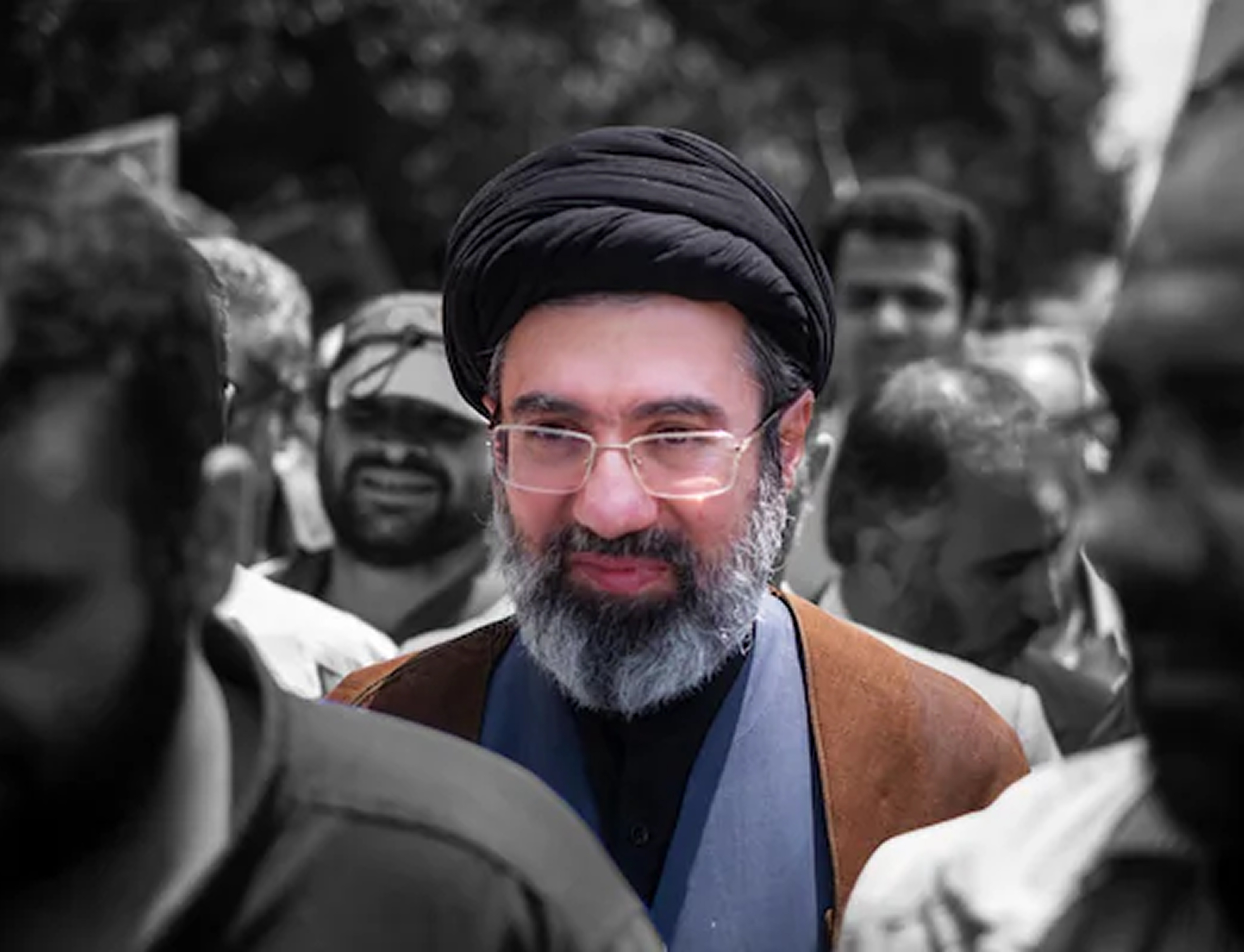
For nearly two decades, a shadow government has operated at the heart of the Islamic Republic, making critical decisions about Iran's political future while the aging Supreme Leader Ali Khamenei, now 86 years old, faces his own mortality. At the center of this clandestine apparatus sits Mojtaba Khamenei, the second son of the supreme leader, a figure who wields extraordinary power without holding any official government position. Through leaked testimony from former regime insiders, financial records, and diplomatic cables, an investigation reveals how this unelected power broker has systematically positioned himself as the likely successor to his father, orchestrating election fraud, commanding brutal crackdowns on protesters, and controlling vast segments of Iran's economy worth tens of billions of dollars. The succession question has become existential for the Islamic Republic as internal documents suggest the Assembly of Experts may have already secretly selected Mojtaba as the next supreme leader, despite constitutional provisions and public resistance to hereditary rule. This investigation exposes the architecture of a hidden power structure that has determined Iran's trajectory for years, the suspicious deaths of potential rival candidates, and the mechanisms through which a theocratic system may transform into a de facto monarchy.
Mojtaba Khamenei was born on September 8, 1969, in Mashhad, the second of six children fathered by Ali Khamenei. Among his siblings, Mojtaba bears the strongest physical and ideological resemblance to his father, a similarity that regime insiders have cultivated for decades. Unlike his brothers, who maintain lower profiles, Mojtaba has operated as the supreme leader's most trusted confidant and enforcer, wielding influence that extends deep into Iran's security apparatus, judiciary, media infrastructure, and electoral system.
According to testimony from Mohammad Sarafraz, who served as head of Islamic Republic of Iran Broadcasting from 2014 to 2016, Mojtaba has participated in secret weekly decision-making sessions for over 17 years. These clandestine meetings, involving only five participants, determined Iran's most critical political outcomes including presidential and parliamentary elections, candidate selections, vote manipulation strategies, and security crackdowns. The other permanent participants included Hossein Taeb, who served as head of the Islamic Revolutionary Guard Corps Intelligence Organization until 2022, and Hossein Fedaee, head of the supreme leader's inspection office. Sarafraz revealed that Mojtaba served as the conduit between this shadow council and his father, presenting decisions for final approval and ensuring implementation across government institutions.
The network surrounding Mojtaba traces back to his service in the Habib Battalion during the Iran-Iraq War in the late 1980s. Fellow battalion members later rose to command Iran's most powerful security organizations. Hossein Taeb, who led the Basij paramilitary force and later the IRGC Intelligence Organization, became Mojtaba's closest operational partner. Other battalion veterans include Hossein Nejat, commander of the IRGC's Sarallah Headquarters responsible for Tehran's security, and connections to Mohammad Bagher Ghalibaf, a former IRGC commander who now serves as parliament speaker. This military-intelligence network has provided Mojtaba with the coercive apparatus necessary to suppress dissent and manipulate political processes.
Despite decades of influence, Mojtaba remained virtually unknown to ordinary Iranians until the 2005 presidential election. That year, reformist cleric Mehdi Karroubi publicly accused him of electoral interference after finishing third in the first round of voting. In an open letter to the supreme leader, Karroubi described how vote counts suddenly shifted after he initially led, suggesting coordination by "centers of power and influential individuals." He specifically referenced interference by those "in the circle of ruling clerics," an indirect but unmistakable reference to Mojtaba's involvement. When critics subsequently referred to Mojtaba as "master's son," Ali Khamenei responded pointedly that "he is a master himself, not a master's son," effectively confirming his son's authority within the system.
The 2005 election brought Mahmoud Ahmadinejad, a relatively obscure IRGC veteran, to power through what many observers characterized as systematic fraud. Leaked diplomatic cables later revealed that Mojtaba initially supported Mohammad Bagher Ghalibaf before switching his backing to Ahmadinejad at the last moment, securing the hardliner's unexpected victory. This episode established Mojtaba as the regime's principal election engineer and demonstrated his ability to override other political factions.
The 2009 presidential election marked Mojtaba's most consequential and brutal intervention in Iranian politics. When widespread protests erupted after authorities declared Ahmadinejad the winner over reformist candidates Mir-Hossein Mousavi and Mehdi Karroubi, Mojtaba took direct command of the suppression campaign. According to leaked IRGC intelligence reports, he personally coordinated the Basij militia's violent crackdown and criticized security forces for insufficient preparedness in crushing street demonstrations. National security meetings were relocated from their normal venues to the Office of the Supreme Leader, where Mojtaba supervised operations.
The Green Movement protests, named for Mousavi's campaign color, represented the most serious domestic challenge to the Islamic Republic since the revolution. Hundreds of thousands took to Tehran's streets chanting "Where is my vote?" The regime's response was ferocious. A list compiled by independent observers documents 110 named victims killed during the protests, though Mohammad Sarafraz later stated the actual death toll ranged between 300 and 1,500. Among the dead was Neda Agha-Soltan, a 26-year-old philosophy student shot in the chest by Basij forces on June 20, 2009. Cellphone footage of her death, broadcast globally within hours, became the movement's most powerful symbol.
Protesters directed their rage not only at Ahmadinejad but explicitly at Mojtaba himself. Demonstrators chanted "Mojtaba, we hope you die, so you never see the supreme leadership," revealing public awareness of his succession ambitions and his role in orchestrating the fraud and violence. The slogan encapsulated both popular knowledge of his hidden power and fierce opposition to hereditary rule.
The U.S. Treasury Department took notice of Mojtaba's activities. In November 2019, the department imposed sanctions on him under Executive Order 13876, which targets the supreme leader's office and associated individuals. The Treasury's designation statement explained that "the Supreme Leader has delegated a part of his leadership responsibilities to Mojtaba Khamenei" and noted his close collaboration with commanders of the IRGC's Quds Force and the Basij Resistance Force. The designation emphasized that Mojtaba represented the supreme leader "in an official capacity despite never being elected or appointed to a government position aside from work in the office of his father." This international recognition confirmed what Iranians had long understood: real power flowed through channels invisible in the formal government structure.
Mojtaba's influence extends comprehensively across Iran's information apparatus. Mohammad Sarafraz's testimony provides detailed insight into how the supreme leader's son controls state broadcasting. When Sarafraz was appointed head of IRIB in 2014, he quickly discovered that editorial decisions and financial operations required approval not just from the supreme leader but specifically from Mojtaba and his security apparatus allies. Sarafraz described systematic interference by Mojtaba and Hossein Taeb aimed at controlling the broadcaster's financial resources and editorial content.
By 2016, the pressure became unbearable. Sarafraz resigned, though Ali Khamenei refused to accept the resignation and instead dismissed him. In his memoir, Sarafraz recounted meeting with Taeb after his removal and sarcastically thanking him: "Please thank Mr. Hossein Mohammadi and Haj Mojtaba for me, because you arranged it for me to leave IRIB. This deserves my thanks because you ended my problems." The European Union subsequently sanctioned Sarafraz for his role in broadcasting forced confessions of political prisoners, though Sarafraz himself later exposed the corruption and manipulation that characterized the system he once served.
IRIB's importance cannot be overstated in the Islamic Republic's control architecture. The state broadcasting monopoly shapes public perception, broadcasts forced confessions, coordinates propaganda campaigns, and serves as a primary tool for suppressing dissent. Mojtaba's control over this apparatus gave him the ability to shape narratives around elections, protests, and succession itself. His network determined which candidates received favorable coverage, how opposition figures were portrayed, and which events received publicity or were buried in silence.
Beyond media, Mojtaba's economic power derives from the vast financial empire controlled by his father. Three major foundations dominate Iran's economy, together controlling an estimated 60 to 65 percent of the country's GDP. The Execution of Imam Khomeini's Order, known as Setad, manages assets worth approximately $95 billion according to a 2013 Reuters investigation, though U.S. officials have suggested the Khamenei family's total holdings may exceed $200 billion. Astan Quds Razavi, ostensibly a charitable foundation managing the Imam Reza shrine in Mashhad, controls real estate, construction, agriculture, energy, telecommunications, and financial services worth an estimated $150 billion or more. The Mostazafan Foundation, with assets reported at 56 trillion rials in 2016, operates hundreds of companies across multiple sectors.
Mojtaba personally controls significant wealth within this empire. Reports indicate he possesses at least $300 million in gold and diamonds, with an additional $1 billion obtained through special taxes on oil sales to China and India. He has seized land near Mashhad for personal development projects, and Mohammad Bagher Ghalibaf, as Tehran's mayor, reportedly gifted him thousands of hectares in the capital's Abbas Abad district. Mojtaba holds stakes in Ayandeh Bank, which has assets worth approximately $380 million. His father-in-law, Gholam-Ali Haddad-Adel, a close Khamenei confidant, resides in foundation properties worth approximately $100 million while paying far below market rates. The family's accumulation of wealth stands in stark contrast to the poverty experienced by millions of ordinary Iranians struggling under economic sanctions, mismanagement, and corruption.
Senior IRGC commanders have publicly acknowledged Mojtaba's financial support for military programs. Amir Ali Hajizadeh, commander of the IRGC's Aerospace Force, praised "the help of Haj Agha Mojtaba's office in overcoming the problems of the air force, both in the supply sector and in obtaining better results," specifically referencing support for Iran's missile and drone development programs. This testimony reveals how Mojtaba functions not merely as a political operator but as a resource allocator within the security state, directing funds from the supreme leader's vast holdings to prioritized military projects.
The constitutional framework governing succession in the Islamic Republic creates the appearance of deliberative process while ensuring the supreme leader controls the outcome. According to the constitution, the Assembly of Experts, an 88-member body of clerics, selects the supreme leader. Candidates for the Assembly must be approved by the Guardian Council, whose members are either appointed directly by the supreme leader or indirectly through his control of the judiciary. This circular structure guarantees that only loyalists reach positions where they might influence succession.
Within the Assembly operates a secret committee, reportedly consisting of just three members, tasked with identifying and vetting potential successors. This Investigative Committee reports exclusively to the current supreme leader, not even sharing information with the Assembly's chairman. The committee's composition, deliberations, and candidate evaluations remain entirely confidential. In 2016, former president Akbar Hashemi Rafsanjani confirmed the committee had "secretly identified two individuals" as potential candidates after interviewing "several hundred individuals," though he declined to name them. Assembly member Mohsen Araki stated in 2019 that the committee would not publicly declare a successor-designate "due to previous unsuccessful experiences," referring to the 1980s dismissal of Grand Ayatollah Hossein-Ali Montazeri, who was removed as designated successor after criticizing regime policies.
Khamenei himself addressed succession obliquely during a November 7, 2024 appearance before the Assembly. Published on his official website, his remarks emphasized continuity: "There will be no pause or interruption in the system. The Assembly of Experts exists to be able to designate a successor. Therefore, this succession will continue with full strength, power, and ability. If the current Leader were to be absent, the Assembly of Experts would immediately take action to select a successor." The statement represented his most direct public discussion of succession, signaling urgency as he entered his mid-eighties.
On November 16, 2024, Iran International, an independent Persian-language outlet with a track record of major revelations, reported that the Assembly of Experts had secretly selected Mojtaba as the designated successor during a September 26 meeting. According to the report, 60 Assembly members convened on Khamenei's orders with instructions to make an immediate decision. Despite initial opposition to both the decision and the rushed process, members ultimately reached unanimous agreement "following the leader's and his representatives' insistence, which allegedly included direct threats." The meeting and its outcome remained secret for nearly two months, with participants warned against disclosure. Iran's state-affiliated Tehran Times denied the report in January 2025, calling it false, but provided no alternative explanation for the alleged emergency session.
The credibility of the succession claim rests partly on precedent. In 2016, when Hassan Khomeini, grandson of the Islamic Republic's founder Ruhollah Khomeini, attempted to run for the Assembly of Experts, the Guardian Council disqualified him despite endorsements from senior religious authorities in Qom. Hassan Khomeini represented the reformist faction and maintained close ties to moderates, making him a potential alternative to Mojtaba. His disqualification prevented any future challenge through the Assembly. Similarly, when Hassan Khomeini considered running for president in 2021, Ali Khamenei summoned him and advised that his candidacy was "not prudent" under prevailing conditions. Hassan Khomeini withdrew immediately.
The pattern of eliminating alternatives extended to more established figures. Ebrahim Raisi, who served as president from 2021 until his death in May 2024, was widely considered a frontrunner for succession. As a hardline cleric with executive experience and unwavering loyalty to Khamenei, Raisi possessed credentials similar to those Khamenei himself held when elevated from the presidency to supreme leader in 1989. However, reports emerged after his death that he had been quietly removed from succession consideration months earlier. On May 19, 2024, Raisi died when his helicopter crashed in mountainous terrain near the Azerbaijan border during poor weather. Foreign Minister Hossein Amir-Abdollahian also perished in the crash. While Iranian officials expressed relief that Israel was not responsible for the accident, Raisi's death eliminated the most credible alternative to Mojtaba among hardline factions.
By June 2025, as Israeli threats against Iran intensified, the succession committee reportedly accelerated its planning. Reuters reported that the three-member committee, appointed by Khamenei two years earlier, had narrowed the field to two primary candidates: Mojtaba Khamenei and Hassan Khomeini. Five insiders with knowledge of the discussions indicated that Mojtaba represented continuity and hardline policies, while Hassan Khomeini was viewed as potentially more conciliatory toward domestic opponents and foreign adversaries. The existence of these deliberations, even if Hassan Khomeini remained in consideration, demonstrated how thoroughly the succession process had been orchestrated to produce an acceptable outcome from the supreme leader's perspective.
The history of the Islamic Republic is punctuated by suspicious deaths of figures who challenged existing power structures or represented alternative visions for succession. Three cases stand out for the questions they raise about internal purges masquerading as natural causes or accidents.
Akbar Hashemi Rafsanjani died on January 8, 2017, officially from a heart attack while swimming at a pool belonging to the Expediency Discernment Council, which he chaired. Rafsanjani had been Iran's president from 1989 to 1997 and played the decisive role in engineering Ali Khamenei's selection as supreme leader after Ruhollah Khomeini's death. As the years passed, Rafsanjani grew increasingly critical of Khamenei's authoritarian tendencies. By 2016, he was openly stating that he had "made a mistake in choosing Khamenei" as leader, according to political analyst Mehdi Mahdavi-Azad. Two months before his death, individuals approached Rafsanjani's daughter Fatemeh and warned that he "would be killed in a way that would make it appear a natural death."
The circumstances of Rafsanjani's death raised immediate suspicions. His bodyguards delayed transporting him to the hospital. The family was denied access to CCTV footage from both the swimming pool and his office. Despite family requests, no post-mortem examination was conducted, and officials rushed the burial. His diaries and will disappeared from his office safe shortly after his death. Most disturbingly, family members reported that his body contained radiation levels ten times the safe limit, suggesting possible poisoning. An official investigation led by Ali Shamkhani, then Secretary of the Supreme National Security Council, concluded the death was "completely natural, without any ambiguity." Rafsanjani's family rejected this conclusion and continues to maintain he was murdered. His death removed a figure with sufficient stature and institutional memory to potentially challenge succession plans or mobilize opposition factions.
Ahmad Khomeini, the youngest son of Ruhollah Khomeini and gatekeeper to the revolution's founder, died on March 17, 1995, officially from drug overdose and heart failure at age 49. However, investigative journalist Emadeddin Baghi later reported that Mohammad Niazi, head of the Armed Forces Judiciary, personally informed Ahmad's son Hassan that the death was murder carried out by the Intelligence Ministry. Niazi reportedly stated that Akbar Khosh Kushk, a senior Intelligence Ministry official and Ahmad's neighbor, along with Saeed Emami, then deputy intelligence minister, had confessed to killing Ahmad Khomeini. The case remained linked to Iran's "chain murders" campaign of the 1990s, during which dozens of intellectuals, writers, and dissidents were systematically assassinated. Ahmad Khomeini had been positioned as a potential power broker after his father's death, and some observers believed he might have become a successor candidate. Instead, Ali Khamenei was elevated, and the Khomeini family was gradually marginalized. Ahmad's death eliminated any possibility of the founder's family maintaining significant influence.
Ebrahim Raisi's helicopter crash in 2024, while officially attributed to bad weather and mechanical failure, occurred at a moment when his political trajectory had reportedly stalled. Unlike the Rafsanjani and Ahmad Khomeini cases, no evidence suggests foul play in Raisi's death. However, the pattern of removing potential alternative successors through death, whether by design or fortune, has consistently benefited Mojtaba's path to power. Each elimination narrowed the field and reduced the Assembly of Experts' options when succession becomes necessary.
In June 2022, the IRGC announced the removal of Hossein Taeb from his position as head of the Intelligence Organization, a post he had held since 2009. The dismissal shocked Iran's political establishment because Taeb was one of the regime's most powerful figures and Mojtaba's closest operational ally. The IRGC provided no explanation, stating only that Taeb would serve as an adviser to IRGC Commander Major General Hossein Salami, an obvious demotion.
Multiple theories emerged to explain Taeb's removal. Some analysts pointed to a series of suspected Israeli operations inside Iran, including attacks on nuclear facilities, assassinations of scientists, and sabotage of military installations. Israel's intelligence successes suggested possible penetration of Iran's security apparatus, potentially implicating Taeb's organization. Others interpreted the dismissal as related to succession politics, with Taeb's ouster weakening Mojtaba's position by removing his most reliable intelligence chief. A third theory suggested routine personnel rotation to inject "new blood" into the organization.
The reality appears more complex. Taeb's removal should be understood as part of a broader reorganization of Iran's military-security structures initiated in 2019 under the banner of "The Second Step of the Islamic Revolution." This campaign aimed to consolidate power around the supreme leader by eliminating potential rival centers of authority. Despite his loyalty, Taeb had become too powerful and too independently influential, creating what Ali Khamenei perceived as a potential threat to his personalized control. Taeb's replacement, Mohammad Kazemi, previously headed the IRGC's counterintelligence unit and was a military general rather than a cleric. The shift from Taeb, a clerical figure with deep ideological and personal connections, to Kazemi, a security professional, represented an attempt to make the Intelligence Organization more operationally efficient while reducing the political influence of any individual commander.
Taeb's dismissal temporarily appeared to weaken Mojtaba by removing his closest ally from a crucial position. However, viewed in the broader context of succession planning, the move eliminated a figure whose power and visibility might have complicated the transition. Taeb's association with brutal suppressions, torture, and assassination plots made him a liability in terms of public perception. His removal allowed the regime to perform a show of accountability while actually preparing a cleaner succession narrative. Mojtaba's network within the IRGC and Basij remained intact through other Habib Battalion veterans and through the broader institutional loyalty those organizations owe to the supreme leader's office.
On September 22, 2024, the same day as a mining disaster in Tabas that killed dozens of workers, Mojtaba Khamenei released a self-recorded video message announcing the suspension of his religious classes at Qom seminary. Teaching "Kharej Fiqh," the highest level of Islamic jurisprudence study, represents a crucial credential for senior clerical authority. Mojtaba had taught these courses since 2009, gradually building his religious qualifications despite widespread acknowledgment that his theological expertise was inferior to that of more established scholars.
In the video, characterized by notably low production quality apparently intended to convey spontaneity, Mojtaba stated: "The suspension of these classes is a personal decision and has no political connection. It is a matter between me and God." He added that the suspension might be "temporary or permanent," leaving open the possibility of resuming. The announcement came just one day after the start of the new academic year, when his courses reportedly enrolled approximately 700 students.
State media immediately interpreted the move through a religious lens, quoting clerics who praised Mojtaba's spiritual humility. Saeed Solh Mirzaei, a member of the Assembly of Experts, suggested the suspension reflected "the path of ethical scholars, who would sometimes suspend their lessons to cultivate spiritual humility." Media outlets uniformly referred to Mojtaba as "Ayatollah," emphasizing the title that Qom seminary-associated media had first applied to him in August 2022. The title was awarded despite questions about his scholarly qualifications, reflecting political influence rather than theological consensus.
The suspension sparked widespread speculation about its true meaning. Some analysts suggested it signaled preparation for assuming supreme leadership, as teaching obligations would be incompatible with the role. Others interpreted it as a response to resistance within religious circles to his succession candidacy, representing a tactical retreat to reduce opposition. A third theory held that friction between Mojtaba and his father over succession timing or strategy prompted the move. The cryptic nature of the announcement and the simultaneous emphasis on his religious title by state media suggested careful choreography rather than spontaneous personal decision.
The Islamic Republic's founding ideology explicitly rejected monarchical succession. Ruhollah Khomeini and his followers positioned their revolution as ending the Pahlavi dynasty's hereditary rule and replacing it with governance by qualified Islamic jurists. The concept of velayat-e faqih (guardianship of the jurist) was theoretically meritocratic, selecting the most learned and just cleric to lead the Islamic state. Yet the systematic preparation of Mojtaba Khamenei for succession represents the construction of hereditary power within a formally theocratic system.
Ali Khamenei has publicly stated opposition to hereditary succession, likely recognizing the contradiction with revolutionary principles. When his son's name first emerged in succession discussions, Khamenei told the Assembly of Experts to "draw a line" around the topic. However, his actions contradict his words. The decades-long process of positioning Mojtaba involved installing him in the Office of the Supreme Leader with no formal position, delegating substantive responsibilities to him, ensuring his control over security and intelligence apparatus, facilitating his accumulation of wealth, and orchestrating his religious education and credentials.
The constitutional framework theoretically provides checks on succession. Article 111 stipulates that if the supreme leader "becomes incapable of fulfilling his constitutional duties, or loses one of the qualifications mentioned in Articles 5 and 109, or it becomes known that he did not possess some of the qualifications initially, he will be dismissed." However, the Assembly of Experts, which would make such a determination, consists entirely of clerics vetted by Guardian Council members appointed by the supreme leader. No mechanism exists for genuine accountability or independent evaluation.
In the event of Ali Khamenei's death or incapacitation before a successor is formally announced, the constitution mandates that a temporary council consisting of the president, head of the judiciary, and one Guardian Council jurist selected by the Expediency Discernment Council would assume leadership responsibilities until the Assembly selects a permanent replacement. This interim arrangement creates a window of vulnerability during which competing factions might maneuver for advantage. The alleged secret selection of Mojtaba in September 2024, if accurate, would serve to minimize this window by ensuring consensus before the transition actually occurs.
The transformation of clerical rule into hereditary succession mirrors historical patterns where revolutionary regimes calcify into personalist dictatorships. The first generation of revolutionary leaders justifies its authority through participation in the founding struggle and ideological purity. The second generation, lacking those credentials, must construct alternative bases of legitimacy. In Mojtaba's case, this construction has involved demonstrating ruthlessness in suppressing dissent, building networks within the security apparatus, accumulating economic resources to distribute as patronage, and acquiring sufficient religious credentials to satisfy formal requirements while everyone understands that real power derives from other sources.
Mojtaba's role in Iran's regional and international posture remains less visible than his domestic influence, but significant evidence demonstrates his involvement in foreign policy and security decisions. The U.S. Treasury Department's 2019 sanctions designation specifically noted his close work with commanders of the Quds Force, the IRGC division responsible for operations outside Iran including support for proxy forces in Iraq, Syria, Lebanon, Yemen, and elsewhere. Reports indicate he was a strong supporter of Qassem Soleimani, the Quds Force commander assassinated by the United States in January 2020, and backed Soleimani's policies in Iraq and Afghanistan.
The systematic U.S. sanctions imposed on entities controlled by the supreme leader, including Setad, Astan Quds Razavi, and Mostazafan Foundation in 2021, targeted the economic empire from which Mojtaba derives his wealth and patronage capabilities. These sanctions, designating the foundations pursuant to Executive Order 13876 targeting the Supreme Leader's Office, aimed to constrict resources available to the regime's leadership. However, sanctions also arguably strengthened Mojtaba's position by eliminating potential competitors who might have attracted Western support or engagement.
European Union sanctions against regime figures, including those involved in broadcasting forced confessions and suppressing protests, reflect international awareness of the structure of repression within which Mojtaba operates. His personal inclusion on U.S. sanctions lists signals that foreign governments understand his central role despite his lack of formal position. This international recognition paradoxically legitimizes his status as a significant power center while attempting to constrain his resources and freedom of movement.
The escalation of confrontation with Israel during 2024 and 2025, including direct Iranian missile attacks and Israeli strikes on nuclear and military facilities, has intensified succession urgency. Ali Khamenei's age and reported health issues, combined with credible Israeli threats to assassinate him, have accelerated planning for his replacement. The June 2025 reports of the succession committee's intensified deliberations occurred specifically in response to Israeli military actions and threats. Iranian insiders indicated that the ruling establishment was prepared to immediately name a successor if Khamenei were killed, precisely to signal stability and continuity in a moment of vulnerability.
Despite the systematic preparation for Mojtaba's succession, significant resistance exists within Iran's political system and society. Competing factions within the IRGC, various clerical circles, and even hardline conservatives harbor doubts about hereditary succession or prefer alternative candidates. The initial opposition reported during the alleged September 2024 Assembly meeting, overcome only through pressure and threats, suggests that even among loyalist clerics, consensus is not genuine but coerced.
Public opinion, to the extent it can be measured in an authoritarian system, strongly opposes Mojtaba. The 2009 protest chant hoping for his death before he could achieve supreme leadership reflected widespread understanding that his ascension would represent the complete betrayal of the revolution's anti-monarchical principles. Subsequent protest movements, including the 2019 demonstrations that killed at least 1,500 people according to Reuters estimates, and the 2022 protests following Mahsa Amini's death in custody, have explicitly rejected the entire structure of clerical rule. For these demonstrators, succession—whether to Mojtaba or anyone else within the existing system—is irrelevant because they seek the system's overthrow.
Within religious circles, serious questions persist about Mojtaba's qualifications. Traditional criteria for supreme leadership include being a source of emulation (marja-e taqlid) with an extensive following of adherents who seek religious guidance on matters of Islamic law. Ali Khamenei himself did not meet this standard when selected in 1989, and the constitution was amended to remove the requirement. However, his lack of full religious credentials contributed to persistent legitimacy questions throughout his tenure. Mojtaba's theological credentials are even weaker. While he has been granted the title "Ayatollah" by institutions controlled by his father, senior independent clerics in Qom have not recognized him as possessing the scholarship or following that would justify supreme leadership on religious grounds.
The Assembly of Experts, despite being thoroughly vetted and controlled, represents a potential point of institutional resistance. Even if the September 2024 meeting occurred and produced a decision under duress, that decision could theoretically be revisited or challenged during an actual transition. Historical precedent exists: in 1989, Ali Akbar Hashemi Rafsanjani convinced the Assembly to select Ali Khamenei over other candidates with superior religious credentials, demonstrating that political negotiation rather than formal qualifications determines outcomes. A similar process during Ali Khamenei's death or incapacitation might produce a different result, particularly if competing power centers within the IRGC or other institutions mobilize support for alternative candidates or for a leadership council rather than an individual successor.
Hassan Khomeini's continued mention in succession discussions, despite his 2016 disqualification from the Assembly and 2021 exclusion from the presidential race, suggests he retains some support among those seeking a more moderate direction. His family name carries symbolic weight, and his reformist orientation might appeal to factions hoping to reduce confrontation with the international community and allow greater domestic freedoms. However, his selection would represent a dramatic departure from the hardline trajectory Mojtaba embodies, making it unlikely given current power dynamics but not impossible in the context of a genuine crisis.
The succession crisis and Mojtaba's rise illuminate the fundamental contradictions and structural weaknesses of the Islamic Republic. A system founded on opposition to hereditary monarchy is engineering precisely such succession. A theocracy claiming legitimacy through Islamic jurisprudence is elevating a figure with questionable religious credentials. A constitution providing formal processes for leadership selection is being circumvented through secret meetings and coerced decisions. A revolution that promised justice and dignity for ordinary Iranians has produced a ruling class controlling hundreds of billions of dollars while the population suffers economic hardship.
The shadow government that has operated for nearly two decades, conducting secret weekly meetings to determine electoral outcomes and coordinate repression, represents the institutionalization of dictatorship. The opacity surrounding succession planning, the elimination of potential alternatives through death or marginalization, and the concentration of power in an unelected individual with no constitutional authority demonstrate how far the system has diverged from its founding principles or any recognizable form of accountable governance.
International implications extend beyond Iran's borders. A Mojtaba succession would signal that the Islamic Republic's regional ambitions, support for proxy forces, nuclear program advancement, and confrontational posture toward adversaries would continue unchanged. His documented role in suppressing domestic dissent suggests any hopes for internal reform would be extinguished. The economic empire he would inherit and control represents resources that could be directed either toward improving Iranian citizens' lives or toward continued regional intervention and military programs. His track record indicates the latter.
The resistance movements that have periodically convulsed Iran since 2009, each larger and more radical than the last, reflect popular rejection of the entire system. For protesters chanting "Woman, Life, Freedom" in 2022 or demanding an end to the Islamic Republic, the question of who succeeds Ali Khamenei matters less than ending the structure that succession would perpetuate. Yet succession timing and process will determine whether opposition movements face a smooth transition to a prepared successor backed by unified security forces, or encounter a moment of regime vulnerability during which competing factions paralyze decision-making and create openings for fundamental change.
As Ali Khamenei enters what are likely his final years, the succession question has evolved from theoretical speculation to immediate operational planning. The secret selection of Mojtaba, if confirmed, would represent a fait accompli that the Assembly of Experts would be expected to ratify when the time comes. Yet history demonstrates that even the most carefully orchestrated transitions can unravel when confronted with unexpected events, public resistance, or internal betrayals. The Islamic Republic's second succession will test whether the architecture of control built over decades can withstand the stresses of leadership transition, or whether the moment of succession becomes the catalyst for the system's collapse.
What remains certain is that Mojtaba Khamenei, the man who has operated behind the curtain for a generation, wielding power without accountability and suppressing dissent without mercy, has positioned himself to step into the light as the public face of the Islamic Republic. Whether Iranians will accept this inheritance, or whether they will use the moment of transition to reject inherited power entirely, will determine not only who leads Iran but whether the system itself survives its founder's passing.