



The Mehrjui Files: A Filmmaker's Murder and the Shadow of State Terror
An acclaimed director and his wife killed in their home. Evidence mysteriously disappears. Courts rush to judgment.
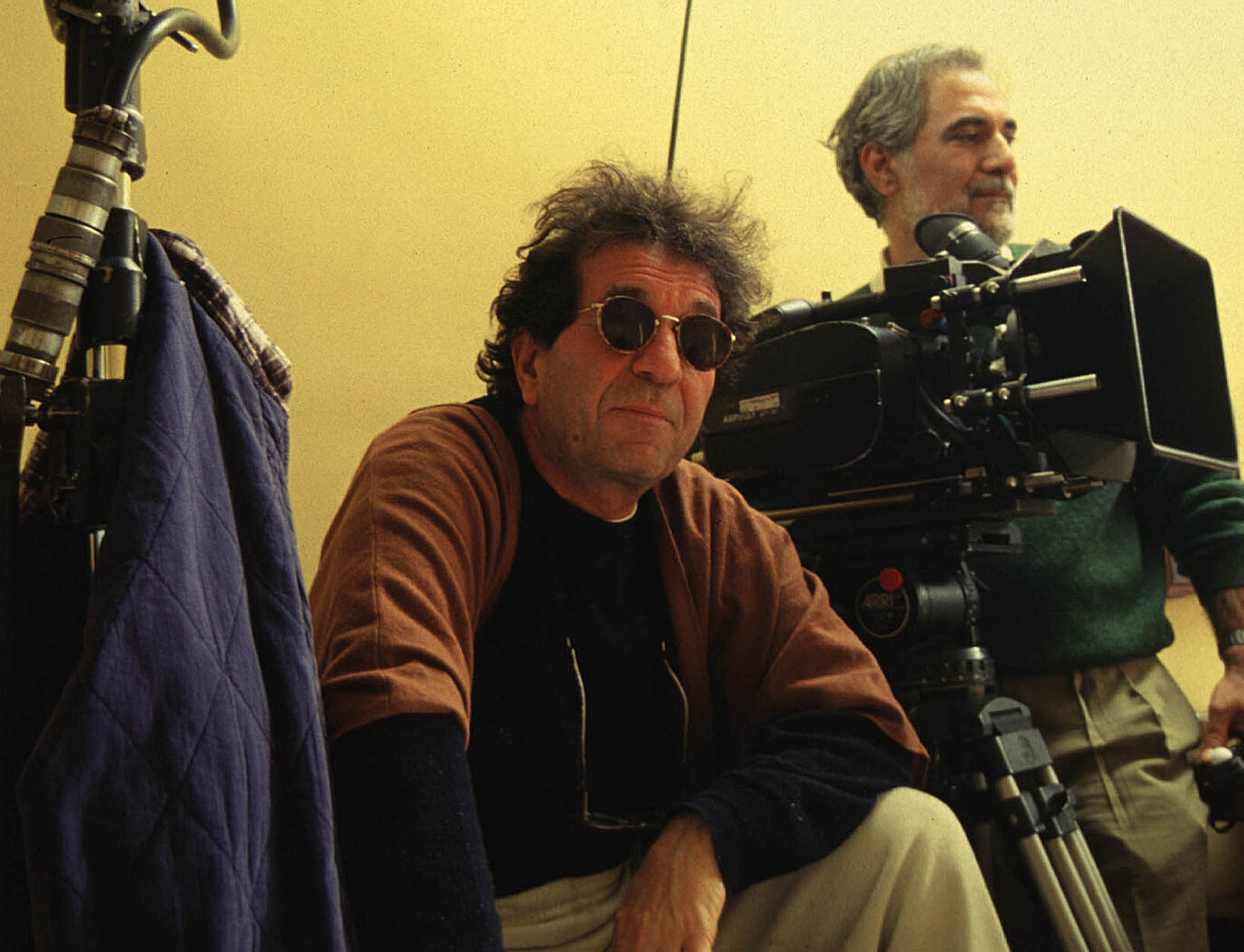
On the evening of October 14, 2023, Dariush Mehrjui, one of Iran's most celebrated filmmakers, and his wife Vahideh Mohammadifar, a screenwriter and costume designer, were found stabbed to death in their villa outside Tehran. The couple had been attacked with extraordinary brutality: 48 stab wounds between them, with Mohammadifar nearly decapitated and her hands bound. Their daughter Mona discovered the scene when she returned home that night.
Within days, authorities arrested four Afghan men and presented the case as a robbery gone wrong. Yet the investigation was marked by glaring irregularities: security cameras that inexplicably failed, a missing murder weapon, deleted phone records that were never forensically recovered, and contradictory confessions. The main suspect later recanted, claiming his statements were coerced. When the case reached Iran's Supreme Court, judges ordered the investigation reopened, citing "flaws" in the original proceedings.
But the most troubling evidence lies not in what investigators found, but in what they ignored. One week before the murders, Mohammadifar had posted a desperate plea on social media about being threatened by an unknown person with a knife. She gave an interview to a newspaper in which a portion of the audio was censored. The journalist who conducted that interview was detained. According to sources, the censored section mentioned a paramilitary group linked to Iran's Islamic Revolutionary Guard Corps.
High-ranking former security officials publicly questioned the official narrative. Mohammad Mousavi Khoeiniha, a former intelligence operative who founded the reformist Salam newspaper, spoke at Mehrjui's funeral about "religious and security extremism" within the state apparatus. He referenced an obscure superstition about sacrificing a couple during a lunar eclipse to preserve the regime. The Mehrjuis were killed on precisely that date. Former police commander Reza Seifollahi wrote in a state-affiliated newspaper that the case bore the hallmarks of "security cell murders" resembling Iran's infamous chain murders of the 1990s, when Ministry of Intelligence operatives assassinated more than 80 intellectuals and dissidents.
The pattern is unmistakable. In November 1998, dissident politician Dariush Forouhar and his wife Parvaneh were stabbed to death in their Tehran home with similar brutality: 11 and 24 knife wounds respectively. Their murders, along with those of several writers that same month, eventually forced the government to admit that "rogue elements" within the intelligence ministry had conducted the killings. The mastermind, deputy intelligence minister Saeed Emami, died under suspicious circumstances in custody before he could testify. The parallels to Mehrjui's case extend beyond methodology to motive: both victims were prominent cultural figures who had challenged the government's narrative.
This investigation reveals a pattern of evidence manipulation, judicial irregularities, and historical precedent that raises profound questions about who truly wanted Dariush Mehrjui dead and why a case that should have been straightforward was instead riddled with contradictions and cover-ups.
Dariush Mehrjui did not set out to become an enemy of the state. Born in Tehran in 1939, he studied philosophy at UCLA in the early 1960s and returned to Iran steeped in the cinematic traditions of European art cinema and American independent film. In 1969, he directed "The Cow," a stark portrayal of rural Iranian life that became one of the founding works of the Iranian New Wave. The film was immediately banned by the Shah's government for its unflinching depiction of poverty and backwardness.
Ironically, it was Ayatollah Khomeini who rescued the film from obscurity. After the 1979 revolution, "The Cow" was broadcast on state television. Khomeini reportedly declared, "We have to make films like that. We are not against cinema in general, we are against corrupt and corrupting films." The film's implicit critique of the Shah's modernization programs aligned with revolutionary ideology. Mehrjui even traveled to Paris to film Khomeini in exile, footage that would prove advantageous once the Ayatollah came to power.
But the honeymoon was brief. Throughout the 1980s and 1990s, Mehrjui's films increasingly focused on Tehran's educated middle class, exploring themes that made the new theocratic authorities uncomfortable: marital breakdown in "Hamoun" (1990), infertility and polygamy in "Leila" (1997), the plight of women in conservative society in "Bemani" (2002). His work depicted Iranians grappling with modernity, secularism, and the tension between personal desire and religious obligation. These were not the triumphalist revolutionary narratives the state wanted.
Mehrjui's trajectory mirrors that of many Iranian intellectuals: initial sympathy with the revolution's anti-imperialist rhetoric followed by growing disillusionment as the new regime proved as intolerant as its predecessor. By the 2000s, Mehrjui was openly critical. In interviews, he denounced censorship and the suffocating atmosphere for artists. He supported the 2009 Green Movement protests, a stance that earned him official scrutiny. In the months before his death, he spoke about the 2022 Woman, Life, Freedom uprising with visible anguish, lamenting a regime that "mercilessly destroys the young" and wondering aloud if intellectual life in Iran had any future.
His final film, left unfinished at his death, reportedly dealt with the state's repressive policies. He would not live to complete it.
The official narrative of the Mehrjui murders begins to unravel with the first pieces of physical evidence, or rather, the absence thereof.
When police arrived at the Zibadasht villa on the night of October 14, they found Mehrjui's body in the kitchen and Mohammadifar's in the bedroom. The scene suggested prolonged violence: Mehrjui had been bludgeoned with a wooden stick and stabbed; Mohammadifar's hands were bound, she had been stabbed repeatedly, and her throat was slashed so deeply she was nearly decapitated. According to police spokesman Hamid Hadavand, there was "no sign of forced entry." The doors were intact.
This detail is critical. The villa was located in a gated community with security cameras and a guard station approximately one kilometer from the entrance. Yet investigators claimed that on the night of the murders, the security cameras were not functioning, and the guard was absent. No footage was ever produced. No explanation was provided for why an entire security system would fail on the precise night of a double homicide.
The arrested suspects, four Afghan men named Karim, Mirwais, Davood, and Eskandar, initially confessed to entering the property by climbing over a fence. They claimed to have stolen jewelry and phones. Two knives were recovered from a location indicated by one of the suspects. Forensic testing revealed a crucial anomaly: both knives bore traces of Mohammadifar's blood, but neither contained any trace of Mehrjui's blood. Yet Mehrjui had been stabbed multiple times. A third knife, the one used to kill him, was never found.
More troubling was what happened to Mohammadifar's phone. Family attorney Noban Fashandi stated that the device was recovered with the victim's social media applications, Telegram, WhatsApp, and Instagram, completely deleted. These apps had been actively used up until the final hour of her life; she had sent messages to her daughter and friends that evening. Yet someone had taken the time during or immediately after a violent double homicide to systematically erase communication records. When the family's lawyer requested that forensic experts attempt to recover the deleted data, the court declined to issue the necessary order.
The contradictions in the suspects' confessions raise further doubt. Karim, identified as the ringleader and sentenced to death, initially admitted to planning and executing the murders over a supposed debt of 30 million tomans (approximately $1,000 at the time). He later recanted entirely, claiming his confession was coerced and that he was not present at the scene. His lawyer stated that Karim had worked as a gardener for multiple properties in the area and earned a stable income of 40 million tomans per month. Why would such a person commit murder over a minor financial dispute?
Mirwais, the second defendant, claimed he had been fired by Mehrjui and sought revenge. But this contradicted Karim's version. Davood, a minor, said he believed they were committing a simple robbery and was unaware of any plan to kill. Eskandar, who hid the murder weapons, claimed he was threatened into participation. None of these narratives cohere. They describe different motives, different levels of premeditation, and incompatible sequences of events.
Yet the court initially accepted these confessions and issued swift verdicts: death for Karim, 36 years imprisonment for Mirwais, 20 years for Eskandar, and five years in a juvenile facility for Davood. The rapidity of the proceedings alarmed legal observers. Iran's Supreme Court intervened, ordering a new investigation and citing "serious procedural flaws." That intervention is highly unusual in the Iranian judicial system and typically occurs only when a case presents obvious irregularities.
One lawyer involved in the case told the newspaper Etemad that the original trial appeared "rushed," as if authorities wanted the case closed quickly. The family of the victims later granted clemency, sparing Karim from execution, but emphasized that they did so because they believed the investigation was incomplete and the full truth had not emerged.
To understand the significance of the Mehrjui case, one must revisit Iran's most notorious series of political killings: the chain murders of the 1990s.
Between 1988 and 1998, more than 80 Iranian intellectuals, writers, translators, and political activists were killed under mysterious circumstances. The methods varied: staged car accidents, injections of potassium to simulate heart attacks, stabbings disguised as robberies, strangulations presented as suicides. For years, the pattern went unnoticed or unreported. Then, in November and December 1998, a series of particularly brazen killings forced the issue into public view.
On November 22, 1998, Dariush Forouhar, a 70-year-old opposition politician and leader of the Nation of Iran Party, and his wife Parvaneh, a 59-year-old poet and activist, were found stabbed to death in their Tehran home. Forouhar had suffered 11 stab wounds; Parvaneh, 24. Their residence was known to be under 24-hour surveillance by the Ministry of Intelligence, yet no one intervened. Days later, writer Mohammad Mokhtari's body was found on a roadside, strangled. On December 9, translator Mohammad Jafar Pouyandeh's body was discovered, also strangled. The murders triggered mass protests by Iran's literary community and international condemnation.
Under intense pressure, President Mohammad Khatami, a relative reformist, ordered an investigation. On January 4, 1999, the Ministry of Intelligence issued an extraordinary statement admitting that "rogue elements" within the ministry had committed the murders. The announcement described the killings as the work of "misguided, headstrong, and obstinate staff" acting under the influence of foreign agents. Eighteen people were arrested. The alleged mastermind was identified as Saeed Emami, a deputy minister of intelligence.
Emami never testified. On June 19, 1999, authorities announced he had committed suicide in custody by drinking hair removal cream. Few believed the official story. Emami had reportedly told interrogators he was "an obedient soldier of Velayat" (the Supreme Leader) and had done nothing more than follow orders. His wife, in her own interrogation, mentioned her husband's close ties to Mojtaba Khamenei, the Supreme Leader's son. The clear implication: the killings had been sanctioned at the highest levels of the state.
In 2001, three intelligence agents were sentenced to death (later commuted) and 12 others received prison terms. The trial was widely dismissed as a sham. Investigative journalist Akbar Ganji, who exposed much of the scandal, was himself imprisoned for his reporting. In 2000, another journalist, Saeed Hajjarian, who had played a key role in uncovering the killings, was shot in the head by an assailant and left permanently paralyzed.
The chain murders share multiple features with the Mehrjui case. First, the victims were prominent cultural or political figures who criticized the government. Second, the killings were designed to appear as ordinary crimes: robberies, accidents, suicides. Third, when investigated, the cases revealed signs of state involvement: surveillance that should have prevented the crimes, evidence that disappeared, investigations that were rushed or obstructed. Fourth, the extreme violence often exceeded what would be necessary for an ordinary criminal act; it served as a message.
Mohammad Mousavi Khoeiniha understood this. A former intelligence operative turned reformist, Khoeiniha had served as prosecutor general in the 1980s and founded the Salam newspaper, which was banned in 1999 after exposing government corruption. At Mehrjui's funeral, Khoeiniha made a cryptic but chilling statement. Without naming Mehrjui, he spoke of "religious and security monopolies" within the regime and "extremist supporters" he called "holy fascists" who believed that "even with false and distorted religious narratives, people are killed, blood is shed, and sacrifices are made so that the government is preserved."
He then referenced a specific superstition: on the night of the last lunar eclipse, the 28th of Rabi al-Awwal, there is a belief that if a couple is sacrificed, the ruler and government will remain safe for another year. Mehrjui and Mohammadifar were killed on precisely that night.
Khoeiniha's statement was not idle speculation. It was a warning from someone who had once been inside the system and knew how it operated. Hossamedin Ashna, a former deputy at the Ministry of Intelligence during the chain murders era, wrote on social media that "internal and external" possibilities should not be ruled out in the Mehrjui case. Reza Seifollahi, a former police commander, published an article in the state-affiliated Jomhouri Eslami newspaper stating that the "timing, similarity in method of killing, and geographic and environmental factors all indicate that the hypothesis of organized killings or even unauthorized security operations similar to the chain murders should not be dismissed."
These are not opposition activists making wild accusations. These are former state officials with intimate knowledge of Iran's security apparatus, and they are signaling that something is profoundly wrong with the official narrative.
The Mehrjui case reveals not only violence but the institutional mechanisms that enable and obscure it.
One week before the murders, Vahideh Mohammadifar posted a detailed account on Instagram describing how a man with "a non-Iranian accent" had threatened her with a knife at the gate of their home. She called the police. The guard service responded, but the intruder had fled. In her post, Mohammadifar expressed fear and frustration: "I, the wife of Dariush Mehrjui, a pioneer of this country's art, should I be threatened by a foreigner with a knife? The security here in the complex doesn't seem to matter to anyone." She pleaded with the government to intervene.
Within 24 hours, the post was deleted. Mohammadifar replaced it with a vaguer message urging vigilance. What happened in those 24 hours? Who contacted her? Why did she delete evidence of a threat that would, one week later, materialize as her murder?
After the deletion, the newspaper Etemad arranged an interview with Mohammadifar to follow up on the incident. During the recorded conversation, a section of the audio was deliberately obscured with static and a loud noise added over her voice. According to a source cited in investigative materials, the censored portion contained Mohammadifar naming a specific group affiliated with the Islamic Revolutionary Guard Corps: the Fatemiyoun Brigade.
The Fatemiyoun is a paramilitary force composed primarily of Afghan Shia Hazara fighters recruited from refugees living in Iran. Organized and funded by the IRGC's Quds Force, the brigade was deployed extensively in Syria to support Bashar al-Assad's regime. Estimates suggest between 10,000 and 20,000 Fatemiyoun fighters were active in Syria at the height of the conflict, with over 1,000 reported killed. The brigade operates under direct IRGC command, and its fighters are promised legal residency, salaries, and death benefits in exchange for service.
Why would Mohammadifar mention Fatemiyoun in connection with the threats against her? The hypothesis, advanced by some analysts, is that Afghan fighters or IRGC-affiliated operatives were involved either directly in the murders or in creating the conditions for them. The arrested suspects were all Afghan nationals. Afghanistan's large refugee population in Iran, numbering in the millions, provides a convenient pool of individuals who can be coerced, recruited, or framed for operations that require deniability.
The journalist who conducted the Etemad interview was detained shortly after the story was published. The detention was brief, a warning rather than a prolonged imprisonment, but the message was clear: certain aspects of this case were not to be discussed publicly.
Further evidence of orchestration emerged in the behavior of supposed witnesses. Workers housed in a container unit adjacent to the Mehrjui villa told investigators they heard nothing on the night of the murders, despite the prolonged and violent struggle that must have occurred. The security guard, whose presence might have deterred intruders or at least documented their entry, was conveniently absent, allegedly for "maintenance" reasons.
Even more suspicious was the behavior of investigators themselves. Mehrjui's daughter Mona noted that her father was dressed in formal clothing when killed, attire he rarely wore at home and typically reserved for meetings with professional associates or officials. This detail suggests he was expecting visitors. Yet police never pursued this line of inquiry. They did not ask who Mehrjui had been scheduled to meet. They did not examine his calendar or correspondence.
The deletion of Mohammadifar's phone applications is perhaps the most direct indication of a cover-up. Modern forensic techniques can recover deleted data from smartphones, even after deliberate erasure, provided the device is examined promptly. The family's lawyer explicitly requested such an analysis. The judiciary refused. This refusal cannot be explained by lack of capability; Iran's security services possess sophisticated digital forensics tools. It can only be explained by a lack of will, or more precisely, by a desire not to know what those records might reveal.
When the Supreme Court ordered the case reopened, it cited multiple deficiencies: inconsistent testimony, missing evidence, failure to pursue alternative theories, and procedural violations. Yet even this intervention has not produced a complete accounting. The reopened investigation has proceeded slowly, with few updates provided to the public or the victims' family. As of early 2025, the final disposition remains uncertain, with the main suspect having been spared execution through familial clemency but the full truth still obscured.
The murder of Dariush Mehrjui and Vahideh Mohammadifar is not merely a tragedy for their family. It is a case study in how authoritarian regimes employ violence as a tool of governance, using terror to enforce conformity and silence dissent.
The Islamic Republic's relationship with its cultural producers has always been fraught. Cinema, literature, and theater are inherently subversive forms because they require artists to imagine alternative realities, to depict human experiences outside the narrow confines of ideological orthodoxy. Since 1979, the state has attempted to control this dangerous creativity through a combination of institutional censorship and selective repression.
The Ministry of Culture and Islamic Guidance functions as the first line of defense, requiring filmmakers to obtain permits for scripts, casting, and distribution. Content that challenges religious dogma, depicts forbidden relationships, or critiques the political system is routinely banned. Directors who defy these restrictions face work prohibitions, imprisonment, and worse. Jafar Panahi, one of Iran's most celebrated filmmakers, has been banned from making films or leaving the country since 2010. Mohammad Rasoulof fled Iran in 2024 after being sentenced to prison for his work. Countless others have been intimidated into silence or driven into exile.
But censorship has limits. It can suppress ideas, but it cannot erase the fact that those ideas exist. When censorship fails to prevent dissent, the state resorts to violence. The chain murders of the 1990s were designed to eliminate individuals who had already circumvented censorship and gained public influence. Mehrjui had done the same. His films, though subjected to cuts and delays, had reached audiences and shaped consciousness. His public statements, though monitored, had been heard. Censorship could not undo his legacy.
The choice to kill someone like Mehrjui, and to do so with such brutality, sends multiple messages simultaneously. To other artists, it says: your prominence will not protect you. To the public, it says: even celebrated figures are not safe if they cross invisible lines. To potential investigators, it says: some truths are too dangerous to uncover. And to external observers, it maintains a veneer of deniability: officially, this was a robbery; if you say otherwise, prove it.
This is the logic of state terror: violence that is both visible and deniable, specific in its target yet general in its warning. The chain murders operated on this principle. They were brazen enough to be noticed but obscured enough to be dismissed as random crime or foreign conspiracy. Only when journalists and activists forced the issue, at great personal risk, did the partial truth emerge. Even then, the full truth—who gave the orders, how far up the command structure the authorization went—remains hidden.
Mehrjui's case follows the same pattern. The arrested suspects may have wielded the knives, but the question of who placed those knives in their hands, who ensured the cameras were off and the guards were absent, who deleted the phone records and intimidated the witnesses, remains unanswered. The state has offered a scapegoat, but scapegoats are useful precisely because they obscure the real perpetrators.
For ordinary Iranians, particularly those in the country's large and educated middle class, the Mehrjui murder is a stark reminder of the regime's reach and ruthlessness. If an 83-year-old filmmaker, internationally acclaimed and relatively cautious in his later years, can be killed with impunity in his own home, then no one is safe. This is the intended effect. Fear becomes a form of social control more efficient than any law or regulation.
As of early 2025, the Mehrjui case remains unresolved in any meaningful sense. Karim, the alleged ringleader, has been spared execution through the family's clemency but will spend decades in prison. The other suspects have been sentenced to various terms. No further arrests have been made. No additional evidence has been released. The missing knife has not been found. The deleted phone data has not been recovered. The identity of the person who threatened Mohammadifar one week before the murders has not been determined.
The Supreme Court's order to reopen the investigation offers a faint hope that some accountability might yet emerge. But history counsels pessimism. The chain murders investigation, despite admitting state involvement, resulted in scapegoats rather than systemic accountability. Saeed Emami, the one man who might have revealed the full chain of command, died before he could speak. The intelligence officials who ordered the killings, the judges who covered them up, the politicians who authorized the violence, all remained in power.
The deeper truth is that the Mehrjui case is not an anomaly. It is part of a continuum of political violence that stretches back to the revolution and before. Iran's modern history is punctuated by the elimination of intellectuals, dissidents, and cultural figures who challenged the prevailing orthodoxy: Ahmad Kasravi, the historian, killed by Islamic zealots in 1946; Dariush Forouhar, the politician, stabbed with his wife in 1998; Keyumars Pouramad, the filmmaker, dead under suspicious circumstances six months before Mehrjui. The methods change, the justifications evolve, but the underlying dynamic remains: the state, when it feels threatened, kills.
What makes the Mehrjui case particularly chilling is not its brutality, though that is extreme, but its transparency. The irregularities are not hidden; they are obvious. The contradictions are not subtle; they are glaring. The involvement of security forces is not speculative; it is suggested by former officials themselves. Yet the system proceeds as if none of this matters. Trials are held, sentences are issued, cases are closed. The machinery of justice functions, but it produces injustice.
This is the true meaning of the Mehrjui murders: they demonstrate that the rule of law in the Islamic Republic exists only insofar as it serves the regime's interests. When law becomes inconvenient, it is discarded. When investigations threaten to expose uncomfortable truths, they are obstructed. When evidence contradicts the official narrative, it disappears. The state maintains the forms of legality—courts, judges, procedures—while evacuating them of substance.
For those who knew Mehrjui, the loss is both personal and symbolic. He was one of the last living pioneers of the Iranian New Wave, a link to a time when Iranian cinema was gaining international respect and exploring the complexities of a rapidly changing society. His death severs that link. More than that, it sends a message about the future: in a system that kills its most celebrated artists with impunity, what space remains for cultural expression?
The answer, perhaps, lies in the fact that even after Mehrjui's death, even after decades of repression, Iranian filmmakers continue to work. Some, like Jafar Panahi, make films in secret, smuggling them out of the country for international festivals. Others have fled into exile, producing work from abroad. Still others remain and navigate the censorship apparatus, finding ways to encode critique within approved forms. This persistence, this refusal to be silenced even in the face of violence, may be the only meaningful resistance available.
But resistance, however noble, does not guarantee safety. It did not save Mehrjui. It did not save Forouhar. It did not save the dozens of writers and intellectuals killed in the chain murders. And it will not save the next person who crosses the invisible line that separates permitted criticism from unacceptable dissent. That line is arbitrary, shifting, and known only to those who enforce it. This is the nature of rule by fear: even compliance offers no protection, because the rules can change without warning.
The Mehrjui case, then, is not just about one murder or even a series of murders. It is about a system of governance that relies on violence to maintain itself, that uses the machinery of justice to obscure rather than reveal the truth, and that counts on exhaustion and fear to prevent accountability. It is about the gap between what everyone knows and what can be proven, between suspicion and evidence, between the obvious and the demonstrable.
Somewhere in Tehran, in the archives of the Ministry of Intelligence or the IRGC, there are records that would answer the outstanding questions about Dariush Mehrjui's death. There are orders, communications, surveillance reports, operational plans. There are individuals who know exactly what happened and why. But those records will never be released. Those individuals will never speak. The system protects itself, and it has survived for decades by ensuring that the full truth of its crimes remains forever in shadow.
For now, the official story stands: a filmmaker and his wife were killed by Afghan laborers in a botched robbery. The case is closed. Justice has been served. And anyone who suggests otherwise, who points to the missing evidence and suspicious coincidences, who invokes the precedent of the chain murders and the warnings of former officials, is engaging in speculation.
But some speculations, however unproven, have the weight of truth. And some truths, however obscured, will eventually emerge, even if long after those responsible have escaped accountability. The chain murders secret was kept for a decade before cracking open. The full story of Dariush Mehrjui's death may take just as long. Until then, the shadows remain.