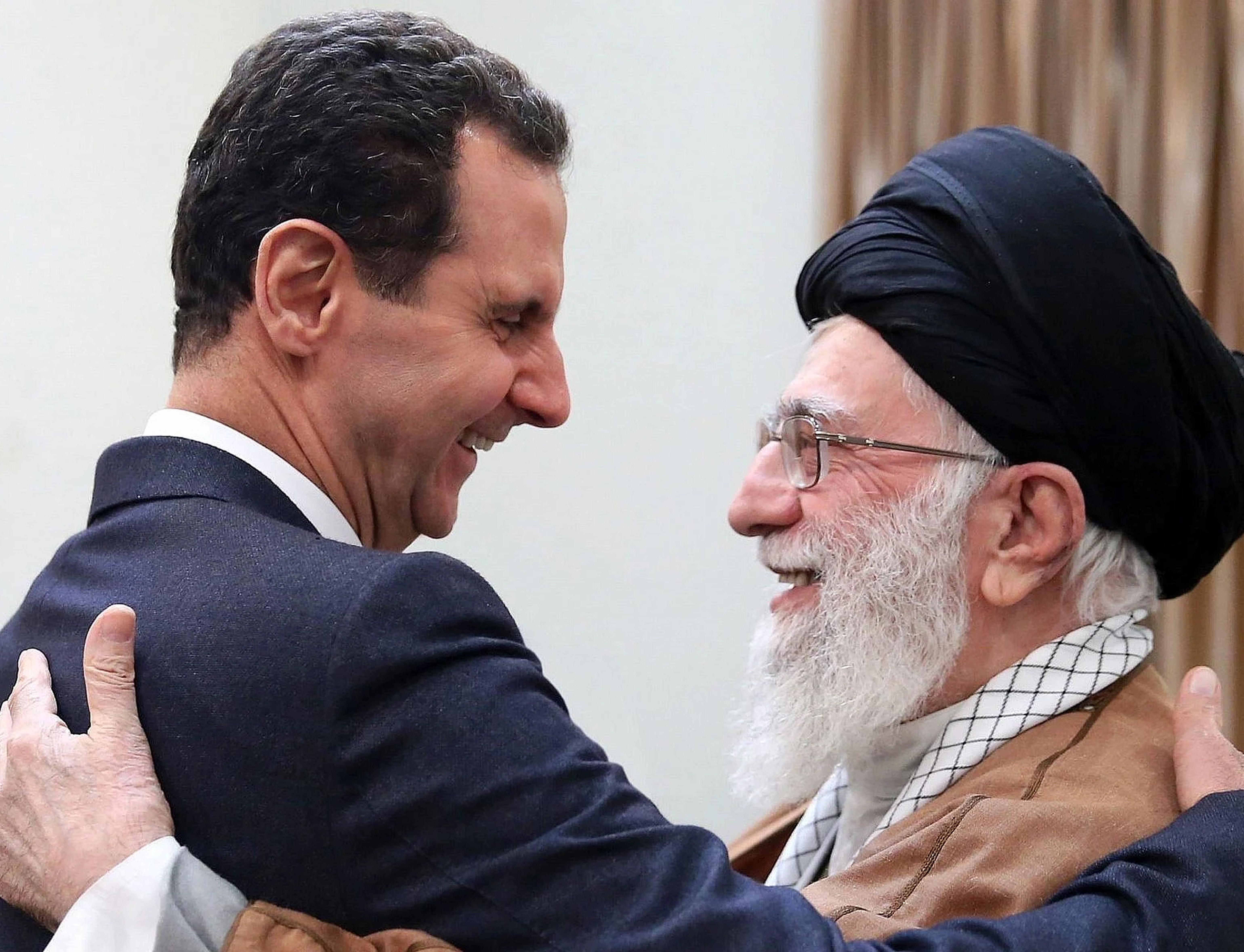




The House of Assad: Inside the Brutal Dynasty That Ruled Syria for Half a Century
An investigative report exposing how the Assad family turned Syria into a torture state.
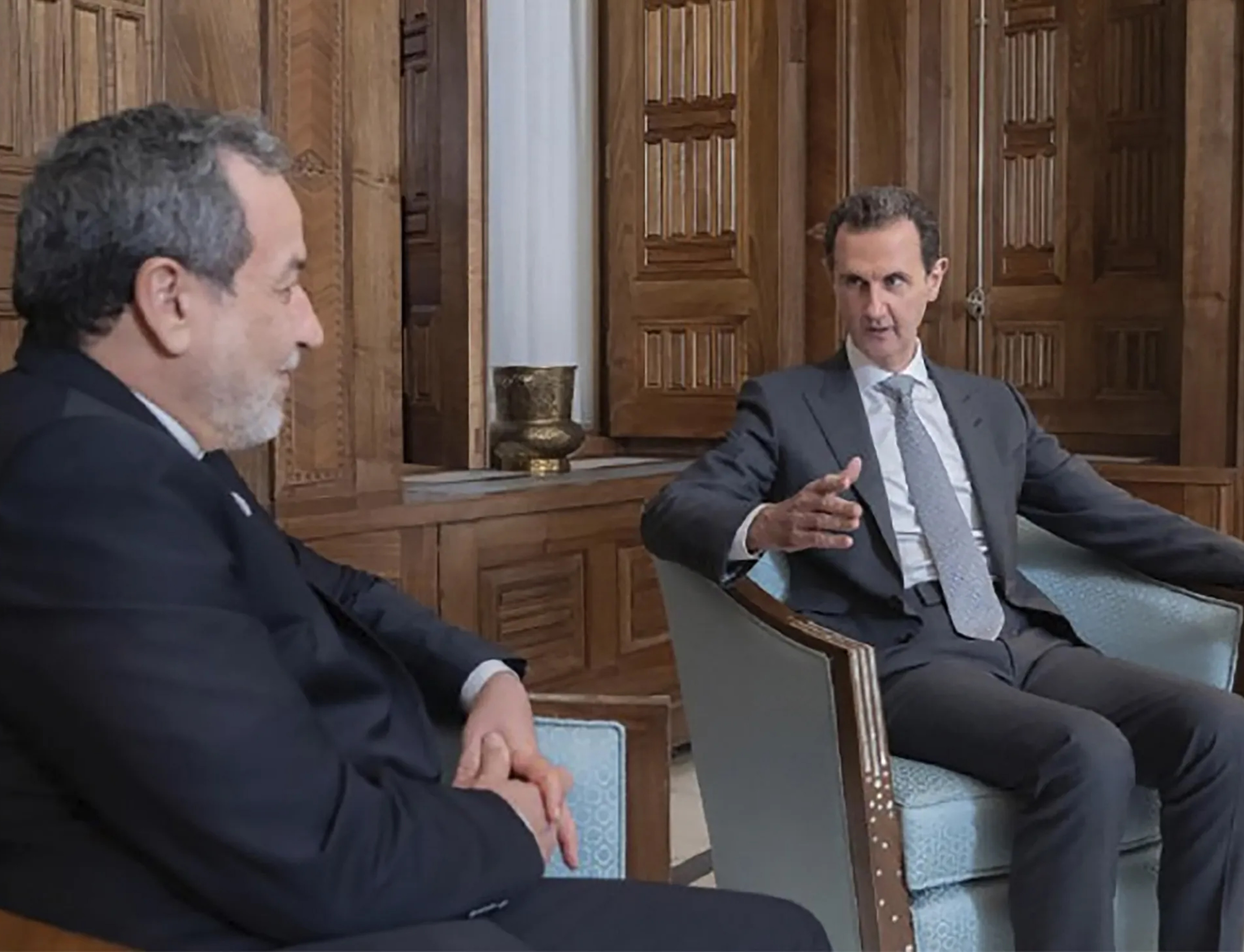
On December 8, 2024, after 54 years of Assad family rule, Syrian President Bashar al-Assad fled Damascus aboard a Russian military aircraft, marking the end of one of the Middle East's most enduring and brutal dictatorships. Within hours, opposition forces entered the presidential palace, state television broadcast declarations of victory, and jubilant crowds tore down statues of the Assad dynasty across the country. The regime that had survived a 13-year civil war, employed chemical weapons against its own population, and maintained a network of torture facilities described by Amnesty International as "human slaughterhouses" collapsed in just 11 days.
The speed of the collapse stunned international observers and caught even Assad's closest allies off guard. Iran's Foreign Minister Abbas Araghchi had visited Damascus just one week earlier, on December 1, 2024, pledging Tehran's "firm support" for the Syrian government and armed forces. Russian air support, which had propped up Assad since 2015, continued striking rebel positions until December 7. Yet when insurgent forces led by Hay'at Tahrir al-Sham (HTS) launched their offensive from Idlib province on November 27, the Syrian Arab Army disintegrated. Soldiers abandoned uniforms and weapons, officers fled their posts, and entire divisions melted away without firing a shot. In Aleppo, Syria's second-largest city, regime forces withdrew so rapidly that opposition fighters found government buildings empty, their occupants having fled hours earlier. Homs, the strategic gateway to Damascus, fell after just 24 hours of fighting on December 7. By the evening of that same day, rebel columns were advancing on the capital from multiple directions, and Assad's whereabouts had become unknown even to his own ministers.
What followed was a carefully orchestrated deception. Hours before his departure, Assad held a meeting with approximately 30 military commanders and security officials, urging them to hold their positions and promising that Russian reinforcements were imminent. He told them violence against civilians must cease and meaningful negotiations must begin, lending the appearance of a president still in command. His Prime Minister, Mohammad Ghazi al-Jalali, spoke with him by phone at 10:30 PM on December 7, reporting panic in the streets and mass displacement toward the coast. Assad's response was cryptic: "Tomorrow we will see." He never answered subsequent calls. Even his younger brother Maher, commander of the elite Fourth Armoured Division, was not informed. Maher fled separately by helicopter to Iraq, then onward to Russia. The president's family and closest aides had already been evacuated. His wife Asma and their three children had reportedly left weeks earlier.
Assad himself drove to Damascus International Airport in a Russian armored vehicle, accompanied by his eldest son Hafez. From there, according to reports citing Syrian and Russian sources, he flew to Khmeimim Air Base near Latakia, the primary Russian military installation in Syria, arriving in the early hours of December 8. Russian forces secured the base perimeter as Assad and his son boarded a second aircraft bound for Moscow. By dawn, the Syrian Arab Army Command issued an unprecedented statement: all soldiers and officers were no longer in service as of December 8, 2024, because "the Assad government has ceased to exist." Russia confirmed that Assad had been granted asylum "for humanitarian reasons" and attributed his departure to a "personal decision" to resign. On December 26, a statement attributed to Assad and published on the Syrian presidency's Telegram channel offered a different account. Assad claimed he had remained at Khmeimim base "to oversee combat operations" but was evacuated by Russian forces "after the base came under siege from rebel forces" and that he "had no intention of resigning or going into exile." The Kremlin refused to comment.
The fall of Damascus revealed the depth of the regime's collapse. In Assad's private residence, half-eaten meals sat on kitchen tables and family photo albums lay scattered on floors, evidence of a hasty, unplanned departure. Government ministries were abandoned so quickly that sensitive documents remained on desks. The presidential palace, once guarded by elite Republican Guard units, stood empty. Syrian state television, which for decades had broadcast only official propaganda, suddenly aired messages from opposition commanders declaring the end of Assad rule. No significant resistance was mounted. The transition of power in a capital city of two million people occurred with almost no fighting. It was not a conquest but a systemic implosion, the final act of a regime that had been hollowing itself out for years through corruption, repression, and the relentless extraction of wealth by a ruling elite utterly disconnected from the population it claimed to govern.
The Assad family's rise to absolute power began not with democratic mandate but through military conspiracy and calculated violence. Hafez al-Assad, born in 1930 to a modest Alawite family in the coastal village of Qardaha, joined the Syrian Air Force as a young officer and quickly aligned himself with the Arab Socialist Ba'ath Party, a Pan-Arab nationalist movement that promised modernization and social justice. The Ba'athists seized control of Syria in a military coup on March 8, 1963, overthrowing the country's fragile post-independence government. The coup ushered in a period of intense internal struggle within the Ba'ath Party itself, as competing factions vied for dominance. Assad positioned himself carefully, rising through the ranks to command the Syrian Air Force and, by 1966, serving as Minister of Defense following a second coup that toppled the party's traditional civilian leadership.
Assad's consolidation of personal power came through a third coup on November 13, 1970, a bloodless but decisive strike that removed the Marxist faction led by Salah Jadid and installed Assad as the unchallenged leader of Syria. He did not initially declare himself president; instead, he maneuvered behind the scenes, purging opponents, promoting loyalists, and systematically dismantling any institutional checks on his authority. By February 1971, Assad had orchestrated his own election as president in a referendum that, predictably, delivered an overwhelming mandate. He would rule Syria for the next 29 years, transforming the Ba'athist state into a personalist dictatorship in which power flowed exclusively through him and his inner circle of family members, security chiefs, and Alawite military officers.
From the outset, Hafez al-Assad understood that terror was an essential instrument of governance. The Assad family's original surname was "al-Wahsh," meaning "the beast" in Arabic. Hafez changed it to "Assad," meaning "lion," cultivating an image of strength and dominance. This was not mere branding; it reflected a governing philosophy rooted in the systematic use of violence to crush dissent and maintain control. Assad built a vast security apparatus consisting of multiple overlapping intelligence agencies, each answerable directly to him, each tasked with monitoring not only the population but also one another. The Mukhabarat, Syria's sprawling intelligence services, became synonymous with arbitrary detention, torture, and disappearance. Thousands of Syrians were imprisoned without trial, held in secret facilities where interrogation methods included beatings, electric shocks, suspension from ceilings, sexual assault, and prolonged solitary confinement. Many prisoners simply vanished, their fates unknown to their families for decades.
The 1980s marked the bloodiest phase of Hafez al-Assad's rule. An armed insurgency led by the Muslim Brotherhood and other Islamist groups challenged the regime's secular, Alawite-dominated authority, carrying out bombings and assassinations targeting government officials and military officers. Assad's response was merciless. On June 26, 1980, members of the Muslim Brotherhood narrowly failed in an attempt to assassinate the president by throwing grenades at him during a public appearance. Assad survived with minor injuries. Less than 24 hours later, on June 27, units of the Defense Companies, a paramilitary force commanded by Assad's younger brother Rifaat al-Assad, flew by helicopter to Tadmor Prison in the desert near Palmyra, approximately 200 kilometers northeast of Damascus. The soldiers stormed the facility, moving from cell to cell with machine guns and grenades, indiscriminately massacring prisoners. Estimates of the death toll range from 500 to 1,000 individuals, most of them suspected Muslim Brotherhood members or sympathizers, killed in a matter of minutes. Their bodies were reportedly dumped in mass graves outside the prison walls. No investigation was ever conducted. The massacre became a defining symbol of the regime's willingness to employ extrajudicial mass killing as state policy.
Two years later, in February 1982, the conflict reached its horrific climax in the city of Hama. After Muslim Brotherhood fighters seized control of the city, Hafez al-Assad ordered a full military assault. Rifaat al-Assad, who had publicly declared his willingness to "sacrifice a million martyrs" to preserve Ba'athist rule, led the operation. Twelve thousand troops, including elite units of the Defense Companies, surrounded Hama, cutting off all communications, electricity, and food supplies. For 27 days, the military shelled the city with heavy artillery and bombed it from the air. Tanks rolled through neighborhoods, firing at close range. Soldiers went door to door, executing suspected insurgents and civilians alike. Entire districts were leveled. The indiscriminate bombardment destroyed mosques, churches, heritage sites, and residential areas. Eyewitness accounts describe streets filled with corpses, families trapped in basements as buildings collapsed around them, and summary executions carried out en masse. Estimates of civilian deaths vary widely but credible assessments place the toll between 10,000 and 40,000. Rifaat al-Assad himself reportedly boasted of killing 38,000 people. Amnesty International estimated at least 10,000 to 25,000 fatalities. Syrian human rights groups put the figure between 30,000 and 40,000. The Hama massacre remains the single deadliest act of state violence perpetrated by an Arab government against its own population in modern Middle Eastern history. It was not a counterinsurgency operation but a deliberate act of collective punishment designed to instill fear so profound that no Syrian would dare challenge Assad rule again.
For two decades, the strategy worked. Hafez al-Assad's Syria became a state defined by silence and submission. Dissent was not debated; it was crushed. Opposition was not tolerated; it was eliminated. The regime maintained a pervasive surveillance network that monitored conversations, infiltrated workplaces, and recruited informants in every neighborhood. Syrians learned to speak carefully, to avoid political topics, to assume that any gathering of more than a few people might be observed and reported. Assad presented himself as a bulwark against chaos, a guarantor of stability in a region racked by conflict. He cultivated relationships with both the Soviet Union and Arab states, positioning Syria as a frontline state in the confrontation with Israel and a key power broker in Lebanon. Domestically, he governed through a combination of patronage, sectarian favoritism, and selective brutality. The Alawite minority, from which Assad and many of his top security officials hailed, benefited disproportionately from state resources and positions of power. The Sunni Arab majority, though dominant in commerce and society, was systematically excluded from the upper echelons of the military and intelligence services. This sectarian calculus, though rarely acknowledged openly, became a defining feature of Assad's rule and would later fuel the sectarian dimensions of Syria's civil war.
Hafez al-Assad did not intend for Bashar to succeed him. The designated heir was Bassel al-Assad, Hafez's eldest son, a charismatic military officer groomed from an early age to take over the regime. Bassel commanded respect within the armed forces, cultivated relationships with key power brokers, and projected the image of a strong leader in his father's mold. But on January 21, 1994, Bassel died in a high-speed car crash on the road to Damascus International Airport. His death upended the succession plan and thrust Bashar, then 28 years old and living in London, into a role for which he had never been prepared.
Bashar al-Assad was studying ophthalmology at the Western Eye Hospital in London, pursuing a medical career far removed from the brutal realities of Syrian politics. He was quiet, soft-spoken, and by all accounts more comfortable discussing medical techniques than military strategy. Friends and acquaintances from his time in London described him as reserved, polite, and seemingly uninterested in the trappings of power. He had married Asma Akhras, a British-Syrian investment banker raised in West Acton, London, who held a degree in computer science from King's College London and had worked for Deutsche Bank and JP Morgan. The couple appeared modern, educated, and cosmopolitan, a stark contrast to the image of Hafez and his generation of hardened military men.
Following Bassel's death, Hafez recalled Bashar to Damascus and began a crash course in political succession. Bashar was enrolled in military training at the Homs Military Academy, promoted rapidly through the officer ranks, and introduced to Syria's labyrinthine power structure. He was assigned to lead anti-corruption campaigns, a role that allowed him to cultivate an image as a reformer while simultaneously purging officials deemed disloyal or politically inconvenient. Hafez ensured that key loyalists, particularly those from the Alawite community and the security establishment, understood that Bashar was the designated successor and that their futures depended on supporting him.
When Hafez al-Assad died on June 10, 2000, the transition was swift and carefully choreographed. The Syrian parliament, dominated by Ba'ath Party loyalists, amended the constitution within hours to lower the minimum age for the presidency from 40 to 34, precisely Bashar's age. On July 10, 2000, Bashar al-Assad was elected president in a referendum that, unsurprisingly, reported 97.29% support. He assumed office with the rank of Lieutenant General and immediately began signaling that his rule would differ from his father's. In his inaugural address, Bashar spoke of transparency, accountability, modernization, and the need for institutional reform. He called for greater openness in government and hinted at economic liberalization. For a brief period, it seemed that change might be possible.
The so-called "Damascus Spring" of 2000-2001 marked a fleeting moment of political openness. Emboldened by Bashar's rhetoric, intellectuals, activists, and civil society groups began organizing discussion forums in private homes, meeting to debate political reform, human rights, and the rule of law. Known as "muntadayat," these forums proliferated across Syria, attracting hundreds of participants. The government initially tolerated the gatherings, and in November 2000, Bashar took a symbolic step by ordering the closure of Mezzeh prison, a notorious detention facility in Damascus, and releasing hundreds of political prisoners. The move was celebrated as a sign that the new president was serious about reform.
The optimism was short-lived. By the summer of 2001, the security establishment, alarmed by the growing calls for political change, convinced Bashar to crack down. On August 9, 2001, security forces arrested Ma'mun al-Homsi, a member of parliament known for his outspoken criticism of the regime. Within weeks, authorities detained ten opposition leaders, including two MPs, and forced the closure of the discussion forums. Prominent activists, including Riad Seif and Aref Dalila, were subjected to show trials and sentenced to years in prison on charges of "attempting to change the constitution by illegal means" and "inciting sectarian strife." The Damascus Spring was over. The state of emergency, in place since 1963, remained in effect. Censorship was tightened, surveillance intensified, and Syria's prisons began filling again with journalists, human rights defenders, and political dissidents. Bashar al-Assad, the mild-mannered ophthalmologist who had promised reform, had instead chosen the path of his father: repression, control, and the ruthless defense of autocratic power.
Bashar's rule also brought with it a new form of corruption that would define his presidency. While Hafez had maintained a degree of separation between state institutions and personal enrichment, Bashar presided over the systematic looting of Syria's economy by a small clique of regime insiders. Chief among them was Rami Makhlouf, Bashar's maternal cousin, who amassed a business empire so vast that it reportedly controlled up to 70% of Syria's economy. Makhlouf held monopolies in telecommunications through Syriatel, the country's largest mobile network, and dominated sectors including construction, oil, real estate, and finance. His wealth, estimated in the billions, was facilitated by preferential access to government contracts, regulatory exemptions, and the implicit backing of the presidential palace. Foreign companies seeking to do business in Syria quickly learned that partnership with Makhlouf was not optional; it was a prerequisite.
This model of crony capitalism enriched a small elite while impoverishing the broader population. Economic liberalization policies introduced by Bashar in the early 2000s, marketed as a "social market economy," opened the door to private investment but in practice served primarily to enrich regime loyalists. State assets were privatized at below-market rates and sold to Assad family members and their associates. Public land was seized and transferred to well-connected developers. The Syrian pound depreciated, inflation rose, and the gap between rich and poor widened dramatically. In rural areas, particularly in the drought-stricken northeast, agricultural communities faced devastation as the government failed to invest in infrastructure or provide adequate support. By 2010, an estimated 1.5 million Syrians had been displaced internally due to drought, poverty, and the collapse of rural livelihoods. Meanwhile, the Assad family and their cronies flaunted their wealth. Rami Makhlouf's sons posted photographs on social media of luxury cars, yachts, and lavish parties. Asma al-Assad, once praised in a now-infamous 2011 Vogue profile as "the Rose of the Desert," cultivated an image as a philanthropist and advocate for civil society while simultaneously benefiting from a system built on exploitation and repression. European Union investigations later revealed that Asma played a central role in managing regime finances and controlling key sectors of the Syrian economy, making her not simply a figurehead but "one of the main economic players" in the country.
The corruption extended beyond the Assad family to a broader network of oligarchs and power brokers. Mohammed Hamsho, a construction and telecommunications magnate, and the Qaterji brothers, who controlled vast oil and wheat operations, became key economic pillars of the regime. These figures operated with impunity, enriching themselves through monopolies, smuggling, and partnerships with the state that blurred the line between public and private enterprise. Even Bashar's uncle, Rifaat al-Assad, the "Butcher of Hama," had built a property empire worth hundreds of millions of euros, acquiring 507 properties in Spain, France, and the United Kingdom through shell companies and offshore accounts. French prosecutors convicted Rifaat of money laundering and embezzling Syrian public funds in 2020, sentencing him to four years in prison. He never served the sentence, having fled to Syria in 2021. Spanish authorities seized €700 million in assets, including palatial villas and apartments overlooking the Seine in Paris. British investigators found that Rifaat's family had secretly owned Witanhurst, London's largest private residence after Buckingham Palace, later estimated to be worth £300 million.
This was the system Bashar al-Assad presided over: a kleptocracy masquerading as a state, a family business disguised as a government. It was not sustainable. The resentment it generated among ordinary Syrians, combined with years of political repression, created the conditions for an explosion of popular anger that would erupt in 2011 and plunge Syria into a civil war that would last 13 years, kill hundreds of thousands, and displace more than half the country's population.
Bashar al-Assad's most enduring legacy is not economic mismanagement or political repression; it is the industrial-scale apparatus of torture and extermination he deployed against the Syrian population. When peaceful protests erupted in March 2011, inspired by the Arab Spring uprisings that had toppled authoritarian regimes in Tunisia and Egypt, Assad's response was not dialogue or reform but an immediate and savage crackdown. Security forces opened fire on demonstrators in the southern city of Daraa, killing civilians and arresting hundreds. The violence escalated rapidly. What began as calls for basic political freedoms transformed into a nationwide uprising, met with overwhelming military force. Tanks rolled into residential neighborhoods. Artillery shelled civilian areas. Helicopter gunships fired on crowds. The Syrian Arab Army, ostensibly a national defense force, became an instrument of domestic repression, deployed to kill and terrorize Syrians demanding change.
As the conflict intensified and opposition groups took up arms, the Assad regime expanded its use of terror as a weapon of war. Human rights organizations documented the existence of at least 27 secret detention facilities across Syria, centers where systematic torture and extrajudicial killings were carried out as a matter of policy. The most notorious of these was Sednaya Military Prison, located on a barren hillside north of Damascus. Built in 1987, Sednaya became synonymous with unimaginable horror. Former detainees described conditions so brutal that Amnesty International, in a February 2017 report based on extensive interviews with survivors, guards, and judges, called it a "human slaughterhouse." The report estimated that between 5,000 and 13,000 people were extrajudicially executed at Sednaya between September 2011 and December 2015. The Syrian Observatory for Human Rights put the total number of deaths at Sednaya since the start of the civil war at 30,000, killed by torture, starvation, disease, and mass hangings.
The process of killing at Sednaya was systematic and bureaucratic. Groups of up to 50 prisoners were removed from their cells, often in the middle of the night, and taken to a military field court where mock trials lasting no more than a few minutes were conducted. Defendants had no legal representation, no opportunity to present evidence, and no right to appeal. Judges, acting on direct orders from senior officials, issued death sentences en masse. Those condemned were returned to the prison, beaten severely, and then transported to a basement execution chamber where they were hanged. The bodies were removed by the truckload and buried in mass graves. The scale of the killings was such that refrigerated trucks were used to transport corpses. Survivors described hearing the sounds of executions, the cries of those being led to their deaths, and the silence that followed. "Every day we wondered, 'Will they execute us today?'" one former detainee recalled. The psychological torment was compounded by the physical torture. Prisoners were subjected to beatings with metal rods and cables, electric shocks, rape, suspension from ceilings for hours, and starvation. Medical care was nonexistent. Those who fell ill were left to die in their cells. Some prisoners were forced into metal cages so small they could neither stand nor lie down. Guards were instructed to dehumanize detainees, forbidding them from looking up, making eye contact, or speaking. "I have not seen the eyes of any of my inmates and none of them saw my eyes until after we left the prison," wrote Syrian intellectual Yassin Haj Saleh, who was imprisoned at Tadmor Prison, another notorious facility, in the mid-1990s. "Eye contact was absolutely forbidden."
The evidence of these atrocities came not only from survivor testimony but from a Syrian military defector known by the codename "Caesar." Between 2011 and 2013, Caesar worked as a forensic photographer for the Syrian Military Police, tasked with documenting the bodies of detainees who had died in custody. He smuggled out more than 53,000 photographs on memory cards, risking his life to preserve evidence of the regime's crimes. The images, later authenticated by international forensic experts, showed emaciated corpses bearing signs of severe torture: ligature marks, burns, bruising, blunt force trauma, and strangulation. Many victims were so disfigured they were barely recognizable as human. Each body was tagged with a number, part of a bureaucratic system that tracked deaths with chilling efficiency. The Caesar photographs provided irrefutable proof that the Assad regime was systematically torturing and murdering detainees on a massive scale.
Yet the killing extended beyond prisons. On August 21, 2013, in the early hours of the morning, chemical weapons were deployed in the suburbs of Damascus. Rockets loaded with sarin, a highly lethal nerve agent, struck Eastern Ghouta and Western Ghouta, densely populated residential areas controlled by opposition forces. Families fled to rooftops to escape the gas but were met with artillery fire that forced them back down into the streets, where sarin exposure proved fatal. Within hours, more than 1,400 people were dead, many of them children. Videos taken in the aftermath showed rows of bodies, victims foaming at the mouth, convulsing, and suffocating as the nerve agent shut down their respiratory systems. The United Nations investigation team confirmed "clear and convincing evidence" of sarin use delivered by surface-to-surface rockets. A UN Human Rights Council report concluded that "significant quantities of sarin were used in a well-planned indiscriminate attack targeting civilian-inhabited areas, causing mass casualties." The evidence, the report noted, "indicated that the perpetrators likely had access to the chemical weapons stockpile of the Syrian military, as well as the expertise and equipment necessary to safely manipulate large amounts of chemical agents."
The Assad regime denied responsibility, as did Russia, which claimed the attack was a "false flag" operation carried out by rebels. But the evidence overwhelmingly pointed to the government. Subsequent investigations documented at least 222 chemical weapons attacks in Syria between 2011 and 2024, with 217 attributed to the Assad regime. Chemical agents were used not as isolated incidents but as a deliberate strategy to terrorize populations in opposition-held areas. On April 4, 2017, sarin was again deployed, this time in the town of Khan Shaykhun in Idlib province, killing dozens of civilians. International forensic investigations, testimonies from survivors and defectors, and analysis of the Syrian military chain of command all pointed to systematic authorization of chemical weapons use at the highest levels of government. In November 2023, French judges issued arrest warrants for Bashar and his brother Maher al-Assad for their involvement in the Ghouta attack, charging them with complicity in crimes against humanity and war crimes. The warrants, while largely symbolic given Assad's presence in Russia, represented a rare moment of accountability.
The toll of Assad's war against the Syrian population is staggering. Between March 2011 and March 2024, an estimated 580,000 to 656,493 people were killed, according to the Syrian Observatory for Human Rights. The UN Human Rights Office, using rigorous statistical analysis, estimated that 306,887 civilians died in the first decade of the conflict alone, representing 1.5% of Syria's entire pre-war population. The Syrian Network for Human Rights documented 231,108 civilian deaths, including 30,193 children and 16,451 women. Of these, approximately 200,000 were killed directly by Syrian government forces through airstrikes, artillery shelling, summary executions, and torture. An additional 15,334 civilians died under torture in government detention facilities. The scale of destruction extended beyond human casualties. Entire cities were reduced to rubble. Aleppo, Homs, Daraa, and large sections of Damascus were devastated by years of bombardment. Schools, hospitals, markets, and cultural heritage sites were deliberately targeted. The use of barrel bombs, improvised explosive devices dropped from helicopters, became a signature tactic of the Assad regime, indiscriminately killing civilians and destroying infrastructure in opposition-held areas. Russia, which intervened militarily on Assad's behalf in September 2015, conducted airstrikes that killed an estimated 6,969 civilians, according to the Syrian Network for Human Rights. International monitoring organizations documented repeated strikes on hospitals, medical facilities, and humanitarian convoys, violations of international humanitarian law carried out with impunity.
By 2024, Bashar al-Assad appeared to have survived. The civil war, though devastating, had reached a frozen stalemate. The regime controlled the capital and major cities. Opposition forces were confined to Idlib province in the northwest, under Turkish protection, and isolated pockets in the south and east. Assad had been gradually rehabilitated on the international stage. In May 2023, Syria was readmitted to the Arab League after a 12-year suspension. Arab states, concluding that Assad was not going anywhere, began reopening embassies in Damascus. Saudi Arabia, the United Arab Emirates, and Egypt sent envoys. Even countries that had once backed the opposition were now engaging with the regime. Assad had outlasted his enemies, survived international isolation, and retained the loyalty of his core security apparatus. The question of accountability for war crimes seemed increasingly remote. The International Criminal Court lacked jurisdiction because Syria was not a signatory. Western governments, distracted by other crises, showed little appetite for intervention. Assad and his family appeared secure.
But beneath the surface, the regime was hollow. The Syrian economy was in freefall. The Caesar Act, a set of comprehensive U.S. sanctions imposed in June 2020, had severed Syria's access to international banking, blocked reconstruction investment, and targeted individuals and entities associated with the government. The Syrian pound collapsed, losing 95% of its value. Inflation soared. Basic goods became unaffordable. State salaries, already meager, were paid irregularly or not at all. Soldiers in the Syrian Arab Army, nominally the regime's backbone, were earning the equivalent of $10 to $20 per month, barely enough to buy food. Corruption within the military reached absurd levels. Officers sold fuel, ammunition, and even weapons to supplement their incomes. Units existed on paper but had no combat capability. Morale was nonexistent. Many soldiers had not seen their families in years. Conscription had emptied entire villages. The Alawite community, from which the regime drew its most loyal fighters, had borne a disproportionate share of casualties and was exhausted. Even within Assad's inner circle, there were signs of fracture. In 2020, Rami Makhlouf, the president's cousin and financial architect of the regime, publicly accused "a cadre of officials" of attempting to seize his assets. In a series of unprecedented Facebook videos, Makhlouf appealed directly to Assad, claiming he was being pressured to hand over more than $5 billion. The dispute exposed the regime's desperation for cash and the internecine struggles among the elite.
Iran, Assad's most important ally, was also weakening. Tehran had spent an estimated $30 billion to $50 billion propping up the Syrian regime since 2011, a staggering sum for a country grappling with its own economic crisis and international sanctions. Iranian Revolutionary Guard Corps (IRGC) advisers, Hezbollah fighters, and Shiite militias from Iraq, Afghanistan, and Pakistan had been essential to Assad's survival, particularly during the darkest days of the civil war when Damascus itself seemed on the verge of falling. But by 2024, Iran's capacity to project power in Syria had been severely degraded. Hezbollah, the Lebanese militant group that had fought alongside Assad's forces for years, had been battered by a year-long war with Israel that culminated in a ceasefire in November 2024. Thousands of Hezbollah fighters were dead, its leadership decapitated by Israeli airstrikes, and its supply lines disrupted. Iran's broader regional network, the so-called "Axis of Resistance," was collapsing. Hamas in Gaza had been severely weakened. Yemen's Houthi rebels remained active but isolated. Syria, the linchpin connecting Iran to Hezbollah and the Mediterranean, was increasingly untenable as a strategic investment. When the rebel offensive began on November 27, 2024, Iran's response was tepid. A few IRGC advisers were dispatched, but there was no large-scale mobilization of Iranian forces or Hezbollah fighters. Tehran recognized that Assad's military was too weak to be salvaged and that further investment would be wasted.
Russia, too, was distracted and overstretched. Moscow's military intervention in September 2015 had been decisive in reversing Assad's fortunes, providing air power that allowed regime forces to recapture Aleppo and other key areas. But Russia's invasion of Ukraine in February 2022 had drained its resources and shifted its strategic priorities. By late 2024, Russia's air force was conducting limited strikes in Syria but lacked the capacity to mount a sustained campaign. Russian officials reportedly conveyed to Assad that Moscow could not provide the level of support it had in previous years. On December 2, 2024, just six days before Damascus fell, Bashar al-Assad traveled to Moscow to meet with President Vladimir Putin, seeking assurances of continued military backing. He left empty-handed. When the offensive accelerated, Russian forces provided minimal assistance. On December 7, as rebel columns closed in on Damascus, Russian military officials at Khmeimim Air Base contacted Assad and informed him that the situation was untenable. They arranged his evacuation, prioritizing the preservation of their own bases in Syria over the survival of the Assad regime. Russia's primary concern was ensuring that its naval facility at Tartus and the Khmeimim airbase would not be threatened, and that it could negotiate with whatever government emerged in Damascus to retain access to these strategic assets.
The final collapse was shockingly rapid. On November 27, HTS launched its offensive from Idlib. Within 48 hours, Aleppo, Syria's second-largest city, was in rebel hands. Government forces offered almost no resistance. Officers fled, abandoning their posts. Soldiers discarded their uniforms and disappeared into the civilian population. The Syrian Arab Army, once feared for its brutality, revealed itself to be a hollow shell, incapable of defending even major cities. On December 5, Hama fell. On December 7, Homs, the strategic crossroads connecting Damascus to the coast and to Assad's Alawite heartland, was taken without a fight. Each city's capture followed the same pattern: regime forces withdrew, local populations either welcomed the rebels or remained passive, and the government's control evaporated. In Damascus, panic spread. Civilians braced for a siege, stocking food and water. But there was no siege. On the night of December 7, opposition forces from the south entered the outskirts of the capital. By the morning of December 8, they were in the city center. Government buildings were empty. The presidential palace was unguarded. Bashar al-Assad was gone.
The final, grotesque detail of Assad's rule emerged in the chaos of his departure. On November 28, 2024, just one day after the rebel offensive began, Brigadier General Kioumars Pourhashemi, a senior IRGC Qods Force commander and the leading Iranian military adviser in Syria, was killed. Initial reports attributed his death to opposition fighters. But subsequent investigations, including testimony from Iranian security officials, revealed the truth: Pourhashemi was shot by a Syrian Arab Army officer during a high-level meeting in Aleppo. The meeting, attended by Iranian advisers and Syrian commanders, had descended into a heated argument. Pourhashemi, frustrated by the Syrian military's lack of will to fight, accused officers of disloyalty and incompetence. One Syrian officer, in an act of mutiny, opened fire with an AKM rifle, killing Pourhashemi instantly and wounding a Hezbollah commander. The incident, initially covered up, spread rapidly through the ranks, accelerating the disintegration of the Syrian military. It was a perfect encapsulation of the regime's final days: Syrian officers, no longer willing to fight for Assad, turned their guns on the very allies who had kept him in power for over a decade.
The collapse of the Assad regime is not merely the end of a dictatorship; it is the disintegration of a system built on terror, corruption, and the systematic dehumanization of an entire population. For 54 years, the Assad family governed Syria not through consent or legitimacy but through fear and violence. Hafez al-Assad murdered tens of thousands to establish his rule. Bashar al-Assad murdered hundreds of thousands to maintain it. They turned Syria into a laboratory of repression, refining techniques of torture and surveillance, deploying chemical weapons as instruments of state policy, and creating a network of prisons where human beings were treated as disposable. The regime's propaganda machine insisted it was defending Syria against terrorism, foreign conspiracies, and sectarian chaos. In reality, it was defending nothing but its own monopoly on power and wealth.
The reckoning for Syria is only beginning. The country is devastated. Half of its pre-war population has been displaced, internally or as refugees in neighboring countries and Europe. Its infrastructure is in ruins. Its economy is shattered. The new government, led by Ahmed al-Sharaa, a former jihadist commander who rebranded himself as a moderate nationalist, faces immense challenges. Al-Sharaa, who once led Jabhat al-Nusra, an al-Qaeda affiliate, and later Hay'at Tahrir al-Sham, has presented himself as a pragmatist willing to engage with the international community and rebuild Syria as a pluralistic state. He has appointed a transitional government, promised to integrate rival factions, and called for national reconciliation. But the scars of 13 years of civil war and half a century of Assad rule are deep. Syria is fractured along sectarian, ethnic, and regional lines. The country is awash with weapons, militias, and competing power centers. Turkey, Israel, the United States, Russia, and Iran all maintain footholds and interests in Syrian territory. The prospect of genuine stability, let alone justice and accountability, remains distant.
The international response to Assad's fall has been muted and transactional. The United States, European Union, United Kingdom, and Canada have lifted some sanctions, recognizing the need to support Syria's transition. But other sanctions remain in place, creating legal and economic uncertainty. Gulf Arab states, eager to secure influence in post-Assad Syria, are offering reconstruction investments but attaching political conditions. Russia, despite Assad's flight, continues to negotiate with the new government to retain its military bases. Iran has lost billions in investments and its land corridor to Hezbollah, a strategic catastrophe for Tehran. Yet Iranian officials have publicly stated that Syria's future is "solely the responsibility" of its people, a tacit acknowledgment that Tehran's era of dominance is over. Israel, meanwhile, has conducted extensive airstrikes on Syrian military installations, destroying weapons stockpiles and infrastructure to prevent them from falling into the hands of groups it considers hostile.
Accountability for the crimes of the Assad regime remains elusive. Bashar al-Assad lives in Moscow, granted asylum by Russia and shielded from extradition. His family, including his British-born wife Asma, resides in luxury, insulated from consequences. Rami Makhlouf, the billionaire cousin who bankrolled the regime, is in Moscow as well, reportedly living on a private floor of a Radisson hotel. Senior officials who oversaw torture, chemical weapons deployment, and mass executions have fled or gone into hiding. The new Syrian government has expressed interest in prosecuting war criminals, but lacks the institutional capacity, resources, and international cooperation necessary to conduct credible trials. International mechanisms, such as the International Criminal Court, face jurisdictional obstacles. European courts have issued arrest warrants for some Assad officials, but these are largely symbolic unless the individuals are apprehended. The families of the hundreds of thousands killed, the survivors of torture, the communities displaced and destroyed, are left with little hope of justice.
The Assad dynasty's fall is a reminder that no regime, no matter how brutal, is permanent. Hafez and Bashar al-Assad believed they had built an unbreakable system, a structure of fear and patronage that could withstand any challenge. They were wrong. In the end, the Syrian Arab Army, the institution that had sustained Assad rule for five decades, disintegrated because its soldiers no longer believed in what they were fighting for. The regime's allies, exhausted and overstretched, abandoned it. The international community, once paralyzed by geopolitical rivalries, stood aside. And the Syrian people, who had endured unimaginable suffering, witnessed the collapse of a dictatorship that had once seemed eternal.
What comes next for Syria is uncertain. But what is certain is that the Assad era, defined by repression, atrocities, and impunity, has ended. The ghosts of Hama, Tadmor, Sednaya, and Ghouta will not be easily laid to rest. The challenge now is whether Syria can move beyond this dark inheritance, build institutions based on accountability and the rule of law, and ensure that the cycle of violence and tyranny is finally broken.