



The Fall of the Butcher: Unanswered Questions in the Death of Iran's President
Ebrahim Raisi's helicopter crash exposes systemic contradictions, suspicious circumstances, and succession intrigue within Iran.
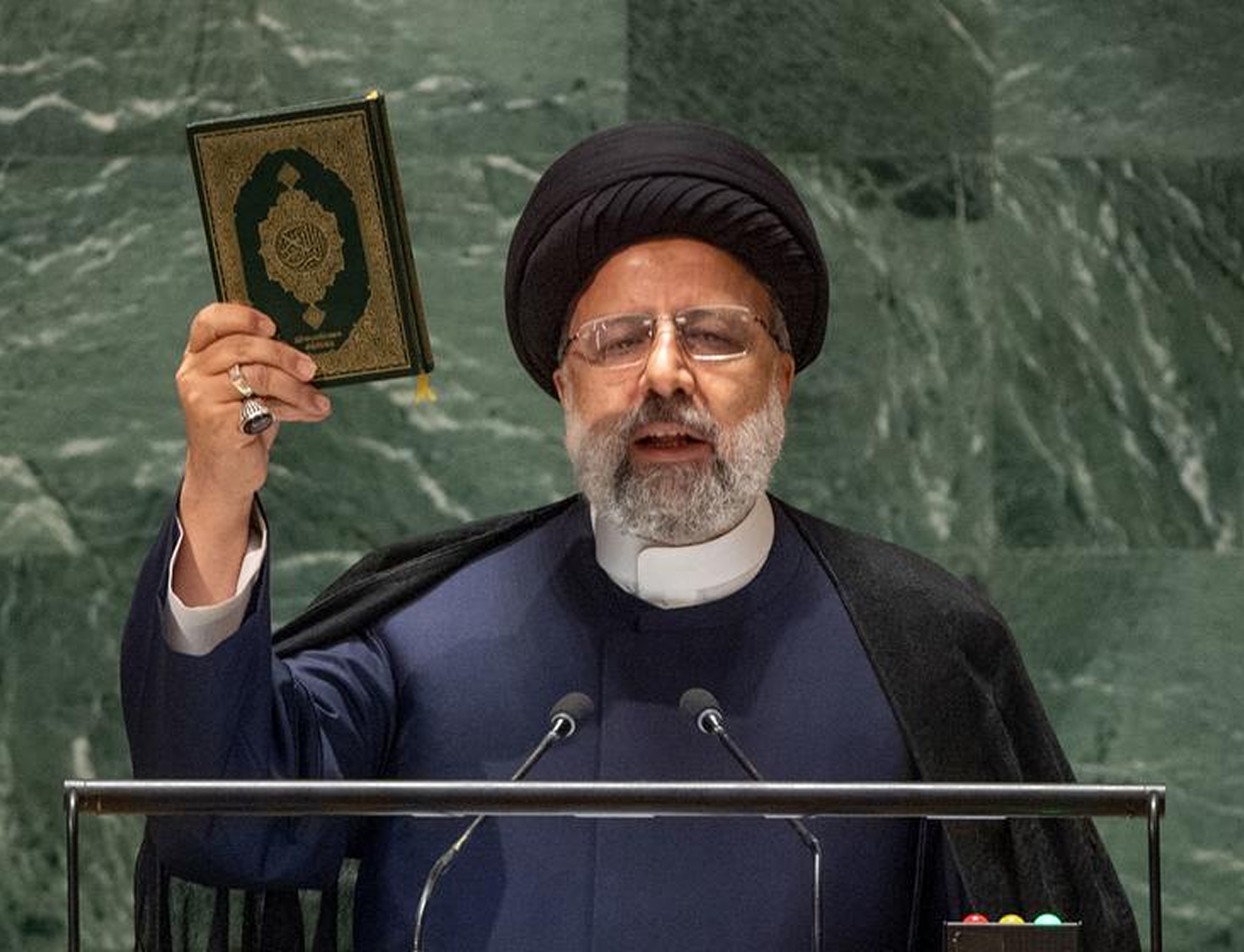
On May 19, 2024, a Bell 212 helicopter carrying Iranian President Ebrahim Raisi plummeted into a fog-shrouded mountainside near the Azerbaijan border, killing all eight people on board. Within hours, the Islamic Republic's carefully orchestrated narrative began to fracture. While official channels attributed the crash to adverse weather conditions, the circumstances surrounding the incident revealed a web of contradictions, security failures, and systemic dysfunction that have fueled persistent questions about what truly happened in those final minutes above the Dizmar Forest.
The 63-year-old Raisi, a hardline cleric who had risen from prosecutor to president, was returning from inaugurating a dam with Azerbaijan's President Ilham Aliyev when his helicopter disappeared from contact. For sixteen hours, rescue teams searched mountainous terrain while state media oscillated between reassurance and obfuscation. When the wreckage was finally located at dawn on May 20, it marked not merely the death of a sitting president but the elimination of a figure who had been positioned as a potential successor to Supreme Leader Ali Khamenei. Among the dead were Foreign Minister Hossein Amir-Abdollahian, East Azerbaijan Governor Malek Rahmati, and Ayatollah Mohammad Ali Ale-Hashem, the Supreme Leader's representative in the province.
The official investigation, completed three months later, concluded that "challenging climatic and atmospheric conditions" caused the crash, with no evidence of sabotage found in the wreckage. Yet this determination has satisfied few observers, either inside or outside Iran. The crash occurred amid a broader pattern of suspicious deaths among senior Islamic Republic figures, most notably that of former President Akbar Hashemi Rafsanjani in 2017, whose family continues to allege assassination by radioactive poisoning. It unfolded against the backdrop of mass protests following the death of Mahsa Amini in 2022, which Raisi's administration had brutally suppressed, and at a moment when succession planning for the aging Khamenei had reached a critical juncture.
This investigation examines the documented anomalies in the crash sequence, the contradictory official statements that followed, the technical questions left unresolved, and the political context that has led many Iranians to view the incident not as an accident but as an orchestrated removal. While definitive proof of foul play remains elusive, the accumulated evidence reveals a system characterized by opacity, internal rivalry, and an institutional willingness to eliminate obstacles to power, by violence if necessary.
Ebrahim Raisi's trajectory through the Islamic Republic's power structure was marked by ruthless loyalty and a willingness to carry out the regime's most brutal directives. Born in 1960 in Mashhad, Iran's second-largest city and home to the country's holiest Shia shrine, Raisi entered seminary education at age 15 following his father's death. He wore the black turban denoting claimed descent from the Prophet Muhammad, a status that conferred religious prestige in Shia tradition.
By age 20, Raisi had been appointed prosecutor for the district of Karaj, a position that launched a career defined by judicial severity. He subsequently served as prosecutor for Hamadan province before becoming deputy prosecutor of Tehran in 1985. It was in this capacity that Raisi earned the epithet that would shadow him for decades: the "Butcher of Tehran."
In the summer of 1988, Supreme Leader Ruhollah Khomeini issued a fatwa ordering the execution of political prisoners who refused to renounce their opposition to clerical rule. The directive was implemented by "death commissions" established in prisons across Iran. In Tehran's Evin and Gohardasht prisons, a four-member panel consisting of prosecutor Morteza Eshraqi, judge Hossein-Ali Nayyeri, intelligence ministry representative Mostafa Pourmohammadi, and deputy prosecutor Ebrahim Raisi presided over what human rights organizations have characterized as crimes against humanity.
Over approximately five months, these commissions sent thousands of prisoners to their deaths. Estimates of the total killed range from 2,800 to upward of 30,000, with most victims affiliated with the People's Mojahedin Organization of Iran. The proceedings were perfunctory: prisoners faced brief interrogations about their political beliefs and were executed if they maintained opposition to the regime. Many were hanged in groups from construction cranes, their bodies disposed of in unmarked mass graves. Families were given no information about their relatives' fates, and public discussion of the massacres was suppressed for decades.
The existence and scope of the 1988 executions came to wider attention in August 2016, when audio recordings surfaced of Ayatollah Hussein-Ali Montazeri, then Khomeini's designated successor, confronting the Tehran death commission. In the recording, Montazeri denounced the killings as "the biggest atrocity of the Islamic Republic" and warned that history would condemn those responsible. Khomeini subsequently removed Montazeri from succession, and the cleric remained under house arrest until his death in 2009. Raisi himself never publicly denied his role on the commission, though he characterized his position as that of a prosecutor representing "the people" rather than issuing death sentences directly.
International human rights bodies have repeatedly called for accountability. Amnesty International documented systematic enforced disappearances, torture, and extrajudicial executions carried out pursuant to Khomeini's order. In July 2024, the UN Special Rapporteur on Human Rights in Iran published a report categorizing the 1988 executions as genocide, finding that they were conducted with "genocidal intent" to eliminate the Islamic Republic's perceived enemies. The report called for Iranian officials to be held accountable for crimes against humanity. Iran's government dismissed the findings as "false news" fabricated by adversaries.
Despite, or perhaps because of, this blood-stained record, Raisi's career continued to advance. He served as head of the General Inspection Office, prosecutor general, and from 2016 to 2019 as custodian of Astan Quds Razavi, the powerful foundation that manages the Imam Reza shrine in Mashhad. This position brought control over vast economic assets and patronage networks. In 2019, Khamenei appointed Raisi as head of the judiciary, and in 2021 he won a stage-managed presidential election characterized by mass disqualifications of reformist and moderate candidates.
Raisi's presidency deepened Iran's international isolation and domestic repression. His administration accelerated uranium enrichment, bringing Iran closer to weapons-grade capacity, while negotiations to revive the 2015 nuclear agreement stalled. Domestically, he appointed hardliners to key positions and intensified enforcement of Islamic social codes, particularly the compulsory hijab for women. His tenure was defined, however, by the events of September 2022, when 22-year-old Mahsa Amini died in custody after being detained by the morality police for allegedly wearing her headscarf improperly. The resulting protests, which spread to more than 150 cities under the slogan "Woman, Life, Freedom," represented the most serious challenge to the Islamic Republic since the 2009 Green Movement.
Raisi's response was unequivocal. While he publicly called for an investigation into Amini's death, his security forces deployed lethal force against demonstrators. Over 500 people were killed during the crackdown, with thousands more arrested. Security forces used live ammunition, birdshot, and other metal pellets fired at protesters' heads and torsos. Courts conducted mass trials and handed down death sentences to participants. In March 2024, a UN investigative panel found Iran responsible for the "physical violence" that caused Amini's death and documented systematic use of excessive force against protesters.
By early 2024, Raisi's political position appeared secure, buttressed by Khamenei's consistent support. Yet beneath the surface, the president faced significant challenges. His economic policies had failed to arrest the collapse of Iran's rial currency or alleviate sanctions-induced hardship. Public discontent simmered. And within the regime's power structure, succession planning for the 85-year-old Khamenei had intensified, with Raisi widely regarded as a leading candidate. It was against this backdrop that, on a spring morning, he boarded a helicopter to inaugurate a dam on a remote stretch of the Azerbaijan border.
The sequence of events on May 19 began auspiciously. At the Giz Galasi Dam, a joint Iran-Azerbaijan hydroelectric project spanning the Aras River, Raisi met with Azerbaijani President Ilham Aliyev for an inauguration ceremony intended to symbolize warming relations between the historically tense neighbors. The weather was clear, and the meeting concluded without incident. Shortly after 1:10 p.m. local time, three helicopters departed the border area, bound for Tabriz, where Raisi was scheduled to inaugurate an oil refinery project.
The convoy consisted of Bell 212 helicopters, twin-engine medium-lift aircraft originally manufactured by Bell Helicopter in the United States during the Vietnam War era. Iran had purchased these helicopters in the early 2000s, before international sanctions tightened. Raisi's helicopter, registered 6-9207, carried eight people: the president; Foreign Minister Amir-Abdollahian; Governor Rahmati; Ayatollah Ale-Hashem, the Friday prayer leader of Tabriz; Brigadier General Mehdi Mousavi, head of Raisi's security detail from the Islamic Revolutionary Guard Corps' Ansar al-Mahdi Protection Corps; and three flight crew members, Colonel Taher Mostafavi, Colonel Mohsen Daryanush, and Major Behrouz Qadimi. Two other helicopters carried the remainder of the delegation, including Minister of Roads and Urban Development Mehrdad Bazdrpash, Energy Minister Ali Akbar Mehrabian, and Gholamhossein Esmaili, chief of Raisi's presidential office.
The Iran Meteorological Organization had issued an orange weather warning for the region the previous day, indicating severe weather that could cause accidents. As the helicopters approached the vicinity of the Songun copper mine, roughly 20 minutes into the flight, they encountered a dense cloud mass clinging to the mountainous terrain. According to subsequent accounts from officials in the other helicopters, the pilot of Raisi's aircraft ordered an increase in altitude to rise above the clouds. The first and third helicopters successfully climbed above the cloud layer. Raisi's helicopter did not.
At approximately 2:00 p.m., communication with the presidential helicopter ceased. The two other aircraft continued for a brief period, expecting contact to resume. When it did not, they initiated search procedures. At around 2:18 p.m., officials aboard the remaining helicopters realized that the presidential aircraft had disappeared. Dense fog prevented effective aerial search, and the two helicopters made emergency landings at the Songun mine. Ground search operations began immediately but were hampered by the mountainous terrain, persistent fog, rain, and failing light.
The official response to the incident was marked by delay and confusion. Fars News Agency, affiliated with the Islamic Revolutionary Guard Corps, did not report the crash until 3:50 p.m., more than an hour and a half after the helicopter went missing. Even then, the initial report described only an "emergency landing" due to fog. State television interrupted programming to broadcast live coverage of rescue efforts, but for hours officials avoided confirming the severity of the situation. Interior Minister Ahmad Vahidi appeared on television and described a "hard landing" but insisted that contact had been made with the passengers, a claim that would prove misleading at best.
At 4:18 p.m., a critical development occurred: someone answered a call placed to the mobile phone of pilot Colonel Mostafavi. The voice on the line was identified as belonging to Ayatollah Ale-Hashem, the Tabriz Friday prayer leader. In recorded exchanges, Ale-Hashem indicated he was injured, lying among trees, and could not see anyone else. He described his condition as serious but provided no information that would help locate the crash site. The fact that he could answer a phone suggested survival, albeit temporarily. Subsequent attempts to reach the phone went unanswered after approximately 5:16 p.m., some three hours after the initial disappearance.
The ability to establish cell phone contact raises a fundamental question that has never been satisfactorily answered: if telecommunications systems could connect to a phone at the crash site, why could authorities not triangulate the signal to determine the helicopter's location? Modern cellular networks require multiple cell towers to provide service, and the location of an active phone can be determined by analyzing which towers it connects to and the relative signal strength. Iranian telecommunications infrastructure, while subject to sanctions, is sufficiently developed to perform such triangulation, particularly in a populated province like East Azerbaijan. The failure or refusal to use this capability during the critical hours when Ale-Hashem's phone remained active has never been explained.
Instead, search operations relied on ground teams and, eventually, aerial surveillance. As night fell, conditions deteriorated further. Iran requested assistance from neighboring Turkey, which deployed an Akinci combat drone equipped with thermal imaging cameras. Turkish media initially reported that the drone had located heat signatures consistent with the crash site, but the coordinates provided proved to be more than six kilometers from the actual location, suggesting either equipment error or deliberate misdirection. Meanwhile, Iranian authorities claimed that teams from the Islamic Revolutionary Guard Corps' Quds Force had deployed specialized drones to locate the wreckage.
Throughout the night, state media broadcast footage of rescue teams trudging through fog-shrouded forests and steep ravines, their progress hampered by darkness and weather. The spectacle exposed a troubling reality: for a country that manufactures and exports long-range combat drones to Russia and supplies armed drones to militia groups across the Middle East, Iran appeared to lack basic search-and-rescue capabilities. The absence of night-vision-equipped helicopters or effective thermal imaging systems in the hours immediately following the crash suggested either catastrophic unpreparedness or, as some observers speculated, a deliberate delay.
At approximately 5:30 a.m. on May 20, nearly 16 hours after the helicopter disappeared, Iranian drones reportedly located the crash site. The first ground personnel to reach the wreckage, however, were not official rescue teams but members of a volunteer motorcycle club. These riders, who had been part of the search effort, arrived at the site around 5:45 a.m. and found the helicopter completely destroyed. In subsequent interviews that were recorded but never broadcast on state television, the motorcyclists described a scene of total devastation: the aircraft had disintegrated into multiple sections, with severe fire damage evident throughout. They found the bodies of the passengers, some severely burned, others showing signs of trauma consistent with high-impact collision.
By 7:00 a.m., official rescue personnel and Islamic Revolutionary Guard Corps forces had secured the site. State television broadcast grainy predawn footage showing the blue-and-white tail section of the helicopter on a steep, forested slope. Later broadcasts showed the full extent of the wreckage: the cockpit area was completely destroyed, the fuselage broken into pieces, and scorch marks evident on the surrounding vegetation and helicopter components. All eight people aboard were confirmed dead.
The location of the crash, approximately 58 kilometers south of the dam and two kilometers southwest of the village of Uzi, placed it in rugged terrain at an elevation of roughly 2,200 meters. The helicopter had struck a mountainside, though the exact angle and circumstances of impact remained unclear. Official statements indicated that the aircraft had collided with elevated terrain in conditions of near-zero visibility, but provided little detail about the final moments of the flight.
The official explanation for the crash, as articulated in the August 2024 final report from the Supreme Board of the General Staff of the Armed Forces, attributed the incident to "complex climatic and atmospheric conditions" and "the sudden appearance of a thick mass of dense fog." The report stated that investigators found "no signs of sabotage in parts and systems" and emphasized that the Bell 212 helicopter had encountered an unexpected weather phenomenon that resulted in collision with the mountain.
This narrative, however, confronts multiple technical and operational anomalies that have never been adequately addressed. The most glaring is the question of why only one of three helicopters in the convoy crashed. All three aircraft were flying the same route, in formation, through the same weather conditions. The lead and trailing helicopters successfully climbed above the cloud layer and continued to their destination without incident. If the fog and weather were the determining factors, why did they selectively affect only the presidential helicopter?
Several hypotheses have been advanced. One possibility is that Raisi's helicopter was flying at a lower altitude than the others when it encountered the cloud mass, either due to pilot decision or technical factors affecting its climb performance. The Bell 212 is powered by a Pratt & Whitney PT6T Twin-Pac engine system, which combines two turboshaft engines driving a common transmission. This configuration provides redundancy: if one engine fails, the other can maintain limited flight capability. However, if the helicopter was carrying a full load of passengers and fuel, and if one engine was operating at reduced capacity, its ability to rapidly gain altitude could have been compromised.
Aviation experts consulted after the crash noted that the Bell 212, while considered a reliable platform, requires proper maintenance to ensure optimal performance. Iran's aging helicopter fleet has been severely impacted by international sanctions, which prevent the import of spare parts and maintenance equipment. The United States, which originally manufactured the Bell 212, has banned the export of aircraft parts to Iran since 1979. Subsequent sanctions have extended this prohibition to any equipment containing more than 10 percent U.S.-origin components, effectively preventing Iran from sourcing parts even from third-party suppliers. As a result, Iran's military and civilian aviation sectors have been forced to cannibalize older aircraft, manufacture improvised replacement parts, and operate helicopters well beyond their intended service life.
Reports indicated that the Bell 212 involved in the crash had been in Iranian service since the early 2000s, making it at least two decades old. While this is not exceptionally old for a well-maintained helicopter, the lack of genuine replacement parts and authorized maintenance raises questions about its mechanical condition. Former Iranian air force personnel interviewed by international media noted that safety standards for VIP transport have historically been compromised by equipment shortages and political pressure to maintain operational tempo despite material constraints.
A second major anomaly involves the complete failure of communication and navigation systems. According to accounts from officials in the other helicopters, Raisi's aircraft simply disappeared from radio contact. There was no distress call, no declaration of emergency, no "mayday" signal. The final communication from the helicopter occurred 69 seconds before the crew ceased responding, and during that interval, pilots reported no problems. This sudden, total loss of communication is inconsistent with a gradual mechanical failure or controlled descent into worsening weather.
The Bell 212 is equipped with multiple communication systems, including VHF radios, emergency locator transmitters, and, in properly configured VIP variants, satellite communication equipment. Modern helicopters carrying heads of state typically also have redundant tracking systems that continuously transmit location data to ground control. These systems are designed to survive impact and continue broadcasting for up to 72 hours after a crash, allowing rescue teams to quickly locate wreckage. The fact that search teams could not locate Raisi's helicopter for 16 hours, despite its presumed tracking equipment, suggests either that these systems were not installed, that they malfunctioned, or that they were deliberately disabled.
The recorded phone call with Ayatollah Ale-Hashem adds another layer of complexity. If the cleric survived the initial impact sufficiently intact to answer a phone and communicate coherently, the crash could not have been instantly catastrophic. This raises the possibility of a survivable emergency landing or low-speed impact, followed by fire or injuries that proved fatal over the subsequent hours. However, photographs and video from the crash site show severe structural damage to the helicopter, with the cockpit area almost completely destroyed and significant fire damage throughout. Reconciling these observations with the survival of at least one passenger long enough to make phone contact has proven difficult.
Some aviation analysts have suggested that the helicopter may have experienced a phenomenon known as "controlled flight into terrain," in which a functioning aircraft, under the control of its crew, inadvertently collides with the ground or an obstacle. This typically occurs when pilots lose situational awareness due to poor visibility, misleading instruments, or distraction. In the case of Raisi's helicopter, if the crew was attempting to climb above clouds in an area of rising terrain, and if they lacked accurate altitude or terrain information, they might have flown directly into a mountainside while believing they were safely gaining altitude.
However, the Bell 212 carries an altimeter that indicates the aircraft's height above sea level, and professional pilots flying in mountainous terrain would be acutely aware of peak elevations in their vicinity. The area around the crash site includes mountains reaching 1,500 meters, well below the helicopter's normal operating ceiling of 12,500 feet. A properly functioning altimeter and competent crew should have been able to avoid terrain even in poor visibility. The failure to do so suggests either instrument malfunction, pilot error of a significant magnitude, or some other factor that degraded the crew's ability to maintain safe flight.
One possibility that has received limited public discussion is the potential for interference with the helicopter's navigation systems. Modern GPS receivers are vulnerable to jamming and spoofing, in which false signals are transmitted to deceive the receiver about its actual position. The Islamic Republic has developed and deployed GPS jamming technology to protect sensitive sites and military installations from drone and missile attacks. If such systems were active in the region, either as part of military exercises or routine operations, they could theoretically have disrupted the helicopter's navigation. However, jamming would not explain the simultaneous loss of radio communication or the failure of the crew to recognize and respond to the problem.
More ominous speculation has focused on the possibility of deliberate sabotage. The transcript evidence includes claims that Israeli-made radar and electronic warfare systems deployed in Azerbaijan, just across the border from the crash site, may have targeted the helicopter. These claims remain unverified and have been officially denied by both Israel and Azerbaijan. The Iranian military's final report explicitly stated that no evidence of foul play was found. Nevertheless, the proximity of the crash to the Azerbaijan border, the complex geopolitical tensions in the region, and the timing of the incident in relation to broader Iranian-Israeli confrontation have sustained conspiracy theories.
Physical evidence from the crash site has been closely guarded by Iranian authorities. Photographs that circulated on social media in the days following the incident appeared to show markings on helicopter components that some observers claimed could be bullet holes or shrapnel damage. These images were of insufficient quality to permit definitive analysis, and official sources dismissed such interpretations as baseless speculation. No independent international investigation was permitted, and the wreckage was not subjected to forensic examination by neutral experts.
The fire that consumed much of the helicopter is itself a subject of dispute. The Iranian military report attributed the fire to the impact, which ruptured fuel tanks and ignited aviation fuel. This is a common outcome in helicopter crashes, particularly those involving high-energy impacts. However, witness descriptions from the volunteer motorcyclists who first reached the site suggested that the fire had burned with unusual intensity, consuming the cockpit area and much of the passenger cabin while leaving other sections relatively intact. Some bodies were reportedly severely charred, while others, including that of Ale-Hashem, showed less burn damage and were found at some distance from the main wreckage.
This pattern could be consistent with a post-crash fire that burned unevenly depending on fuel distribution and wind. It could also, theoretically, indicate a fire or explosion that originated inside the cabin before impact. The nature and distribution of burn injuries on the victims, which would normally be documented in autopsy reports, have not been publicly released. The Iranian government conducted funerals and burials rapidly, with full state honors, but without independent medical examination of the remains.
The helicopter crash and its aftermath must be understood within the broader context of how power operates within the Islamic Republic. This is a system characterized by overlapping and competing power centers, where formal government institutions coexist uneasily with parallel structures controlled by the Islamic Revolutionary Guard Corps and entities reporting directly to the Supreme Leader. Accountability is selective, transparency nonexistent, and the investigation of high-level incidents subject to political calculation rather than procedural rigor.
The management of VIP transportation in Iran falls primarily to the Intelligence Protection Organization of the Islamic Revolutionary Guard Corps, a unit established in 1984 to provide security for senior officials. Within this organization, the Ansar al-Mahdi Protection Corps, formed in 1989, is specifically responsible for protecting high-ranking figures other than the Supreme Leader himself. Personnel from this unit accompanied Raisi on his helicopter flight, including Brigadier General Mousavi, who headed the president's security team.
The Ansar al-Mahdi Corps has a troubled operational history. In July 2024, just two months after Raisi's death, the unit failed to prevent the assassination of Hamas leader Ismail Haniyeh, who was killed by an explosive device planted in a Tehran guesthouse where he was staying under IRGC protection. The ease with which infiltrators penetrated what should have been a secure facility raised questions about the Corps' competence and the possibility of internal compromise. Some Iranian officials quietly suggested that elements within the security apparatus had facilitated the assassination, either through deliberate action or negligent complicity.
The decision-making process that led to Raisi boarding a decades-old helicopter for a flight into deteriorating weather has never been explained. Standard protocols for heads of state include pre-flight safety assessments, real-time weather monitoring, and the authority of security personnel to delay or cancel travel if conditions are unsafe. Multiple officials, speaking on background to international media in the months following the crash, indicated that there had been disagreements about whether the flight should proceed, given the weather forecast and the condition of the available aircraft. However, these concerns were reportedly overruled, either by political pressure to maintain the schedule or by Raisi's own insistence on departing as planned.
The question of who held ultimate authority over the decision remains murky. The helicopter was crewed by Islamic Republic of Iran Air Force pilots, placing operational responsibility within the military chain of command. But security arrangements were managed by the IRGC, and the overall schedule was determined by the presidential office. In the Iranian system, these chains of authority do not always align clearly, creating opportunities for miscommunication, buck-passing, and the diffusion of responsibility that prevents accountability after failures.
One detail that has fueled speculation involves the last-minute removal of Javad Mehrabl, a second bodyguard initially assigned to Raisi's helicopter. Initial reports, including early casualty lists, stated that nine people had been aboard the crashed helicopter. Official accounts later revised this number to eight, with explanations indicating that Mehrabl had been reassigned to one of the other helicopters shortly before departure. Mehrabl was seen publicly five days after the crash, at Raisi's funeral in Mashhad, alive and apparently unharmed.
The alteration of passenger manifests just before a fatal flight inevitably invites questions. Was Mehrabl removed because someone knew the helicopter was unsafe? Was his reassignment a routine security decision unrelated to the subsequent crash? Or was it part of a more complex operation? No official explanation has been provided beyond brief statements that his supervisor, Mousavi, had directed the change. Mehrabl himself has not been permitted to speak publicly about the incident, reportedly on orders from security authorities.
The handling of information in the hours after the crash further exemplifies the regime's operational culture. State media outlets initially broadcast conflicting reports, some describing a "hard landing" with survivors, others suggesting that contact had been lost entirely. Fars News Agency, controlled by the IRGC, published and then deleted a report claiming that Raisi was making a ground journey to Tabriz after an emergency helicopter landing. This story, demonstrably false, remained online for several hours before being scrubbed without explanation or correction.
Senior officials appeared on television making contradictory claims about the status of communications with the helicopter and the condition of passengers. Mehrdad Bazdrpash, the Roads Minister traveling in another helicopter, gave one account of the formation's flight path and the sequence of events. Gholamhossein Esmaili, Raisi's chief of staff, provided a different version. These discrepancies were never reconciled in official statements, leaving the public with multiple incompatible narratives.
The suppression of the video interview with the volunteer motorcyclists who first reached the crash site is particularly instructive. The footage, briefly circulated on social media before being taken down, showed the riders describing in detail what they had seen: the condition of the wreckage, the position of bodies, and the apparent circumstances of the crash. This firsthand testimony, provided by individuals with no obvious political agenda, was never broadcast by state television. Instead, the official narrative emphasized the role of IRGC search teams and gave credit for locating the helicopter to military drone operators, despite clear evidence that civilian volunteers arrived first.
This pattern of information control extends to the investigation itself. The Supreme Board of the General Staff of the Armed Forces, which conducted the inquiry, operates entirely within the military command structure and reports ultimately to the Supreme Leader. Its membership and investigative methods are not subject to public scrutiny, and its findings are not open to independent review. The August 2024 report, released three months after the crash, provided a brief summary of conclusions but no detailed technical analysis, no examination of alternative hypotheses, and no acknowledgment of the numerous anomalies and contradictions that had emerged.
International aviation safety investigations, by contrast, typically involve multi-agency teams including representatives from aircraft manufacturers, regulatory authorities, and independent technical experts. Wreckage is meticulously examined, flight recorder data analyzed, and witness testimony systematically collected. Preliminary findings are released within weeks, followed by a comprehensive final report that addresses all evidence and considers all plausible scenarios. Iran's investigation met none of these standards.
The rapid burial of the victims, completed within days of the crash and before any results of the investigation were announced, precluded the possibility of independent forensic examination. While Islamic tradition calls for prompt burial, exceptions are routinely made when legal or investigative concerns require autopsy. In this case, the bodies were prepared, displayed in state funeral ceremonies, and interred without any indication that detailed post-mortem examinations were conducted. Questions about the causes of death, the nature and distribution of injuries, and whether toxicology screening was performed remain unanswered.
For Iranians who had suffered under Raisi's presidency, the crash provoked complex emotions. Many viewed him as directly responsible for the deaths of hundreds during the Mahsa Amini protests and as the architect of intensified social repression. His role in the 1988 massacre had made him a symbol of the Islamic Republic's most brutal chapter. When news of his death spread, spontaneous celebrations erupted in some cities, with videos showing people dancing in the streets and distributing sweets. These displays of relief and even joy were swiftly suppressed by security forces, and the regime's top prosecutor issued orders for the arrest of anyone "spreading false news" or "insulting" Raisi and the other crash victims.
Yet the manner of Raisi's death, and the suspicious circumstances surrounding it, also resonated with a broader Iranian understanding of how power operates in the Islamic Republic. For more than four decades, the regime has been marked by a succession of unexplained deaths, convenient accidents, and sudden removals of figures who had become politically inconvenient. The case of Akbar Hashemi Rafsanjani looms especially large in this history.
Rafsanjani, who served as president from 1989 to 1997 and remained a powerful behind-the-scenes figure for decades, died on January 8, 2017, officially of a heart attack while swimming in a pool. His death occurred at a time when he had positioned himself as a leading opponent of hardline policies and a supporter of the reformist-moderate camp that sought engagement with the West and easing of social restrictions. Relations between Rafsanjani and Supreme Leader Khamenei, once close allies, had deteriorated to the point of open political warfare.
Within hours of Rafsanjani's death, his family began raising questions. The Supreme National Security Council announced that his body contained unusually high levels of radioactive contamination. One of his daughters, Fatemeh Hashemi, stated publicly that she believed her father had been poisoned with radioactive material, drawing comparisons to the assassination of Alexander Litvinenko in London. The family requested a full autopsy and investigation. The request was denied, and the case was closed. Rafsanjani was buried, and discussion of possible foul play was effectively suppressed.
The parallels between Rafsanjani's death and Raisi's are instructive. Both men had reached positions where they were potential successors to Khamenei, or at least significant players in succession deliberations. Both died suddenly, in circumstances described as accidental or natural but accompanied by anomalies that fueled suspicion. Both deaths served the interests of factions within the regime who viewed the deceased as obstacles. And in both cases, the official investigation was cursory, family members' concerns dismissed, and independent inquiry prevented.
In Raisi's case, the most poignant testimony to suspicions of foul play came from his own family. Video footage that circulated after the crash showed Raisi's elderly mother expressing grief in terms that were ambiguous but suggestive. In early statements, she appeared to address Imam Mahdi, the hidden Shia messiah, saying that he had taken her son. But in later recordings, her words were more pointed: "Someone other than God killed you." Whether this reflected developing information, pressure from other family members, or her own evolving understanding, the change was striking.
Similarly, Jamileh Alamolhoda, Raisi's wife, reportedly resisted the official narrative that attributed the crash solely to weather and mechanical issues. She pressed for a more thorough investigation and questioned why, if conditions were so dangerous, only her husband's helicopter had crashed. According to sources close to the family, she was subsequently visited by intelligence officials and advised to refrain from public statements that could be construed as casting doubt on the official account. She has remained silent since.
Ahmad Alamolhoda, Raisi's father-in-law and one of Iran's most hardline clerics, has also been conspicuously absent from public life since the crash. As the Friday prayer leader of Mashhad and the Supreme Leader's representative in Khorasan province, Alamolhoda had wielded considerable influence and used his platform to denounce reformists and defend the most repressive policies. His lectures and public appearances ceased abruptly after Raisi's death, with official sources initially claiming he was in poor health. Later, reports emerged that security authorities had instructed him to cancel his engagements and avoid making statements about the crash. The message was clear: even a senior cleric with family ties to the deceased would not be permitted to challenge the regime's narrative.
The broader impact of Raisi's removal extends beyond individual grief to the structure of Iranian politics. His death eliminated what many observers believed was the most likely successor to Khamenei. While Raisi lacked the religious credentials of a high-ranking marja (source of emulation) and had never demonstrated the political cunning of a figure like Rafsanjani, his hardline reliability and his position as the sitting president made him a plausible choice. His removal reopened succession questions that the regime leadership had appeared to be resolving.
The two names most frequently mentioned in succession discussions illustrate the regime's dilemma. Mojtaba Khamenei, the Supreme Leader's second son, is a shadowy figure with deep ties to the Islamic Revolutionary Guard Corps and control over significant patronage networks. His elevation would ensure continuity of hardline policies and maintain power within the Khamenei family, but it would also confirm what many Iranians already believe: that the Islamic Republic has devolved into a hereditary dictatorship indistinguishable from the monarchy it replaced. Even Khamenei himself has reportedly expressed concern that such a succession would lack legitimacy.
The alternative most discussed is Hassan Khomeini, grandson of the Islamic Republic's founder, Ayatollah Ruhollah Khomeini. The younger Khomeini has aligned himself with reformist and moderate elements and has called for greater political openness and respect for dissenting views. His lineage gives him unassailable revolutionary credentials, and his relatively pragmatic positions might make him acceptable to a population exhausted by repression and economic hardship. For the regime's hardliners, however, precisely these qualities make Hassan Khomeini dangerous. A leader who might seek accommodation with the West, ease social restrictions, and tolerate political pluralism threatens the ideological foundations on which the Islamic Republic was built.
There is a third possibility, increasingly discussed in the aftermath of Raisi's death: that the next Supreme Leader will be a figurehead, a cleric with religious credentials but limited personal authority, behind whom the Islamic Revolutionary Guard Corps will exercise de facto control. Such an arrangement would preserve the formal structure of clerical rule while acknowledging the reality that political and military power has shifted decisively to the Guards and their economic empire. Several relatively unknown clerics have been mentioned in this context, individuals whose lack of public profile is precisely what recommends them.
Raisi's death occurred at a moment when these succession dynamics were intensifying due to Khamenei's age and health. Reports in mid-2025 indicated that Khamenei had been relocated to an underground bunker facility amid Israeli military strikes and had delegated certain emergency powers to the Supreme Council of the Revolutionary Guards. In June 2025, multiple sources confirmed that a three-member committee drawn from the Assembly of Experts had been quietly compiling a shortlist of potential successors and that discussions had become urgent due to perceived threats to Khamenei's life.
Whether Raisi's removal on May 19, 2024, was an accident of weather and mechanical failure, or a calculated operation to eliminate a succession candidate whose prominence had made him a target, may never be conclusively determined. What is clear is that his death served certain interests within the regime and occurred at a politically convenient moment. It also followed a pattern of strategic eliminations that has characterized Iranian politics for decades.
The Islamic Republic is a system in which power is contested through means that often include violence. Dissidents are imprisoned, tortured, and executed. Journalists and activists disappear or die under suspicious circumstances. Political rivals suffer convenient accidents or sudden illnesses. This culture of impunity extends to the highest levels. When a president and foreign minister die together in a helicopter crash marked by multiple anomalies and investigative irregularities, the default assumption among Iranians is not that this was a tragic accident but that it was orchestrated.
This assumption reflects not paranoia but lived experience. For more than four decades, the Islamic Republic has demonstrated a willingness to kill to preserve its power structure. Raisi himself was a product and perpetrator of this system, a man who sent thousands to their deaths and never expressed remorse. That he may have met his end through the same mechanisms of violence and deceit he once administered carries a certain historical symmetry, though it provides little comfort to those seeking accountability and truth.
The final unanswered question is what the crash reveals about the future of Iran. A regime that cannot maintain basic aviation safety for its president, that conducts investigations lacking credibility, that suppresses witness testimony and family inquiries, and that permits or orchestrates the elimination of high officials is a regime in crisis. The fog that swallowed Ebrahim Raisi's helicopter on that spring afternoon is metaphorical as much as meteorological, obscuring a political system consumed by internal rivalry, incapable of transparency, and sustained only by force and fear.
Whether the Islamic Republic survives the succession struggle that Raisi's death has accelerated remains uncertain. What is beyond doubt is that the system which shaped him and which he served with such ruthless dedication is entering a period of profound instability. The helicopter crash in the Dizmar Forest, whatever its true cause, was a symptom of that instability and perhaps an omen of further turbulence to come. For the people of Iran, who have endured decades of repression and deception, the search for answers about how their president died has become inseparable from the larger search for a political order characterized by accountability, transparency, and the rule of law, rather than the rule of violence concealed by official lies.