





Mohammad Bagher Ghalibaf: From Revolutionary Commander to Power Broker
A military commander turned political operator built influence across security institutions and government.
|
Pars Barghandan

Few figures have navigated the shifting centers of power within the Islamic Republic as successfully as Mohammad Bagher Ghalibaf. Over four decades, he transformed himself from a young Revolutionary Guard member into one of the most influential political actors in the country. His career has spanned military command, law enforcement, municipal administration, parliamentary leadership, and high-level national decision-making.
Unlike many politicians whose influence depends on elections, ideology, or factional alliances, Ghalibaf's rise has been rooted in his ability to maintain relationships across multiple pillars of the state. He cultivated support within military institutions, demonstrated loyalty to senior leadership, built extensive administrative networks, and repeatedly positioned himself as a pragmatic manager capable of handling crises.
At the same time, his career has been accompanied by persistent controversy. Allegations of corruption, accusations of political repression, disputed financial dealings, and repeated questions about accountability have followed him through nearly every major stage of his public life. Yet despite numerous scandals and investigations, his political standing has remained remarkably resilient.
His story is therefore not merely the biography of a politician. It is a case study in how influence is accumulated, preserved, and expanded within a political system where military credentials, institutional loyalty, and administrative control often carry as much weight as electoral legitimacy.
Ghalibaf was born in 1961 near Mashhad, in northeastern Iran, into a family with Kurdish roots. His political trajectory began shortly after the 1979 revolution when he joined the newly emerging revolutionary institutions and later entered the Revolutionary Guard.
The Iran-Iraq War became the defining formative experience of his generation. During the conflict, Ghalibaf advanced through military ranks and eventually held command responsibilities within Revolutionary Guard formations. While he did not emerge as one of the most prominent commanders of the war years, the conflict provided the credentials, relationships, and institutional trust that would shape his future career.
The real turning point came after the war. As the post-war political order consolidated under new leadership, opportunities emerged for younger commanders willing to align themselves closely with evolving centers of power. Ghalibaf proved particularly adept at this transition.
He moved through several influential positions, including leadership roles within the Basij structure, command responsibilities in major military formations, and later management of the Revolutionary Guard's expanding engineering and infrastructure projects. These assignments provided access not only to political influence but also to extensive administrative and economic networks.
His appointment to command the Revolutionary Guard Air Force further elevated his profile. During this period he cultivated an image that combined military discipline with technical expertise and managerial competence, an image he would later use extensively in electoral politics.
One of the most consequential periods of Ghalibaf's career came during the late 1990s and early 2000s, when political tensions between reformist and conservative forces intensified.
Documents and public statements from that period place him among senior security figures who advocated a hard-line response to unrest. His association with efforts to suppress student protests became one of the most controversial aspects of his political record. Public remarks made years later suggested that he viewed decisive intervention against unrest not as a source of embarrassment but as a point of pride.
The student demonstrations of 1999 became particularly significant in shaping his reputation. As political tensions escalated, security institutions increasingly positioned themselves as guardians of stability. Ghalibaf emerged as part of a generation of commanders who believed that preserving the system justified extraordinary measures.
His later appointment as national police chief reflected the confidence senior leadership placed in him. In that role he attempted to present a more modern and professional image, emphasizing public engagement and institutional reform. Yet allegations concerning heavy-handed responses to dissent continued to shadow his tenure.
This dual identity became a recurring theme throughout his career: a politician who spoke the language of modernization and efficiency while retaining deep roots in the security apparatus.
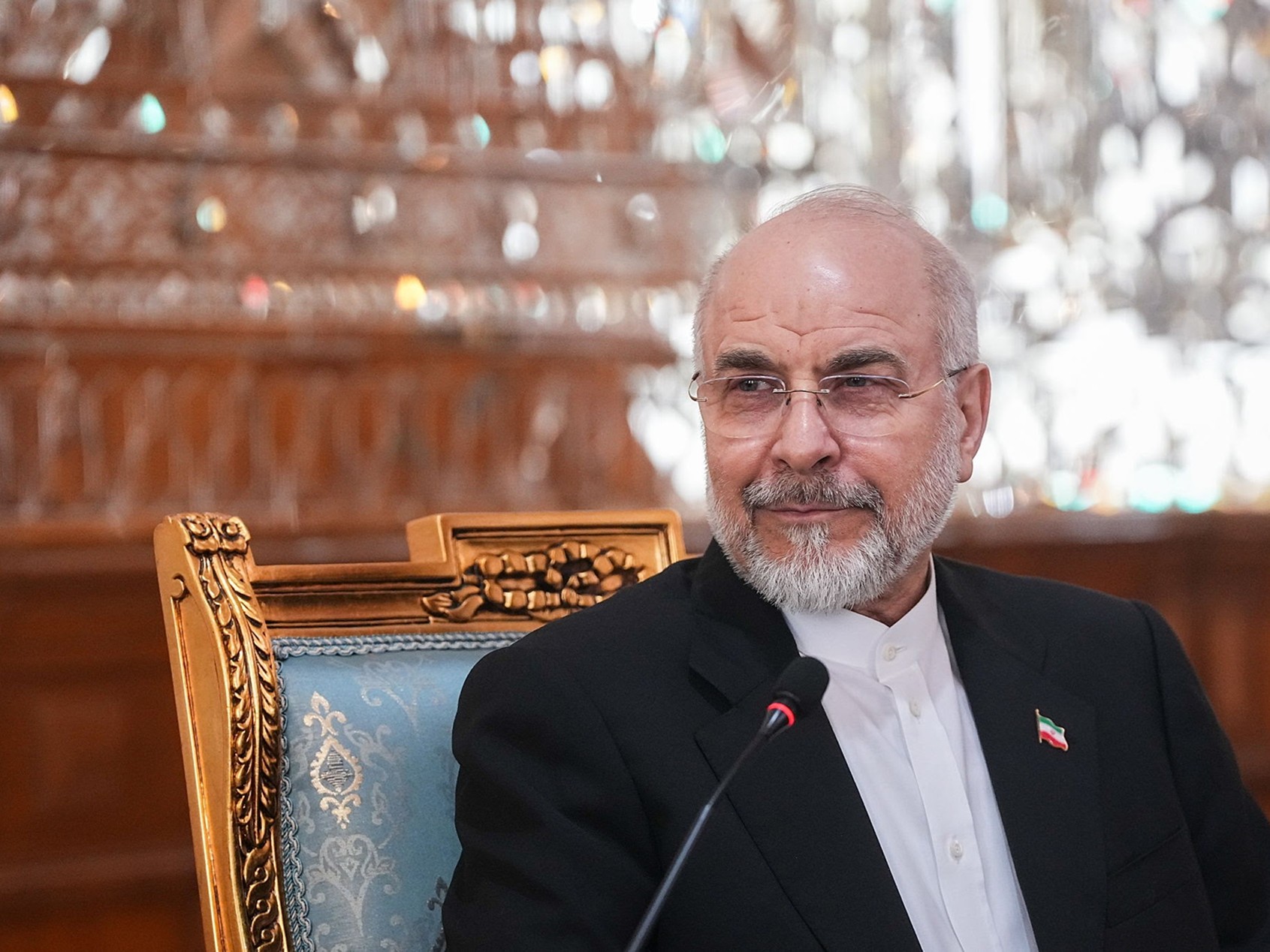
If the military made Ghalibaf a national figure, the Tehran mayoralty transformed him into a political powerhouse.
After an unsuccessful presidential campaign in 2005, he became mayor of the capital. What followed was one of the longest mayoral tenures in Tehran's modern history. Over twelve years, he oversaw major infrastructure projects, transportation initiatives, urban development programs, and municipal expansion.
Supporters argued that he brought managerial discipline and ambitious planning to a city struggling with rapid growth. Critics countered that the concentration of power within municipal institutions created opportunities for patronage, favoritism, and corruption.
It was during this period that some of the most serious allegations against him emerged.
Reports concerning discounted property transfers, preferential access to municipal assets, controversial financial arrangements, and questionable contracting practices generated repeated public controversy. Critics alleged that valuable public resources had been distributed to politically connected individuals under favorable conditions. Journalists and investigators who pursued these stories often encountered significant institutional resistance.
Several close associates faced legal scrutiny, including senior municipal officials who had worked alongside him for years. One of the most prominent cases involved a longtime deputy and trusted aide who was later convicted on corruption-related charges. These developments fueled accusations that systemic problems had flourished under Ghalibaf's administration.
Despite the scale of the allegations, Ghalibaf himself consistently avoided direct legal consequences. This ability to emerge politically intact from repeated scandals contributed to his reputation as one of the most resilient figures in the country's political landscape.
Throughout his public life, Ghalibaf repeatedly sought the presidency.
He campaigned multiple times, each effort revealing a slightly different political persona. Early campaigns emphasized technocratic competence and managerial expertise. Later campaigns attempted to portray him as a pragmatic conservative capable of balancing security concerns with economic development.
The evolution of his public image was striking. A former military commander known for hard-line positions increasingly presented himself as a moderate problem-solver focused on governance and national interests. Whether this reflected genuine transformation or strategic adaptation remains a matter of debate.
Repeated electoral defeats did not diminish his influence. Instead, they helped normalize his presence as a permanent contender for national leadership. Over time, he became one of the few political figures recognized across nearly every factional divide.
His eventual ascent to the speakership of parliament provided a new institutional base from which to exercise influence. Rather than relying solely on electoral politics, he developed authority through legislative networks, elite relationships, and strategic positioning within the broader power structure.
This gradual accumulation of influence proved more durable than any single electoral victory might have been.
Recent political developments have further elevated Ghalibaf's importance.
As the Islamic Republic confronted leadership uncertainty, regional conflict, economic pressure, and questions regarding succession, reports increasingly described him as a central figure in strategic decision-making. According to various accounts, senior officials viewed him as a capable coordinator during periods of crisis because he possessed credibility across multiple institutions simultaneously.
His significance stems from a rare combination of attributes. He possesses military credentials respected by security institutions, administrative experience acquired through municipal governance, legislative authority derived from parliamentary leadership, and political visibility developed through repeated national campaigns.
Few figures possess all four.
Whether he ultimately reaches the highest offices of state remains uncertain. Yet his career already reveals important truths about how power functions inside the Islamic Republic. Advancement is rarely determined by elections alone. Military service, institutional loyalty, bureaucratic control, and the ability to survive controversy often matter just as much.
Ghalibaf's journey from a provincial revolutionary volunteer to one of the country's most influential political actors illustrates the evolution of a generation that emerged from war, consolidated power through state institutions, and gradually expanded its influence across nearly every major sector of public life.
More than any single office he has held, that ability to adapt, endure, and remain indispensable explains why Mohammad Bagher Ghalibaf continues to occupy a central place in the political architecture of the Islamic Republic.

