





Abbas Araghchi: The Diplomat Who Survived Every Power Shift
A veteran negotiator navigated decades of upheaval while remaining indispensable to power.
|
Pars Barghandan

Few figures in the history of the Islamic Republic have demonstrated the political durability of Abbas Araghchi. Over more than four decades, he has remained a constant presence through ideological shifts, factional battles, diplomatic crises, sanctions campaigns, nuclear negotiations, regional conflicts, and leadership transitions. While presidents, ministers, military commanders, and political factions rose and fell, Araghchi repeatedly adapted, survived, and returned to positions of influence.
His public image has long been defined by contradiction. International audiences often encountered a polished diplomat fluent in the language of negotiations, international law, and conflict resolution. Domestically, however, he consistently presented himself as a loyal servant of the political establishment, emphasizing obedience to the system's ideological and security priorities. This dual identity allowed him to operate simultaneously in diplomatic circles abroad and among the most influential centers of power at home.
Supporters portray him as a skilled negotiator capable of defending national interests under intense pressure. Critics argue that his career reflects the broader structure of the Islamic Republic, where diplomacy frequently functions as an extension of security policy rather than an independent instrument of statecraft. Whatever interpretation prevails, Araghchi's trajectory provides a revealing window into how power is exercised, preserved, and legitimized within the country's political system.
His career also illustrates a larger pattern: individuals who demonstrate unwavering loyalty to the core leadership often outlast those associated with specific governments, parties, or political currents. Araghchi's endurance appears to stem less from ideological innovation than from his ability to remain aligned with the priorities of the state's most powerful institutions.
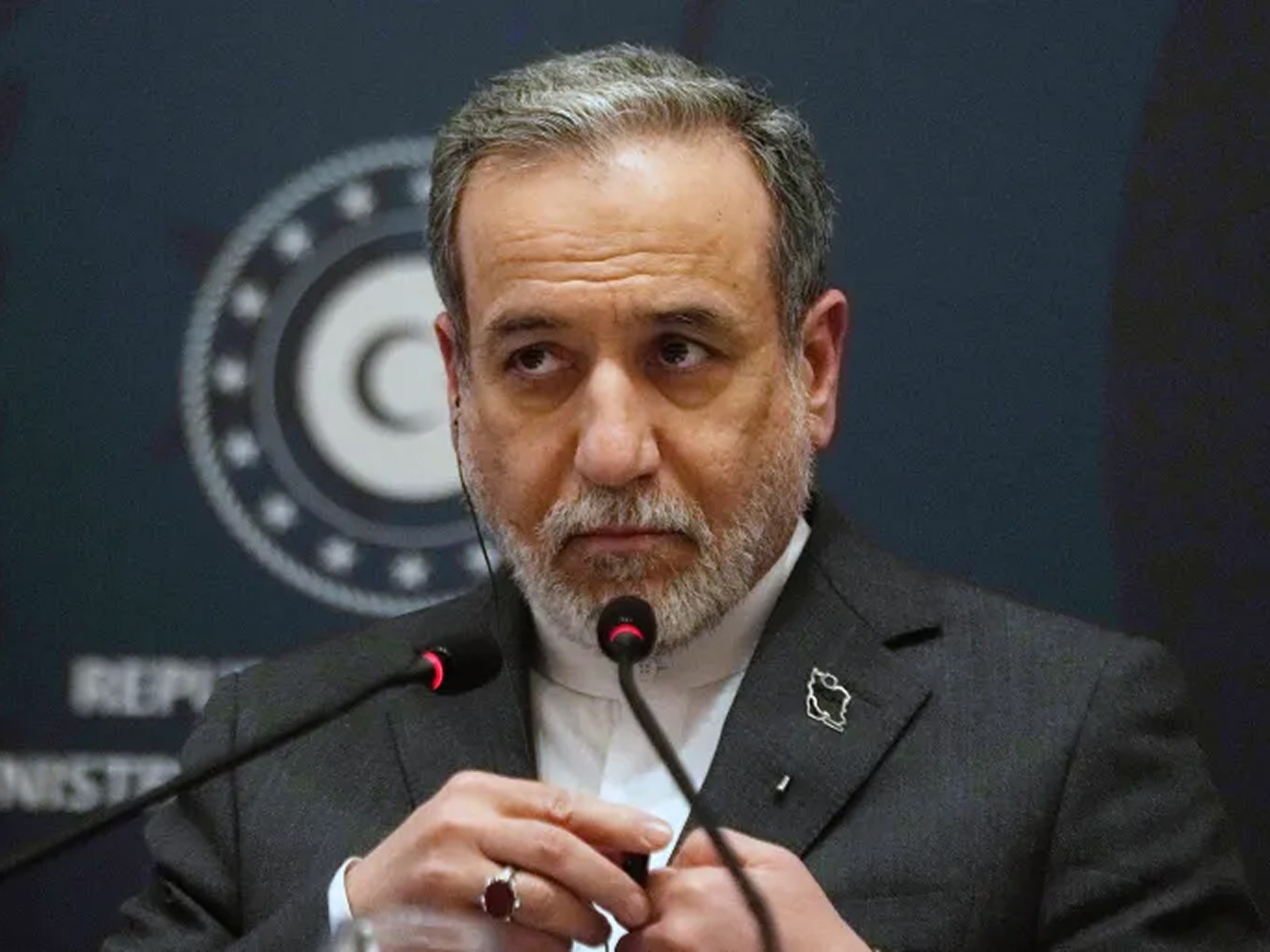
Born into a wealthy merchant family with roots in the traditional carpet trade, Araghchi emerged from a social environment connected to commerce, influence, and longstanding economic networks. Unlike other members of his family who continued in business, he chose a different path during the revolutionary upheaval that transformed Iran in 1979.
As a teenager, he became involved in the revolutionary atmosphere of the period and later joined the military effort during the Iran-Iraq War. His service in the Revolutionary Guard became one of the foundational credentials that would shape his later political career. The combination of wartime experience, ideological reliability, and formal education positioned him for advancement inside the state's diplomatic institutions.
After entering the Ministry of Foreign Affairs, Araghchi pursued a systematic process of professional development. He studied international relations, advanced through the diplomatic bureaucracy, and eventually earned a doctorate in the United Kingdom. His academic work focused on themes related to political participation and Islamic political thought, subjects closely connected to the intellectual foundations of the governing system.
His rise accelerated through a series of increasingly important assignments. He held diplomatic positions in Europe and Asia, served as ambassador, managed regional portfolios, and developed expertise in international negotiations. Unlike many officials whose careers became tied to a single political faction, Araghchi cultivated a reputation as a professional operator capable of serving different administrations without becoming identified exclusively with any of them.
This flexibility would later become one of his greatest political assets.
Araghchi's national prominence emerged during the long struggle over Iran's nuclear program.
Throughout successive administrations, he became involved in increasingly sensitive negotiations with Western governments and international institutions. His role expanded significantly during the years leading to the Joint Comprehensive Plan of Action, commonly known as the nuclear agreement.
Although public attention often focused on Foreign Minister Mohammad Javad Zarif, Araghchi became one of the key architects of the negotiation process. He participated directly in technical discussions, legal drafting, and diplomatic coordination. By the time the agreement was reached, he had become one of the most recognizable faces of Iranian diplomacy.
Yet his position differed in important ways from other members of the negotiating team.
According to accounts of his career, Araghchi consistently emphasized adherence to directives issued by senior leadership. Rather than presenting himself as an independent strategist, he portrayed his role as implementing established policy and translating political instructions into diplomatic outcomes. This distinction proved crucial during periods when the nuclear agreement became controversial inside the country.
As criticism of the agreement intensified, some negotiators became targets of political attacks. Araghchi, however, largely avoided the most severe consequences. His background in the Revolutionary Guard, his reputation for loyalty, and his careful avoidance of public confrontation with powerful institutions provided a layer of protection that many others lacked.
The result was a political paradox. He became associated with one of the most controversial diplomatic initiatives in modern Iranian history while simultaneously preserving the confidence of many figures who distrusted the agreement itself.
A recurring theme throughout Araghchi's career has been the relationship between diplomacy and security policy.
Publicly, he often spoke the language of international engagement, negotiation, and conflict management. At the same time, his critics argued that Iranian foreign policy remained fundamentally shaped by military and security institutions rather than the Foreign Ministry. In this view, diplomats functioned primarily as representatives of decisions made elsewhere.
Araghchi's career offers evidence for both interpretations.
His extensive involvement in negotiations demonstrated genuine diplomatic expertise. Yet his own public statements frequently reinforced the notion that major strategic decisions originated at higher levels of authority and that diplomats were responsible for execution rather than formulation.
This dynamic became especially visible during periods of regional conflict. As tensions escalated across the Middle East, diplomatic initiatives increasingly intersected with military operations, security calculations, and deterrence strategies. The distinction between foreign policy and national security became progressively blurred.
Araghchi adapted to this environment by positioning himself not as an alternative to the security establishment but as a bridge between diplomatic and military objectives. This approach enhanced his political resilience while reinforcing perceptions that diplomacy operated within boundaries established by more powerful institutions.
His survival across multiple administrations suggests that this balancing act was highly effective.
No long political career unfolds without controversy, and Araghchi's has been no exception.
One of the most damaging episodes involved corruption allegations connected to a family member. The resulting investigation generated intense public scrutiny and provided ammunition for political opponents seeking to undermine his credibility. Although the case attracted considerable attention, it ultimately failed to derail his career.
Another controversy emerged from remarks concerning Afghan migrants living in Iran. Critics accused him of treating vulnerable populations as bargaining tools in international disputes. Human rights advocates and observers questioned both the substance of the comments and the broader assumptions behind them. Araghchi later attempted to clarify his position, but the episode contributed to ongoing criticism of his political judgment.
More broadly, critics pointed to his silence during major episodes of domestic unrest. Across successive protest movements, he remained aligned with the official position of the state and avoided public criticism of security measures. For opponents of the government, this silence became evidence that his commitment to the system outweighed any commitment to reform or accountability.
Yet none of these controversies fundamentally weakened his standing.
The reason appears rooted in the same factor that has defined his entire career: reliability. In a political environment characterized by factional conflict and institutional rivalry, officials who consistently demonstrate loyalty to the central structure often retain influence even when individual policies fail or public criticism intensifies.
The story of Abbas Araghchi is ultimately not just the story of a diplomat. It is the story of how political survival functions within the Islamic Republic.
Unlike many prominent figures who tied their fortunes to specific factions, Araghchi built his career around institutional loyalty. He learned to navigate changing political environments without becoming dependent on any single president, movement, or ideological camp. As governments changed and priorities shifted, he remained useful because he was perceived as serving the system rather than a faction within it.
This strategy transformed him into one of the rare officials capable of moving between radically different political eras while maintaining credibility with decision-makers at the highest levels. Whether negotiating with foreign powers, managing diplomatic crises, or representing the state during periods of conflict, he repeatedly demonstrated an ability to adapt without fundamentally altering his political identity.
His career therefore reveals something important about the broader structure of power. Longevity is not necessarily achieved through charisma, electoral popularity, or ideological innovation. More often, it is secured through consistency, institutional trust, and an understanding of where ultimate authority resides.
As new crises reshape the region and new struggles emerge within the political establishment, Araghchi remains a central figure. The future of his career will depend on factors larger than any individual diplomat. Yet his four decades in public life have already established him as one of the most enduring and revealing political operators of the Islamic Republic.

