





The Assassination at Pasteur Street: How Intelligence Penetration Reached the Heart of Power
A covert intelligence campaign exposed vulnerabilities beneath Ali Khamenei's decades-long architecture of power.
|
Pars Barghandan

For decades, Ali Khamenei built the Islamic Republic around an assertion of control. His authority rested on a security system designed to detect dissent, prevent foreign penetration, protect senior officials, and preserve the ruling structure through war, protest, assassination, and internal crisis. Yet the operation that killed him on 9 Esfand 1404, according to the available accounts, exposed a striking contradiction at the centre of that system: the state had developed an immense apparatus for monitoring its population, but failed to prevent its adversaries from mapping the routines of the man at the apex of power.
Khamenei was killed during a daytime strike on the leadership compound near Pasteur Street in Tehran. The attack reportedly involved more than 30 precision or bunker-penetrating munitions, disruption of nearby telecommunications infrastructure, suppression of air defences, and intelligence gathered from a combination of human sources, hacked traffic cameras, intercepted communications, mobile-phone data, artificial intelligence, and long-term surveillance.
The timing was critical. Khamenei had reportedly spent months moving between secure locations and underground shelters. On the morning of the attack, however, he returned to his office for meetings with senior officials. American and Israeli planners allegedly learned only hours earlier that the meeting had been moved from Saturday night to Saturday morning. They concluded that the opportunity might not recur once a broader war began and senior figures dispersed into hardened shelters.
The strike was not simply an example of military reach. It was the culmination of an intelligence campaign that appears to have reconstructed the everyday functioning of Khamenei's protected world: where his guards lived, where drivers parked, which routes they used, when their shifts changed, whom they transported, which mobile towers served the compound, and how senior officials communicated during emergencies.
Accounts of the operation suggest that at least one human source had penetrated Khamenei's inner circle closely enough to confirm his presence inside the compound. Alongside this source, Israeli intelligence had reportedly compromised Tehran's traffic-camera network years earlier, gaining access to live images near the entrances to the leadership complex. Analysts then combined those images with communications intelligence and data modelling to establish what intelligence services call patterns of life.
The operation also exposed the fragility of the Islamic Republic's official information system. For hours after the compound had been devastated, senior officials, parliamentarians, the Islamic Revolutionary Guard Corps, and state media denied or obscured what had happened. Foreign Minister Abbas Araghchi initially said that Khamenei, the president, and other senior leaders were alive and safe. Members of parliament issued similar assurances. The Revolutionary Guard dismissed reports of the leader's death as part of a history of fabricated claims.
Hours later, state television announced that Khamenei had been killed while carrying out his duties at his workplace.
The reversal was more than wartime confusion. It revealed the degree to which information had become fragmented inside the state. Officials either lacked access to reliable knowledge, were ordered to repeat a prepared narrative, or sought to delay confirmation until the ruling establishment had agreed on how to present the death. The eventual portrayal transformed a severe counterintelligence failure into a story of martyrdom and duty.
But the underlying facts, even where operational details remain disputed, point in another direction. Khamenei's death was made possible by the penetration of institutions created to make such an event impossible. The attack reached not only a building, but the routines, communications, assumptions, and security culture surrounding the most protected political figure in the country.
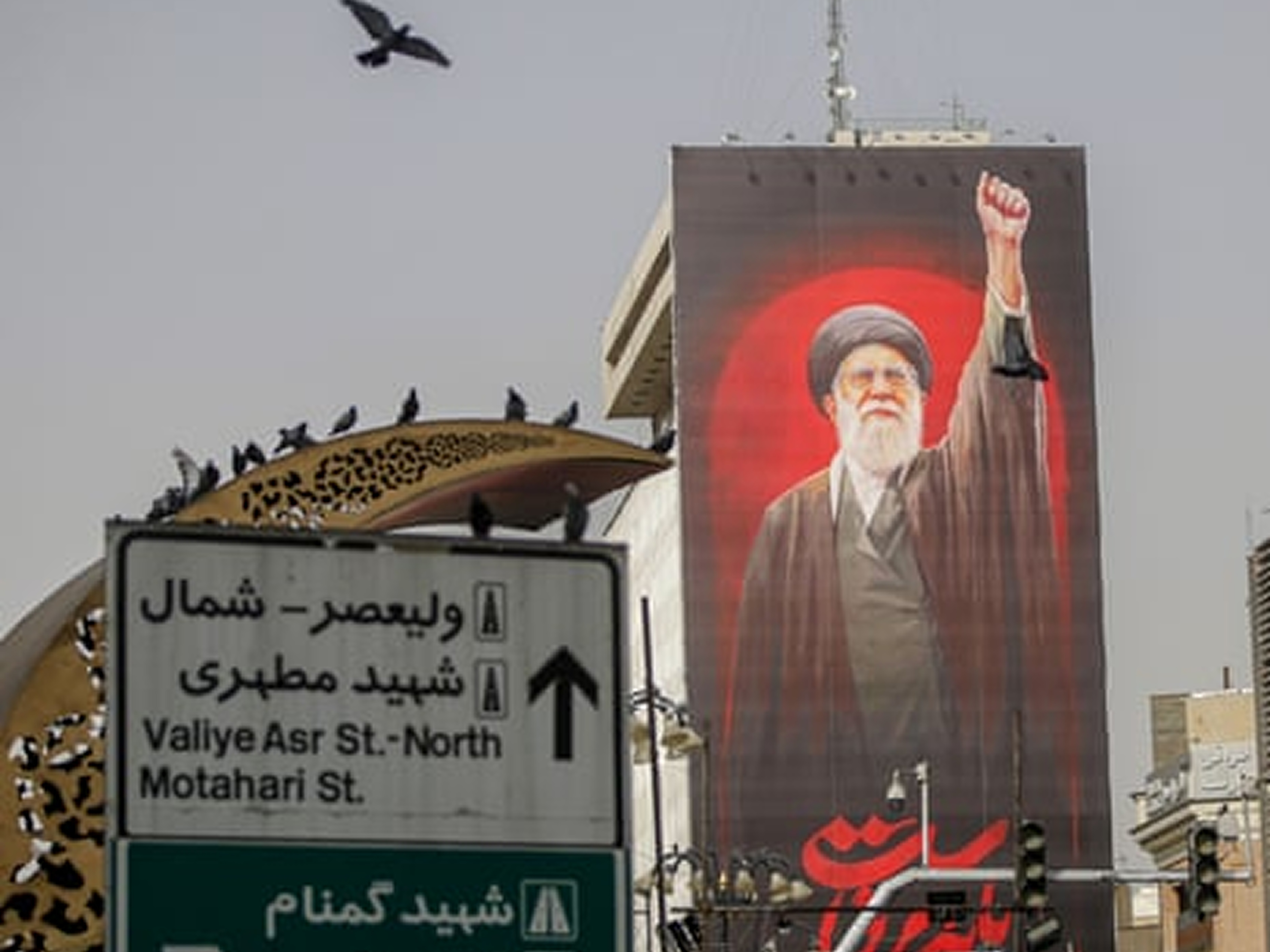
Khamenei's 37-year leadership was defined by the concentration of authority in institutions answerable directly or indirectly to him. The Revolutionary Guard became the central military, economic, political, and intelligence instrument of that system. Its role extended far beyond conventional defence. It protected strategic sites, controlled missile forces, managed regional networks, intervened in the economy, suppressed domestic unrest, and helped enforce the ideological boundaries of public life.
The security architecture was inseparable from Khamenei's political worldview. He repeatedly described the United States and Israel not simply as foreign rivals, but as permanent forces seeking to infiltrate and transform the Islamic Republic from within. Negotiation, cultural exchange, educational initiatives, private investment, journalism, civil society, and access to global communications were often interpreted through the language of penetration.
Khamenei warned of cultural assault, soft war, and ideological subversion. International programs such as UNESCO's 2030 education framework were portrayed as possible channels for foreign influence. Intellectuals, journalists, artists, students, and activists were treated not only as domestic critics but, in many cases, as potential extensions of an external campaign.
This doctrine helped justify censorship, surveillance, internet controls, arrests, forced confessions, pressure on families, and the prosecution of writers and political opponents. It also contributed to an institutional culture in which security agencies were rewarded for finding internal enemies, sometimes on the basis of weak evidence, while more serious penetration at the highest levels remained undetected.
The contradiction was structural. A system consumed by the possibility of ideological infiltration became vulnerable to operational infiltration.
Khamenei's foreign policy followed a similar logic. He rejected the idea that accommodation with Washington could provide durable security. In 2018, he told the country that there would be neither war nor negotiation. Resistance was presented as the only viable strategy, and state resources were mobilised around confrontation with the United States and Israel.
Hostility toward Israel was not peripheral rhetoric. It became one of the organising principles of the Islamic Republic's regional strategy. The Revolutionary Guard supported armed groups, missile programs, and military networks intended to extend pressure beyond Iran's borders. Khamenei publicly threatened that Tel Aviv and Haifa could be destroyed if Israel acted against the Islamic Republic.
This posture created deterrence, but it also generated an escalating intelligence war. Israeli services spent years targeting nuclear specialists, military commanders, missile infrastructure, warehouses, communications systems, and senior operatives associated with the Islamic Republic and its regional allies. The killing of Hezbollah leader Hassan Nasrallah in Beirut in September 2024, after years of underground concealment, demonstrated how persistent surveillance could eventually overcome even extensive protective measures.
Khamenei was not hidden in the same manner. He appeared at official meetings and public events, received senior figures, and continued to work from locations associated with the leadership compound. During periods of heightened danger, however, his movements reportedly followed complex security protocols. He moved between offices, residences, and underground shelters, limiting the ability of foreign intelligence services to establish a stable routine.
The protective infrastructure around him was extensive. One reported complex, constructed over approximately a decade near the leadership compound, was known as Habib Ebrahimi, named after a former driver. It allegedly included vehicle access from Mofid Alley, underground parking, firing ranges, tunnels connecting to exits near Jami parking and western Pasteur Street, and shelters at depths of approximately 30 and 35 metres.
A blast-resistant room was reportedly constructed inside one of the shelters. Above ground, a sports facility provided cover for parts of the subterranean complex. Another shelter was said to be located in Lavizan.
These installations reflected a central assumption of the security system: Khamenei could survive if he reached the correct protected space in time. The fatal weakness was not necessarily the strength of the shelters, but the intelligence required to determine when he was outside them.
One person familiar with the leadership compound later expressed surprise that Khamenei had not been in one of his shelters during the strike. Had he been inside the deeper protected space, the munitions used might not have reached him. The operation therefore depended less on defeating every layer of underground construction than on identifying a narrow interval when those layers were not protecting their intended occupant.
The difference between an invulnerable leader and an exposed one was measured in hours.
The attack appears to have begun long before aircraft were launched.
Israeli intelligence had reportedly penetrated Tehran's traffic-camera system years earlier. Images from the network were allegedly encrypted and transferred to servers in Israel. One camera near the leadership compound provided a particularly useful view of movements around an entrance used by guards, drivers, and officials.
Such images would not necessarily reveal Khamenei directly. Their value lay in routine. Trained security personnel still had homes, shifts, vehicles, parking preferences, and habitual routes. Drivers assigned to particular officials could be identified. Guards who appeared together could be linked to the same protective detail. Changes in the number or identity of personnel could indicate that a senior figure was expected.
Algorithms reportedly expanded these observations into individual dossiers. Addresses, work schedules, commuting patterns, vehicle locations, and professional relationships were incorporated into a broader map of the security network. Analysts could then identify deviations from normal behaviour.
The available accounts describe this as a dense, multi-layered intelligence picture built through signal interception, human recruitment by Mossad, military intelligence reporting, and the capabilities of Israel's Unit 8200. Large volumes of data were processed using network-analysis methods designed to locate hidden centres of decision-making and identify people whose formal titles might understate their operational importance.
The objective was not merely to collect information. It was to convert information into targets.
The same approach had reportedly been demonstrated during the earlier twelve-day war, when more than a dozen nuclear specialists and senior military officials were killed within a short period at the beginning of hostilities. That campaign was accompanied by the disruption of air defences through cyberattacks, short-range drones, and precision munitions launched from beyond the country's borders.
Radar systems and missile launchers, including Russian-designed components, were reportedly disabled before they could provide an effective defensive response. Israeli aircraft were said to have used long-range variants of the Sparrow missile family, some described as capable of striking relatively small targets from distances exceeding 1,000 kilometres.
The operation against Khamenei followed the same doctrine on a larger political scale. Intelligence superiority was used to create a period in which the adversary's leadership could be struck before the wider system fully understood that war had begun.
According to the reported timeline, Israeli Prime Minister Benjamin Netanyahu spoke with Donald Trump less than 48 hours before the attack. Intelligence gathered earlier that week indicated that Khamenei and several close associates would soon meet at his Tehran office. Updated information showed that the meeting had been moved from Saturday night to Saturday morning.
The change created what planners considered a rare opportunity. Once open conflict began, Khamenei and other senior leaders were expected to activate established escape procedures, separate from one another, reduce communications, and relocate to underground shelters. Tracking and targeting them would then become significantly more difficult.
Netanyahu reportedly argued that the chance to kill Khamenei alongside a substantial part of the senior leadership might never return. The decision was political as much as military. Technology could establish the opportunity, but elected leaders still had to decide whether to use it.
The broader strategic calculations remain contested. Trump had agreed in principle to military action against the Islamic Republic but had reportedly not finalised the timing or full conditions of American participation. United States forces had been strengthened across the region, creating the impression inside the administration that large-scale operations required only a presidential order.
One earlier possible date was reportedly abandoned because of poor weather. Two other developments were described as influencing Trump's assessment: a successful American operation in Caracas to detain former Venezuelan president Nicolás Maduro without American casualties, and mass anti-government protests in Iran followed by severe repression.
The death toll attributed in the source material to those protests is extremely high and cannot be independently established from the available evidence. What matters to the reported decision-making is that American officials were said to view the unrest as evidence of unusual vulnerability inside the Islamic Republic. Netanyahu allegedly suggested that Khamenei's removal might bring Iranians into the streets and create conditions for the fall of the political system established in 1979.
United States intelligence was reportedly more cautious. Its assessment was that another hardline figure would probably replace Khamenei. The difference between those views was significant. One treated assassination as a possible catalyst for political transformation. The other saw it as a leadership decapitation that might alter personalities without dismantling the system.
The reported division of labour reflected that uncertainty. Israel would concentrate more heavily on political and senior leadership targets. The United States would focus primarily on military objectives. Rather than a single isolated decapitation strike, the attack on the leadership compound would signal the beginning of a broader campaign.
At approximately 9:40 a.m. local time, Israeli aircraft reportedly attacked the compound with around 30 bunker-penetrating munitions. Other locations in Tehran were also struck, including an office associated with President Masoud Pezeshkian, who later stated that he was safe.
The number of bombs used suggests that planners believed Khamenei might be inside a protected area beneath the compound. Even if the shelter was not among the deepest available, repeated impacts were considered necessary to penetrate enough layers and increase the probability of killing everyone in the target zone.
At the same time, components of roughly 12 telecommunications towers near Pasteur Street were allegedly disrupted. Calls appeared busy, preventing members of Khamenei's protection team from receiving warnings or coordinating a response. Air-defence systems were also neutralised or suppressed during the opening stage.
The operation reportedly included a psychological and cyber component. The widely used Bad Saba prayer-time application had allegedly been compromised in advance. Minutes after the attack began, messages were sent to millions of users urging them to rise against the government.
The inclusion of such an application illustrates the breadth of the operation. Civilian digital infrastructure was treated as part of the battlespace. A program associated with religious observance became a platform for psychological warfare, timed to coincide with the physical destruction of the leadership compound.
The missiles did not begin the battle. By the time they arrived, the compound had already been penetrated informationally. The attackers allegedly knew the routines of its guards, the location of its vehicles, the patterns of its communications, the weaknesses of its telecommunications coverage, and the schedule of its principal occupant.
The first public evidence of the attack came through satellite imagery and videos showing heavy damage, smoke, and dust around the leadership complex. A nearby resident described seeing Khamenei's son, Masoud, emerge in a state of visible shock, unable to walk without assistance before being placed in a car.
Despite the scale of the destruction, the official system initially denied that the leadership had been seriously affected.
Araghchi, who was himself reportedly inside part of the complex, told NBC that only one or two commanders had been lost and that this did not constitute a major problem. He said that, to the best of his knowledge, Khamenei, the president, and all senior officials were alive and safe.
Members of parliament repeated the same line. Hamid Rasaei wrote that Khamenei was in full health and directing the war, just as he had during the previous twelve-day conflict. The Revolutionary Guard accused Trump of spreading false information and compared the claims to earlier reports that it said had later proved baseless.
The denials continued even though the leadership compound had been struck with dozens of munitions.
Several explanations are possible. Officials may genuinely have lacked confirmation. Communications disruption may have prevented reliable information from reaching ministries and military institutions. Surviving officials may have feared creating panic before succession arrangements were discussed. Some may simply have followed an established wartime instruction to deny claims about senior casualties until state media issued an authorised statement.
Whatever the reason, the episode revealed a hierarchy in which political messaging took precedence over verifiable information. Officials spoke confidently about matters they did not know or could not confirm.
State television eventually announced Khamenei's death, describing him as having been killed while performing his duties at his workplace. The Supreme National Security Council issued its own religiously framed declaration. According to a later parliamentary account, officials meeting at the council around 1 a.m. decided that the announcement would be broadcast before dawn on 10 Esfand, during Ramadan.
The delay gave the state time to transform the meaning of the attack. The event was no longer presented as the result of intelligence penetration or the failure of protective systems. It became a narrative of sacrifice: the leader had refused to abandon his responsibilities, remained at work despite danger, and died in service.
Araghchi later offered a more detailed account. He said that he had returned to Tehran from negotiations in Geneva on Friday and went to the leadership office at approximately 9 a.m. Saturday to report on the talks and discuss the growing likelihood of war. The building in which he was sitting was struck. His section survived, while another part was destroyed.
He said his first concern was Khamenei's condition. He hoped the leader had not been in the office, but suspected that he was because Khamenei maintained his normal work habits despite the military threat.
This account unintentionally reinforced the central security question. If senior officials understood that the probability of war had sharply increased, why was Khamenei present at a predictable government compound rather than inside a protected shelter? If he was moving according to complex security procedures, how did the attackers know the precise morning when he would appear?
Mehdi Kharatian, a political analyst familiar with aspects of the leadership's security routines, argued that the killing could not be understood without penetration. Khamenei moved repeatedly between locations, attended meetings at the compound, and followed complicated protocols. A successful strike during a brief appearance therefore implied access to information unavailable through ordinary observation alone.
Emergency responders provided only fragments of the scene. A Red Crescent official said rescue personnel had been outside the compound without mobile phones because of security restrictions. He reported seeing Ali Larijani and Salehi, while colleagues said they had seen Araghchi. Other officials emerged covered in dust.
Firefighters reportedly located Khamenei's body beneath the rubble. Jalal Maleki, a fire department spokesman, later said he had not initially believed the leader was inside. His description of the body was stark: it had been extensively burned.
This description sat uneasily beside the symbolic imagery later promoted by supporters. A message attributed to Mojtaba Khamenei claimed that the body retained an image of strength and that one undamaged hand had remained clenched in a fist. The account combined what its author said he had seen with what he said he had heard, providing no clear forensic explanation.
The clenched fist nevertheless became a political symbol. Plans were reportedly made to install a representation of it in Revolution Square. The transformation was characteristic of the Islamic Republic's political culture: physical destruction was converted into iconography, uncertainty into certainty, and failure into martyrdom.
The effort to control the meaning of Khamenei's death could not erase the institutional implications. The leadership compound had been observed. Its communications had been disrupted. Its schedule had been penetrated. Its protective assumptions had failed. The state could build a monument to defiance, but it could not easily explain how the most heavily protected person in the country had been located and killed at the start of a war.
For many Iranians, Khamenei's death carried a meaning entirely different from the one constructed by state media. Celebrations were reported in Tehran, Shiraz, Isfahan, Tabriz, and other cities. People danced, lit fires, shouted against the government, and described the moment as the beginning of a new world.
Iranian communities abroad also gathered in cities including Los Angeles, Toronto, London, and Paris. The response reflected decades of accumulated anger over repression, executions, censorship, economic decline, regional conflict, and the violent suppression of protests.
Khamenei's final years had deepened that hostility. He portrayed protesters as rioters, foreign agents, and trained terrorists. Demonstrations were repeatedly framed as security operations directed by the United States or Israel, allowing the Revolutionary Guard and other agencies to respond as though confronting an external enemy rather than citizens.
The same concept of infiltration that shaped Khamenei's national-security doctrine was applied to domestic dissent. Protesters were denied political agency. Journalists were treated as instruments of hostile influence. Cultural change was described as warfare. Negotiation became surrender. The boundary between disagreement and treason steadily narrowed.
His death therefore produced an unusual division in public meaning. The state demanded mourning for a martyr. Many citizens celebrated the disappearance of the man they regarded as ultimately responsible for the system's violence.
Yet the removal of a ruler does not automatically dismantle the institutions created under him. Khamenei's authority had been personal, but it was exercised through durable networks: the Revolutionary Guard, intelligence agencies, judicial bodies, foundations, clerical institutions, state broadcasting, patronage systems, and unelected councils.
American intelligence reportedly expected another hardliner to succeed him. That assessment reflected the reality that the Islamic Republic was designed to preserve continuity after the death of an individual leader. Succession procedures, security commands, and ideological institutions existed precisely to prevent a vacuum from becoming a revolution.
The assassination nevertheless altered the system in several fundamental ways.
First, it destroyed the aura of physical protection surrounding the supreme leadership. A state that had repeatedly demonstrated its ability to monitor, arrest, and eliminate domestic opponents could not prevent foreign services from reaching its most restricted compound.
Second, it raised the possibility of internal purges. An operation dependent on human intelligence inside Khamenei's circle would inevitably produce suspicion among surviving officials. Guards, drivers, communications staff, advisers, military officers, and relatives could all become subjects of investigation. The search for collaborators could weaken trust at the precise moment when the system required unity.
Third, the attack challenged the Islamic Republic's deterrence doctrine. Khamenei had argued that resistance and military pressure would prevent adversaries from imposing their will. Instead, the confrontation he had spent decades preparing for reportedly ended with enemy aircraft striking his office in daylight.
Fourth, the attack demonstrated the growing fusion of military, digital, and intelligence operations. Hacked cameras, mobile data, telecommunications disruption, artificial intelligence, human sources, cyber penetration, psychological messaging, long-range weapons, and precision bombing formed a single operational system.
In this model of conflict, the decisive advantage does not necessarily belong to the side with the largest army or deepest shelter. It belongs to the side capable of integrating scattered data into an accurate picture faster than its opponent can recognise that it has been exposed.
The Islamic Republic had invested enormous resources in preventing infiltration. Khamenei made the concept central to national ideology and internal repression. Yet the available accounts suggest that the decisive penetration occurred not through universities, newspapers, cultural organisations, or civil society groups, but through the security environment surrounding the leader himself.
This is the central irony of his rule. Khamenei warned constantly that foreign enemies sought access to the country's political core. In response, he narrowed public life, empowered security institutions, and treated openness as danger. But the resulting system became secretive without becoming secure, coercive without becoming perceptive, and heavily guarded without being able to distinguish loyalty from penetration.
The full operational record may remain classified for years. Intelligence services have strong reasons to protect sources and methods that could still be used against other figures. Some details may have been exaggerated for psychological effect. Others may have been deliberately obscured by the Islamic Republic to conceal the scale of the damage.
But the broad pattern is difficult to dismiss. The strike depended on more than firepower. It required prolonged access to the rhythms of power in Tehran. It required observers who understood the difference between ordinary movement and a significant change. It required a system capable of recognising a temporary gathering and acting before the targets disappeared underground.
Khamenei spent decades presenting himself as the guardian of a political order under siege. In the end, the siege reached him through the very structures designed to keep it out. His death did not by itself determine the future of the Islamic Republic, but it revealed the extent to which the system's appearance of control had concealed an extraordinary vulnerability.
The question left behind is not simply who will replace him. It is whether a political order built around one man's authority can recover after his enemies demonstrated that they could observe its inner routines, disrupt its communications, bypass its defences, and strike its centre before the state could even agree on what had happened.

