



The Shadow Network: How Israeli Intelligence Infiltrated Iran's Most Secure Institutions
An investigation into systemic intelligence failures exposing Iran's vulnerability to foreign espionage operations.
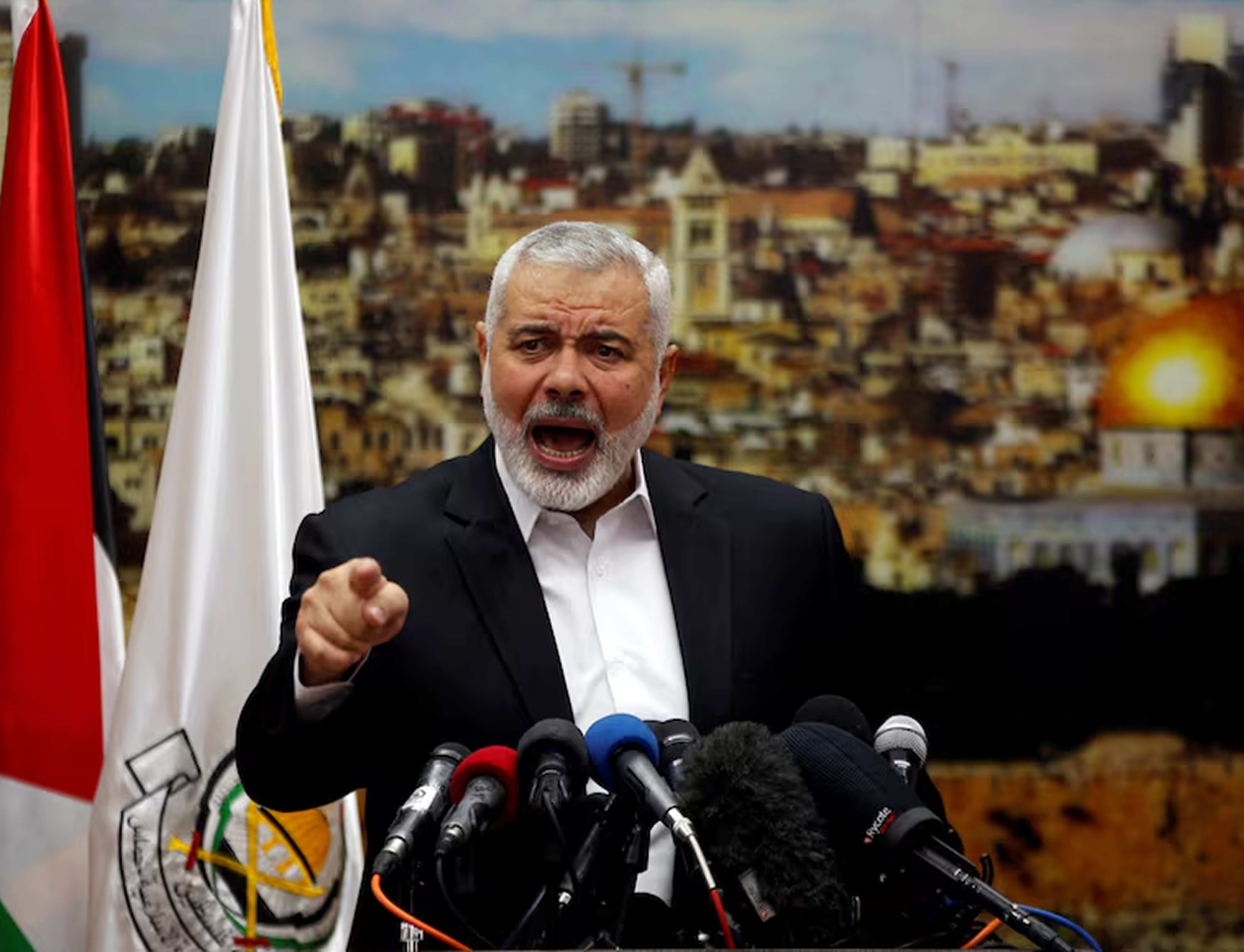
The assassination of Hamas political leader Ismail Haniyeh in the early hours of July 31, 2024, inside a heavily guarded compound in Tehran, represents far more than a singular intelligence failure. It exposes the collapse of the Islamic Republic's counterintelligence apparatus and reveals the extraordinary depth of Israeli penetration into institutions once considered impenetrable. Warnings from former senior officials went unheeded for years. Double agents operated at the highest levels of counterespionage units specifically tasked with stopping foreign infiltration. Elite protection forces assigned to guard top officials were allegedly compromised and recruited to serve Israel's Mossad. This investigation reconstructs how a systematic campaign of infiltration, operating over more than a decade, rendered Iran's security establishment vulnerable to devastating breaches that have cost lives, compromised nuclear secrets, and shattered the regime's aura of invincibility.
The roots of Iran's current intelligence crisis extend back more than a decade, though warnings emerged publicly as early as 2020. In June 2021, Ali Younesi, who served as Minister of Intelligence under President Mohammad Khatami from 2000 to 2005, issued an unprecedented public warning that sent shockwaves through Iranian security circles. Speaking with unusual candor, Younesi declared that "over the last ten years, the Israeli Mossad spy agency has penetrated various sectors in the Islamic Republic to the extent that all Iranian officials should fear for their lives".
Younesi's warning was not rhetorical hyperbole. He elaborated that the infiltration of Mossad into different sectors of the country had reached such alarming levels that "authorities of the Islamic Republic should be concerned about their lives." His statement pointed to a fundamental structural problem: the competition and rivalry between the Intelligence Ministry and the Islamic Revolutionary Guard Corps Intelligence Organization had created exploitable gaps. "Unfortunately, security and intelligence organizations, instead of identifying these [infiltrators], have turned against their own people," Younesi stated. "Neglect of Mossad has allowed them to easily infiltrate and deliver so many blows".
His testimony carried particular weight given his background. As someone who had worked within the intelligence apparatus during a period when, by his own admission, "such infiltrations did not exist," Younesi witnessed firsthand the deterioration of Iran's counterintelligence capabilities. The former minister lamented that what was once attributed to Israeli operations "turned out not to be" their work at all, suggesting that internal paranoia and misdirection had allowed real foreign agents to operate with impunity.
Yet Younesi's warnings were dismissed and even mocked by commanders within the IRGC. The institutional arrogance would prove catastrophic. Within three years, those warnings would be validated in the most humiliating fashion imaginable: a senior Hamas leader assassinated inside an IRGC-controlled facility in the heart of Tehran, just hours after attending the inauguration of Iran's new president.
In June 2021, shortly after Younesi's public warning, former President Mahmoud Ahmadinejad made an even more explosive revelation. Speaking in a video interview that was widely circulated, Ahmadinejad disclosed that the highest-ranking official responsible for countering Israeli espionage within the Intelligence Ministry had himself been exposed as an Israeli agent.
"How is it that the highest person responsible for controlling Israeli spies, responsible for confronting Israeli plots in Iran, himself turned out to be an Israeli spy?" Ahmadinejad asked rhetorically. "Is it a joke that this person, alone in the Intelligence Ministry, became an Israeli spy? Does he have no connections, no support network? Has he single-handedly supported numerous operations in Iran?".
The implications were staggering. Ahmadinejad insisted that such an operation could not have been conducted by a single individual. "Anyone who knows anything about how these things work knows that if someone makes this claim, it's a big lie. Obviously there is a network. That is the front line; we must pull that thread and collect the entire network from across the country. Where were they collected? One person was convicted. Where did all the others go?".
In a 2024 interview with CNN Turk, Ahmadinejad elaborated further, revealing that not only was the head of the counter-Mossad unit compromised, but an additional twenty agents within that team were also operating on behalf of Israeli intelligence. According to Ahmadinejad, these double agents were responsible for some of Mossad's most significant intelligence coups inside Iran, including the audacious 2018 theft of Iran's nuclear archive and the subsequent assassinations of key nuclear scientists.
The alleged double agents, Ahmadinejad claimed, were able to flee Iran following their operations and are now living in Israel. The officer in charge of counter-intelligence against Israel within the Intelligence Ministry was quietly convicted by an Iranian Revolutionary court, sentenced to death, and executed without any publicity. But if Ahmadinejad's claims are accurate, the network he belonged to remained largely intact, continuing to feed intelligence to Israel.
This revelation laid bare a fundamental paradox: the very unit established to identify and neutralize Israeli spies had become a conduit for Israeli intelligence gathering. It represented not merely a failure of vetting or oversight, but a complete inversion of institutional purpose. The hunters had become the hunted, the guardians had become collaborators, and the counterintelligence apparatus had become a tool of the adversary it was designed to combat.
On the night of July 30, 2024, Ismail Haniyeh, the 62-year-old political leader of Hamas, attended the inauguration ceremony of Masoud Pezeshkian as the fourteenth president of the Islamic Republic. Haniyeh had been invited as an honored guest, reflecting the close relationship between Hamas and Iran. Following the ceremony, he retired to his accommodation at the Neshat guesthouse complex, a facility operated by the IRGC's Ansar al-Mahdi Protection Corps, located in the upscale Zafaraniyeh neighborhood of northern Tehran, near the historic Saadabad Palace.
Despite being aware that Israeli intelligence services were actively tracking Haniyeh, Iranian security forces had placed him under what they described as exceptional security protocols. Upon his arrival in Tehran, Haniyeh was placed under the protection of multiple layers of security: the special police protection unit for VIPs, the IRGC's Ansar al-Mahdi Protection Corps, and IRGC Intelligence operatives. His security detail was described as among the most intensive ever deployed for a visiting dignitary.
The Neshat guesthouse where Haniyeh was staying was part of a secure IRGC compound, theoretically one of the most protected locations in Tehran. Yet at approximately 1:37 to 1:45 AM on July 31, an explosion tore through the fourth-floor room where Haniyeh was sleeping, killing him instantly along with his bodyguard.
Khaled al-Qadoumi, Hamas's representative in Tehran, was present in the building at the time and provided a detailed account. Al-Qadoumi, who was staying on a lower floor, described hearing the explosion: "At around 1 or 2 AM, something unusual happened. I stood up. I thought maybe it was an earthquake. Then I looked out the window—no rain, no thunder, it's a very hot season. Then I came out of the room and found smoke everywhere".
Al-Qadoumi rushed to the fourth floor and discovered the devastating scene. "The outer walls of Ismail Haniyeh's room had collapsed," he later testified. "It was clear that the cause of the explosion came from above, penetrating inside the building". He observed that Haniyeh's room had been directly targeted, with the ceiling and external walls destroyed, while he and Hamas official Ziyad al-Nakhalah, who was staying on the third floor, escaped unharmed. "If the scenario of a missile penetrating from the roof is correct, naturally someone on the top floor would be easily harmed," al-Qadoumi noted.
The assassination method itself became a source of conflicting narratives, each raising disturbing questions about security failures. The IRGC initially claimed the attack was carried out by a "short-range projectile with a warhead of approximately seven kilograms" fired from outside the compound. This version supported the Iranian regime's preferred narrative: that the attack came from external forces rather than internal betrayal.
However, The New York Times, citing seven Middle Eastern officials including two Iranians and one American, reported a fundamentally different account. According to these sources, Haniyeh was killed by an explosive device that had been covertly smuggled into the guesthouse approximately two months earlier and hidden in his room. The bomb was detonated remotely once it was confirmed that Haniyeh was inside. The explosion shattered windows, caused a partial collapse of an external wall, and created significant structural damage visible in photographs of the scene.
The Telegraph went further, reporting that Mossad had recruited agents from within the IRGC's own Ansar al-Mahdi Protection Corps to plant explosives in three separate rooms at the compound. According to two Iranian officials cited by the Telegraph, surveillance footage showed these agents moving discreetly from room to room, entering and exiting within minutes. After planting the devices, the operatives fled Iran. When the moment arrived, they detonated the explosives remotely from abroad.
"They are now certain that Mossad hired agents from the Ansar al-Mahdi security unit," an IRGC official told The Telegraph. "Upon further investigation, they discovered additional explosive devices in two other rooms". If accurate, this account suggests that Mossad had not merely penetrated Iranian security but had actively recruited members of the elite unit specifically tasked with protecting high-ranking officials.
The Telegraph's sources also revealed that the assassination had originally been planned for May 2024, during the funeral of President Ebrahim Raisi, who had died in a helicopter crash. Haniyeh had attended that funeral as well, and Mossad agents had allegedly prepared to strike then. However, the operation was aborted at the last minute due to the large crowds inside the building and the high likelihood of failure. The operatives waited, and when Haniyeh returned for Pezeshkian's inauguration in late July, they executed the operation.
The precision of the strike raised immediate questions about how the operatives knew Haniyeh's exact location in real-time. Some reports suggested that operatives exploited vulnerabilities in Haniyeh's communications security, potentially through compromised WhatsApp applications on phones used by his security team. A Lebanese journalist claimed that spyware had been installed on Haniyeh's phone via a WhatsApp message, enabling Mossad to track his precise location. However, security analysts noted that identifying the specific room within a multi-story building would require more than phone tracking; it would necessitate human intelligence from within the compound itself.
The scale of the intelligence failure prompted an immediate and frantic response from Iranian authorities. According to The New York Times, Iran arrested more than two dozen people in the aftermath, including senior intelligence officers, military officials, and staff workers at the IRGC-run guesthouse. The Independent Persian reported that approximately forty members of the Ansar al-Mahdi Protection Unit were arrested shortly after the assassination. However, on August 5, Iranian judiciary spokesman Asghar Jahangir publicly denied any arrests had been made, calling such reports "rumors" and "false". This contradiction only deepened suspicions about the extent of the breach and the regime's desperation to control the narrative.
Esmail Qaani, the commander of the IRGC's elite Quds Force, reportedly called Supreme Leader Ali Khamenei immediately after the assassination and informed him that Haniyeh had been killed in an Israeli missile attack. Khamenei ordered Iran to prepare for direct retaliation against Israel. Yet within days, Qaani himself vanished from public view. Reports emerged in early October that Qaani had traveled to Lebanon after the assassination of Hezbollah leader Hassan Nasrallah and had not been heard from since Israeli airstrikes targeted Hezbollah's intelligence headquarters in Beirut. Iranian officials later confirmed they had lost contact with Qaani, fueling speculation that he had either been killed, detained for questioning about security breaches, or had gone into hiding.
The assassination of Haniyeh was not an isolated incident. Just hours before Haniyeh was killed, Israel carried out a precision airstrike in southern Beirut, killing Fuad Shukr, a senior Hezbollah commander and close adviser to Hassan Nasrallah. Shukr was targeted in his apartment in the Dahiyeh suburb, a Hezbollah stronghold, in retaliation for a rocket attack that had killed twelve children in the Israeli-controlled Golan Heights. The near-simultaneous assassinations in Lebanon and Iran, executed within hours of each other, demonstrated not only operational coordination but also Israel's capacity to strike high-value targets deep inside adversary territory with apparent impunity.
The timing of Haniyeh's assassination was particularly galling for Iranian authorities. Just four days before his death, Intelligence Minister Esmail Khatib had publicly declared that the Intelligence Ministry had dismantled a Mossad infiltration network that had been planning to assassinate Iranian nuclear scientists and sabotage key IRGC installations. Khatib's premature boast was exposed as hollow within 96 hours, when Israel demonstrated that its operatives retained unfettered access to Iran's most secure facilities.
Mansour Haghtgoo, a former senior Iranian security official, sought to defend the regime by dismissing the theory that a bomb had been pre-planted in Haniyeh's room. Haghtgoo argued that when a head of state or leader of an allied organization visits Iran, not only do Iranian security teams thoroughly inspect the accommodation, but the visiting dignitary's own security detail also conducts meticulous sweeps using advanced detection technology. "Therefore, the idea that a bomb was in a room for two months and both security teams failed to detect it is impossible," Haghtgoo asserted. Yet this defense only raised more troubling questions: if external security protocols were so rigorous, how did the assassination occur at all? The only plausible explanation was that the breach came from within, from individuals with authorized access who could bypass security measures entirely.
The Haniyeh assassination was not the first, nor even the most audacious, breach of Iranian security. In January 2018, fewer than two dozen Mossad agents carried out what intelligence analysts regard as one of the most daring espionage operations in modern history: the infiltration of a secret warehouse in the Kahrizak District of southern Tehran and the theft of Iran's entire nuclear archive.
The operation was planned over two years and executed with surgical precision. Using a combination of human intelligence from within the Iranian government and signals intelligence from intercepted communications, Mossad identified a nondescript warehouse in the Shorabad industrial district where Iran had moved approximately 110,000 documents related to its nuclear weapons program. The files, stored in 32 safes, included detailed records of the AMAD Project, Iran's covert nuclear weapons development effort that operated between 1999 and 2015, as well as warhead designs, production plans, and research data on nuclear weaponization.
Mossad director Yossi Cohen and Prime Minister Benjamin Netanyahu decided the evidence could convince the Trump administration to withdraw from the 2015 Joint Comprehensive Plan of Action (JCPOA), the nuclear deal negotiated by President Barack Obama. Beginning in early 2017, Mossad operatives began surveillance and reconnaissance. The warehouse had no visible external security presence, making it appear unremarkable among rows of similar industrial buildings. This lack of security was deliberate: Iranian officials calculated that concealing the location in plain sight would be more effective than fortifying it and drawing attention.
Mossad sent a female, Farsi-speaking undercover agent to Tehran for an extended reconnaissance mission. She spent weeks in the area, wandering the Shorabad district, observing patterns, identifying vulnerabilities, and mapping routes. Israeli intelligence analyzed the facility extensively before green-lighting the operation.
On the night of January 31, 2018, approximately twenty Mossad operatives, none of whom were Israeli citizens, broke into the warehouse. The team had to crack more than thirty safes. Yossi Cohen, watching from a command center in Tel Aviv, later described the moment when images of the nuclear documents began appearing on screens before him: "There was incredible excitement for us all".
The operatives removed the documents and computer disks and smuggled them out of Iran the same night, dividing the materials across multiple routes to ensure redundancy. By dawn, 55,000 pages of documents and 55,000 files across 183 CDs were en route to Israel. The heist was not discovered until days later, and by then the evidence was in Israeli hands.
In April 2018, Netanyahu held a dramatic press conference at the Israeli Defense Ministry in Tel Aviv, unveiling the stolen archive to the world. Standing before display boards showing photocopies, blueprints, and video files, Netanyahu declared: "These files conclusively prove that Iran is brazenly lying when it says it never had a nuclear weapons program". He shared the intelligence with the United States, which confirmed its authenticity. The revelation played a significant role in President Trump's decision to withdraw from the JCPOA in May 2018, reimposing crippling sanctions on Iran.
Iranian President Hassan Rouhani, in one of his final acts before leaving office in August 2021, publicly acknowledged the theft. "The secrets that the Zionists came and took from inside [the country], published and showed to [former US President Donald] Trump [led him] to abandon the [nuclear] agreement," Rouhani admitted. His acknowledgment was as close as the Iranian regime came to admitting the scale of the intelligence disaster.
The archive theft highlighted vulnerabilities that extended beyond physical security. It demonstrated that Mossad had cultivated sources within the Iranian government who provided precise intelligence on the location and contents of the warehouse. It showed that Israeli operatives could move freely within Tehran, recruit and train local agents, and exfiltrate massive volumes of classified material without detection. Most ominously, it proved that Iran's counter-espionage units, despite their mandate to prevent exactly such breaches, had no advance warning of the operation.
The pattern of targeted killings inside Iran reveals a deliberate strategy: eliminate key individuals while exposing the regime's inability to protect them. Since 2010, at least five Iranian nuclear scientists have been assassinated, with several others surviving attempts on their lives. The methods employed ranged from magnetic bombs attached to vehicles to remotely operated weapons systems guided by artificial intelligence.
The assassination of Mohsen Fakhrizadeh on November 27, 2020, stands as perhaps the most technologically sophisticated killing in espionage history. Fakhrizadeh, a senior IRGC officer and physicist widely regarded as the architect of Iran's nuclear weapons program, was traveling with his wife in a convoy of vehicles from their vacation home on the Caspian Sea to their country house in Absard, east of Tehran. His bodyguards followed in separate cars.
As Fakhrizadeh's vehicle approached a junction near the town of Absard, the convoy slowed for a speed bump. A blue Zamyad pickup truck was parked along Imam Khomeini Street. Concealed inside the truck was a US-made M240C 7.62mm machine gun, smuggled into Iran in parts and assembled over eight months by a Mossad team of approximately twenty operatives. The weapon was equipped with artificial intelligence-enhanced facial recognition technology and operated via satellite link, requiring no on-site personnel.
Once Fakhrizadeh's vehicle slowed, the weapon system positively identified him as the driver. A hail of bullets struck the car below the windshield. Fakhrizadeh, possibly injured, exited the vehicle and crouched behind the open door. The weapon then fired three more rounds, striking him in the spine. He collapsed on the road. His wife, seated beside him, was not harmed. The entire attack lasted less than sixty seconds. The blue truck then exploded, destroying much of the equipment, though significant components remained intact for Iranian investigators to recover.
Brigadier General Ali Fadavi of the IRGC stated that the weapon targeted Fakhrizadeh "with such precision" that it struck only him while leaving his wife and bodyguards unharmed. The use of satellite-controlled weaponry, facial recognition AI, and remote detonation represented a quantum leap in targeted killing capability. No operatives needed to be physically present at the scene, eliminating the risk of capture and drastically reducing the operational footprint.
Fakhrizadeh's assassination followed years of careful tracking. Israeli intelligence had monitored his career and movements since at least 2007. In 2018, when Netanyahu revealed the stolen nuclear archive, he specifically highlighted Fakhrizadeh's name and role. "Dr. Mohsen Fakhrizadeh… remember that name," Netanyahu had said ominously. Two years later, Fakhrizadeh was dead.
Beyond nuclear scientists, Iranian military commanders and security officials have also been systematically targeted. In June 2022, Hasan Sayyad Khodaei, a member of the IRGC Quds Force allegedly involved in overseas operations, was assassinated in Tehran in broad daylight. Israel claimed he was affiliated with Unit 840, responsible for external terror operations. In January 2023, Alireza Akbari, a former deputy defense minister under Ali Shamkhani and a dual Iranian-British citizen, was executed by Iran on charges of spying for MI6. Akbari had allegedly provided intelligence to British intelligence regarding 178 Iranian individuals, including Fakhrizadeh. Iranian authorities claimed Akbari was part of a network that facilitated the assassination of nuclear scientists, though Akbari and his family denied all charges and claimed his confession was extracted under torture.
The recurring theme in these assassinations is not merely the loss of individual lives but the systemic failure to prevent them despite advance warnings. Ali Shamkhani, then secretary of Iran's Supreme National Security Council, admitted after Fakhrizadeh's assassination that Iranian intelligence had been aware of a plot to kill him and had even predicted where the attack might occur. Yet the assassination proceeded successfully regardless. This pattern suggests that even when Iranian intelligence possessed actionable warning, institutional dysfunction, interagency rivalry, and possible internal sabotage prevented effective protective measures.
One of the most significant strategic shifts in Mossad operations over the past fifteen years has been the transition from deploying Israeli operatives inside Iran to recruiting and training local agents. Senior Israeli officials with direct knowledge of operations have confirmed that the agents who broke into safes, assembled remote-controlled weapons, disabled air defenses, and monitored scientists' movements were not Israelis. They were either Iranian citizens or nationals of neighboring countries.
This shift was championed by Meir Dagan, who served as Mossad director from 2002 to 2011. Dagan recognized that the growing unpopularity of the Iranian regime, combined with the ethnic and religious diversity of Iran's population, created a fertile recruitment environment. Approximately 40 percent of Iran's 90 million people belong to ethnic minorities: Arabs, Azeris, Baluchis, Kurds, and others. Dagan believed that "the best pool for recruiting agents inside Iran lies within the country's ethnic and human mosaic. Many of them oppose the regime. Some even hate it".
Mossad's recruitment methods are multifaceted and sophisticated. Medical care has been a signature approach for decades. Israeli intelligence maintains links with doctors and clinics in several countries, and the promise of life-saving surgery or specialized treatments unavailable in Iran has persuaded many Iranians to cooperate. Mossad creates websites and publishes social media posts aimed at Iranians, offering assistance to those suffering from life-threatening illnesses like cancer. These posts include phone numbers and encrypted contact options. Once a candidate expresses interest, Mossad arranges an initial meeting in an accessible third country such as Turkey, Armenia, Azerbaijan, Thailand, or India, where Iranians can obtain visas relatively easily.
Candidates undergo extensive psychological evaluation. Psychologists observe their behavior from behind one-way mirrors. They complete detailed questionnaires about their personal histories, including intimate details of their family lives, and are subjected to polygraph examinations. Agents are regularly retested throughout their operational tenure. Every action, whether minor or major, is followed by another lie detector test to confirm continued loyalty.
Training is comprehensive and supervised by Israeli weapons specialists and intelligence officers. To avoid arousing suspicion inside Iran, recruited agents are instructed on what to wear, where to purchase clothing, what cars to drive, and even how, when, and where to deposit payments they receive. The agent-handler relationship is central. Handlers serve simultaneously as confessors, babysitters, psychologists, spiritual mentors, and surrogate family members. The goal is to build a bond so strong that the agent feels safe and supported, comfortable enough to share even their deepest personal secrets.
Before major operations like the June 2025 strikes during Operation Rising Lion, Mossad and Israel's military intelligence agency, Aman, trained non-Israeli agents for approximately five months. Some were brought to Israel, where models of targets had been built for practice runs. Others rehearsed their missions in third countries under the supervision of Israeli experts. The material and equipment used in operations, including weapons and surveillance devices, were delivered to "infrastructure agents"—Mossad operatives inside Iran who store the material until needed. This gear can remain hidden in safe houses for years, updated as technology evolves or maintenance is required.
In preparation for major operations, tons of metallic equipment and sophisticated weaponry were smuggled into Iran in parts by unwitting truck drivers and assembled on-site by these recruited agents. Kamikaze micro-drones were hidden inside vehicles and shipping containers. In one operation, agents assembled a secret drone base near Tehran, parking explosive drones next to Iran's air defense and missile systems. When Israeli strikes commenced, these drones disabled radar and missile batteries from within, creating a stealthy opening for airborne assaults.
The recruitment of S.T., a pseudonym used in investigative reporting, illustrates the personal dimensions of these operations. S.T., an Iranian citizen, was consumed by hatred toward the regime following abuses he suffered at the hands of the Basij militia. A Mossad case officer approached him with an offer to work as a covert operative against Iran. S.T. agreed, asking only that Israel pledge to care for his family if anything went wrong. He was trained for months outside Iran by Israeli weapons specialists. Just before a major attack began, he and his small team slipped back into the country to execute their assigned roles.
Stories like S.T.'s reveal the deeply personal motivations behind many recruitment successes. Grievances against the regime, ideological opposition, ethnic or sectarian marginalization, and personal tragedies create pools of individuals willing to take extraordinary risks. Mossad exploits these fault lines with precision, offering not only financial compensation but also medical care, relocation assistance, and the promise of striking back against a government they despise.
One of the most frequently cited explanations for Iran's intelligence vulnerabilities is the corrosive rivalry between its two primary intelligence agencies: the Ministry of Intelligence and Security (MOIS) and the IRGC Intelligence Organization. This competition, far from fostering healthy institutional checks and balances, has created exploitable gaps, duplicated efforts, and generated an environment where inter-agency blame-shifting takes precedence over effective counterintelligence.
Competition between parallel government institutions is not new in Iran. It predates the Islamic Republic and has traditionally allowed Iranian rulers to play different power centers against each other, maintaining control through division. However, under Supreme Leader Ali Khamenei, the conflict between intelligence agencies has reached unprecedented levels, undermining not only operational effectiveness but also public confidence in both the government and Khamenei's leadership.
Ali Younesi, the former intelligence minister, explicitly blamed this rivalry for Mossad's success. "Security and intelligence organizations, instead of identifying these [infiltrators], have turned against their own people. Neglect of Mossad has allowed them to easily infiltrate and deliver so many blows". The implication was clear: while Iranian intelligence agencies waged bureaucratic turf wars, foreign adversaries moved freely.
The rivalry manifests in multiple ways. Both agencies claim jurisdiction over counterintelligence, leading to overlapping operations, conflicting directives, and intelligence hoarding. Each agency jealously guards its sources and refuses to share critical information with the other, fearing that cooperation will diminish its own standing or expose its failures. This lack of coordination has been catastrophic in high-stakes situations. In the case of Fakhrizadeh's assassination, jurisdictional disputes between the Ministry of Interior and the IRGC reportedly contributed to security failures despite prior intelligence warnings.
Following the Haniyeh assassination, reports emerged that the IRGC's specialized intelligence unit for espionage took over the investigation and explicitly excluded MOIS from participating in the manhunt. This exclusion deepened existing tensions and fueled speculation that the IRGC suspected MOIS elements of complicity or incompetence.
The rivalry is exacerbated by ideological and structural differences. MOIS is nominally a government ministry, accountable to the president and subject to at least nominal oversight. The IRGC Intelligence Organization, by contrast, operates as a parallel structure directly subordinate to the Supreme Leader, with a mandate that prioritizes regime security over broader national interests. This dual structure creates conflicting chains of command, divergent priorities, and opportunities for foreign intelligence services to exploit seams between organizations.
Political interference has further weakened institutional effectiveness. Appointments within intelligence agencies are often based on ideological loyalty rather than professional competence. This prioritization of political reliability over technical expertise has resulted in leadership cadres ill-equipped to confront sophisticated adversaries. The focus on internal repression and surveillance of domestic dissidents has diverted resources and attention from external threats. As one analysis noted, "political interference and the prioritization of regime security over broader national interests have not only hindered operational efficiency but also contributed to recurring vulnerabilities such as intelligence leaks, sabotage, and internal dissent".
The rivalry and dysfunction have created a vicious cycle. Each intelligence failure prompts recriminations and purges, which further demoralize personnel and incentivize risk-averse behavior. Agents become more concerned with covering their own tracks and deflecting blame than with proactive counterintelligence. The result is an environment where foreign intelligence services can identify and exploit vulnerabilities with relative ease.
A former IRGC commander candidly acknowledged the depth of the problem. "Rivalry between the Ministry of Intelligence and the IRGC's intelligence unit has become a gateway for infiltration," he stated. This admission, rare in its candor, underscored what many analysts had long suspected: that internal divisions posed as great a threat to Iranian security as any external adversary.
The security breaches documented in this investigation carry consequences that extend far beyond the loss of individual lives or the embarrassment of Iran's leadership. They expose Iranian civilians to catastrophic risks. If foreign operatives can access IRGC facilities, nuclear archives, and the movements of senior officials, they can also potentially access information about Iran's nuclear program, military installations, and critical infrastructure.
The theft of the nuclear archive, for example, not only provided Israel and the United States with detailed intelligence on Iran's past weapons research but also potentially compromised the identities and locations of scientists, engineers, and technicians involved in current nuclear work. This information can be used for future targeting, creating a chilling effect that discourages talented professionals from participating in strategic programs.
The recurring assassinations of nuclear scientists and military commanders send a clear message: the Iranian state cannot protect those who serve it. This erodes morale within critical sectors and fosters an atmosphere of paranoia and mistrust. Scientists and officers become reluctant to travel, alter their routines out of fear, and question whether their colleagues or security personnel might be compromised. This climate of fear degrades operational effectiveness and hinders recruitment of top talent.
For ordinary Iranians, the security failures represent a double betrayal. On one hand, the regime demands absolute loyalty and subjects the population to pervasive surveillance, brutal repression of dissent, and harsh punishment for perceived disloyalty. On the other hand, the same regime proves incapable of safeguarding the nation from foreign penetration. Iranians are left vulnerable to the consequences of potential military strikes, knowing that the regime's intelligence apparatus is compromised and its protective capabilities are questionable.
The assassination of Haniyeh in Tehran also had significant political ramifications beyond Iran's borders. It humiliated the Iranian leadership before its regional allies and clients, demonstrating that Tehran could not guarantee the safety of even high-profile guests. Hamas, Hezbollah, and other groups that rely on Iranian support have reason to question whether alignment with Tehran exposes them to greater risk. The timing of the assassination, occurring during the inauguration of a new president, amplified the embarrassment, suggesting that Israel chose the moment deliberately to maximize the political damage.
The lack of accountability further compounds the problem. Despite promises of investigations and purges, no senior officials have been publicly held responsible for these failures. The arrests reported after Haniyeh's assassination were never officially confirmed, and those detained, if they exist, have not been identified. This absence of transparency perpetuates a culture of impunity, where catastrophic failures produce no meaningful consequences for those in positions of authority.
The cumulative effect of these breaches is to undermine the regime's legitimacy. The Islamic Republic has long justified its authoritarian governance by claiming it provides security and defends the nation against foreign threats. When that claim is repeatedly exposed as hollow, the foundational rationale for the regime's existence comes into question. Iranians are left to wonder: if the government cannot protect high-ranking officials in secure compounds in the capital, how can it protect ordinary citizens?
The intelligence failures documented here do not occur in a vacuum. They are symptomatic of deeper pathologies within the Islamic Republic's governance structure. The regime's obsession with internal control, its prioritization of ideological conformity over competence, and its tolerance of corruption have created an environment where catastrophic security breaches become almost inevitable.
The IRGC, ostensibly Iran's most elite military and intelligence force, has become as much a sprawling economic conglomerate as a security organization. Its involvement in vast commercial enterprises, from construction to telecommunications to oil smuggling, creates countless opportunities for foreign intelligence services to identify and exploit financial vulnerabilities. IRGC commanders and personnel with access to sensitive information are often involved in lucrative but corrupt business dealings. This makes them susceptible to blackmail, bribery, and recruitment by foreign agencies.
The pervasive corruption also degrades institutional effectiveness. Appointments and promotions are often based on connections, loyalty, and financial considerations rather than merit. Competent professionals are passed over in favor of politically reliable but less capable individuals. Resources intended for security and counterintelligence are siphoned off for personal enrichment. Equipment is substandard, training is inadequate, and morale is low.
The regime's reliance on repression to maintain power further weakens its security posture. By alienating large segments of the population through brutal crackdowns on protests, restrictions on freedoms, and economic mismanagement, the regime creates a vast pool of disaffected individuals. These are precisely the people Mossad and other foreign intelligence services seek to recruit. Ethnic minorities who feel marginalized, young people facing economic hardship, professionals frustrated by corruption and incompetence, and anyone who has suffered personal loss at the hands of the security forces become potential collaborators.
The socio-economic pressures facing ordinary Iranians have intensified in recent years. Inflation, unemployment, and the impact of international sanctions have eroded living standards. In this environment, the financial inducements offered by foreign intelligence agencies become increasingly attractive. The promise of medical care, educational opportunities abroad, or simply a way out of a stifling and repressive society can persuade individuals to take risks they might otherwise reject.
Moreover, the regime's ideological rigidity stifles critical thinking and adaptive problem-solving. Intelligence analysis is conducted by a narrow cohort selected primarily on the basis of political loyalty, leading to a strategic culture characterized by limited foresight and rigid decision-making structures. Dissenting views are suppressed, alternative scenarios are not seriously considered, and the regime remains trapped in outdated paradigms. This epistemological closure leaves the system vulnerable to strategic surprise and unable to adapt to evolving threats.
The opacity of decision-making processes further compounds these problems. Power is concentrated in the hands of the Supreme Leader and a small circle of advisers, with little transparency or accountability. Bureaucratic inertia, overlapping jurisdictions, and the absence of clear lines of authority result in slow, confused responses to crises. When security breaches occur, the regime's instinct is to cover them up, issue contradictory statements, and scapegoat lower-level officials rather than undertake genuine reform.
International isolation also plays a role. Decades of sanctions, diplomatic estrangement, and confrontation with Western powers have deprived Iran of access to advanced technologies, best practices in counterintelligence, and international cooperation in security matters. While the regime has cultivated ties with Russia, China, and other non-Western powers, these relationships do not fully compensate for the technological and institutional advantages enjoyed by adversaries like Israel and the United States.
The assassination of Ismail Haniyeh in Tehran was not merely a tactical operation. It was a strategic message: the Islamic Republic's security apparatus is compromised at the highest levels, its most secure facilities are vulnerable, and its leaders cannot protect even their most important allies. The operation exposed years of systemic intelligence failures, internal betrayals, and institutional dysfunction. It validated the warnings that Ali Younesi and others had issued for years, warnings that were dismissed, mocked, or ignored by a regime confident in its own invincibility.
The pattern revealed by this investigation is clear. Mossad has cultivated a network of agents inside Iran, including within institutions specifically tasked with counterespionage. These agents have facilitated the theft of nuclear archives, the assassination of scientists and commanders, and the infiltration of secure compounds. They have operated for years, sometimes decades, without detection. When exposed, the networks are only partially dismantled, and the regime's public denials and contradictory statements suggest either ignorance of the full scope of the problem or a deliberate effort to obscure it.
The recruitment methods employed by Mossad exploit the regime's own failures: economic hardship, ethnic marginalization, political repression, and corruption all create grievances that foreign intelligence services leverage. The rivalry between Iran's intelligence agencies creates gaps that operatives exploit. The prioritization of ideological loyalty over professional competence weakens institutional effectiveness. The result is a security environment that, despite its outward appearance of control and surveillance, is deeply penetrated and vulnerable.
For the Iranian people, the implications are profound. They live under a regime that demands absolute obedience, crushes dissent, and claims to provide security in exchange for freedom. Yet that same regime has proven incapable of protecting its own leadership, its strategic assets, or its most sensitive secrets. Iranians are left exposed to the risks of military escalation, targeted strikes, and the potential consequences of a regime that has made many enemies but few competent defenders.
The question is no longer whether Mossad has infiltrated Iran's security apparatus. The evidence is overwhelming that it has. The question now is whether the Islamic Republic possesses the institutional capacity, political will, and strategic vision to address these vulnerabilities before they lead to even more catastrophic failures. Based on the patterns documented here, the answer appears to be no. The regime remains trapped in cycles of denial, repression, and blame-shifting, incapable of the fundamental reforms that might restore its security and legitimacy.
As one senior analyst observed, "The perception that Iran can neither protect its homeland nor its key allies could be fatal for the Iranian regime, because it basically signals to its foes that if they can't topple the Islamic Republic, they can decapitate it". That perception, validated by successive intelligence breaches, has become reality. The shadow war is ongoing, and for now, the shadows belong to Israel.