

The Suspicious Death of Ali Ansarian: A Football Star's Final Days and the Questions That Remain
An investigation reveals troubling patterns around the COVID-19 death of Iranian football star Ali Ansarian.
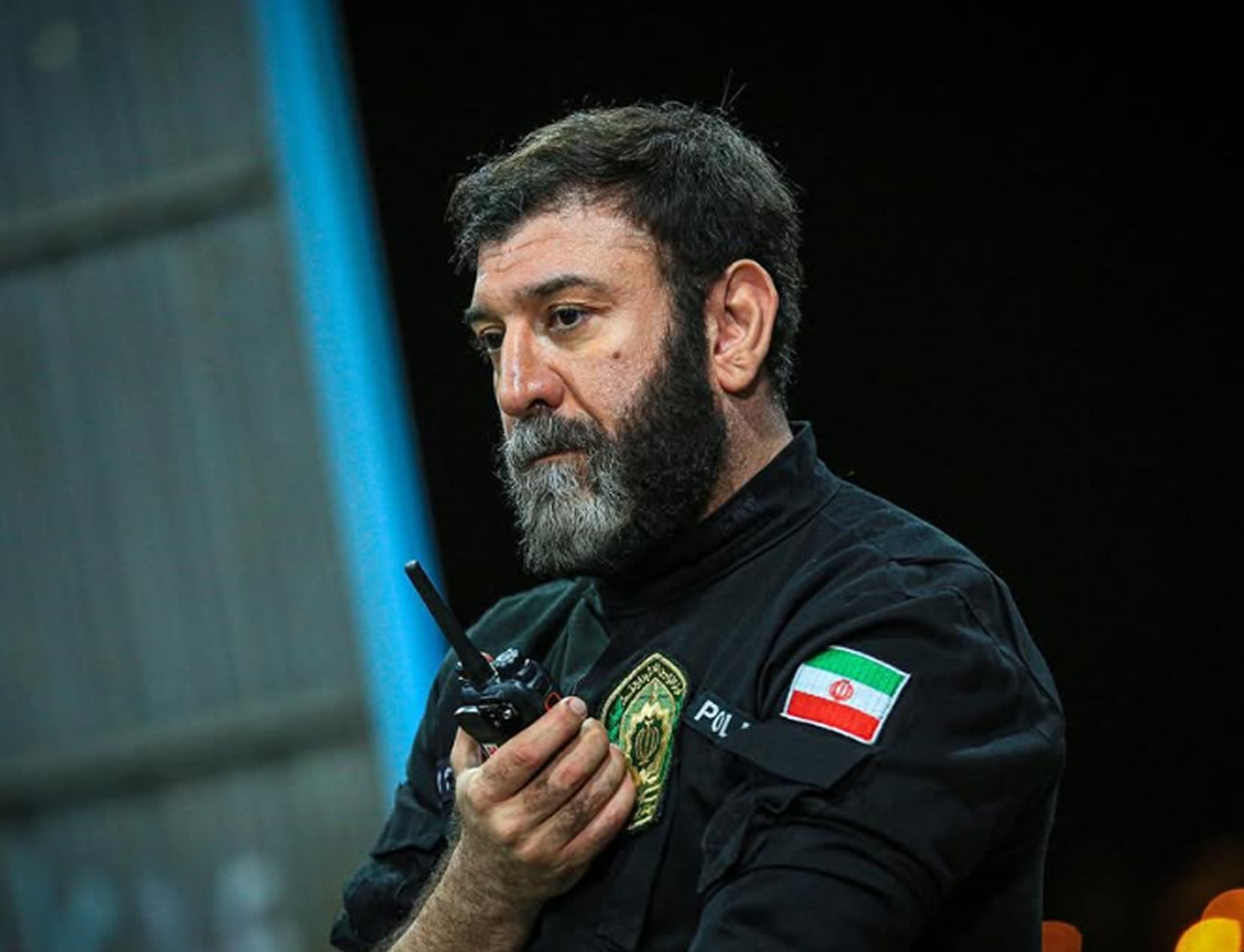
On February 3, 2021, Ali Ansarian died at the age of 43 in a Tehran hospital after a two-week battle with COVID-19. The former national team footballer and popular television host succumbed to the virus at Farhikhtegan Hospital, joining fellow footballer Mehrdad Minavand, who had died just one week earlier from the same disease. Both men had appeared together on a televised football program eleven days before Minavand's hospitalization. Both contracted the virus in what appeared to be a straightforward case of pandemic tragedy. Yet in the years since, disturbing allegations have emerged, accusations of medical malpractice, unauthorized experimental treatments, and threats against family members, all pointing to a death far more complex than initially reported.
The case of Ali Ansarian exposes critical fault lines in the Islamic Republic's healthcare system, its treatment of public figures who dare to criticize the regime, and the opacity that shrouds deaths deemed politically inconvenient. This investigation examines the medical controversies, the family's persistent allegations, the abrupt closure of official inquiries, and the broader pattern of suspicious deaths that have marked the Islamic Republic since its inception.
Ansarian's death raises fundamental questions about medical accountability, state pressure on judicial processes, and whether a beloved public figure with a history of government criticism became yet another casualty in the Islamic Republic's decades-long pattern of silencing dissent. The evidence suggests a troubling confluence of medical negligence, institutional cover-up, and potential deliberate harm, all obscured by a system designed to protect the powerful rather than uncover truth.
Ali Ansarian was born on July 5, 1977, in Tehran. From childhood, football consumed him. At thirteen, he joined the youth squad of Payam Tehran, progressing through Sepah Bank and Bank Melli before landing at Fajr Sepasi, where his professional career ignited. By 1998, Persepolis Football Club, one of Asia's most popular teams with over 30 million supporters, signed the talented defender. Over the next thirteen years, Ansarian played for Persepolis, Saipa, Esteghlal, Steel Azin, Esteghlal Ahvaz, Gostaresh, Shahrdari Tabriz, and Shahin Bushehr, accumulating 240 league appearances and scoring 27 goals.
His international career, though modest, included six caps for the Iranian national team between 1998 and 2007. He was remembered particularly for scoring the lone goal for Persepolis in a match against Bayern Munich, a feat that cemented his status among Iranian football fans. In 2006, he controversially switched to Persepolis's fierce rival Esteghlal, a move that initially drew criticism but did little to diminish the affection supporters held for the charismatic defender. By 2011, at age 34, despite possessing the physical capability to continue, Ansarian retired from professional football.
Retirement opened a new chapter. In 2011, Ansarian entered the entertainment industry, appearing in films, television series, and online programs. His natural charm and quick wit made him a sought-after television host. He fronted programs on state-run Channel Five and later moved to internet-based platforms where restrictions were slightly looser. In 2018, he co-hosted "Zabiwaka," a World Cup program broadcast on the Ivo internet network. The show featured Ansarian joking with Iranian singers living in exile in Los Angeles, musicians effectively blacklisted by the Islamic Republic. After two episodes, state broadcasting authorities issued 140 warnings, and the program was abruptly cancelled.
Ansarian never shied from expressing his views. In interviews and on social media, he criticized government policies, social restrictions, and the handling of national issues. He mocked officials, questioned decisions, and spoke with a candor rare among public figures operating within the Islamic Republic's tightly controlled media environment. For several years, authorities responded with temporary bans, preventing him from appearing on television. The restrictions were never formalized with clear legal charges but were understood as punishment for crossing invisible lines. Despite the bans, Ansarian remained beloved by ordinary Iranians, who saw in him a reflection of their own frustrations.
His personal life was marked by devotion to his mother, Sadat Shahvelayati. Ansarian never married, often citing his wish not to leave his widowed mother alone. In interviews, he spoke movingly of her sacrifices and expressed a desire to place her in an apartment above his own if he ever wed, so she would always remain close. This filial devotion became a defining feature of his public persona, endearing him further to a culture that places immense value on family loyalty.
On January 11, 2021, Ansarian and Mehrdad Minavand, another former Persepolis player and member of Iran's 1998 World Cup squad, appeared together on a live television program discussing the Tehran derby between Persepolis and Esteghlal. The program aired on Persepolis Club's television network. Both men sat close together in the studio. Neither wore masks. No social distancing protocols were observed. During the broadcast, Minavand mentioned feeling unwell, complaining of back pain and general malaise. Ansarian and other hosts joked about the comment, unaware or dismissive of its potential significance.
Within days, both footballers fell seriously ill. Minavand was admitted to Laleh Hospital in Tehran on January 21 with acute COVID-19 symptoms. His condition deteriorated rapidly. Despite initial optimism from medical staff, he died on January 27, just six days after hospitalization. Ansarian was admitted to Farhikhtegan Hospital, a facility operated by Islamic Azad University, on the same day. His symptoms were severe, with significant lung involvement, but doctors initially reported his condition as stable and expressed hope for recovery.
The January 11 program became the subject of intense public scrutiny. Critics pointed out the blatant disregard for health protocols, the absence of masks, the close seating arrangements, and the failure of producers to respond when Minavand explicitly stated he felt ill. Iran was in the grip of a devastating pandemic wave. Official death tolls exceeded 80,000 by early 2021, though independent observers suspected the true figure was far higher. Health authorities had repeatedly emphasized that any cold-like symptoms should be treated as potential COVID-19 and that individuals should immediately isolate. Yet the program's producers allowed two high-profile guests to sit unprotected in a confined space, broadcast live to millions, with one guest openly acknowledging illness.
Investigators later confirmed that the television program was the most probable site of infection for both men. The chain of transmission, the timing of symptom onset, and the lack of other obvious exposure points all indicated the studio as ground zero. Yet no disciplinary action was taken against the producers, no public inquiry was launched, and no officials were held accountable for the negligent disregard of pandemic protocols that likely cost two men their lives.
For the first ten days of Ansarian's hospitalization, reports were cautiously optimistic. His lungs showed significant damage, consistent with severe COVID-19, but his vital signs remained relatively stable. He was placed on supplemental oxygen and closely monitored. Friends and former teammates visited the hospital, some observing him through isolation glass. Mehdi Amirabadi, a former colleague, visited on February 2 and later recounted that Ansarian waved to him, gave a thumbs-up, and appeared to be recovering. The medical team, led by Dr. Mohammad Reza Hashemian, expressed measured confidence.
Then, abruptly, everything changed. On the evening of February 2, Ansarian's condition deteriorated sharply. The medical team decided to place him on mechanical ventilation, sedating him and inserting an endotracheal tube to support his failing respiratory system. Dr. Hashemian went live on Instagram that night to inform the public, his tone grim and his language suggesting he was preparing followers for the worst. Hours later, in the early morning of February 3, Ali Ansarian was declared dead.
The speed of the decline shocked family members, friends, and the public. One day he was waving from behind glass, appearing stable. The next, he was on a ventilator. Hours after that, he was dead. The official cause listed organ failure due to COVID-19 complications, specifically damage to the lungs, liver, and kidneys. But this explanation satisfied almost no one.
Within hours of his death, Ansarian's family lodged complaints. They alleged that the ventilator had been disconnected prematurely, before his body could sustain independent breathing. They claimed that experimental treatments had been administered without informed consent. They reported that immediately after death, hospital staff rushed the body to Behesht-e Zahra Cemetery without allowing the family to view it. At the cemetery, at 5:30 in the morning, staff informed the family that the body had already been washed and prepared for burial. When family members requested to see Ansarian's face one final time, they were told this was impossible because the body was covered in blisters and sores from the neck down, allegedly the result of stem cell therapy administered during his final hours.
Dr. Hashemian and the hospital administration categorically denied all allegations. The physician insisted that the ventilator was removed only after appropriate consultation with family representatives and in the presence of medical colleagues. He stated that Ansarian arrived at the hospital too late, with organ systems already severely compromised, and that the medical team did everything possible within accepted treatment protocols. He accused unnamed individuals close to the family of spreading false rumors on social media and filed legal complaints for defamation.
The allegations of stem cell therapy became the most explosive element of the dispute. In standard COVID-19 treatment protocols, stem cell therapy is not indicated for acute respiratory distress syndrome caused by viral infection. While some experimental trials explored mesenchymal stem cell therapies for severe cases, these were tightly controlled research environments with strict ethical oversight. Unauthorized use of stem cells on a critically ill patient, without prior consent and without clear clinical rationale, would constitute a serious violation of medical ethics and Iranian law.
Years after Ansarian's death, Mojtaba Pourbakhsh, a former state television host and friend of Ansarian, made a public statement. In a television appearance, he explicitly claimed that Ansarian had been injected with stem cells without his consent or the consent of his family. Pourbakhsh declared, "They used my friend's body like a laboratory mouse." He provided what he claimed was a hospital receipt showing no payment charges, suggesting irregularities in billing that he implied indicated covert or experimental procedures. He further alleged that the family was denied access to the body, that the rapid transportation to the cemetery was suspicious, and that the refusal to allow the family to view the face was evidence of something far more sinister than COVID-19 complications.
Public outrage over Ansarian's death was immediate and sustained. Tens of thousands of Iranians signed online petitions demanding a full investigation. The reformist newspaper Shargh ran a front-page headline: "25,000 Signatures Demand Clarification of Ali Ansarian's Death." Activists, journalists, and ordinary citizens flooded social media with demands for transparency. The volume of public pressure forced Iran's judiciary to respond.
A formal complaint was filed with the Office of the Prosecutor General, alleging medical malpractice, negligence, and potentially criminal misconduct. The Legal Medicine Organization, the state body responsible for forensic investigations and medical malpractice inquiries, opened a case. Forensic pathologists examined medical records, interviewed hospital staff, and reviewed treatment protocols. Family members submitted detailed written accounts of their interactions with hospital personnel and the irregularities they observed.
The investigation proceeded slowly and opaquely. No public updates were provided. No preliminary findings were released. Months passed. Then, without warning or detailed explanation, the case was closed. The Legal Medicine Organization issued a terse statement concluding that Ali Ansarian died of COVID-19 complications exacerbated by late arrival at the hospital and pre-existing conditions. Dr. Hashemian and the Farhikhtegan Hospital medical team were exonerated of any wrongdoing. No evidence of malpractice was found. The case was considered resolved.
The family and their legal representatives protested the decision, pointing to numerous unanswered questions. Why were the stem cell allegations not addressed in the findings? Why was the family not permitted to see the body before burial? Why did the condition deteriorate so suddenly after days of relative stability? Why were the producers of the television program, whose negligence exposed both men to the virus, not held accountable? These questions received no answers. Requests to reopen the investigation were denied. Appeals were dismissed. The matter, in the view of the state, was concluded.
Multiple factors suggest the investigation was compromised. The Legal Medicine Organization, though nominally independent, operates under the supervision of the judiciary, which itself is an arm of the Islamic Republic's political establishment. Medical malpractice cases in Iran frequently favor physicians and hospitals over patients, particularly when state institutions or well-connected individuals are involved. A 2019 study published in Medical Journal of the Islamic Republic of Iran found that while 36 percent of malpractice complaints resulted in findings of physician fault, cases involving teaching hospitals and state-affiliated institutions had significantly lower rates of confirmed negligence.
Moreover, the speed with which the case was closed, the absence of transparency, and the failure to address specific allegations all point to external pressure to contain the scandal. Ansarian, though beloved by ordinary Iranians, had been a thorn in the side of authorities for years. His criticism of the government, his work on programs that featured exiled artists, and his open defiance of cultural restrictions made him a problematic figure. His death, while officially attributed to a virus, removed a prominent voice of dissent. Whether that removal was deliberate, the result of negligence, or genuinely accidental, a thorough and transparent investigation would have been required to determine. Such an investigation never occurred.
For three years, Sadat Shahvelayati, Ali Ansarian's mother, remained largely silent. She attended memorial services, accepted condolences, and avoided public statements. Then, in 2024, she broke her silence with allegations that stunned even those already suspicious of the circumstances surrounding her son's death.
In a tearful video statement, Shahvelayati claimed that she had been threatened and pressured by two individuals, referred to by initials as H.A. and F.A., whom she described as well-known figures in Iranian football circles. According to her account, these individuals sought to seize control of Ali's estate, which included property, savings, and intellectual property rights. When she resisted, the threats escalated. She alleged that H.A. threatened to strangle her with her own chador, and that both individuals warned they possessed firearms and explosives and were prepared to use them. Shahvelayati pleaded for help from the Iranian football community, saying she feared for her life and needed protection.
The allegations immediately triggered speculation. The initials H.A. and F.A. led some to conclude the accused were Hamed Ajdari, Ansarian's brother-in-law, and Fatemeh Ansarian, his sister. This interpretation suggested a bitter family dispute over inheritance, with siblings threatening the mother to gain control of Ali's assets. If accurate, it painted the earlier complaints about hospital conduct in a different light, perhaps as part of a broader family power struggle rather than a genuine pursuit of justice.
However, the allegations also raised an alternative and darker interpretation. If external parties with connections to the Islamic Republic's security apparatus sought to control Ansarian's estate, or if the family was being pressured to remain silent about aspects of his death, the threats could represent an effort to suppress evidence or intimidation tactics commonly employed by regime-linked entities. In this reading, the family conflict was not an internal dispute but rather external coercion exploiting familial tensions.
No criminal charges related to these threats have been publicly filed, and no arrests have been reported. Whether the allegations were credible, exaggerated, or part of a complex family dynamic remains unresolved. What is clear is that Ansarian's death did not bring closure. Instead, it opened a Pandora's box of suspicion, recrimination, and fear that has persisted long after his burial.
Ali Ansarian's death did not occur in a vacuum. The Islamic Republic has a documented history of eliminating critics, dissidents, and troublesome public figures through methods designed to appear accidental or natural. The most infamous episode is the "chain murders" of the 1990s, a coordinated campaign by agents of the Ministry of Intelligence and Security to assassinate intellectuals, writers, and opposition figures. Between 1988 and 1998, at least 80 individuals were killed, often by stabbing or strangulation, with deaths staged to look like robberies or accidents.
Victims included Dariush and Parvaneh Forouhar, nationalist opposition leaders found stabbed to death in their home; Mohammad Mokhtari and Mohammad Jafar Pouyandeh, dissident writers killed in similar fashion; and dozens of others whose murders bore a chilling consistency. When the scandal finally broke in 1998, the government admitted that "rogue agents" within the intelligence ministry were responsible. Saeed Emami, a deputy minister of intelligence, was named as the mastermind. Before he could stand trial, Emami allegedly committed suicide in prison by ingesting arsenic, a death that many believe was itself a state-sponsored execution to prevent damaging revelations.
The chain murders were not an aberration but a reflection of systemic practices. The Islamic Republic has employed assassination, disappearance, and suspicious deaths as tools of governance since its founding. Dissidents abroad have been killed by agents using ricin-tipped umbrellas, poisoned food, and staged accidents. Inside Iran, critics have died in car crashes that witnesses describe as deliberate, from sudden "heart attacks" in prison, and from "suicides" under circumstances that defy plausibility. Journalists, activists, lawyers, and artists who cross certain lines frequently face harassment, imprisonment, or worse.
In this context, the question of whether Ali Ansarian was deliberately targeted through biological means is not far-fetched. The Soviet Union and later the Russian Federation perfected the use of poisons and biological agents to eliminate perceived enemies. The KGB's "Kamera" poison laboratory developed untraceable toxins for decades, used against dissidents like Alexander Litvinenko, who died from polonium-210 poisoning, and Sergei Skripal, attacked with Novichok nerve agent. Iran maintains close ties with Russia and has access to similar expertise. The concept of "biological assassination" deliberately infecting a target with a pathogen is not theoretical but documented practice by authoritarian regimes.
In Ansarian's case, the convergence of several factors raises suspicion. He was a prominent critic of the regime with a large public platform. He had been banned from television for content deemed subversive. He appeared on a program with minimal health precautions, potentially creating an opportunity for deliberate exposure. His sudden decline after days of stability, the alleged use of experimental treatments, the rapid removal of the body, and the family's inability to view his remains all suggest something beyond straightforward medical misfortune.
Moreover, Mehrdad Minavand's nearly simultaneous death from the same virus under similarly controversial circumstances adds weight to the theory. Two outspoken former footballers, both critics of government policies, both appearing on the same program, both dying within a week, one of whom was explicitly stating he felt ill on camera yet was allowed to continue broadcasting. The probabilities of coincidence diminish when viewed through the lens of the Islamic Republic's history.
Even if Ansarian's death was the result of medical negligence rather than deliberate harm, it still reveals endemic failures within Iran's healthcare system and the structures that shield incompetence and malfeasance from accountability.
Medical malpractice is rampant in Iran. A 2019 systematic review published in the peer-reviewed journal Medical Journal of the Islamic Republic of Iran examined 3,977 malpractice complaints filed with the Iran Medical Council. Of these, 1,455 cases (36 percent) were confirmed as genuine malpractice. The most common causes were lack of skill (30.4 percent), negligence (29.2 percent), imprudence (26.3 percent), and noncompliance with regulations (14.1 percent). Gynecologists, orthopedic specialists, and general surgeons faced the highest rates of complaint. Private hospitals accounted for a disproportionate share of confirmed failures, but teaching hospitals affiliated with state universities were also implicated at significant rates.
Farhikhtegan Hospital, where Ansarian was treated, is a large facility operated by Islamic Azad University. While it possesses modern equipment and employs trained physicians, the hospital operates within a system marked by chronic underfunding, corruption, and inadequate oversight. Medical staff frequently work excessive hours. Supplies are inconsistent. Pharmaceutical availability fluctuates. Patients with resources can access superior care through bribes or connections, while ordinary citizens face delays, substandard treatment, and indifference.
The process for filing malpractice complaints is cumbersome, opaque, and heavily biased toward protecting physicians. Cases are reviewed by medical councils composed of other doctors, creating inherent conflicts of interest. Judicial proceedings are conducted behind closed doors, often without the presence of the victim's family or legal representatives. Penalties, when imposed, are often minimal. Physicians found guilty of serious negligence may receive fines, temporary suspensions, or mandatory retraining, but criminal prosecution is exceedingly rare.
In Ansarian's case, even if every allegation of malpractice were true, unauthorized stem cell treatment, premature ventilator removal, inadequate monitoring, the likelihood of meaningful punishment was remote. Dr. Hashemian, with institutional backing and legal resources, could afford to deny, deflect, and litigate. The family, lacking insider knowledge of medical procedures and facing a judiciary predisposed to protect state institutions, had little recourse. When public pressure became too intense, the state simply declared the matter closed, confident that popular attention would eventually move elsewhere.
This dynamic creates an environment of impunity. Physicians know that even serious errors are unlikely to result in career-ending consequences, particularly if the case involves a patient who had been politically problematic. Hospitals can operate with minimal transparency, confident that regulatory bodies will not conduct aggressive investigations. The Legal Medicine Organization, theoretically independent, functions in practice as an extension of state interests, producing findings that serve political expediency rather than scientific truth.
Ali Ansarian's death is a tragedy not only for his family but for all Iranians who saw in him a symbol of courage and defiance. His willingness to speak openly, to criticize authority, and to live with authenticity made him a rare figure in a society where dissent is dangerous. His devotion to his mother, his humor, his generosity in supporting charitable causes, and his efforts to help impoverished prisoners all contributed to a public image of decency and compassion. When he died, tens of thousands mourned, not merely a footballer or a television host, but a man who represented what many Iranians wished they could be: free, fearless, and loved.
His mother, Sadat Shahvelayati, has been left in a state of perpetual grief compounded by fear and confusion. She has lost her son under circumstances she cannot fully understand. She has been denied the right to see his body one final time. She has faced threats, intimidation, and isolation. She has watched as the state machinery closed ranks to protect itself, offering no answers, no accountability, and no justice. Her suffering is a microcosm of the suffering inflicted on countless Iranian families whose loved ones have died under suspicious circumstances, their questions dismissed, their grief exploited, their demands for truth ignored.
The broader implications extend beyond one death. Ansarian's case illustrates how the Islamic Republic manages dissent. When outright assassination is politically costly, more subtle methods suffice. A critic can be banned from work, diminishing his platform. He can be exposed to danger through negligence, a television program without masks, with plausible deniability intact. If he falls ill, experimental treatments can be administered, or care can be withheld. If he dies, the investigation can be controlled, witnesses silenced, and the official narrative imposed. At each stage, the system protects itself, ensuring that even if suspicions persist, definitive proof remains elusive.
This architecture of impunity corrodes the rule of law and public trust. When citizens cannot rely on institutions to investigate deaths honestly, when medical professionals face no consequences for negligence or misconduct, when judicial bodies serve political interests rather than justice, society fractures. Fear replaces confidence. Silence replaces speech. Individuals learn that challenging power invites danger, and that danger will be met not with protection but with abandonment.
The fact that Ali Ansarian's death remains unresolved, that his family's questions remain unanswered, and that no one has been held accountable is not an anomaly. It is the system functioning as designed. The Islamic Republic tolerates criticism up to a point, but when that point is crossed, consequences follow. Those consequences may be imprisonment, exile, violence, or something more subtle and more sinister, a virus contracted under suspicious circumstances, a medical treatment administered without consent, a death that arrives too quickly and too conveniently.
Ali Ansarian's death at age 43 on February 3, 2021, officially attributed to COVID-19, remains shrouded in unresolved questions and disturbing allegations. Whether he was the victim of deliberate biological targeting, medical malpractice, institutional negligence, or simply a tragic confluence of pandemic circumstances and systemic failures, the lack of transparent investigation ensures that the truth may never be known with certainty.
What is certain is that Ansarian was a public figure who criticized the Islamic Republic, was temporarily banned from television for content deemed subversive, and died under conditions that his family and friends found deeply suspicious. The refusal of authorities to conduct a thorough investigation, the rapid closure of the case despite significant public pressure, the alleged use of experimental treatments without consent, and the subsequent threats against his mother all suggest a pattern consistent with state-managed suppression of inconvenient truths.
The case lays bare the fragility of life for those who speak out in the Islamic Republic. It reveals a healthcare system riddled with corruption, negligence, and impunity. It exposes a judiciary willing to subordinate justice to political expediency. And it demonstrates once again that in a system where power is absolute and accountability is absent, even beloved national figures can disappear into the machinery of repression, their deaths explained away, their families silenced, and their memories manipulated.
Ali Ansarian deserved better. He deserved competent medical care, delivered ethically and transparently. He deserved an honest investigation into the circumstances of his death. His family deserved answers, accountability, and justice. The Iranian people deserved to know the truth about what happened to a man they admired and mourned. None of these things occurred. Instead, the familiar machinery of the Islamic Republic churned on, producing official explanations that satisfied no one, investigations that answered nothing, and a silence enforced by fear and power.
In the end, Ansarian's story is not just about one man's death. It is about a system that has perfected the art of making dissent deadly, accountability impossible, and truth optional. It is about a regime that has ruled for nearly five decades through violence, suppression, and the calculated elimination of those who dare to challenge it. And it is a reminder that until that system is dismantled, until transparency replaces opacity, until justice replaces impunity, the questions surrounding Ali Ansarian's death will echo alongside countless others, unanswered, unresolved, and unforgotten.