


Policed Twice: How Gender Control and Criminalization Trap LGBTQ+ Women in the Islamic Republic
Gender policing and criminalization combine to expose LGBTQ+ women to layered, persistent danger.
|
Milad Torabi
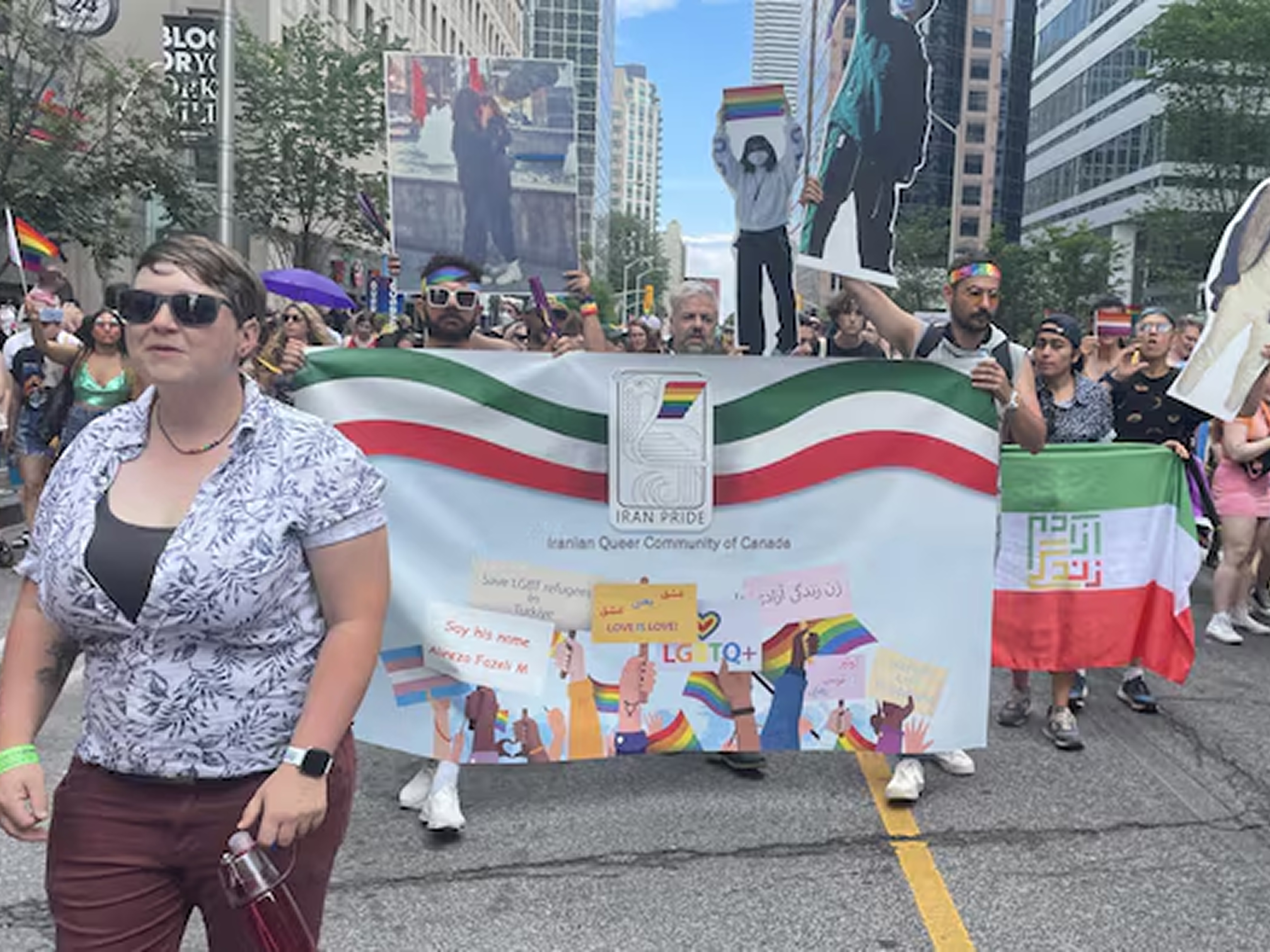
For LGBTQ+ women in the Islamic Republic, repression is rarely confined to a single law, institution or encounter. It is produced by overlapping systems that regulate women as women and stigmatize or criminalize them because of actual or perceived sexual orientation or gender identity. Compulsory dress rules, restrictions on public behavior, criminal provisions governing same-sex sexual conduct, religious stigma, family coercion and the possibility of police or security intervention create a layered structure of vulnerability.
The significance of this overlap is practical. A lesbian or bisexual woman may attract scrutiny because of clothing, hairstyle, companionship or public behavior long before authorities possess evidence of an intimate relationship. A family member may discover her orientation and respond with threats or forced marriage. A victim of violence may then hesitate to seek police protection because disclosure could expose the very identity that placed her at risk. In that cycle, institutions nominally responsible for protection can become an additional source of fear.
The result is not merely discrimination in the abstract. It is a system that can shape where a woman lives, whom she trusts, whether she reports abuse, what she posts online and whether she can maintain an intimate relationship without anticipating exposure. The law supplies the coercive background, while family and social pressure extend its reach into private life.
Same-sex sexual conduct remains criminalized under the legal system of the Islamic Republic, with punishments for certain acts ranging from flogging to death. The existence of these provisions matters even when prosecution does not occur in every case. Criminalization changes the bargaining power between an LGBTQ+ person and anyone capable of exposing her. A threat to tell relatives, an employer or authorities can carry consequences far beyond embarrassment.
For women, this legal exposure operates alongside a broader regime regulating dress and public conduct. Compulsory hijab rules allow the state to intervene in appearance and bodily autonomy in ordinary public settings. Human-rights reporting has documented surveillance, arrests, harassment and other penalties directed at women and girls who defy mandatory veiling. For LGBTQ+ women, gender expression that departs from official expectations can add another layer of scrutiny.
This does not mean that sexual orientation can reliably be inferred from appearance. It cannot. The danger lies instead in a system that gives officials and social actors broad latitude to classify women as compliant or deviant. A woman perceived as insufficiently feminine, socially unconventional or openly resistant to dress rules can become more visible to authorities or hostile observers, regardless of whether their assumptions about her identity are accurate.
Criminalization also weakens access to remedies. If a lesbian woman is assaulted by a relative or threatened by an acquaintance, reporting the incident may require explaining the relationship or motive. That disclosure can expose her to stigma or legal jeopardy. A formal right to seek police assistance is of limited value when the act of seeking assistance may generate a new risk.
Many of the most consequential punishments occur without a court order. Families can exert control through housing, money, marriage expectations and social reputation. When a woman's orientation becomes known or suspected, relatives may demand that she end relationships, surrender her phone, stop seeing friends or accept a marriage intended to restore conformity and conceal her sexuality.
Forced or coerced marriage can transform family pressure into long-term dependency. A woman may enter a heterosexual marriage not because it reflects her wishes but because refusal risks exposure, expulsion or violence. Such a marriage can deepen psychological distress and eliminate practical avenues for independent living. It can also create new forms of domestic vulnerability in a legal and social environment where women's autonomy is already constrained.
Employment and education are similarly affected by concealment. Human-rights reporting has described discrimination against LGBTI people in schooling, work, housing and health care. The threat of being outed can therefore become an economic weapon. A person who loses family support may also fear losing a job or accommodation, making resistance to coercion more difficult.
The cumulative effect is self-surveillance. Women delete messages, restrict social-media activity, avoid public affection and maintain separate identities for family, work and private relationships. This concealment may reduce immediate exposure, but it imposes its own cost. The person is required to organize ordinary life around the possibility that authenticity can be converted into evidence against her.
The state is not simply absent from this landscape. Its laws and enforcement practices help define the danger. Police structures enforce rules governing women's dress and public behavior, while the criminal law stigmatizes same-sex intimacy. Security institutions may become relevant when LGBTQ+ identity intersects with activism, public advocacy or online expression.
This creates a protection gap with unusual consequences. Private violence is often treated as separate from state persecution, but that distinction becomes unstable when the state has constructed the conditions that deter victims from asking for help. A woman threatened by relatives may reasonably fear that explaining the threat will require disclosing her sexual orientation. If that orientation is not effectively protected and related conduct is criminalized, the pathway to protection is compromised from the outset.
The same problem applies to health care. A patient who anticipates stigma may withhold information from doctors or counselors. If families pressure women toward purported treatments intended to change orientation or identity, the absence of safe and independent support can make coercion harder to resist. Institutions that should reduce vulnerability can become inaccessible because disclosure is dangerous.
The pattern is therefore systemic rather than episodic. Law, policing, family authority and social stigma do not need to be centrally coordinated to reinforce one another. Each can make the others more effective. The state supplies legal and ideological boundaries; families and communities can enforce those boundaries informally; fear of state exposure then prevents victims from challenging private abuse.
The human consequences are visible in isolation, disrupted relationships, coerced marriages, economic dependence and chronic fear. For some women, the safest strategy becomes disappearance from public LGBTQ+ life. For others, leaving the family home or relocating may offer temporary relief but create new vulnerabilities involving housing, work and social support.
The central finding is that LGBTQ+ women face a double structure of control. They are subject to rules that regulate women generally and to a legal and social order that punishes or stigmatizes sexual and gender difference. The two systems overlap in the body, the home and the street.
Any serious assessment of their circumstances must therefore avoid treating gender discrimination, sexual-orientation persecution and family violence as separate files. In practice, they can form a single chain. A dress-code encounter can increase visibility. Visibility can trigger family suspicion. Suspicion can lead to coercion. Attempts to seek help can produce further exposure. What appears as a collection of unrelated pressures is, for the individual living through it, one continuous system of risk.

